Equality

Equality, non-discrimination and racism

Equality is a core value of the EU. You have the right to fair treatment regardless of who you are, what you believe, or how you chose to live.

We carry out research and share expertise to help fight discrimination, inequality and racism in all its forms.

Highlights

  • Data explorer
    FRA’s 2024 survey on Roma and Travellers in Albania, Bulgaria, Czechia, France, Greece, Hungary, Ireland, Italy, North Macedonia, Portugal, Romania, Serbia and Spain collected information from 10,126 respondents living in private households who self-identify as Roma or Traveller, are 16 or older and have lived in the survey countries for at least the 12 months before the survey.

  • Report / Paper / Summary
    25
    November
    2024
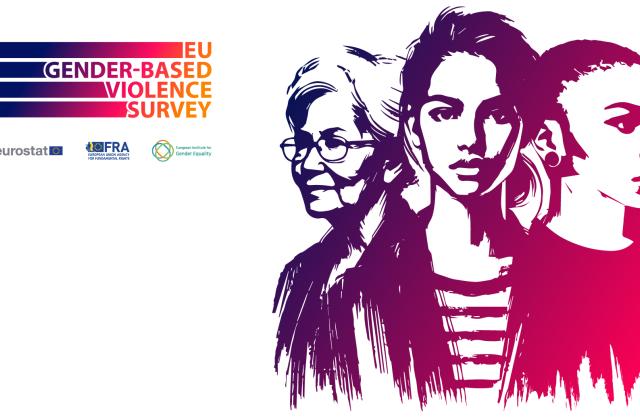
    This report presents key results of the EU gender-based violence survey based on data from all 27 Member States. The report focuses on the overall prevalence of physical violence or threats and/or sexual violence by any perpetrator, violence perpetrated by women’s intimate partners and by other people (non-partners) and women’s experiences of sexual harassment at work.
  • Report / Paper / Summary
    25
    October
    2024
    Racism towards Muslims is increasing in countries across the EU. Muslims face racial discrimination and racist harassment because of their religion, skin colour or ethnic background. This report shows a sharp rise since the last survey in 2016.
  • Report / Paper / Summary
    11
    July
    2024
    Antisemitism is still a reality for many Jewish people in the EU today. Faced with prejudice and hostility, most feel unable to live openly Jewish lives. This report presents the results of FRA’s third EU survey of Jewish people’s experiences and perceptions of antisemitism. The survey took place before the Hamas attacks in October 2023 and the war in Gaza; however, it includes evidence from a consultation with national and European Jewish umbrella organisations since. It covers 13 EU Member States that together account for around 96 % of the EU’s Jewish population.
    Publications and data
    7
    November
    2013
    Antisemitism can be expressed in the form of verbal and physical attacks, threats, harassment, property damage, graffiti or other forms of text, including hate speech on the internet. The present report – the ninth update of the European Union Agency for Fundamental Rights (FRA) overview of Manifestations of antisemitism in the EU – relates to manifestations of antisemitism as they are recorded by official and unofficial sources in the 28 European Union (EU) Member States.
    This 2012 survey provides comparable data from eight countries (Belgium, France, Germany, Hungary, Italy, Latvia, Sweden and the UK) on Jewish people’s experiences and perceptions of discrimination, hate-motivated crime and antisemitism. The data explorer also allows the filtering of responses by age, gender and strength of Jewish identity of respondents.
    22
    October
    2013
    The Opinion assesses the impact of the Framework Decision on the rights of the victims of crimes motivated by hatred and prejudice, including racism and xenophobia.
    1
    October
    2013
    Drawing on evidence gathered in its surveys and reports, FRA submits a set of opinions aimed at improving the protection against discrimination. These could be taken into account in the implementation and the eventual reform of the EU legal framework on the protection against discrimination.
    18
    September
    2013
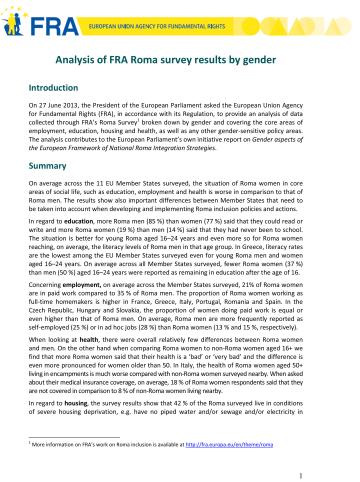
    This paper provides an analysis of data collected through FRA’s Roma Survey broken down by gender and covering the core areas of employment, education, housing and health, as well as any other gender‐sensitive policy areas. The paper is the result of a request made by the President of the European Parliament to the European Union Agency for Fundamental Rights (FRA) on 27 June 2013.
    26
    July
    2013
    This report analyses the current international and European legal standards and compares EU Member States’ laws in the area of legal capacity. Evidence from fieldwork research supports the legal analysis, providing eloquent testimony to the obstacles many persons with disabilities face in securing equal enjoyment of their fundamental rights.
    8
    November
    2010
    This report provides the first results from a legal study carried out by the European Union Agency for Fundamental Rights (FRA) in the context of its project on the "Fundamental rights of persons with intellectual disabilities and persons with mental health problems".
    26
    January
    2010
    In 2009, the FRA conducted the first EU-wide study of the role that European memorial sites, museums and exhibitions play with respect to educating young Europeans about the Holocaust and human rights. The findings of the study were presented at a Conference in Auschwitz on the 27 January bringing together Education Ministers from across Europe.
    1
    November
    2010
    The development of indicators for the protection, respect and promotion of the rights of the child in the European Union by the FRA aims at assessing the impact of Union law and policies that have been adopted so far, identifying their achievements and revealing their gaps on EU provisions for children.

    21
    March
    2011
    The Handbook on European non-discrimination law is jointly produced by the European Court of Human Rights and the FRA. It is a comprehensive guide to non-discrimination law and relevant key concepts.
    18
    June
    2013
    This year’s summary of the FRA Annual report – Highlights 2012 – puts the spotlight on key legal and policy developments in the field of fundamental rights in 2012.
    18
    June
    2013
    Against a backdrop of rising unemployment and increased deprivation, this FRA Annual report closely examines the situation of those, such as children, who are vulnerable to budget cuts, impacting important fields such as education, healthcare and social services. It looks at the discrimination that Roma continue to face and the mainstreaming of elements of extremist ideology in political and public discourse. It considers the impact the crises have had on the basic principle of the rule of law, as well as stepped up EU Member State efforts to ensure trust in justice systems.
    17
    May
    2013
    In light of a lack of comparable data on the respect, protection and fulfilment of the fundamental rights of lesbian, gay, bisexual and transgender (LGBT) persons, the European Union Agency for Fundamental Rights (FRA) launched in 2012 its European Union (EU) online survey of LGBT persons’ experiences of discrimination, violence and harassment.
    This major online survey, carried out in 2012, collected information from more than 93,000 LGBT people in the EU on their experiences of discrimination, violence, verbal abuse or hate speech on the grounds of their sexual orientation or gender identity. The data explorer also allows the filtering of responses by age, sexual orientation and country of residence.
    8
    May
    2013
    Many of us enjoy and take pride in supporting sports clubs and teams. Nevertheless, racism, xenophobia and antisemitism continue to blight sport. These phenomena persist in many sports, but tend to be most visible in football due to its popularity, its coverage and the number of people engaged in the sport at all levels.
    11
    March
    2013
    Certain people are seen as particularly vulnerable to unequal treatment, because they share a combination of characteristics that may trigger discrimination. A Roma woman sterilised without her informed consent, for example, has suffered discrimination not just because of her sex, as all women do not face this treatment, nor just because she is Roma, as Roma men may not face this treatment. The discriminatory treatment is based specifically on the intersection of her sex and ethnic origin.
    11
    March
    2013
    The FRA report 'Inequalities and multiple discrimination in access to and quality of healthcare' examines experiences of unequal treatment on more than one ground in healthcare, providing evidence of discrimination or unfair treatment.
    10
    March
    2013
    This book will tell you about FRA’s work on how people might be treated differently in healthcare and on multiple discrimination in healthcare.
    7
    March
    2013
    This brief provides a short compilation of FRA findings on the issue of combating hate crime in the EU.
    On 8 September, FRA took part in the kick-off meeting of the study on ‘Intersex people in the EU, a project of the European Commission’s Justice and Consumers Directorate-General.
    Significant barriers to reporting hate crime across the EU hinder victims’ access to protection and justice, finds a new report of the EU Agency for Fundamental Rights (FRA). Many victims do not report attacks, as it is too difficult or they do not trust the police. FRA calls on EU countries to encourage hate crime reporting, improve its recording and ensure victims can get support, protection and justice.
    FRA presented key findings at two events from its latest Coronavirus Bulletin on ensuring fair and equal access to vaccines for all. The first took place on 23 June, during a webinar hosted by the European Centre for Disease Prevention and Control.
    Vaccination campaigns are beginning to bring results in the global struggle to tackle the Covid-19 pandemic. But there are setbacks in some countries. Particularly people in vulnerable situations, such as prisoners, homeless people and migrants, risk to be left behind in the deployment of Covid-19 vaccination, finds the Fundamental Rights Agency’s (FRA) latest Coronavirus bulletin. FRA calls on EU countries to ensure fair and equal access to vaccines for all.
    The COVID-19 pandemic exposed gaps in respecting the fundamental rights to health, education, employment and social protection across society. FRA’s Fundamental Rights Report 2021 plots the pandemic’s wide-ranging impact on rights and suggests how best to address increasing inequalities and threats to societal cohesion.
    A new paper by the EU Agency for Fundamental Rights (FRA) reveals the differences between people’s experiences with police stops. It shows that Black people, Asians and Roma are still more likely to be stopped and searched by police, which also affects their trust in policing. FRA will continue providing EU countries with data and guidance to support them in ensuring their policing practices respect people’s fundamental rights.
    The American Association for Public Opinion Research (AAPOR) honoured FRA with its Inclusive Voices Award 2021.
    Over 40 Embassies, Delegations and Permanent Missions all welcome 17 May as the International Day against Homophobia, Transphobia and Biphobia (IDAHOBIT), as a celebration of diversity and inclusion around the world.
    There is still a long way to go for LGBTI equality. International Day against Homophobia, Biphobia and Transphobia (IDAHOBIT) on 17 May is a reminder to challenge the discrimination and violence that too many lesbian, gay, bisexual, trans and intersex (LGBTI) people across Europe continue to face.
    Discrimination remains a daily reality for many people across the EU despite 20 years of EU equality legislation. This finds the latest Opinion from the EU Agency for Fundamental Rights.
    All societies still feel the impact of the COVID-19 pandemic, but the challenges for Roma are particularly acute, say the EU Agency for Fundamental Rights (FRA) and the OSCE Office for Democratic Institutions and Human Rights (ODIHR) on International Roma Day.
    The pandemic poses unprecedented challenges for governments, health systems and societies at large, with many people in despair. We also witnessed solidarity with generosity, care and commitment towards the most vulnerable. This crisis offers us a unique opportunity to create more inclusive and equal societies, said the heads of four human rights institutions ahead of the International Day for the Elimination of Racial Discrimination.
    Women in Europe continue to face widespread harassment and violence. Many limit where they go and whom they meet out of worry of being attacked. And when attacked, they often do not report it. These are some of the findings of the Fundamental Rights Agency’s (FRA) recent survey into people’s experiences with different types of crimes. On International Women’s Day, FRA calls for better support for women to ensure they can access their rights.
    FRA’s Fundamentally Right podcast series launched on 19 January. The final episode, Law: a bird's eye view, with FRA's Gabriel Toggenburg, is now out.
    Holocaust Remembrance Day is a time to honour and remember the millions of Jews, Roma, people with disabilities, gays and lesbians, and many others who fell victim to the horrors of Nazi persecution. Championing inclusion and tolerance towards others serves to honour their memory, says the EU Agency for Fundamental Rights (FRA).
    FRA has today, 19 January, launched a new podcast, titled Fundamentally Right. The podcast charts how events inspired people dedicating their professional lives working for EU’s independent centre of reference and excellence for promoting and protecting human rights.
    The dataset from FRA’s lesbian, gay, bisexual, trans and intersex (LGBTI) survey is now available for further use by researchers.
    Living in some of the richest countries in the world, a quarter of Roma and Travellers in Western Europe cannot afford basic items such as heating or healthy food, and up to a fifth of their children go to bed hungry, reveal the results of the EU Fundamental Rights Agency’s (FRA) new survey. Rampant discrimination coupled with early school leaving also leads to lack of job opportunities and widespread poverty for many. As a result, the life expectancy of Roma and Travellers is 10 years below the expectancy of the general population. These findings should drive policy responses at EU and national level and support policymakers to work with Roma and Travellers to tackle exclusion and poverty.