Equality

Equality, non-discrimination and racism

Equality is a core value of the EU. You have the right to fair treatment regardless of who you are, what you believe, or how you chose to live.

We carry out research and share expertise to help fight discrimination, inequality and racism in all its forms.

Highlights

  • Report / Paper / Summary
    3
    March
    2026
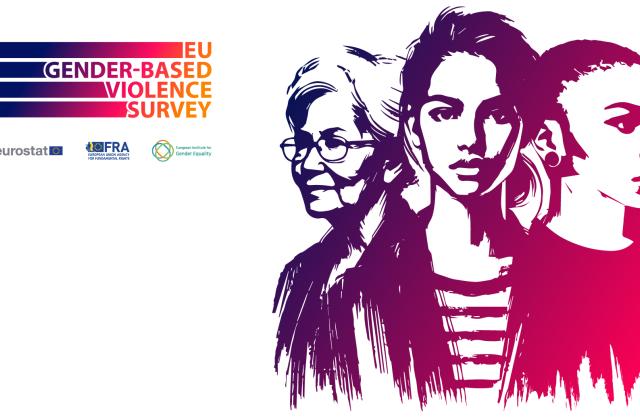
    Violence against women remains widespread in the European Union (EU). This joint report by the EU Agency for Fundamental Rights (FRA) and the European Institute for Gender Equality (EIGE) presents detailed findings from the EU gender-based violence survey. It offers in-depth analysis of the scale, nature and drivers of violence and exposes the structural gender inequality. Building on the 2024 publication, EU gender-based violence survey - Key results, and following up on FRA’s 2014 report, Violence against women: an EU-wide survey, this report tracks trends over the last decade across the EU. Eurostat, FRA, and EIGE jointly conducted the survey. It is based on over 100,000 interviews covering all 27 EU Member States.
  • Report / Paper / Summary
    27
    January
    2026
    This report looks at antisemitism in the EU, focusing on what can be done to address gaps in recording and inconsistencies in data collection. It highlights existing tools and guidance for Member States to improve their recording systems. The analysis is based on official administrative data and information from publicly available sources across EU Member States, as well as Albania, North Macedonia, and Serbia. Detailed country overviews are available for all countries covered. Antisemitism has been monitored by FRA since 2004. This report builds on the 2024 publication, ‘Jewish People’s Experiences and Perceptions of Antisemitism’.
  • Data explorer
    FRA’s 2024 survey on Roma and Travellers in Albania, Bulgaria, Czechia, France, Greece, Hungary, Ireland, Italy, North Macedonia, Portugal, Romania, Serbia and Spain collected information from 10,126 respondents living in private households who self-identify as Roma or Traveller, are 16 or older and have lived in the survey countries for at least the 12 months before the survey.

    Publications and data
    11
    March
    2013
    Certain people are seen as particularly vulnerable to unequal treatment, because they share a combination of characteristics that may trigger discrimination. A Roma woman sterilised without her informed consent, for example, has suffered discrimination not just because of her sex, as all women do not face this treatment, nor just because she is Roma, as Roma men may not face this treatment. The discriminatory treatment is based specifically on the intersection of her sex and ethnic origin.
    11
    March
    2013
    The FRA report 'Inequalities and multiple discrimination in access to and quality of healthcare' examines experiences of unequal treatment on more than one ground in healthcare, providing evidence of discrimination or unfair treatment.
    10
    March
    2013
    This book will tell you about FRA’s work on how people might be treated differently in healthcare and on multiple discrimination in healthcare.
    7
    March
    2013
    This brief provides a short compilation of FRA findings on the issue of combating hate crime in the EU.
    June
    2012
    This summary in easy read format provides information about FRA’s work on the right to live independently.
    27
    November
    2012
    Discrimination and intolerance persist in the European Union (EU) despite the best efforts of Member States to root them out, FRA research shows. Verbal abuse, physical attacks and murders motivated by prejudice target EU society in all its diversity, from visible minorities to those with disabilities. This FRA report is designed to help the EU and its Member States to tackle these fundamental rights violations both by making them more visible and bringing perpetrators to account.
    27
    November
    2012
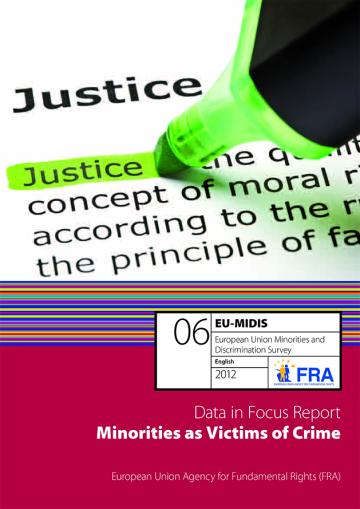
    This EU-MIDIS Data in focus report 6 presents data on respondents’ experiences of victimisation across five crime types: theft of or from a vehicle; burglary or attempted burglary; theft of personal property not involving force or threat (personal theft); assault or threat; and serious harassment. The European Union Minorities and Discrimination Survey (EU-MIDIS) is the first EU-wide survey to ask 23,500 individuals with an ethnic and minority background about their experiences of discrimination and criminal victimisation in everyday life.
    Report / Paper / Summary
    April
    2005
    This summary provides an insight into the extent of, and policy responses to, racist violence in the EU15. To this end they provide an overview of current knowledge about and responses to racist violence, by the State and civil society, in individual Member States.
    26
    January
    2010
    The European Agency for Fundamental Rights (FRA) conducted European-wide research in 2009 on the contribution of memorial sites to Holocaust education and human rights education in the European Union (EU). This summary report, derived from the main report 'Discover the past for the future. The role of historical sites and museums in Holocaust education and human rights education in the EU', provides selected findings, discussion points and recommendations.
    Report / Paper / Summary
    10
    October
    2010
    Racism and ethnic discrimination in sport have increasingly become a public issue in European sport over the past decades. This report examines the occurrence and different forms of racism, ethnic discrimination and exclusionary practices in sports, focusing on different sports and levels of practice in the EU.
    7
    December
    2010
    The arrival of thousands of separated children in the European Union from third countries poses a serious challenge to EU institutions and Member States, since, according to the EU Charter of Fundamental Rights and the UN Convention on the Rights of the Child, they have a duty to care for and protect children. This summary highlights the key findings of the FRA research on separated, asylum-seeking children in EU Member States.
    20
    June
    2012
    This year‘s summary of the FRA Annual report – Highlights 2011 – chronicles the positive developments made in 2011 as well as the challenges facing the EU and its Member States in the field of fundamental rights, drawing on objective, reliable and comparable socio-legal data.
    1
    December
    2007
    Equal Voices 22 "Being an older woman is disadvantageous and being additionally a minority, even more so", says Naina Patel in this Equal Voices.
    Fundamental Rights Report
    12
    June
    2003
    This report provides an account of the activities and achievements of the EUMC during 2002, and was presented on 12 June 2003 to the European Parliament, the Council ...
    Report / Paper / Summary
    1
    June
    2008
    The Annual Report 2008 is the first to be produced on the basis of the FRA legal base and mandate (Council Regulation 168//2007, art. 4.1(e)). This summary highlights information, events and developments related to racism and xenophobia in the EU for the year 2007 which are contained in the 2008 Annual Report.
    1
    October
    2006
    This issue of Equal Voices seeks to give an overview of the main questions around the ‘integration debate' at the EU level: What is the context of the current debate? How is integration defined? Can integration be measured, and how? What should integration policies look like?

    May
    2009
    This report focuses on respondents who identified themselves as Muslims, and is the second in a series of EU-MIDIS ‘Data in Focus' reports exploring different results from the survey. Up to nine ‘Data in Focus' reports are planned. Given the shortage of extensive, objective and comparable data on Muslims in the European Union, EU-MIDIS provides, for the first time, comparable data on how Muslims across the EU experience discrimination and victimisation.
    June
    2008
    The report examines the situation of homophobia in the 27 EU Member States. It analyses comparatively key legal provisions, relevant judicial data, such as court decisions, and case law in the Member States. In addition, the report identifies and highlights 'good practice' in the form of positive measures and initiatives to overcome underreporting of LGBT (Lesbians, Gays, Bisexuals and Transsexuals) discrimination, to promote inclusion and to protect transgender persons. FRA's legal analysis is the first of two reports related to homophobia and discrimination experienced by members of the LGBT community.
    Living in some of the richest countries in the world, a quarter of Roma and Travellers in Western Europe cannot afford basic items such as heating or healthy food, and up to a fifth of their children go to bed hungry, reveal the results of the EU Fundamental Rights Agency’s (FRA) new survey. Rampant discrimination coupled with early school leaving also leads to lack of job opportunities and widespread poverty for many. As a result, the life expectancy of Roma and Travellers is 10 years below the expectancy of the general population. These findings should drive policy responses at EU and national level and support policymakers to work with Roma and Travellers to tackle exclusion and poverty.
    Growing intolerance and attacks on people’s fundamental rights continue to erode the considerable progress achieved over the years, finds FRA’s Fundamental Rights Report 2020. As Europe begins to emerge from the COVID-19 pandemic we see a worsening of existing inequalities and threats to societal cohesion.
    Racist harassment, violence and discriminatory ethnic profiling are commonplace in Europe. Following the current protests that are spreading across the continent, the EU Agency for Fundamental Rights (FRA) calls on EU Member States to step up their efforts and effectively fight discrimination, harassment and violence against black people.
    More lesbian, gay, bisexual, trans and intersex (LGBTI) people are now open about who they are but fear, violence and discrimination remain high, show the results of the EU Fundamental Rights Agency’s survey on experiences of LGBTI people in Europe. With 140,000 respondents, it is the largest ever survey on hate crime and discrimination against LGBTI people. The findings should drive policy measures to further protect and promote the rights of LGBTI people.
    Government measures to combat COVID-19 have profound implications for everybody’s fundamental rights, including the right to life and to health, as mapped by a new Fundamental Rights Agency (FRA) report. Government responses to stop the virus particularly affect the rights of already vulnerable or at-risk people, such as the elderly, children, people with disabilities, Roma or refugees. Respecting human rights and protecting public health is in everyone’s best interest – they have to go hand-in-hand.
    Many young Jewish Europeans face antisemitic harassment in Europe, but are also very resilient as they clearly express their Jewish identity, finds a report published today by the European Commission and FRA. Rising hate speech and intolerance towards them shows the urgent need for continued concerted efforts to adequately address society’s longstanding and persistent hostility towards Jews.
    Many people across the EU risk being left behind, as growing intolerance and attacks on people’s fundamental rights continue to erode the considerable progress achieved to date, finds FRA’s Fundamental Rights Report 2019.
    Karoline Edtstadler, State Secretary at the Austrian Ministry of the Interior, and Ariel Muzicant, Vice-President of the European Jewish Congress, will speak at an event in Vienna on 30 April which addresses antisemitism in Austria.
    Antisemitic hate speech, harassment and fear of being recognised as Jewish; these are some of the realities of being Jewish in the EU today. It appears to be getting worse, finds a major repeat survey of Jews from the EU Agency for Fundamental Rights, the largest ever of its kind worldwide.
    Black people in the EU face unacceptable difficulties in simply finding somewhere to live or getting a decent job because of their skin colour, according to findings from a major repeat survey by the European Union Agency for Fundamental Rights. Racist harassment also remains all too common.
    Nearly 60% of Europeans consider being old a disadvantage when looking for work. Societies often view older people as burdens. Too often we overlook the basic human rights of our older people. This year, the EU Agency for Fundamental Rights (FRA) in its 2018 Fundamental Rights Report explores how a rights-based approach towards respect for older people is starting to happen.
    Promoting equality and combating racism are essential to fortify social cohesion and democratic security, the heads of three European human rights institutions said in a joint statement on today’s International Day for the Elimination of Racial Discrimination.
    A major new survey investigating discrimination and hate crime against Jews living in the European Union will start in 2018, led by the European Union Agency for Fundamental Rights (FRA).
    The vast majority of Muslims in the EU have a high sense of trust in democratic institutions despite experiencing widespread discrimination and harassment, a major survey by the European Union Agency for Fundamental Rights (FRA) shows. The survey captures the experiences of Muslim immigrants and their EU-born children, revealing that public attitudes have changed all too little over the last decade.
    Promoting inclusion and mutual respect through education and strong positive narratives are essential to prevent incitement to hatred and counter hate speech in the digital age, the heads of three European human rights institutions said in a joint statement on today’s International Day for the Elimination of Racial Discrimination.
    Widespread deprivation is destroying Roma lives. Families are living excluded from society in shocking conditions, while children with little education face bleak prospects for the future, a new report from the European Union Agency for Fundamental Rights (FRA) shows. The report analyses the gaps in Roma inclusion around the EU to guide Member States seeking to improve their integration policies.
    Over one million people sought refuge in the EU in 2015, a fivefold increase from the year before. In its Fundamental Rights Report 2016, the EU Agency for Fundamental Rights (FRA) examines the scale and nature of the challenge and proposes measures to ensure fundamental rights are respected across the EU.
    On the International Day for the Elimination of Racial Discrimination, the heads of Europe’s main intergovernmental human rights institutions call for a strong response to xenophobic attacks against migrants, asylum seekers and refugees, and call on governments and state authorities to uphold their international obligations in this regard.
    Research by FRA shows that racism and xenophobia are a widespread problem in Europe today. As support for xenophobic and anti-migrant agendas grows, FRA calls in a special contribution to the European Commission’s first annual colloquium on fundamental rights for targeted awareness-raising measures, better data collection, and more effective access to justice for victims. The persistent lack of data is central to the Agency’s annual overview of data on antisemitism in the EU, which is also published today.
    Record numbers of migrants died as they tried to cross the Mediterranean to reach Europe in 2014. Member States should therefore consider offering more legal possibilities for people in need of international protection to enter the EU, as viable alternatives to risky irregular entry. This is one of the conclusions from this year’s Annual report which looks at developments across the EU in many areas over 2014.