Equality

Equality, non-discrimination and racism

Equality is a core value of the EU. You have the right to fair treatment regardless of who you are, what you believe, or how you chose to live.

We carry out research and share expertise to help fight discrimination, inequality and racism in all its forms.

Highlights
  • Report / Paper / Summary
    27
    January
    2026
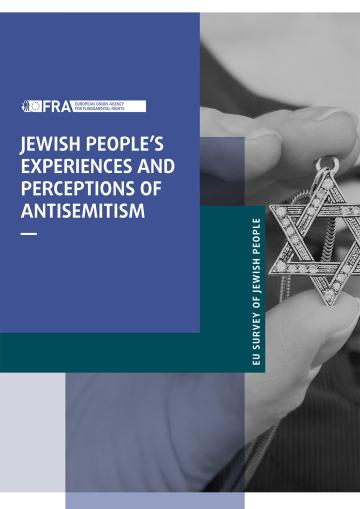
    This report looks at antisemitism in the EU, focusing on what can be done to address gaps in recording and inconsistencies in data collection. It highlights existing tools and guidance for Member States to improve their recording systems. The analysis is based on official administrative data and information from publicly available sources across EU Member States, as well as Albania, North Macedonia, and Serbia. Detailed country overviews are available for all countries covered. Antisemitism has been monitored by FRA since 2004. This report builds on the 2024 publication, ‘Jewish People’s Experiences and Perceptions of Antisemitism’.
  • Report / Paper / Summary
    27
    November
    2025
    This report looks at the breadth and depth of violence and neglect faced by people with disabilities living in institutions. It highlights the shortcomings by EU Member States in preventing violence and protecting those who are at a higher risk of experiencing it, in line with the UN Convention on the Rights of Persons with Disabilities. Based on research across all EU Member States and FRA observer candidate countries, the report calls for better protection, stronger prevention of violence, and clear accountability. It urges the EU and its Member States to implement their obligations around equality and fundamental rights.
  • Data explorer
    FRA’s 2024 survey on Roma and Travellers in Albania, Bulgaria, Czechia, France, Greece, Hungary, Ireland, Italy, North Macedonia, Portugal, Romania, Serbia and Spain collected information from 10,126 respondents living in private households who self-identify as Roma or Traveller, are 16 or older and have lived in the survey countries for at least the 12 months before the survey.
  • Report / Paper / Summary
    25
    October
    2024
    Racism towards Muslims is increasing in countries across the EU. Muslims face racial discrimination and racist harassment because of their religion, skin colour or ethnic background. This report shows a sharp rise since the last survey in 2016.
    Publications and data
    FRA’s 2021 survey on Roma in Croatia, Czechia, Greece, Hungary, Italy, North Macedonia, Portugal, Romania, Serbia and Spain collected information from 8,461 respondents living in private households who self-identify as Roma, are 16 or older and have lived in the survey countries for at least the 12 months before the survey.
    20
    March
    2023
    This guide helps independent national monitoring frameworks to fulfil their monitoring responsibility set out in Article 33 of the Convention on the Rights of Persons with Disabilities (CRPD). It focuses on the use of indicators. It does not deal with aspects such as compliance with the Paris Principles or the efficiency of complaints mechanisms. Its objective is to support national monitoring frameworks in designing or improving indicators for assessing progress of CRPD implementation at national level.
    27
    February
    2023
    FRA’s 2021 survey on Roma was conducted in Croatia, Czechia, Greece, Hungary, Italy, Portugal, Romania, and Spain, as well as in North Macedonia and Serbia. It includes interviews with more than 8,400 Roma, collecting information on more than 20,000 individuals living in their households. This technical report provides a detailed overview of the survey methodology used by FRA when collecting the survey data.
    8
    December
    2022
    Artificial intelligence is everywhere and affects everyone – from deciding what content people see on their social media feeds to determining who will receive state benefits. AI technologies are typically based on algorithms that make predictions to support or even fully automate decision-making.
    11
    November
    2022
    Europe stands at a delicate moment in its history. It is a moment of existential significance for the wellbeing and sustainability of our societies. It is emerging from the pandemic caused by the coronavirus disease, only to face a set of major overlapping challenges. These pose profound questions about the political, economic and societal future of the continent. To discuss elements of a human rights vision for the future and to identify opportunities for action, FRA brought together a group of sixty human rights leaders and experts with diverse backgrounds
    from across the continent. This report distils the meeting discussions, including analysis and ideas, and concludes with proposals for action. It does not represent the views either of individual participants or of FRA.
    3
    November
    2022
    Antisemitic incidents and hate crimes violate fundamental rights, especially the right to human dignity, the right to equality of treatment and the freedom of thought, conscience and religion. This report provides an overview of available data on antisemitism as recorded by official and unofficial sources in the EU Member States and in Albania, North Macedonia and Serbia. The data provided by the countries are supplemented with information from international organisations.
    25
    October
    2022
    02 November 2022
    This report presents findings from FRA’s 2021 survey on Roma in Croatia, Czechia, Greece, Hungary, Italy, Portugal, Romania and Spain, as well as in North Macedonia and Serbia. The survey includes interviews with more than 8,400 Roma, collecting information on more than 20,000 individuals living in their households. By focusing on Roma, the survey provides unique data and information that are not available from European general population surveys, which do not disaggregate on grounds of ethnic origin. The findings present a bleak but familiar picture of exclusion, deprivation, discrimination and racism.
    Young? Passionate about human rights? Having the right data can make a world of difference for your campaigning.
    16
    September
    2022
    Europe stands at a delicate moment in its history, facing a convergence of major tests. Each of them taken on their own is significant. Together, they pose profound questions about the political, economic, and societal future of the continent. This is a moment for strong commitment to put human rights at the heart of our vision for Europe’s future. It is also time to demonstrate our determination to work together to this end. Against this backdrop, the EU Agency for Fundamental Rights (FRA) brought together around sixty human rights leaders and experts from across the continent to discuss elements of a human rights vision for the future and to identify opportunities for action. A full conference report will be available soon, including the specific ideas and proposals which arose from the meeting. Meanwhile, this is a summary of the conclusions.
    On 7 May 2022, the EU Agency for Fundamental Rights (FRA) organised the fourth Fundamental Rights Dialogue – a live debate that gives young people an opportunity to voice their fundamental rights concerns and to discuss ways to solve them.
    In this vlog, FRA Director Michael O'Flaherty, points to the need to recommit to human rights, as evidenced by the wide-ranging impact of the Covid-19 pandemic. Here he refers to vaccine inequalities and the impact on marginalised communities, disadvantaged children and frontline workers. As he explains in this vlog, human rights can help fix and strengthen society so we are ready for the next pandemic.
    8
    June
    2022
    FRA’s Fundamental Rights Report 2022 reviews major developments in the field in 2021, identifying both achievements and areas of concern. It also presents FRA’s opinions on these developments, including a synopsis of the evidence supporting these opinions.
    8
    June
    2022
    This focus looks at the impact of the pandemic on social rights. It examines the measures in national recovery and resilience plans that address the social vulnerabilities among a variety of population groups in the EU, including women, children and young people in situations of vulnerability, people with disabilities, older people, Roma and people in precarious working conditions.
    8
    June
    2022
    All language versions now available
    14 September 2022
    The year 2021 brought both progress and setbacks in terms of fundamental rights protection. FRA’s Fundamental Rights Report 2022 reviews major developments in the field, identifying both achievements and remaining areas of concern. This publication presents FRA’s opinions on the main developments in the thematic areas covered, and a synopsis of the evidence supporting these opinions.
    In this vlog, FRA Director Michael O'Flaherty talks about the importance of celebrating diversity in our societies. He calls on everyone to build bridges and listen to each other, so we can create a society where everyone is equal in dignity and in rights.
    The Fundamental Rights Survey is the first survey to collect comprehensive and comparable data on people’s experiences and views of their rights in the EU-27. The survey included questions related to rights in a number of different areas, including crime victimisation and safety, data protection and privacy, functioning of the democracy, views on human rights and experiences with public services.
    7
    April
    2022
    ES, NL and PL version now available
    17 June 2025
    Children are full-fledged holders of rights. They are beneficiaries of all human and fundamental rights and subjects of special regulations, given their specific characteristics. This handbook aims to illustrate how European law and case law accommodate the specific interests and needs of children. It also considers the importance of parents and guardians or other legal representatives and makes reference, where appropriate, to situations in which rights and responsibilities are most prominently vested in children’s carers. It is a point of reference on both European Union (EU) and Council of Europe (CoE) law related to these subjects, explaining how each issue is regulated under EU law, including the Charter of Fundamental Rights of the European Union, as well as under the European Convention on Human Rights, the European Social Charter and other CoE instruments.
    In this vlog, FRA Director Michael O'Flaherty highlights the need to work together to tackle hate and discrimination in our societies.
    FRA’s 2019 survey on Roma and Travellers in Belgium, France, Ireland, the Netherlands, Sweden and the United Kingdom interviewed almost 4 700 Roma and Travellers, collecting information on more than 8 200 individuals living in their households.
    If we are serious about protecting fundamental rights, we need to start listening to young people and what they have to tell us. This message came through very strongly at the Fundamental Rights Forum 2021. As we kick off the European Year of Youth 2022, let’s look at why listening to young people is key to protecting their rights.
    Black people in the EU face unacceptable difficulties in simply finding somewhere to live because of their skin colour.
    The EU Agency for Fundamental Rights (FRA) launches its second EU Minorities and Discrimination Survey (EU-MIDIS II).
    This infographic illustrates the main experiences immigrants and ethnic minorities across the EU have when it comes to discrimination. It draws from the findings from FRA's EU-MIDIS II survey.
    This infographic illustrates the main experiences immigrants and ethnic minorities across the EU have when it comes to victimisation. It draws from the findings from FRA's EU-MIDIS II survey.
    This infographic illustrates the main experiences immigrants and ethnic minorities across the EU have when it comes to inclusion. It draws from the findings from FRA's EU-MIDIS II survey.
    The Agency, in close cooperation with the Maltese Presidency of the EU Council, held a high-level symposium where the fundamental rights issues that are currently high on the EU’s political agenda were discussed.
    Miltos Pavlou, Senior Programme Manager at the EU Agency for Fundamental Rights, talks about the participation of migrants and their descendants in the EU.
    The Agency’s Director, Michael O’Flaherty, took part in a meeting of the European Parliament’s Committee on Civil Liberties, Justice and Home Affairs (LIBE) on 9 February.
    This video message was produced for a holocaust education training for public officials.
    Children should always be supported by a professional support person when they are involved in judicial proceedings, such as being at court. This could be, for example, a social worker or a legal counsellor.
    Children should always be supported by a professional support person when they are involved in judicial proceedings, such as being at court. This could be, for example, a social worker or a legal counsellor.
    During judicial proceedings, such as being at court, children should always be told what is going on. The information should be presented in a child-friendly and understandable way.
    Children need to be heard and be involved in all issues that concern them. This includes the justice system.
    This video was shown in the beginning of the high-level conference “Tackling sexual orientation and gender identity discrimination: next steps in EU and Member State policy making”.
    FRA joined an online consultation for the new Action Plan for the European Pillar of Social Rights. Seven EU agencies provided input to a review of the first Action Plan, its achievements and gaps in implementation, as well as proposals for future actions and possible contributions by the Agencies.
    On 14 June, the EU Agency for Fundamental Rights (FRA) will march alongside the Diplomats for Equality and the EU institutions in Vienna to celebrate love, equality and inclusion at the Vienna Pride Parade. This year’s march will also pause to honour the victims of the recent tragic school shooting in Graz, standing in solidarity with the affected communities.
    On 11 June, FRA hosted an online information session for public authorities. It presented key findings from its report ‘Towards Integrated Child Protection Systems - Challenges, promising practices and ways forward’.
    Threats to democracy, stark levels of violence against women and rights abuses at the EU’s borders - these are some of the key challenges detailed in FRA’s Fundamental Rights Report 2025. The report provides telling evidence of fundamental rights under threat across Europe. This must act as a wake-up call for Member States and EU Institutions to prevent the erosion of rights and stop democratic backsliding.
    FRA has submitted a contribution to the call for evidence of the European Commission for the European affordable housing plan. President von der Leyen announced in the Political Guidelines 2024-2029 that the new European Commission will put forward the first-ever European Affordable Housing Plan.
    On 8 May in Rome, FRA attended a conference analysing the methodology used in European countries to collect data on the presence of Roma communities.
    FRA spoke about remembrance and democracy in a changing Europe during the first international event of the FREI – From Resistance to European Integration project.
    FRA and the European Institute for Gender Equality discussed the prevalence of workplace sexual harassment during an online Eurochambres workshop on 23 May. It was an opportunity to present the Eurostat, FRA, EIGE survey on gender-based violence to the business community.
    At the German Antidiscrimination Days 2025 from 13 to 14 May, FRA contributed to a panel on anti-Muslim racism, addressing its manifestations in education, employment and housing, as well as the experiences of queer Muslims.
    We – The Austrian Federal Ministry for European and International Affairs and the diplomatic missions of the European Union to the International Organisations in Vienna, Andorra, Australia, Belgium, Canada, Chile, Colombia, Cyprus, Czechia, Denmark, Estonia, Finland, France, Germany, Greece, Iceland, Ireland, Latvia, Lithuania, Luxembourg, Malta, Mexico, Montenegro, the Netherlands, Norway, Poland, Portugal, San Marino, Slovenia, Spain, Sweden, Switzerland, Ukraine, the United Kingdom and Uruguay, as well as the European Union Agency for Fundamental Rights (FRA), the European Investment Bank, UN-Globe and the Diplomatische Akademie Wien – Vienna School of International Studies – all welcome 17 May as the International Day Against Homophobia, Biphobia and Transphobia (IDAHOBIT), as a celebration of sexual and gender diversity and inclusion around the world.
    On 9 and 10 April, FRA took part in the LGBTIQ Equality Strategy joint consultation and a meeting of the LGBTIQ Equality Subgroup in Brussels.
    FRA met members of the European Network of National Human Rights Institutions (ENNHRI) Working Group on the UN’s Convention of the Rights of People with Disabilities (CRPD).
    FRA attended a meeting of Eurostat’s equality and non-discrimination statistics task force on 19 and 20 March in Luxembourg.
    FRA took part in a consultation on Luxembourg’s LGBTIQ Equality Action Plan and related policies.
    On 27 March, FRA took part in a meeting of the EU Disability Platform in Brussels. FRA presented the history, composition, tasks, operation and the work programme 2025-2026 of the EU Monitoring Framework of the UN’s Disability Convention.
    FRA took part in the second review of the EU’s implementation of the Convention on the Rights of Persons with Disabilities (CPRD) to which the EU is a Party. FRA participated as a member of the EU level monitoring framework and supported the CRPD Committee with data and research on people with disabilities.
    FRA took part in a coordination meeting on combatting anti-Muslim hatred and racism, organised jointly by the European Commission and the Council of Europe. The event aimed at further facilitating dialogue among institutional stakeholders dedicated to combatting anti-Muslim hatred and racism.
    Child protection in the EU has improved over the years, but significant gaps remain, finds a report from the EU Agency for Fundamental Rights (FRA). Fragmented laws and policies, split responsibilities and limited resources are impediments to fully integrated child protection systems that safeguard children's rights.
    As human rights and democracy come under increasing pressure worldwide, the discussions at the latest Fundamental Rights Forum remain as relevant as ever. On 11-12 March 2024, the Forum gathered diverse voices to tackle some of the most pressing human rights challenges of our time. The Forum’s videos on FRA’s YouTube channel offer insights into issues, such as democratic resilience, freedom of expression, and challenges to the rule of law - all critical in today's shifting political landscape.
    The European Green Deal is the EU’s principal strategy to tackle climate change: a green transition that strives to leave no one behind. A new paper from the EU Agency for Fundamental Rights (FRA) reveals a fragmented approach to addressing the impact of climate change on fundamental rights. The paper argues that a systematic application of fundamental rights standards and obligations in EU climate policy could more effectively advance a just and inclusive transition.
    On 30 April, FRA will contribute to a CEPOL webinar on fighting antisemitism online and offline. The webinar aims at improving law enforcement actions against violence and discrimination against Jews.
    On 29 April, FRA will host a webinar for interested organisations within the Agency’s Fundamental Rights Platform. The webinar will explore the vital role civil society organisations play in driving more integrated child protection systems.
    -
    FRA will join a consultation that will prepare for the LGBTIQ Equality Strategy post-2025. This will include a discussion on the new mandate of the LGBTIQ Equality Subgroup and on the role of Member States in implementing the strategy through national action plans and relations with the European Commission.
    On 3 April, FRA will speak during the mid-term review conference of the Council of Europe’s child rights strategy (2022-2027). The event in Strasbourg looks towards a child justice system which guarantees the respect and the effective implementation of children’s rights.
    FRA will contribute to the Luxembourg National Dialogue and consultation about the forthcoming action plan to promote LGBTIQ Equality.
    On 26 March, FRA will host an online stakeholders’ consultation on the Roma Survey 2024. There will be breakout discussions in national languages.
    -
    FRA will join the annual meeting of the Infra4NextGen Consortium Meeting as member of its stakeholder board.
    FRA will join the regular meeting of the National Roma Contact Points. The European Commission-organised meeting takes place in Brussels on 20 March.
    -
    FRA will take part in a CRPD Committee review meeting from 10 to 12 March in Geneva of the UN Convention on the Rights of Persons with Disabilities (CRPD). FRA is a member of the EU’s CRPD Monitoring Framework.
    FRA and EIGE will give a presentation on the EU Gender-Based Violence survey results to the Luxembourg Ministry of Gender Equality and Diversity. The coordination committee that deals with measures to combat violence against women and domestic violence will also attend.
    Members of the Roma survey Technical Working Group for Ukraine, Moldova, Georgia as well as survey implementing agencies will meet online on 5 March. . The members are the UN Development Programme, the World Bank and FRA.
    Eurostat, FRA and EIGE will deliver a joint presentation to the Council of Europe on the results of the EU Gender-Based Violence survey.
    FRA’s Director will address the OSCE's annual conference on addressing antisemitism. The OSCE Chairpersonship of Finland in consultation with OSCE Office for Democratic Institutions and Human Rights (ODIHR) organised the event.
    -
    During the week of 27 January, FRA’s Director will have various speaking engagements and participate in several events during her visit to Poland.
    FRA’s Director will give introductory remarks at the international conference on ‘Denial, distortion and disinformation: the truth about the Holocaust 80 years after the liberation of Auschwitz’.
    FRA’s Director, Sirpa Rautio, will attend the 80th commemoration of the liberation of Auschwitz-Birkenau German Nazi concentration and extermination camp.
    -
    FRA will deliver a keynote speech at the opening of the International SYNERGY Network conference. FRA will present the results from the EU gender-based violence survey.
    On 3 December, the Secretariat of Governing Bodies to the UN Commission on Crime Prevention and Criminal Justice (CCPCJ) will host a virtual event to discuss how to fully implement Sustainable Development Goal 16 for people with disabilities.
    -
    FRA will take part in a meeting of the EU Network for Children’s Rights. FRA will present insights and outputs from its integrated child protection systems project.
    -
    The workshop co-organised by the European Commission and FRA brought together civil society organisations to discuss the findings of the FRA report 'Being Muslim in the EU' and the challenges they face in combating this form of racism.