Equality

Equality, non-discrimination and racism

Equality is a core value of the EU. You have the right to fair treatment regardless of who you are, what you believe, or how you chose to live.

We carry out research and share expertise to help fight discrimination, inequality and racism in all its forms.

Highlights

  • Report / Paper / Summary
    3
    March
    2026
    Violence against women remains widespread in the European Union (EU). This joint report by the EU Agency for Fundamental Rights (FRA) and the European Institute for Gender Equality (EIGE) presents detailed findings from the EU gender-based violence survey. It offers in-depth analysis of the scale, nature and drivers of violence and exposes the structural gender inequality. Building on the 2024 publication, EU gender-based violence survey - Key results, and following up on FRA’s 2014 report, Violence against women: an EU-wide survey, this report tracks trends over the last decade across the EU. Eurostat, FRA, and EIGE jointly conducted the survey. It is based on over 100,000 interviews covering all 27 EU Member States.
  • Report / Paper / Summary
    27
    January
    2026
    This report looks at antisemitism in the EU, focusing on what can be done to address gaps in recording and inconsistencies in data collection. It highlights existing tools and guidance for Member States to improve their recording systems. The analysis is based on official administrative data and information from publicly available sources across EU Member States, as well as Albania, North Macedonia, and Serbia. Detailed country overviews are available for all countries covered. Antisemitism has been monitored by FRA since 2004. This report builds on the 2024 publication, ‘Jewish People’s Experiences and Perceptions of Antisemitism’.
  • Report / Paper / Summary
    27
    November
    2025
    This report looks at the breadth and depth of violence and neglect faced by people with disabilities living in institutions. It highlights the shortcomings by EU Member States in preventing violence and protecting those who are at a higher risk of experiencing it, in line with the UN Convention on the Rights of Persons with Disabilities. Based on research across all EU Member States and FRA observer candidate countries, the report calls for better protection, stronger prevention of violence, and clear accountability. It urges the EU and its Member States to implement their obligations around equality and fundamental rights.
  • Data explorer
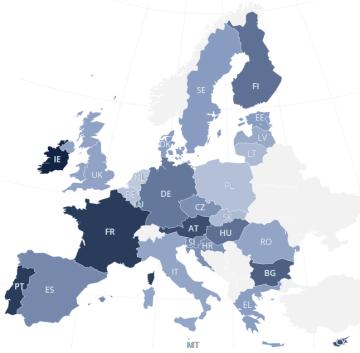
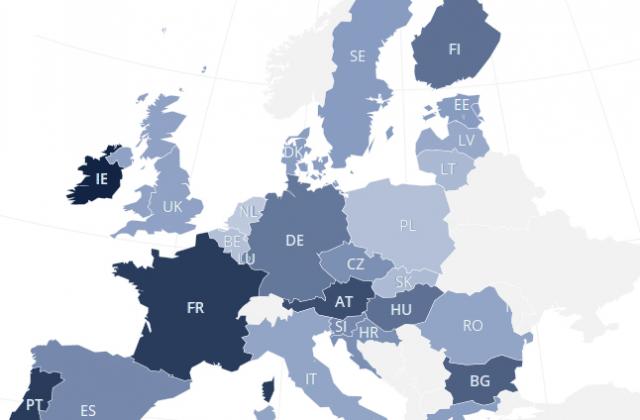
    FRA’s 2024 survey on Roma and Travellers in Albania, Bulgaria, Czechia, France, Greece, Hungary, Ireland, Italy, North Macedonia, Portugal, Romania, Serbia and Spain collected information from 10,126 respondents living in private households who self-identify as Roma or Traveller, are 16 or older and have lived in the survey countries for at least the 12 months before the survey.

    Publications and data
    21
    June
    2018
    Across the European Union, people face hatred because of their skin colour, ethnicity, religion, gender or sexuality. In response, the EU and its Member States have introduced laws against hate crime and support services for victims. But these will only fulfil their potential if victims report hate-motivated harassment and violence to the police, and if police officers record such incidents as hate crimes. This report provides rich and detailed information on hate crime recording and data collection systems across the EU, including any systemic cooperation with civil society.
    6
    June
    2018
    Finnish version now available
    27 January 2020
    European societies are not getting any younger! It is a simple truth we must face both about ourselves and Europe as a whole. In two generations, by 2080, those aged 65 or above will account for almost 30% of the European Union’s population.
    6
    June
    2018
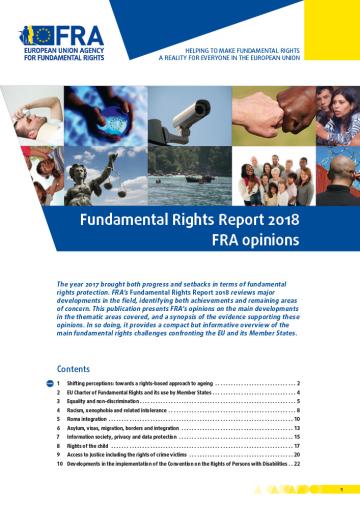
    The year 2017 brought both progress and setbacks in terms of fundamental rights protection. FRA’s Fundamental Rights Report 2018 reviews major developments in the field, identifying both achievements and remaining areas of concern.
    30
    May
    2018
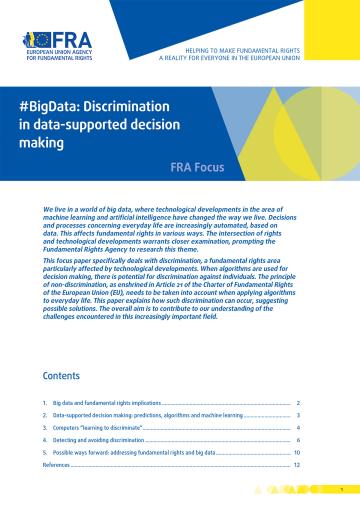
    We live in a world of big data, where technological developments in the area of machine learning and artificial intelligence have changed the way we live. Decisions and processes concerning everyday life are increasingly automated, based on data. This affects fundamental rights in various ways. This focus paper specifically deals with discrimination, a fundamental rights area particularly affected by technological developments.
    17
    May
    2018
    Civil society organisations in the European Union play a crucial role in promoting fundamental
    rights, but it has become harder for them do so – due to both legal and practical restrictions.
    This summary outlines the main
    findings and FRA’s opinions on the different
    types and patterns of challenges faced by civil society
    organisations across the EU,
    25
    April
    2018
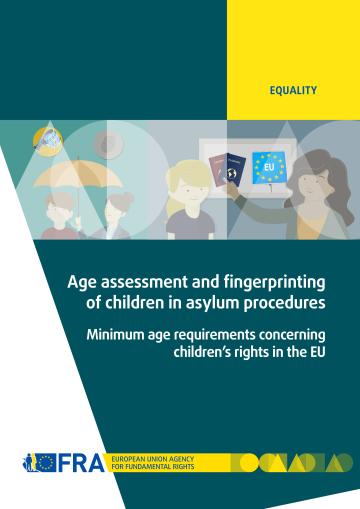
    The methods used to determine the age of
    an applicant may include “invasive” medical tests which interfere with the rights of the child, including their right to dignity,
    integrity and privacy. It is often a challenge to find the right balance between protecting children from harm and promoting
    their participation in these procedures. This report provides important insights and identifies the implications of collecting
    children’s biometric data and conducting age assessments.
    25
    April
    2018
    The right to access justice and all other relevant procedural rights are not just rights in themselves; they also protect against violations of every other right. Respect for children’s rights in the area of justice is therefore essential. International treaties, the Charter of Fundamental Rights of the European Union, European Union (EU) secondary law, and national legislation provide a number of relevant rights.
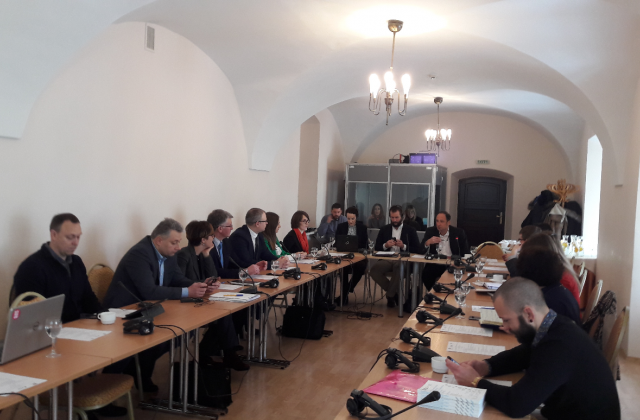
    The EU's Agency for Fundamental Rights (FRA) and the OSCE Office for Democratic Institutions and Human Rights (ODIHR) work together to help states improve their ability to record and collect hate crime data through national workshops.
    6
    April
    2018
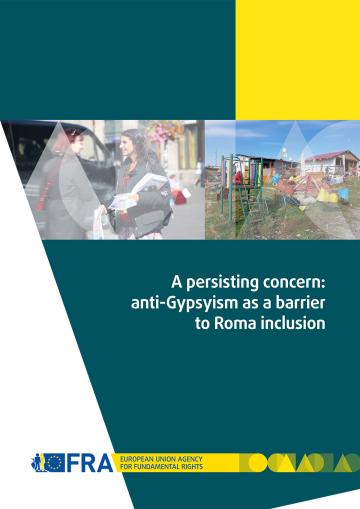
    Despite ambitious initiatives, the fundamental rights situation of Roma in the EU remains profoundly troubling. This report examines the persisting phenomenon of anti-Gypsyism and its effect on Roma inclusion efforts. It first presents data on key manifestations of anti-Gypsyism, namely discrimination, harassment and hate crime.
    21
    March
    2018
    New language versions: Estonian, Maltese, Danish, Latvian
    23 March 2022
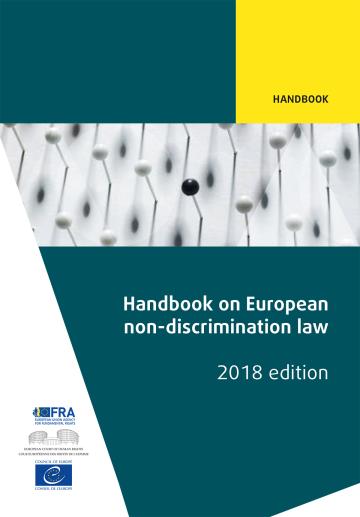
    European non-discrimination law, as constituted in particular by the EU non-discrimination directives, and Article 14 of and Protocol 12 to the European Convention on Human Rights, prohibits discrimination across a range of contexts and grounds. This handbook examines European non-discrimination law stemming from these two sources as complementary systems, drawing on them interchangeably to the extent that they overlap, while highlighting differences where these exist.
    16
    January
    2018
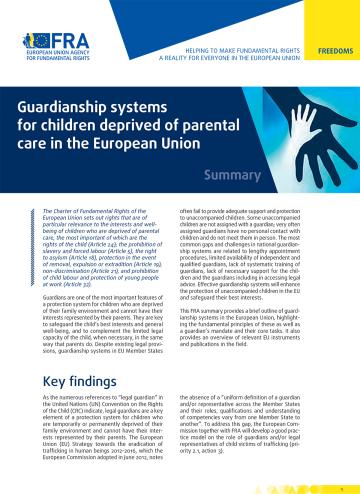
    Guardians are a key element of a protection system for children who are temporarily or
    permanently deprived of their family environment and cannot have their interests represented
    by their parents. Great disparities exist between the types of guardianship provided
    to children in and within European Union (EU) Member States. This report explores the key
    features of guardianship systems put in place to cater for the needs of all children in need
    of protection, including child victims and those at risk of becoming victims of trafficking in
    human beings or of other forms of exploitation.
    3
    January
    2018
    Inside this book you will read about the justice system and the problems in justice for children and how to fix the problems.
    15
    December
    2017
    This meeting report distils the discussions held during a high-level expert meeting organised by FRA, which explored the shared space between religion and human rights.
    6
    December
    2017
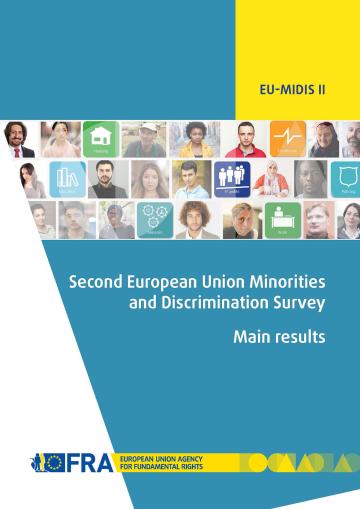
    Seventeen years after adoption of EU laws that forbid discrimination, immigrants, descendants of immigrants, and minority ethnic groups continue to face widespread discrimination across the EU and in all areas of life – most often when seeking employment. For many, discrimination is a recurring experience. This is just one of the findings of FRA’s second European Union Minorities and Discrimination Survey (EU-MIDIS II), which collected information from over 25,500 respondents with different ethnic minority and immigrant backgrounds across all 28 EU Member States.
    The EU Agency for Fundamental Rights (FRA) launches its second EU Minorities and Discrimination Survey (EU-MIDIS II).
    This survey involved interviews with 25,515 people with different ethnic minority and immigrant backgrounds across 28 EU countries. It explores issues concerning discrimination as well as experiences of harassment, hate-motivated violence and discriminatory profiling.
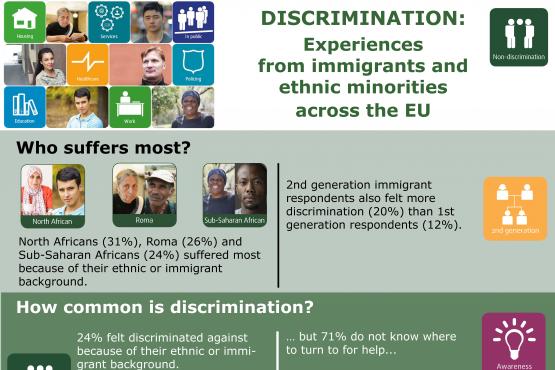
    This infographic illustrates the main experiences immigrants and ethnic minorities across the EU have when it comes to discrimination. It draws from the findings from FRA's EU-MIDIS II survey.
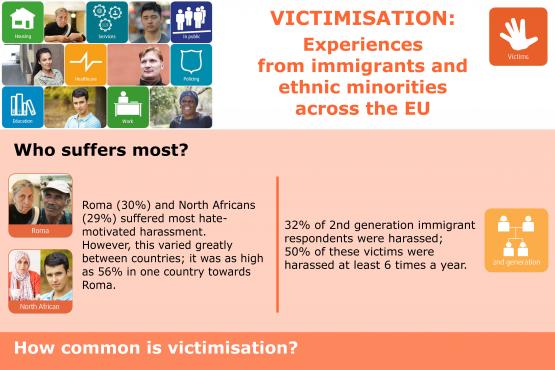
    This infographic illustrates the main experiences immigrants and ethnic minorities across the EU have when it comes to victimisation. It draws from the findings from FRA's EU-MIDIS II survey.
    This infographic illustrates the main experiences immigrants and ethnic minorities across the EU have when it comes to inclusion. It draws from the findings from FRA's EU-MIDIS II survey.
    13
    November
    2017
    Women and girls in the European Union (EU) experience persistent gender discrimination and gender-based violence, as evidence collected by FRA confirms. This severely limits the ability of women and girls to enjoy their rights and to participate on an equal footing in society. This FRA contribution to the third Annual Colloquium on Fundamental Rights ‘Women's rights in turbulent times’ looks at core human rights commitments. It balances these against selected evidence on gender discrimination, sexist hate speech and gender-based violence against women and girls in the EU.
    FRA joined the conference on safeguarding older people’s legal and human rights through active citizenship and inter-generational approach on 24 April in Vienna.
    FRA received a visit from Claudia Mahler, the UN Independent Expert on the enjoyment of all human rights by older people.
    On 12 April, the FRA Director delivered a speech setting the scene for a high-level event on LGBTIQ Equality.
    The online data explorer for the FRA Roma Survey 2021 in 10 European countries is now available.
    FRA spoke during a debate on the Spanish Ministry of Equality’s proposal to add information on racial or ethnic origin in a nationwide survey.
    A new EU Agency for Fundamental Rights (FRA) guide supports the collection of data on the rights of people with disabilities across the EU. It shows how to develop and improve indicators to assess the national implementation of the United Nation Convention on the Rights of Persons with Disabilities (CRPD). This is key to ensuring people with disabilities can fully enjoy their rights.
    On 15 March, FRA met representatives from three organisations dealing with Roma rights across Europe.
    FRA gave a presentation on promoting the collection and use of equality data based on racial or ethnic origin during a Eurostat conference.
    FRA addressed the Council of the EU’s Fundamental Rights, Citizens Rights and Free Movement of Persons Working Group (FREMP) on 23 February.
    The Swedish Presidency of the Council of the European Union hosted a high-level conference on the implementation of National Action Plans against Racism.
    On 8 February, FRA’s Director exchanged views with the Council of Europe’s GREVIO expert group on monitoring the implementation of the Istanbul Convention on preventing and combating violence against women and domestic violence.
    FRA will take part in a webinar that will provide an overview of the state of knowledge on equality and inclusion in the European Parliament elections.
    A major survey measuring hate crime and discrimination against Jews across Europe opened on 25 January, led by the European Union Agency for Fundamental Rights (FRA).
    FRA published 26 new promising practices on racial or ethnic equality data collection.
    FRA took part in the first meeting of the advisory board of the EU’s Child Participation Platform on 12 December.
    On 8 December, FRA presented key findings of its report on Guardianship for unaccompanied children at a roundtable in the European Parliament.
    On 7-8 December, FRA attended the high-level group on non-discrimination, equality and diversity.
    FRA joined the meeting of the antisemitism working group initiated by the EU coordinator on combating antisemitism and fostering Jewish life.
    On 1 December, FRA contributed to a technical meeting on surveys and equality data.
    On 30 November, FRA presented disability statistics from its Fundamental Rights Survey to the European Parliament Petition Committee’s annual seminar on the Convention on the Rights of Persons with Disabilities.
    On 29 March, FRA will take part in an online working meeting on age equality.
    On 22 March, FRA will give an overview of the EU's goals and measures in the fight against racism and discrimination. It will also present the Agency’s work.
    FRA will speak on a panel during the final conference of the Enhancing Stakeholder Awareness and Resources for Hate Crime Victim Support (EStAR) project.
    FRA will take part in the European Anti-Racism Summit on 21 March.
    On 10 March, FRA, in cooperation with the National Roma Contact Points will present preliminary results from its FRA’s Roma survey 2020.
    On 7 March, FRA’s Director will take part in a virtual round table discussion on mobilising law enforcement services against domestic violence.
    FRA’s Director will take part in a French EU Presidency conference on improving accessibility and access to rights, implementing the 2021-2030 EU Strategy.
    On 25 February, FRA will speak at the Zero Project International Conference 2022.
    -
    On 23-24 February, FRA will contribute at the Council of Europe seminar on “The role of Equality Bodies and National Human Rights Institutions in advancing Roma women’s access to justice”.
    FRA will take part in the third meeting of the European Commission’s Working Group on Equality and Values in Education and Training.
    -
    FRA will take part in a WHO expert meeting on psychological intimate partner violence.
    On 1 February, European experts from the European Commission, academia and civil society organisations meet to discuss ways of improving criminal proceedings for children who are in conflict with the law.
    The French Presidency of the EU invited FRA to the informal meeting of Justice Ministers in Lillle.
    On 20 January, FRA will take part in the second meeting of the Working Group on Equality and Values in Education and Training.
    FRA will join virtually the plenary meeting of the Spanish Council for the Elimination of Racial or Ethnic Discrimination on 17 December.
    FRA’s Director will address the General Affairs Council on 14 December. He will present the overview of antisemitic incidents recorded in the European Union 2010-2020.
    FRA will join virtually the plenary meeting of the Spanish Council for the Elimination of Racial or Ethnic Discrimination on 17 December. There will be a debate introducing a question on ethnic origin in statistics, surveys and studies.
    FRA’s Director will address the General Affairs Council on 14 December. He will present the overview of antisemitic incidents recorded in the European Union 2010-2020.
    -
    This year, FRA renews its cooperation with this human world 2021, an international human rights film festival.
    On 29 November, FRA will take part in the first meeting of the European Commission’s Working Group on Equality and Values in Education and Training.