Equality

Equality, non-discrimination and racism

Equality is a core value of the EU. You have the right to fair treatment regardless of who you are, what you believe, or how you chose to live.

We carry out research and share expertise to help fight discrimination, inequality and racism in all its forms.

Highlights
  • Report / Paper / Summary
    3
    March
    2026
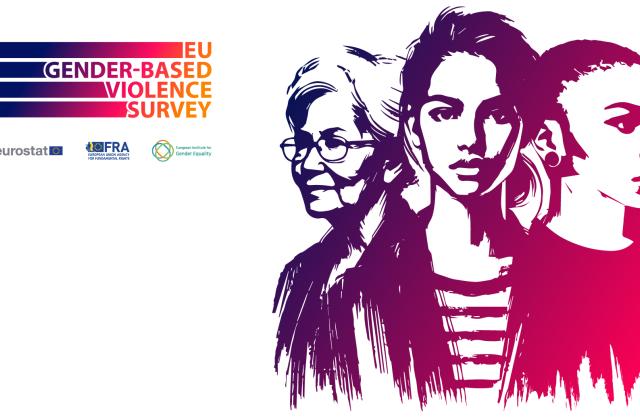
    Violence against women remains widespread in the European Union (EU). This joint report by the EU Agency for Fundamental Rights (FRA) and the European Institute for Gender Equality (EIGE) presents detailed findings from the EU gender-based violence survey. It offers in-depth analysis of the scale, nature and drivers of violence and exposes the structural gender inequality. Building on the 2024 publication, EU gender-based violence survey - Key results, and following up on FRA’s 2014 report, Violence against women: an EU-wide survey, this report tracks trends over the last decade across the EU. Eurostat, FRA, and EIGE jointly conducted the survey. It is based on over 100,000 interviews covering all 27 EU Member States.
  • Report / Paper / Summary
    27
    January
    2026
    This report looks at antisemitism in the EU, focusing on what can be done to address gaps in recording and inconsistencies in data collection. It highlights existing tools and guidance for Member States to improve their recording systems. The analysis is based on official administrative data and information from publicly available sources across EU Member States, as well as Albania, North Macedonia, and Serbia. Detailed country overviews are available for all countries covered. Antisemitism has been monitored by FRA since 2004. This report builds on the 2024 publication, ‘Jewish People’s Experiences and Perceptions of Antisemitism’.
  • Data explorer
    FRA’s 2024 survey on Roma and Travellers in Albania, Bulgaria, Czechia, France, Greece, Hungary, Ireland, Italy, North Macedonia, Portugal, Romania, Serbia and Spain collected information from 10,126 respondents living in private households who self-identify as Roma or Traveller, are 16 or older and have lived in the survey countries for at least the 12 months before the survey.
    Publications and data
    20
    November
    2017
    International treaties, the Charter of Fundamental Rights of the European Union, European Union (EU) secondary law and national legislation provide a number of rights to citizens. The maps and tables presented show the various patterns concerning age requirements for children to acquire rights in the EU. They also identify inconsistencies, protection gaps and restrictions deriving from different age thresholds. The reference period was until April 2016. Any legislative developments since then have been included whenever relevant or if known.
    9
    November
    2017
    This report provides an overview of data on antisemitism as recorded by
    international organisations and by official and unofficial sources in the 28 European
    Union (EU) Member States, based on their own definitions and categorisations.
    21
    September
    2017
    Muslims living in the EU face discrimination in a broad range of settings – and particularly when looking for work, on the job, and when trying to access public or private services. The report examines how characteristics – such as an individual's first and last name, skin colour and the wearing of visible religious symbols like a headscarf, for example – may trigger discriminatory treatment and harassment.
    The Agency, in close cooperation with the Maltese Presidency of the EU Council, held a high-level symposium where the fundamental rights issues that are currently high on the EU’s political agenda were discussed.
    22
    June
    2017
    Up to one third of migrants arriving in the European Union since the summer of 2015 have been children. The current emphasis on speedier asylum processing and making returns more effective may trigger increased use of immigration detention, possibly also affecting children. The detention of children implicates various fundamental rights and will only be in line with EU law if limited to exceptional cases. This report aims to support practitioners in implementing relevant polices in line with applicable law by outlining available safeguards against unlawful and arbitrary detention and highlighting promising practices.
    19
    May
    2017
    This report assesses asylum seekers’ and refugees’ opportunities to access early
    childhood education and primary, secondary and tertiary education and training.
    It identifies measures available for their support, as well as possible areas for
    improvement.
    24
    March
    2017
    This report reviews how asylum claims based on sexual
    orientation and gender identity are assessed and analyses the existence of
    specific reception measures for LGBTI persons.
    Miltos Pavlou, Senior Programme Manager at the EU Agency for Fundamental Rights, talks about the participation of migrants and their descendants in the EU.
    22
    February
    2017
    Around 2.5 million children participate in judicial proceedings across the European Union (EU) every year, affected by parental divorce or as victims of, or witnesses to, crime. Although their effective participation in such proceedings is vital for improving the operation of justice, the treatment of children in justice systems remains a concern. FRA investigated to what extent children’s rights to be heard, to be informed, to be protected, and to non-discrimination are fulfilled in practice.
    The Agency’s Director, Michael O’Flaherty, took part in a meeting of the European Parliament’s Committee on Civil Liberties, Justice and Home Affairs (LIBE) on 9 February.
    20
    December
    2016
    This focus section outlines the specific protection needs of separated children, and highlights current responses and promising practices among EU Member States.
    13
    December
    2016
    Antisemitism can be expressed in the form of verbal and physical attacks, threats,
    harassment, property damage and graffiti or other forms of text, including on the
    internet. The present report relates to manifestations of antisemitism as they are
    recorded by international organisations, and by official and unofficial sources in the
    28 EU Member States.
    8
    December
    2016
    This opinion analyses the effects on children of the proposed recast Dublin Regulation. It covers child-specific rules as well as provisions relating to all asylum applicants that significantly affect children.
    29
    November
    2016
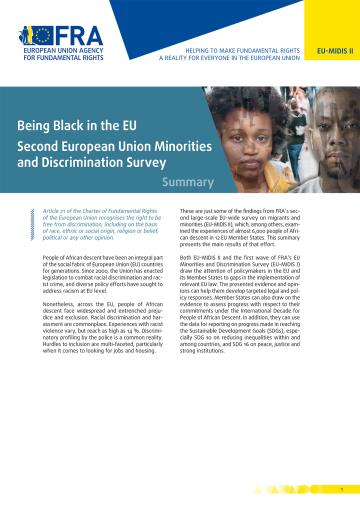
    Some 80% of Roma surveyed live below their country’s at-risk-of-poverty threshold; every third Roma lives in housing without tap water; every third Roma child lives in a household where someone went to bed hungry at least once in the previous month; and 50% of Roma between the ages of six and 24 do not attend school. This EU-MIDIS II report underscores an unsettling but unavoidable reality: the European Union’s largest ethnic minority continues to face intolerable discrimination and unequal access to vital services.
    This video message was produced for a holocaust education training for public officials.
    17
    November
    2016
    Media content and political discourse in EU Member States, whether online or
    offline, show incitement to discrimination, hatred or violence on different
    grounds, as evidence collected by FRA reveals. The growing reliance on the internet as the main source of
    information for many enables the fast spread of often unverified statements
    that could also incite to hatred.
    The United Nations Convention on the Rights of Persons with Disabilities (CRPD) is the first binding international human rights instrument to specifically address disability. Its aim is to "promote, protect and ensure the full and equal enjoyment of all human rights and fundamental freedoms by all persons with disabilities, and to promote respect for their inherent dignity".
    30
    May
    2016
    The European Union (EU) and its Member States introduced and pursued numerous initiatives to safeguard and strengthen
    fundamental rights in 2015. Some of these efforts produced important progress; others fell short of their aims. Meanwhile,
    various global developments brought new – and exacerbated existing – challenges.
    30
    May
    2016
    The European Union (EU) and its Member States introduced and pursued
    numerous initiatives to safeguard and strengthen fundamental rights in 2015.
    FRA’s Fundamental Rights Report 2016 summarises and analyses major
    developments in the fundamental rights field, noting both progress made
    and persisting obstacles. This publication presents FRA’s opinions on the
    main developments in the thematic areas covered and a synopsis of the
    evidence supporting these opinions. In so doing, it provides a compact but
    informative overview of the main fundamental rights challenges confronting
    the EU and its Member States.
    20
    May
    2016
    This opinion addresses the designation and operation of a framework established under Article 33 (2) of the CRPD at EU level (EU Framework). It aims to clarify the requirements of an EU Framework in light of the monitoring practice and jurisprudence of the CRPD Committee and – with regard to the concept of independence –the Committee interpreting the Paris Principles on the establishment of National Human Rights Institutions (NHRIs).
    On 1 December, the Agency held a workshop on monitoring EU funds under the new Common Provisions Regulation.
    On 1 December, FRA presented the results of the Roma survey 2021 to the members of the Czech government council for Roma minority affairs.
    On 25 November, the European Commission’s child rights coordinator hosted an Interservice Group meeting to discuss the implementation of the EU Strategy on Child Rights (2021-2024).
    FRA took part in the online AGE Annual Conference 2022 on 18 November.
    On 17 November, FRA joined the first European Employment and Social Rights Forum.
    On 16 November, FRA joined the conference of German commissioners against antisemitism and for the promotion of Jewish life.
    FRA participated at the first Civil Society Forum on combating antisemitism and fostering Jewish life.
    FRA presented the results of its Roma survey 2021 to participants of the European Platform for Roma Inclusion. This is a regular event since 2009.
    FRA presented the main findings of its latest Roma survey at a hearing of the European Parliament's Committee on Civil Liberties, Justice and Home Affairs (LIBE).
    Disinformation and hate against Jews flourished on the internet throughout the Covid-19 pandemic and Russia’s invasion of Ukraine. Yet, recording of antisemitic incidents remains poor across Europe. Each country collects data differently and some do not collect data at all. This hampers efforts to effectively tackle antisemitism, shows the latest annual overview of antisemitic incidents from the EU Agency for Fundamental Rights (FRA).
    Roma across Europe continue to experience widespread deprivation. Six years on since the last survey from the European Union Agency for Fundamental Rights (FRA), Roma families still live in shocking conditions, and their educational and job prospects are poor. This new FRA report identifies improvements and gaps in Roma inclusion to guide national efforts for Roma equality, inclusion and participation.
    FRA presented the Swedish results of the Roma and Travellers survey in Stockholm on 14 October.
    FRA has extracted youth data from its extensive body of research to guide campaigns supporting the rights of young people.
    FRA presented its Being Black in the EU report findings at the Discriminations ethno-raciales au Luxembourg: perceptions de la population conference on 17 October in Luxembourg.
    FRA hosted a delegation from the Gender Alliance for Development Center (GADC) on 20 October.
    FRA met with representatives of the International Association of Universities of the Third Age on 11 October at the Agency.
    The Raoul Wallenberg Institute for Human Rights and Humanitarian Law (RWI) held a national launch of FRA’s 2020 Roma and Travellers report in Stockholm on 14 October.
    FRA took part in meetings of the EU Subgroup on Equality Data, facilitated by the Agency.
    On 28 September, FRA took part in a panel discussion at the Health Forum Gastein on controlling a pandemic by controlling people?
    The European Society of Criminology held its annual conference in Malaga from 21 to 24 September.
    FRA will speak about the impact of the pandemic on people with disabilities on 25 November.
    FRA will take part in an international conference under the Slovenian EU Presidency on empowering people with disabilities to fully participate in society by increasing their mobility and accessibility.
    FRA will give a keynote speech on 25 November to mark the 13th German Senior Citizens’ Day 2021.
    -
    FRA will join the 2021 World Congress on Justice with Children.
    -
    From 18 to 19 November, the Roma Working Party will take place online. It will bring together National Roma Contact Points from EU Member States and observer countries.
    FRA will take part in an international conference under the Slovenian EU Presidency on empowering people with disabilities to fully participate in society by increasing their mobility and accessibility.
    FRA’s Director will address a high-level conference on public health futures in a changing world on 12 November.
    FRA Director Michael O'Flaherty will speak about police violence against Roma during a meeting of the European Parliament’s Committee on Civil Liberties, Justice and Home Affairs (LIBE) on 9 November.
    On 11 November, FRA, in cooperation with National Roma Contact Points (NRCPs) will present preliminary results from FRA’s Roma survey 2020.
    FRA invites civil society organisations, registered in its Fundamental Rights Platform, to take part in an online Roma meeting on 10 November.
    -
    FRA will present its new report on ‘Human Rights Cities in the EU: a framework for reinforcing rights locally’ at a conference on building equal cities.
    FRA will join an event in Sweden that will look at the impact of the pandemic on equality and human rights, and ways forward.
    On 28 October, the FRA Director will participate in a virtual Slovenian Presidency conference on 'Stamping out hate crime and hate speech – Effective responses to hate crimes and hate speech online, and protection of victims'.
    FRA will present key findings from its report on encouraging hate crime reporting during an online hate crime conference.
    FRA will present results from its Roma and Traveller Survey and its hate crime work to a webinar organised by CEPOL, the EU’s law enforcement training agency.
    The FRA Director will take part in the Malmö International Forum on Holocaust Remembrance and Combating Antisemitism.
    FRA’s Director will virtually join celebrations of the 60th anniversary of the European Social Charter.
    The annual meeting of the European Platform for Roma Inclusion takes place on 20 September.
    FRA, together with the Public Defender of Rights and the Office of the Government of the Czech Republic will co-host a seminar on developing human rights indicators for monitoring the implementation of the Convention on the rights of persons with disabilities (CRPD).