Highlights

  • Report / Paper / Summary
    7
    mars
    2024
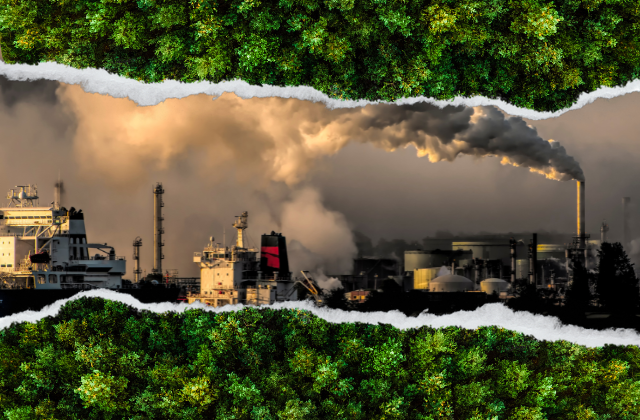
    Tackling greenwashing is an issue where human rights, consumer rights and climate goals align. Companies use greenwashing to convince people to buy products that are not always as environmentally friendly as they claim to be. They mislead consumers and harm the environment. This report shows how a human rights approach can combat greenwashing. It is based on consultations with experts in 10 Member States. The report identifies gaps in existing laws and enforcement. It includes case studies of consumers seeking remedies for misleading environmental claims. The EU and Member States should enforce rules that make it harder for companies to make misleading environmental claims. They should strengthen rules that make it easier for consumers to prove that companies are greenwashing. Consumer and environmental organisations already hold governments and business to account. Governments should make it easier to use collective action for the protection of consumer rights and the environment.
  • Report / Paper / Summary
    6
    octobre
    2020
    Business activity affects not just customers, employees, and contractors along supply chains, but often entire communities and the environment. This makes it vital that every business complies with human rights. This comparative report looks at the realities victims face when they seek redress for business-related human rights abuses. It presents the findings of fieldwork research on the views of professionals regarding the different ways people can pursue complaints. The findings highlight that obstacles to achieving justice are often multi-layered.
  • Fundamental Rights Report
    5
    juin
    2024
    FRA’s Fundamental Rights Report 2024 analyses the year’s developments in fundamental rights. It focuses on the most pressing fundamental rights concerns facing Europe in 2023: the cost-of-living crisis, rights concerns at the EU’s external borders and migration, and threats to democracy. Re-structured, this year’s new approach is a shorter and sharper analysis. It also presents FRA’s opinions on these developments, including a summary of the evidence supporting these opinions.
  • Report / Paper / Summary
    15
    janvier
    2025
    Climate change affects the daily lives of everyone in the EU and has significant environmental, economic, social and health impacts. To tackle this, the European Green Deal was adopted in 2019. This report examines the Green Deal from a fundamental rights perspective, with the aim of protecting the right to a safe, clean, healthy and sustainable environment for all. It highlights the lack of fundamental rights in EU climate policy and the need to incorporate these rights into future legislation. It also considers how applying a human-rights-based approach to climate policy could support a fair and inclusive transition.
    Produits
    15
    décembre
    2025
    This factsheet outlines key judgments of the Court of Justice of the European Union (CJEU) and the European Court of Human Rights (ECtHR) relating to the intersection of climate change and human rights. The issues examined include territorial jurisdiction, standards of protection, standing and victim status, and procedural guarantees in climate-related cases, including the rights of access to information. It is intended to assist legal practitioners, policymakers, and researchers in understanding and applying the evolving human rights jurisprudence in the context of climate change within the European legal space.

    5
    juin
    2024
    FRA’s Fundamental Rights Report 2024 analyses the year’s developments in fundamental rights. It focuses on the most pressing fundamental rights concerns facing Europe in 2023: the cost-of-living crisis, rights concerns at the EU’s external borders and migration, and threats to democracy. Re-structured, this year’s new approach is a shorter and sharper analysis. It also presents FRA’s opinions on these developments, including a summary of the evidence supporting these opinions.
    6
    octobre
    2020
    Business activity affects not just customers, employees, and contractors along supply chains, but often entire communities and the environment. This makes it vital that every business complies with human rights. This comparative report looks at the realities victims face when they seek redress for business-related human rights abuses. It presents the findings of fieldwork research on the views of professionals regarding the different ways people can pursue complaints. The findings highlight that obstacles to achieving justice are often multi-layered.