Highlights

  • Report / Paper / Summary
    27
    January
    2026
    This report looks at antisemitism in the EU, focusing on what can be done to address gaps in recording and inconsistencies in data collection. It highlights existing tools and guidance for Member States to improve their recording systems. The analysis is based on official administrative data and information from publicly available sources across EU Member States, as well as Albania, North Macedonia, and Serbia. Detailed country overviews are available for all countries covered. Antisemitism has been monitored by FRA since 2004. This report builds on the 2024 publication, ‘Jewish People’s Experiences and Perceptions of Antisemitism’.
  • Report / Paper / Summary
    27
    November
    2025
    This report looks at the breadth and depth of violence and neglect faced by people with disabilities living in institutions. It highlights the shortcomings by EU Member States in preventing violence and protecting those who are at a higher risk of experiencing it, in line with the UN Convention on the Rights of Persons with Disabilities. Based on research across all EU Member States and FRA observer candidate countries, the report calls for better protection, stronger prevention of violence, and clear accountability. It urges the EU and its Member States to implement their obligations around equality and fundamental rights.
  • Data explorer
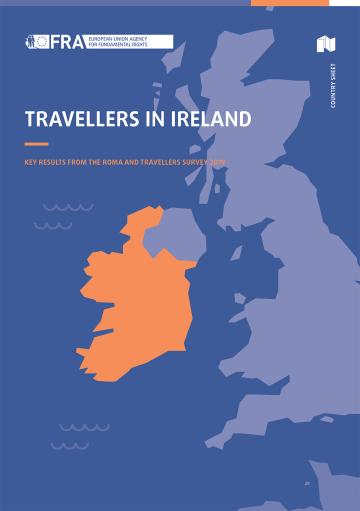
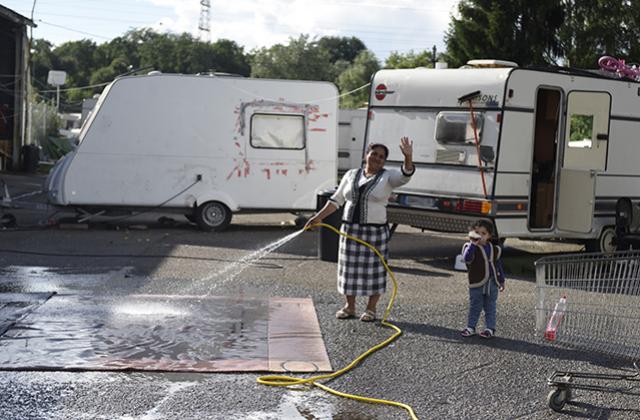
    FRA’s 2024 survey on Roma and Travellers in Albania, Bulgaria, Czechia, France, Greece, Hungary, Ireland, Italy, North Macedonia, Portugal, Romania, Serbia and Spain collected information from 10,126 respondents living in private households who self-identify as Roma or Traveller, are 16 or older and have lived in the survey countries for at least the 12 months before the survey.
  • Report / Paper / Summary
    25
    October
    2024
    Racism towards Muslims is increasing in countries across the EU. Muslims face racial discrimination and racist harassment because of their religion, skin colour or ethnic background. This report shows a sharp rise since the last survey in 2016.
    Prodotti
    8
    March
    2019
    La presente sintesi illustra i principali risultati della seconda indagine della FRA sulle esperienze della popolazione ebraica riguardo ai reati generati dall’odio, alla discriminazione e all’antisemitismo nell’Unione europea; si tratta della più vasta indagine condotta sulla popolazione ebraica a livello mondiale.
    12
    December
    2018
    This paper discusses the evolution of European Court of Human Rights case law relating
    to hate crime, providing an update on the most recent rulings. Approaching hate crime
    from a fundamental rights perspective, it shows how Member State authorities’ duty to
    effectively investigate the bias motivation of crimes flows from key human rights
    instruments, such as the European Convention on Human Rights.
    Michael O'Flaherty focuses on the situation of the Jewish community living in the EU.
    10
    December
    2018
    This report outlines the main findings of FRA’s second survey on Jewish people’s experiences with hate crime, discrimination and antisemitism in the European Union – the biggest survey of Jewish people ever conducted worldwide. Covering 12 EU Member States, the survey reached almost 16,500 individuals who identify as being Jewish. It follows up on the agency’s first survey, conducted in seven countries in 2012.
    5
    December
    2018
    Last versions available are EL and NL
    11 March 2021
    La presente guida spiega che cos’è la profilazione, illustra i quadri giuridici che la disciplinano ed espone i motivi per cui l’applicazione della profilazione entro i limiti stabiliti dalla legge è necessaria per rispettare i diritti fondamentali ed essenziale per un’efficace attività di polizia e gestione delle frontiere. La guida fornisce inoltre indicazioni pratiche su come evitare la profilazione illecita nelle operazioni di polizia e di gestione delle frontiere.
    4
    December
    2018
    The Convention on the Rights of Persons with Disabilities commits both the EU and all of its Member States to realising the right of persons with disabilities to live independently in the community – which includes achieving deinstitutionalisation for those residing in institutional settings. But much remains to be done to make this a reality in practice. This report presents the main insights gained during fieldwork on the drivers of and barriers to deinstitutionalisation. Focusing on the local level, it gives voice to a diverse set of actors – most importantly, to people with disabilities themselves.
    Black people in the EU face unacceptable difficulties in getting a decent job because of their skin colour. Racist harassment also remains all too common.
    Black people in the EU face unacceptable difficulties in simply finding somewhere to live because of their skin colour.
    28
    November
    2018
    Almost twenty years after adoption of EU laws forbidding discrimination, people of African descent in the EU face widespread and entrenched prejudice and exclusion. This report outlines selected results from FRA's second large-scale EU-wide survey on migrants and minorities (EU-MIDIS II) carried out in 2016. It examines the experiences of almost 6,000 people of African descent in 12 EU Member States.
    16
    November
    2018
    This report presents the main insights gained during the EU Fundamental Rights Agency’s project on local engagement for Roma inclusion, which explores how to best involve Roma in integration efforts at the local level. Bringing together local authorities and residents, especially Roma, it investigated what aspects work, which ones do not, and why this is the case.
    9
    November
    2018
    Antisemitism can be expressed in the form of verbal and physical attacks, threats,
    harassment, discrimination and unequal treatment, property damage and graffiti or other
    forms of speech or text, including on the internet. The present report provides an overview of data on antisemitism as recorded by
    international organisations and by official and unofficial sources in the 28 European
    Union (EU) Member States, based on their own definitions and categorisations.
    26
    October
    2018
    The EU Agency for Fundamental Rights’ 2018 Fundamental Rights Forum
    brought together more than 700 human rights champions at a time of
    widening social divisions and increasingly polarised politics across
    Europe.
    17
    October
    2018
    Almost 25 million children under 18 are at risk of poverty or social exclusion in the EU. Poverty deprives children of educational
    opportunities, childcare, access to health care, adequate food and housing, family support and even protection from violence.
    This report outlines data and survey findings that highlight the magnitude of child poverty in the EU, but also presents tools
    available to counter this phenomenon and keep track of progress made.
    20
    September
    2018
    With enormous volumes of data generated every day, more and more decisions are based on data analysis and algorithms. This can bring welcome benefits, such as consistency and objectivity, but algorithms also entail great risks. A FRA focus paper looks at how the use of automation in decision making can result in, or exacerbate, discrimination.
    12
    September
    2018
    In November 2017, the European Commission requested FRA’s support in evaluating the impact on fundamental rights of the European Border Surveillance System (Eurosur) Regulation. Further to this request, FRA reviewed the work of the European Border and Coast Guard Agency (Frontex) and analysed cooperation agreements concluded by EU Member States with third countries which are relevant for the exchange of information for the purposes of Eurosur. This report presents the main findings of such review.
    29
    August
    2018
    The founding treaties, the EU Charter of Fundamental Rights and secondary EU law all provide for EU citizens’ freedom to move and reside freely in any EU country of their choice. Growing numbers of citizens, and their family members, are making use of this freedom and related rights, such as the right not to be discriminated against based on nationality and the right to vote in certain elections in the host Member State. But making these rights a reality remains a challenge. This report presents an EU-wide, comparative overview of the application of the Free Movement Directive (2004/38/EC) across the 28 Member States based on a review of select case law at national level.
    19
    July
    2018
    Across the European Union, Member States are faced with the challenge of integrating Europe’s most deprived
    and disenfranchised minority groups. As a follow up to the EU-MIDIS II findings on Roma, this report presents
    FRA’s findings relating to the issues of education and employment. Encouraging Roma participation in education
    and employment equips communities with higher incomes, better life opportunities and greater social inclusion.
    21
    June
    2018
    Across the European Union, people face hatred because of their skin colour, ethnicity, religion, gender or sexuality. In response, the EU and its Member States have introduced laws against hate crime and support services for victims. But these will only fulfil their potential if victims report hate-motivated harassment and violence to the police, and if police officers record such incidents as hate crimes. This report provides rich and detailed information on hate crime recording and data collection systems across the EU, including any systemic cooperation with civil society.
    6
    June
    2018
    Finnish version now available
    27 January 2020
    European societies are not getting any younger! It is a simple truth we must face both about ourselves and Europe as a whole. In two generations, by 2080, those aged 65 or above will account for almost 30% of the European Union’s population.