Data

Datu aizsardzība, privātums un jaunās tehnoloģijas

<p>More of our everyday lives are online &mdash; both at work and home. Meanwhile, terror attacks intensify calls for more surveillance. Concerns grow over the safety of our privacy and personal data.</p>
<p>FRA helps lawmakers and practitioners protect your rights in a connected world.</p>

Highlights

  • Report / Paper / Summary
    4
    December
    2025
    Artificial Intelligence comes with both benefits and risks. Safe AI use that accounts for fundamental rights is thus crucial. While the 2024 EU AI Act was a milestone in this regard, its broad definitions regarding AI systems and high-risk AI could introduce loopholes for fundamental rights compliance. This report offers an empirical basis for much-needed practical guidance on the Act’s implementation. Based on interviews with AI developers, sellers, and users, FRA addresses challenges of its use in critical domains, like asylum, education, and employment. Our findings help guide next steps in realising the AI Act’s potential to
    ensure responsible innovation.
  • Report / Paper / Summary
    11
    June
    2024
    Data protection rules protect privacy and prevent personal information from misuse. When the general data protection regulation (GDPR) came into force in 2018, it strengthened the role of data protection authorities. These supervisory bodies are the key enforcers of the fundamental right of protection of personal data. This report analyses the challenges they face in the GDPR implementation. The findings complement the European Commission's forthcoming evaluation of the GDPR.
  • Report / Paper / Summary
    24
    May
    2023
    This report provides a partial update on the findings of the 2017 European Union Agency for Fundamental Rights (FRA) report Surveillance by intelligence services: Fundamental rights safeguards and remedies in the EU. It was prepared at the request of the European Parliament, which asked FRA to update its 2017 findings to support the work of its committee of inquiry to investigate the use of Pegasus and equivalent surveillance spyware (PEGA).
  • Report / Paper / Summary
    8
    December
    2022
    Artificial intelligence is everywhere and affects everyone – from deciding what content people see on their social media feeds to determining who will receive state benefits. AI technologies are typically based on algorithms that make predictions to support or even fully automate decision-making.
    Produkti
    12
    September
    2018
    In November 2017, the European Commission requested FRA’s support in evaluating the impact on fundamental rights of the European Border Surveillance System (Eurosur) Regulation. Further to this request, FRA reviewed the work of the European Border and Coast Guard Agency (Frontex) and analysed cooperation agreements concluded by EU Member States with third countries which are relevant for the exchange of information for the purposes of Eurosur. This report presents the main findings of such review.
    10
    September
    2018
    This Opinion aims to
    inform the European Parliament’s position on the legislative proposal amending the
    Visa Information System, the Visa Code and other related provisions of EU law. The
    European Commission presented the proposal on 16 May 2018 and EU legislators are
    currently discussing it.
    6
    June
    2018
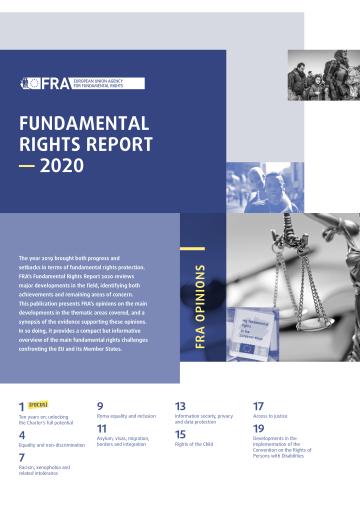
    The year 2017 brought both progress and setbacks in terms of rights protection. The European Pillar of Social Rights marked an important move towards a more ‘social Europe’. But, as experiences with the EU Charter of Fundamental Rights underscore, agreement on a text is merely a first step. Even in its eighth year as the EU's binding bill of rights, the Charter's potential was not fully exploited, highlighting the need to more actively promote its use.
    6
    June
    2018
    Pamattiesību aizsardzības jomā 2017. gadā bija vērojami gan sasniegumi, gan neveiksmes. FRA 2018. gada ziņojumā par pamattiesībām ir aplūkoti galvenie jaunumi pamattiesību jomā, nosakot gan sasniegumus, gan jomas, kas vēl joprojām rada bažas.
    30
    May
    2018
    We live in a world of big data, where technological developments in the area of machine learning and artificial intelligence have changed the way we live. Decisions and processes concerning everyday life are increasingly automated, based on data. This affects fundamental rights in various ways. This focus paper specifically deals with discrimination, a fundamental rights area particularly affected by technological developments.
    25
    May
    2018
    New language versions - Danish, Lithuanian, Slovenian
    10 November 2021
    Straujā informācijas tehnoloģiju attīstība ir saasinājusi nepieciešamību pēc stabila personas datu aizsardzības
    regulējuma, tiesībām, kuras aizsargā gan Eiropas Savienības (ES), gan Eiropas Padomes (EP) instrumenti.
    Šo svarīgo tiesību aizsardzība rada jaunas un būtiskas problēmas, jo tehnoloģiju attīstība paplašina tādu
    jomu robežas kā novērošana, sakaru pārtveršana un datu glabāšana. Šī rokasgrāmata ir paredzēta, lai
    iepazīstinātu ar šo jauno tiesību jomu praktizējošus juristus, kuri nespecializējas datu aizsardzībā.
    17
    May
    2018
    Pilsoniskās sabiedrības organizācijām Eiropas Savienībā ir būtiska nozīme pamattiesību veicināšanā, taču tām ir arvien grūtāk to darīt dažādu juridisku un praktisku ierobežojumu dēļ.
    Lai arī problēmas ir visās ES dalībvalstīs, to būtība un apjoms atšķiras. Kopumā trūkst datu un pētījumu par šo tēmu, tostarp salīdzinošu pētījumu.
    Tāpēc FRA ziņojumā tiek aprakstītas dažādu veidu problēmas, ar ko saskaras pilsoniskās sabiedrības organizācijas, kuru darbs ir saistīts ar cilvēktiesību aizsardzību ES. Tajā ir izcelta arī daudzsološa prakse, kas var palīdzēt neitralizēt šīs satraucošās tendences.
    9
    May
    2018
    Pieaugot terorisma, kiberuzbrukumu un sarežģītu pārrobežu noziedzīgo tīklu radītajiem draudiem, izlūkdienestu darbs ir kļuvis aktuālāks, sarežģītāks un tam ir spēcīgāks starptautiskais faktors. Šāds darbs var lielā mērā skart pamattiesības, jo īpaši privātās dzīves un datu aizsardzību. Lai arī nepārtraukts tehnoloģiskais progress potenciāli pastiprina šādas iejaukšanās risku, efektīva uzraudzība un tiesiskās aizsardzības līdzekļi var ierobežot ļaunprātīgas izmantošanas potenciālu.
    This video blog by FRA Director Michael O'Flaherty is released periodically and will address burning fundamental rights themes.
    19
    April
    2018
    This Opinion by the European Union Agency for Fundamental Rights (FRA) aims to inform the European Parliament position concerning legislative proposals on interoperability between EU information technology systems (IT systems) presented on 12 December 2017 and currently discussed by the EU legislators.
    28
    March
    2018
    This report outlines the fundamental rights implications of collecting, storing and using
    biometric and other data in EU IT systems in the area of asylum and migration.
    Mario Oetheimer presented FRA’s second surveillance report to the European Parliament’s Civil Liberties, Justice and Home Affairs (LIBE) Committee on 21 November in Brussels.
    This is the recording of the online press briefing about mass surveillance as presented by the EU Agency for Fundamental Rights (FRA) on 16 October 2017.
    This second volume, ‘Surveillance by intelligence services: fundamental rights safeguards and remedies in the EU’, explores legal changes since the first volume in 2015 and how these laws are applied in practice. It is based on data from all EU Member States on the legal framework governing surveillance and complemented by field research in seven Member States: Belgium, France, Germany, Italy, the Netherlands, Sweden and the UK. This involved more than 70 interviews with a range of stakeholders related to surveillance. These included overseers and controllers from the executive, indedepent expert bodies, parliamentary committees, the judiciary and actors from the civil society. These quotes are contained in the report. Below are a selection of some of them:
    23
    October
    2017
    This report is FRA’s second publication addressing a European Parliament request for in-depth research on the impact of surveillance on fundamental rights. It updates FRA’s 2015 legal analysis on the topic, and supplements that analysis with field-based insights gained from extensive interviews with diverse experts in intelligence and related fields, including its oversight.
    13
    July
    2017
    In 2006 the EU issued its Data Retention Directive. According to the Directive, EU Member States had to store electronic telecommunications data for at least six months and at most 24 months for investigating, detecting and prosecuting serious crime. In 2016, with an EU legal framework on data retention still lacking, the CJEU further clarified what safeguards are required for data retention to be lawful.This paper looks at amendments to national data retention laws in 2016 after the Digital Rights Ireland judgment.
    11
    July
    2017
    The European Parliament requested this FRA Opinion on the fundamental rights and personal data protection implications of the proposed Regulation for the creation of a European Travel Information and Authorisation System (ETIAS), including an assessment of the fundamental rights aspects of the access
    by law enforcement authorities and Europol.
    7
    July
    2017
    Various proposals on EU-level information systems in the areas of borders and security mention interoperability, aiming to provide fast and easy access to information about third-country nationals.
    30
    May
    2017
    Diverse efforts at both EU and national levels sought to bolster fundamental rights protection in 2016, while some measures threatened to undermine such protection.