eu-charter

EU Charter of Fundamental Rights

Everyone has the right to liberty and security of person.

Explanations

  • Text:

    The rights in Article 6 are the rights guaranteed by Article 5 of the ECHR, and in accordance with Article 52(3) of the Charter, they have the same meaning and scope. Consequently, the limitations which may legitimately be imposed on them may not exceed those permitted by the ECHR, in the wording of Article 5:

    1. Everyone has the right to liberty and security of person. No one shall be deprived of his liberty save in the following cases and in accordance with a procedure prescribed by law:
    (a) the lawful detention of a person after conviction by a competent court;
    (b) the lawful arrest or detention of a person for non-compliance with the lawful order of a court or in order to secure the fulfilment of any obligation prescribed by law;
    (c) the lawful arrest or detention of a person effected for the purpose of bringing him before the competent legal authority on reasonable suspicion of having committed an offence or when it is reasonably considered necessary to prevent his committing an offence or fleeing after having done so;
    (d) the detention of a minor by lawful order for the purpose of educational supervision or his lawful detention for the purpose of bringing him before the competent legal authority;
    (e) the lawful detention of persons for the prevention of the spreading of infectious diseases, of persons of unsound mind, alcoholics or drug addicts or vagrants;
    (f) the lawful arrest or detention of a person to prevent his effecting an unauthorised entry into the country or of a person against whom action is being taken with a view to deportation or extradition.

    2. Everyone who is arrested shall be informed promptly, in a language which he understands, of the reasons for his arrest and of any charge against him.

    3. Everyone arrested or detained in accordance with the provisions of paragraph 1.c of this Article shall be brought promptly before a judge or other officer authorised by law to exercise judicial power and shall be entitled to trial within a reasonable time or to release pending trial. Release may be conditioned by guarantees to appear for trial.

    4. Everyone who is deprived of his liberty by arrest or detention shall be entitled to take proceedings by which the lawfulness of his detention shall be decided speedily by a court and his release ordered if the detention is not lawful.

    5. Everyone who has been the victim of arrest or detention in contravention of the provisions of this Article shall have an enforceable right to compensation.

    The rights enshrined in Article 6 must be respected particularly when the European Parliament and the Council adopt legislative acts in the area of judicial cooperation in criminal matters, on the basis of Articles 82, 83 and 85 of the Treaty on the Functioning of the European Union, notably to define common minimum provisions as regards the categorisation of offences and punishments and certain aspects of procedural law.

    Source:
    Official Journal of the European Union C 303/17 - 14.12.2007
    Preamble - Explanations relating to the Charter of Fundamental Rights:
    These explanations were originally prepared under the authority of the Praesidium of the Convention which drafted the Charter of Fundamental Rights of the European Union. Although they do not as such have the status of law, they are a valuable tool of interpretation intended to clarify the provisions of the Charter.

Case Law References

National Constitutional Law

42 results found

  • Sweden / Instrument of Government
    Country:
    Sweden

    Chapter 2 - Fundamental rights and freedoms:

    Article 7 No Swedish citizen may be deported from or refused entry into the Realm. No Swedish citizen who is domiciled in the Realm or who has previously been domiciled in the Realm may be deprived of his or her citizenship. It may however be prescribed that children under the age of eighteen
    shall have the same nationality as their parents or as one parent.;

    Article 8 Everyone shall be protected in their relations with the public institutions against deprivations of personal liberty. All Swedish citizens shall also in other respects be guaranteed freedom of movement within the Realm and freedom to depart the Realm; 

    Article 9 If a public authority other than a court of law has deprived an individual of his or her liberty on account of a criminal act or because he or she is suspected of having committed such an act, the individual shall be entitled to have the deprivation of liberty examined before a court of law without undue delay. This shall not, however, apply where the matter concerns the transfer to Sweden of responsibility for executing a penal sanction involving deprivation of liberty according to a sentence in another state. (...)

  • Basic Law for the Federal Republic of Germany
    Country:
    Germany

    Article 104 (1) Liberty of the person may be restricted only pursuant to a formal law and only in compliance with the procedures prescribed therein. Persons in custody may not be subjected to mental or physical mistreatment. (2) Only a judge may rule upon the permissibility or continuation of any deprivation of liberty. If such a deprivation is not based on a judicial order, a judicial decision shall be obtained without delay. The police may hold no one in custody on their own authority beyond the end of the day following the arrest. Details shall be regulated by a law. (3) Any person provisionally detained on suspicion of having committed a criminal offence shall be brought before a judge no later than the day following his arrest; the judge shall inform him of the reasons for the arrest, examine him, and give him an opportunity to raise objections. The judge shall, without delay, either issue a written arrest warrant setting forth the reasons therefor or order his release. (4) A relative or a person enjoying the confidence of the person in custody shall be notified without delay of any judicial decision imposing or continuing a deprivation of liberty.

  • Constitution
    Country:
    France

     Article 66(1) Nul ne peut être arbitrairement détenu. (2) L'autorité judiciaire, gardienne de la liberté individuelle, assure le respect de ce principe dans les conditions prévues par la loi.

  • Constitution
    Country:
    France

    Article 66 (1) No one shall be arbitrarily detained. (2) The judicial authority, guardian of the freedom of the individual, shall ensure compliance with this principle in the conditions laid down by statute.

  • Constitution of Finland
    Country:
    Finland

    Section 7 Right to life, personal liberty and integrity Everyone has the right to life, personal liberty, integrity and security. No one shall be sentenced to death, tortured or otherwise treated in a manner violating human dignity. The personal integrity of the individual shall not be violated, nor shall anyone be deprived of liberty arbitrarily or without a reason prescribed by an Act. A penalty involving deprivation of liberty may be imposed only by a court of law. The lawfulness of other cases of deprivation of liberty may be submitted for review by a court of law. The rights of individuals deprived of their liberty shall be guaranteed by an Act.

  • Constitution of Ireland
    Country:
    Ireland

    Article 40.4.1. No citizen shall be deprived of his personal liberty save in accordance with law. Article 40.4.2. Upon complaint being made by or on behalf of any person to the High Court or any judge thereof alleging that such person is being unlawfully detained, the High Court and any and every judge thereof to whom such complaint is made shall forthwith enquire into the said complaint and may order the person in whose custody such person is detained to produce the body of such person before the High Court on a named day and to certify in writing the grounds of his detention, and the High Court shall, upon the body of such person being produced before that Court and after giving the person in whose custody he is detained an opportunity of justifying the detention, order the release of such person from such detention unless satisfied that he is being detained in accordance with the law. Article 40.4.3. Where the body of a person alleged to be unlawfully detained is produced before the High Court in pursuance of an order in that behalf made under this section and that Court is satisfied that such person is being detained in accordance with a law but that such law is invalid having regard to the provisions of this Constitution, the High Court shall refer the question of the validity of such law to the Supreme Court by way of case stated and may, at the time of such reference or at any time thereafter, allow the said person to be at liberty on such bail and subject to such conditions as the High Court shall fix until the Supreme Court has determined the question so referred to it. Article 40.4.4. The High Court before which the body of a person alleged to be unlawfully detained is to be produced in pursuance of an order in that behalf made under this section shall, if the President of the High Court or, if he is not available, the senior judge of that Court who is available so directs in respect of any particular case, consist of three judges and shall, in every other case, consist of one judge only. 5° Nothing in this section, however, shall be invoked to prohibit, control, or interfere with any act of the Defence Forces during the existence of a state of war or armed rebellion. 6° Provision may be made by law for the refusal of bail by a court to a person charged with a serious offence where it is reasonably considered necessary to prevent the commission of a serious offence by that person. 5. The dwelling of every citizen is inviolable and shall not be forcibly entered save in accordance with law.(…)

  • Constitution of Malta
    Country:
    Malta

    Article 34(1) No person shall be deprived of his personal liberty save as may be authorised by law in the following cases, that is to say - (a) in consequence of his unfitness to plead to a criminal charge; (b) in execution of the sentence or order of a court, whether in Malta or elsewhere, in respect of a criminal offence of which he has been convicted; (c) in execution of the order of a court punishing him for contempt of that court or of another court or tribunal or in execution of the order of the House of Representatives punishing him for contempt of itself or of its members or for breach of privilege; (d) in execution of the order of a court made to secure the fulfilment of any obligation imposed on him by law; (e) for the purpose of bringing him before a court in execution of the order of a court or before the House of Representatives in execution of the order of that House; (f) upon reasonable suspicion of his having committed, or being about to commit, a criminal offence; (g) in the case of a person who has not attained the age of eighteen years, for the purpose of his education or welfare; (h) for the purpose of preventing the spread of an infectious or contagious disease; (i) in the case of a person who is, or is reasonably suspected to be, of unsound mind, addicted to drugs or alcohol, or a vagrant, for the purpose of his care or treatment or the protection of the community; or (j) for the purpose of preventing the unlawful entry of that person into Malta, or for the purpose of effecting the expulsion, extradition or other lawful removal of that person from Malta or the taking of proceedings relating thereto or for the purpose of restraining that person while he is being conveyed through Malta in the course of his extradition or removal as a convicted prisoner from one country to another. (2) Any person who is arrested or detained shall be informed at the time of his arrest or detention, in a language that he understands, of the reasons for his arrest or detention: Provided that if an interpreter is necessary and is not readily available or if it is otherwise impracticable to comply with the provisions of this sub-article at the time of the person’s arrest or detention, such provisions shall be complied with as soon as practicable. (3) Any person who is arrested or detained - (a) for the purpose of bringing him before a court in execution of the order of a court; or (b) upon reasonable suspicion of his having committed, or being about to commit, a criminal offence, and who is not released, shall be brought not later than forty-eight hours before a court; and if any person arrested or detained in such a case as is mentioned in paragraph (b) of this sub-article is not tried within a reasonable time, then, without prejudice to any further proceedings which may be brought against him, he shall be released either unconditionally or upon reasonable conditions, including in particular such conditions as are reasonably necessary to ensure that he appears at a later date for trial or for proceedings preliminary to trial. (4) Any person who is unlawfully arrested or detained by any other person shall be entitled to compensation therefore from that person. (5) Nothing contained in or done under the authority of any law shall be held to be inconsistent with or in contravention of this article to the extent that the law in question authorises the taking during such a period of public emergency as is referred to in paragraph (a) or (c) of sub-article (2) of article 47 of this Constitution of measures that are reasonably justifiable for the purpose of dealing with the situation that exists during that period of public emergency. (6) If any person who is lawfully detained by virtue only of such a law as is referred to in the last foregoing sub-article so requests at any time during the period of that detention not earlier than six months after he last made such a request during that period, his case shall be reviewed by an independent and impartial tribunal established by law and composed of a person or persons each of whom holds or has held judicial office or is qualified to be appointed to such office in Malta. (7) On any review by a tribunal in pursuance of the last foregoing sub-article of the case of any detained person, the tribunal may make recommendations concerning the necessity or expediency of continuing his detention to the authority by whom it was ordered, but, unless it is otherwise provided by law, that authority shall not be obliged to act in accordance with any such recommendations.

  • Constitution of the Hellenic Republic
    Country:
    Greece

    Article 5 (1) All persons shall have the right to develop freely their personality and to participate in the social, economic and political life of the country, insofar as they do not infringe the rights of others or violate the Constitution and the good usages. (2). All persons living within the Greek territory shall enjoy full protection of their life, honour and liberty irrespective of nationality, race or language and of religious or political beliefs. Exceptions shall be permitted only in cases provided by international law. The extradition of aliens prosecuted for their action as freedom-fighters shall be prohibited. (3). Personal liberty is inviolable. No one shall be prosecuted, arrested, imprisoned or otherwise confined except when and as the law provides. (4). Individual administrative measures restrictive of the free movement or establishment in the country, and of the free exit and entrance therein of any Greek are prohibited. Restrictive measures of such content may only be imposed as an attendant penalty by a criminal court ruling, in exceptional cases of emergency and only in order to prevent the commitment of criminal acts, as specified by law. (5). All persons have the right to the protection of their health and of their genetic identity. Matters relating to the protection of every person against biomedical interventions shall be specified by law; Article 6 (1). No person shall be arrested or imprisoned without a reasoned judicial warrant which must be served at the moment of arrest or detention pending trial, except when caught in the act of committing a crime. (2) A person who is arrested in the act of committing a crime or on a warrant shall be brought before the competent examining magistrate within twenty-four hours of his arrest at the latest; should the arrest be made outside the seat of the examining magistrate, within the shortest time required to transfer him thereto. The examining magistrate must, within three days from the day the person was brought before him, either release the detainee or issue a warrant of imprisonment. Upon application of the person brought before him or in case of force majeure confirmed by decision of the competent judicial council, this time-limit shall be extended by two days. (3). Should either of these time-limits elapse before action has been taken, any warden or other officer, civil or military servant, responsible for the detention of the arrested person must release him immediately. Violators shall be punished for illegal detention and shall be liable to restore any damage caused to the sufferer and to pay him a monetary compensation for pain and suffering, as specified by law. (4). The maximum duration of detention pending trial shall be specified by law; such detention may not exceed a period of one year in the case of felonies or six months in the case of misdemeanours. In entirely exceptional cases, these maximum limits may be extended by six or three months respectively, by decision of the competent judicial council. It is prohibited to exceed these maximum limits of detention pending trial, by successively applying this measure to separate acts of the
    same case.

  • Constitution of the Italian Republic
    Country:
    Italy

    Art. 13. Personal liberty is inviolable. No one may be detained, inspected, or searched nor otherwise subjected to any restriction of personal liberty except by order of the Judiciary stating a reason and only in such cases and in such manner as provided by the law. In exceptional circumstances and under such conditions of necessity and
    urgency as shall conclusively be defined by the law, the police may take provisional measures that shall be referred within 48 hours to the Judiciary for
    validation and which, in default of such validation in the following 48 hours, shall be revoked and considered null and void. Any act of physical and moral violence against a person subjected to restriction of personal liberty shall be punished. The law shall establish the maximum duration of preventive detention.

  • Constitution of the Republic of Bulgaria
    Country:
    Bulgaria

    Preamble We, the Members of the Seventh Grand National Assembly, guided by our desire to express the will of the people of Bulgaria [...] by holding as the highest principle the rights, dignity and security of the individual [...] Art. 30. (1) Everyone shall be entitled to personal freedom and inviolability. (2) No one shall be detained or subjected to inspection, search or any other infringement of his personal inviolability except on the conditions and in a manner established by law. (3) The State authorities shall be free to detain citizens only in the urgent circumstances expressly stipulated by law, and shall immediately advise the judicial authorities accordingly. The judicial authorities shall rule on the legality of a detention within the next 24 hours.

  • Constitution of the Republic of Estonia
    Country:
    Estonia

    § 20. Everyone has the right to liberty and security of person.
    No one may be deprived of his or her liberty except in the cases and pursuant to a procedure provided by law:
    1) to enforce a judgment of conviction rendered or a detention ordered by a court;
    2) for the case of non-compliance with a direction of a court, or to guarantee fulfilment of a duty provided by law;
    3) to prevent a criminal or administrative offence, to bring before a competent authority a person in relation to whom there is reasonable suspicion that he or she has committed such an offence, or to prevent such a person from absconding;
    4) to place a minor under disciplinary supervision or to bring him or her before a competent authority to determine whether to impose such supervision;
    5) to detain a person suffering from an infectious disease, a person of unsound mind, an alcoholic or a drug addict, if such a person is a danger to himself or herself or to others;
    6) to prevent illegal settlement in Estonia and for removing a person from Estonia or for extraditing a person to a foreign state.
    No one may be deprived of his or her liberty on the mere ground of inability to fulfil a contractual obligation.
    § 21. Everyone who has been deprived of his or her liberty must be informed promptly, in a language and manner which he or she understands, of the reason for the deprivation of liberty and of his or her rights, and be given an opportunity to notify those closest to him or her. A person suspected of a criminal offence must also be promptly given an opportunity to choose a counsel and to confer with him or her. The right of a person suspected of a criminal offence to notify those closest to him or her of the deprivation of liberty may be circumscribed only in the cases and pursuant to a procedure provided by law to prevent a criminal offence or in the interests of ascertaining the truth in a criminal case.
    No one may be held in custody for more than forty-eight hours without a specific authorisation of a court. The decision of the court must be promptly communicated to the person in custody in a language and manner which he or she understands.

  • Constitution of the Republic of Latvia
    Country:
    Latvia

    94. Everyone has the right to liberty and security of person. No one may be deprived of or have their liberty restricted, otherwise than in accordance with law.

  • Constitution of the Republic of Lithuania
    Country:
    Lithuania

    Article 20. Human liberty shall be inviolable. No one may be arbitrarily apprehended or detained. No one may be deprived of his liberty otherwise than on the grounds and according to the procedures established by law. A person apprehended in flagrante delicto must, within 48 hours, be brought before a court for the purpose of deciding, in the presence of this person, on the validity of the apprehension. If the court does not adopt a decision to detain the person, the apprehended person shall be released immediately.

  • Constitution of the Republic of Poland
    Country:
    Poland

    Article 41.1. Personal inviolability and security shall be ensured to everyone. Any deprivation or limitation of liberty may be imposed only in accordance with principles and under procedures specified by statute.2. Anyone deprived of liberty, except by sentence of a court, shall have the right to appeal to a court for immediate decision upon the lawfulness of such deprivation. Any deprivation of liberty shall be immediately made known to the family of, or a person indicated by, the person deprived of liberty.3. Every detained person shall be informed, immediately and in a manner comprehensible to him, of the reasons for such detention. The person shall, within 48 hours of detention, be given over to a court for consideration of the case. The detained person shall be set free unless a warrant of temporary arrest issued by a court, along with specification of the charges laid, has been served on him within 24 hours of the time of being given over to the court's disposal.4. Anyone deprived of liberty shall be treated in a humane manner.5. Anyone who has been unlawfully deprived of liberty shall have a right to compensation.

  • Costituzione della Repubblica Italiana
    Country:
    Italy

    Art. 13. La libertà personale è inviolabile.Non è ammessa forma alcuna di detenzione, di ispezione o perquisizione personale, né qualsiasi altra restrizione della libertà personale, se non per atto motivato dall'autorità giudiziaria e nei soli casi e modi previsti dalla legge.In casi eccezionali di necessità ed urgenza, indicati tassativamente dalla legge, l'autorità di pubblica sicurezza può adottare provvedimenti provvisori, che devono essere comunicati entro quarantotto ore all'autorità giudiziaria e, se questa non li convalida nelle successive quarantotto ore, si intendono revocati e restano privi di ogni effetto.E' punita ogni violenza fisica e morale sulle persone comunque sottoposte a restrizioni di libertà.La legge stabilisce i limiti massimi della carcerazione preventiva.

  • Czechia / Charter of Fundamental Rights and Freedoms
    Country:
    Czechia

    Article 8 (1) Personal liberty is guaranteed. (2) No one may be prosecuted or deprived of her liberty except on the grounds and in the manner specified by law. No one may be deprived of her liberty merely on the grounds of inability to fulfill a contractual obligation. (3) A person accused of or suspected of having committed a criminal act may be detained only in cases specified by law. A person who is detained shall be immediately informed of the grounds for the detention, questioned, and within forty-eight hours at the latest, either released or turned over to a court. A judge must question the detained person and decide, within twenty-four hours of receiving her, whether the person shall be placed in custody or released. (4) A person accused of a criminal act may be arrested only on the basis of a warrant issued by a judge in writing and stating the grounds for the arrest. The arrested person shall be turned over to a court within twenty-four hours. A judge shall question the arrested person and decide, within twenty-four hours, whether the person shall be placed or released. (5) Nobody may be placed in custody, except on the grounds and for the period of time laid down in a law, and only on the basis of a judicial decision. (6) The law shall specify the cases in which a person may be committed to or kept in a medical institution without her consent. A court must be notified within twenty-four hours that such a measure has been taken, and it shall decide on such placement within seven days.

  • Danmarks Riges Grundlov
    Country:
    Denmark

    § 71. Stk. 1. Den personlige frihed er ukrænkelig. Ingen dansk borger kan på grund af sin politiske eller religiøse overbevisning eller sin afstamning underkastes nogen form for frihedsberøvelse. Stk. 2. Frihedsberøvelse kan kun finde sted med hjemmel i loven. Stk. 3. Enhver, der anholdes, skal inden 24 timer stilles for en dommer. Hvis den anholdte ikke straks kan sættes på fri fod, skal dommeren ved en af grunde ledsaget kendelse, der afsiges snarest muligt og senest inden tre dage, afgøre, om han skal fængsles, og, hvis han kan løslades mod sikkerhed, bestemme dennes art og størrelse. Denne bestemmelse kan for Grønlands vedkommende fraviges ved lov, forsåvidt dette efter de stedlige forhold må anses for påkrævet. Stk. 4. Den kendelse, som dommeren afsiger, kan af vedkommende straks særskilt indbringes for højere ret. Stk. 5. Ingen kan underkastes varetægtsfængsel for en forseelse, som kun kan medføre straf af bøde eller hæfte. Stk. 6. Udenfor strafferetsplejen skal lovligheden af en frihedsberøvelse, der ikke er besluttet af en dømmende myndighed, og som ikke har hjemmel i lovgivningen om udlændinge, på begæring af den, der er berøvet sin frihed, eller den, der handler på hans vegne, forelægges de almindelige domstole eller anden dømmende myndighed til prøvelse. Nærmere regler herom fastsættes ved lov. Stk. 7. Behandlingen af de i stk. 6 nævnte personer undergives et af folketinget valgt tilsyn, hvortil de pågældende skal have adgang til at rette henvendelse.
    § 85. For forsvarsmagten er de i §§ 71, 78 og 79 givne bestemmelser kun anvendelige med de indskrænkninger, der følger af de militære loves forskrifter.

  • De Belgische Grondwet
    Country:
    Belgium

    Artikel 12. De vrijheid van de persoon is gewaarborgd.
    Niemand kan worden vervolgd dan in de gevallen die de wet bepaalt en in de vorm die zij voorschrijft.
    Behalve bij ontdekking op heterdaad kan niemand worden aangehouden dan krachtens een met redenen omkleed bevel van de rechter dat uiterlijk binnen achtenveertig uren te rekenen van de vrijheidsberoving moet worden betekend en enkel tot voorlopige inhechtenisneming kan strekken

  • Eesti Vabariigi Põhiseadus
    Country:
    Estonia

    § 20. Igaühel on õigus vabadusele ja isikupuutumatusele.Vabaduse võib võtta ainult seaduses sätestatud juhtudel ja korras:
    1) süüdimõistva kohtuotsuse või kohtu poolt määratud aresti täitmiseks;
    2) kohtu korralduse täitmata jätmise korral või seadusega sätestatud kohustuse täitmise tagamiseks;
    3) kuriteo või haldusõiguserikkumise ärahoidmiseks, sellises õiguserikkumises põhjendatult kahtlustatava toimetamiseks pädeva riigiorgani ette või tema pakkumineku vältimiseks;
    4) alaealise üle kasvatusliku järelevalve sisseseadmiseks või tema toimetamiseks pädeva riigiorgani ette, et otsustada sellise järelevalve sisseseadmine;
    5) nakkushaige, vaimuhaige, alkohooliku või narkomaani kinnipidamiseks, kui ta on endale või teistele ohtlik;
    6) ebaseadusliku Eestisse asumise tõkestamiseks ning Eestist väljasaatmiseks või välisriigile väljaandmiseks.
    Kelleltki ei tohi võtta vabadust üksnes sel põhjusel, et ta ei ole suuteline täitma mingit lepingulist kohustust.
    § 21. Igaühele, kellelt on võetud vabadus, teatatakse viivitamatult talle arusaadavas keeles ja viisil vabaduse võtmise põhjus ja tema õigused ning antakse võimalus teatada vabaduse võtmisest oma lähedastele. Kuriteos kahtlustatavale antakse viivitamatult ka võimalus valida endale kaitsja ja kohtuda temaga. Kuriteos kahtlustatava õigust teatada vabaduse võtmisest oma lähedastele võib piirata ainult seaduses sätestatud juhtudel ja korras kuriteo tõkestamiseks või kriminaalmenetluses tõe väljaselgitamise huvides.
    Kedagi ei tohi vahi all pidada üle neljakümne kaheksa tunni ilma kohtu sellekohase loata. Kohtu otsus teatatakse vahistatule viivitamatult talle arusaadavas keeles ja viisil.

  • European Convention on Human Rights - Article 5
    Country:
    Austria

    Article 5 – Right to liberty and security

    1 Everyone has the right to liberty and security of person. No one shall be deprived of his liberty save in the following cases and in accordance with a procedure prescribed by law:

    a the lawful detention of a person after conviction by a competent court;

    b the lawful arrest or detention of a person for non-compliance with the lawful order of a court or in order to secure the fulfilment of any obligation prescribed by law;

    c the lawful arrest or detention of a person effected for the purpose of bringing him before the competent legal authority on reasonable suspicion of having committed an offence or when it is reasonably considered necessary to prevent his committing an offence or fleeing after having done so;

    d the detention of a minor by lawful order for the purpose of educational supervision or his lawful detention for the purpose of bringing him before the competent legal authority;

    e the lawful detention of persons for the prevention of the spreading of infectious diseases, of persons of unsound mind, alcoholics or drug addicts or vagrants;

    f the lawful arrest or detention of a person to prevent his effecting an unauthorised entry into the country or of a person against whom action is being taken with a view to deportation or extradition.

    2 Everyone who is arrested shall be informed promptly, in a language which he understands, of the reasons for his arrest and of any charge against him.

    3 Everyone arrested or detained in accordance with the provisions of paragraph 1.c of this article shall be brought promptly before a judge or other officer authorised by law to exercise judicial power and shall be entitled to trial within a reasonable time or to release pending trial. Release may be conditioned by guarantees to appear for trial. 4 Everyone who is deprived of his liberty by arrest or detention shall be entitled to take proceedings by which the lawfulness of his detention shall be decided speedily by a court and his release ordered if the detention is not lawful. 5 Everyone who has been the victim of arrest or detention in contravention of the provisions of this article shall have an enforceable right to compensation.

EU Law

13 results found

  • Regulation (EU) 2019/1896 of the European Parliament and of the Council of 13 November 2019 on the European Border and Coast Guard and repealing Regulations (EU) No 1052/2013 and (EU) 2016/1624

    Preamble

    (103) This Regulation respects the fundamental rights and observes the principles recognised by Articles 2 and 6 TEU and by the Charter of Fundamental Rights of the European Union (‘the Charter’), in particular respect for human dignity, the right to life, the prohibition of torture and inhuman or degrading treatment or punishment, the prohibition of trafficking in human beings, the right to liberty and security, the right to the protection of personal data, the right of access to documents, the right to asylum and to protection against removal and expulsion, non-refoulement, non-discrimination and the rights of the child.

    Article 1: Subject matter

    This Regulation establishes a European Border and Coast Guard to ensure European integrated border management at the external borders with a view to managing those borders efficiently in full compliance with fundamental rights and to increasing the efficiency of the Union return policy.

    This Regulation addresses migratory challenges and potential future challenges and threats at the external borders. It ensures a high level of internal security within the Union in full respect of fundamental rights, while safeguarding the free movement of persons within the Union. It contributes to the detection, prevention and combating of cross-border crime at the external borders.

    Article 43: Instructions to the teams

    4.   Members of the teams shall, in the performance of their tasks and in the exercise of their powers, fully respect fundamental rights, including access to asylum procedures and human dignity, and shall pay particular attention to vulnerable persons. Any measures taken in the performance of their tasks and in the exercise of their powers shall be proportionate to the objectives pursued by such measures. While performing their tasks and exercising their powers, they shall not discriminate against persons on the basis of any grounds such as sex, race, colour, ethnic or social origin, genetic features, language, religion or belief, political or any other opinion, membership of a national minority, property, birth, disability, age or sexual orientation in line with Article 21 of the Charter.

  • Commission Recommendation of 27 November 2013 on procedural safeguards for vulnerable persons suspected or accused in criminal proceedings

    Preamble
    ‘(10) Vulnerable persons need appropriate assistance and support during criminal proceedings. For that purpose, the legal representative of a vulnerable suspect or accused person or an appropriate adult should be informed as soon as possible of the criminal proceedings against him, of the nature of the accusation, the procedural rights and the available remedies. The legal representative or an appropriate adult should be notified as soon as possible of the deprivation of liberty and be informed about the reasons for it, unless it is contrary to the person's best interests.‘
    Right to medical assistance
    ‘12. Vulnerable persons should have access to systematic and regular medical assistance throughout criminal proceedings if they are deprived of liberty.‘
    Deprivation of liberty
    ‘14. Member States should take all steps to ensure that deprivation of liberty of vulnerable persons before their conviction is a measure of last resort, proportionate and taking place under conditions suited to the needs of the vulnerable person. Appropriate measures should be taken to ensure that vulnerable persons have access to reasonable accommodations taking into account their particular needs when they are deprived of liberty.‘

  • Directive 2012/29/EU of the European Parliament and of the Council of 25 October 2012 establishing minimum standards on the rights, support and protection of victims of crime, and replacing Council Framework Decision 2001/220/JHA

    Preamble:

    (14) In applying this Directive, children's best interests must be a primary consideration, in accordance with the Charter of Fundamental Rights of the European Union and the United Nations Convention on the Rights of the Child adopted on 20 November 1989. Child victims should be considered and treated as the full bearers of rights set out in this Directive and should be entitled to exercise those rights in a manner that takes into account their capacity to form their own views.
    (16) Victims of terrorism have suffered attacks that are intended ultimately to harm society. They may therefore need special attention, support and protection due to the particular nature of the crime that has been committed against them. Victims of terrorism can be under significant public scrutiny and often need social recognition and respectful treatment by society. Member States should therefore take particular account of the needs of victims of terrorism, and should seek to protect their dignity and security.’
    ‘(38) [...] A main task of these services and their staff, which play an important role in supporting the victim to recover from and overcome potential harm or trauma as a result of a criminal offence, should be to inform victims about the rights set out in this Directive so that they can take decisions in a supportive environment that treats them with dignity, respect and sensitivity. The types of support that such specialist support services should offer could include providing shelter and safe accommodation, immediate medical support, referral to medical and forensic examination for evidence in cases of rape or sexual assault, short and long-term psychological counselling, trauma care, legal advice, advocacy and specific services for children as direct or indirect victims.’
    ‘(52) Measures should be available to protect the safety and dignity of victims and their family members from secondary and repeat victimisation, from intimidation and from retaliation, such as interim injunctions or protection or restraining orders.’

    (66) This Directive respects fundamental rights and observes the principles recognised by the Charter of Fundamental Rights of the European Union. In particular, it seeks to promote the right to dignity, life, physical and mental integrity, liberty and security, respect for private and family life, the right to property, the principle of non-discrimination, the principle of equality between women and men, the rights of the child, the elderly and persons with disabilities, and the right to a fair trial.

    Article 18 - Right to protection
    ‘Without prejudice to the rights of the defence, Member States shall ensure that measures are available to protect victims and their family members from secondary and repeat victimisation, from intimidation and from retaliation, including against the risk of emotional or psychological harm, and to protect the dignity of victims during questioning and when testifying. When necessary, such measures shall also include procedures established under national law for the physical protection of victims and their family members.’

International Law

5 results found

  • European Convention on Human Rights - Article 5

    Article 5 – Right to liberty and security

    1 Everyone has the right to liberty and security of person. No one shall be deprived of his liberty save in the following cases and in accordance with a procedure prescribed by law:

    a the lawful detention of a person after conviction by a competent court;

    b the lawful arrest or detention of a person for non-compliance with the lawful order of a court or in order to secure the fulfilment of any obligation prescribed by law;

    c the lawful arrest or detention of a person effected for the purpose of bringing him before the competent legal authority on reasonable suspicion of having committed an offence or when it is reasonably considered necessary to prevent his committing an offence or fleeing after having done so;

    d the detention of a minor by lawful order for the purpose of educational supervision or his lawful detention for the purpose of bringing him before the competent legal authority;

    e the lawful detention of persons for the prevention of the spreading of infectious diseases, of persons of unsound mind, alcoholics or drug addicts or vagrants;

    f the lawful arrest or detention of a person to prevent his effecting an unauthorised entry into the country or of a person against whom action is being taken with a view to deportation or extradition.

    2 Everyone who is arrested shall be informed promptly, in a language which he understands, of the reasons for his arrest and of any charge against him.

    3 Everyone arrested or detained in accordance with the provisions of paragraph 1.c of this article shall be brought promptly before a judge or other officer authorised by law to exercise judicial power and shall be entitled to trial within a reasonable time or to release pending trial. Release may be conditioned by guarantees to appear for trial. 4 Everyone who is deprived of his liberty by arrest or detention shall be entitled to take proceedings by which the lawfulness of his detention shall be decided speedily by a court and his release ordered if the detention is not lawful. 5 Everyone who has been the victim of arrest or detention in contravention of the provisions of this article shall have an enforceable right to compensation.

  • Convention on the Rights of Persons with Disabilities - Article 14

    Article 14 – Liberty and security of person

    1. States Parties shall ensure that persons with disabilities, on an equal basis with others: a) Enjoy the right to liberty and security of person; b) Are not deprived of their liberty unlawfully or arbitrarily, and that any deprivation of liberty is in conformity with the law, and that the existence of a disability shall in no justify a deprivation of liberty.

    2. States Parties shall ensure that if persons with disabilities are deprived of their liberty through any process, they are, on an equal basis with others, entitled to guarantees in accordance with international human rights law and shall be treated in compliance with the objectives and principles of the present Convention, including by provision of reasonable accommodation.

  • International Covenant on Civil and Political Rights

    Article 9

    1. Everyone has the right to liberty and security of person. No one shall be subjected to arbitrary arrest or detention. No one shall be deprived of his liberty except on such grounds and in accordance with such procedure as are established by law.

    2. Anyone who is arrested shall be informed, at the time of arrest, of the reasons for his arrest and shall be promptly informed of any charges against him.

    3. Anyone arrested or detained on a criminal charge shall be brought promptly before a judge or other officer authorized by law to exercise judicial power and shall be entitled to trial within a reasonable time or to release. It shall not be the general rule that persons awaiting trial shall be detained in custody, but release may be subject to guarantees to appear for trial, at any other stage of the judicial proceedings, and, should occasion arise, for execution of the judgement.

    4. Anyone who is deprived of his liberty by arrest or detention shall be entitled to take proceedings before a court, in order that that court may decide without delay on the lawfulness of his detention and order his release if the detention is not lawful.

    5. Anyone who has been the victim of unlawful arrest or detention shall have an enforceable right to compensation.


    Article 10

    1. All persons deprived of their liberty shall be treated with humanity and with respect for the inherent dignity of the human person.

    2. (a) Accused persons shall, save in exceptional circumstances, be segregated from convicted persons and shall be subject to separate treatment appropriate to their status as unconvicted persons; (b) Accused juvenile persons shall be separated from adults and brought as speedily as possible for adjudication.

    3. The penitentiary system shall comprise treatment of prisoners the essential aim of which shall be their reformation and social rehabilitation. Juvenile offenders shall be segregated from adults and be accorded treatment appropriate to their age and legal status.

  • Human Rights Committee, General Comment No. 35 - Article 9: Liberty and Security of person
  • UN General Assembly Resolution 70/175 (2015) - United Nations Standard Minimum Rules for the Treatment of Prisoners (the Nelson Mandela Rules)

Publications and data

  • Fundamental Rights Report
    8
    June
    2022
    All language versions now available
    14 September 2022
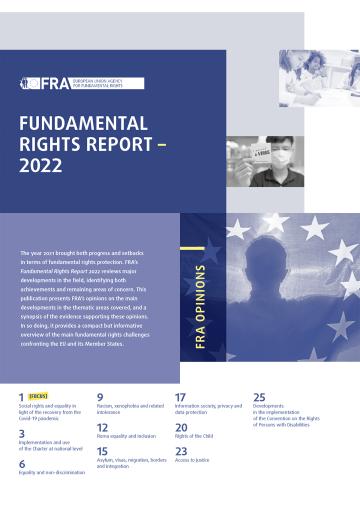
    The year 2021 brought both progress and setbacks in terms of fundamental rights protection. FRA’s Fundamental Rights Report 2022 reviews major developments in the field, identifying both achievements and remaining areas of concern. This publication presents FRA’s opinions on the main developments in the thematic areas covered, and a synopsis of the evidence supporting these opinions.
  • Report / Paper / Summary
    8
    March
    2021
    24 language versions now available
    23 November 2021
    Kjo përmbledhje paraqet idetë kyçe të raportit të dytë kryesor të FRA-së, mbështetur në Anketën për të Drejtat Themelore. Anketa mblodhi të dhëna nga rreth 35 000 njerëz lidhur me përvojat, perceptimet dhe opinionet e tyre mbi një sërë çështjesh që përmblidhen në mënyra të ndryshme nga të drejtat e njeriut.
  • Periodic updates / Series
    21
    July
    2026
    This is the second bulletin in FRA’s new quarterly series monitoring the situation of migrants, asylum seekers and refugees. It covers key developments and ongoing concerns from 1 April to 30 June 2026.

    Following regular reporting on fundamental rights issues related to migration and asylum from 2015 to 2023, FRA resumed the series in 2026 under the EU's 2024 Asylum and Migration Management Regulation, ahead of the June 2026 implementation of the EU Migration and Asylum Pact. The first bulletin, published in April 2026, covered developments from 1 January 2025 to 31 March 2026.
  • Periodic updates / Series
    21
    April
    2026
    From 2015 to 2023, FRA regularly published bulletins on fundamental rights issues related to migration and asylum. As part of the EU's 2024 Asylum and Migration Management Regulation, FRA is now restarting this reporting ahead of the June 2026 implementation of the EU Migration and Asylum Pact. This first bulletin in the new series takes stock of the situation of migrants, asylum seekers and refugees as of March 2026. It looks at key developments between January 2025 and the end of March 2026, as well as ongoing problems and new areas of concern.
  • Report / Paper / Summary
    14
    April
    2026
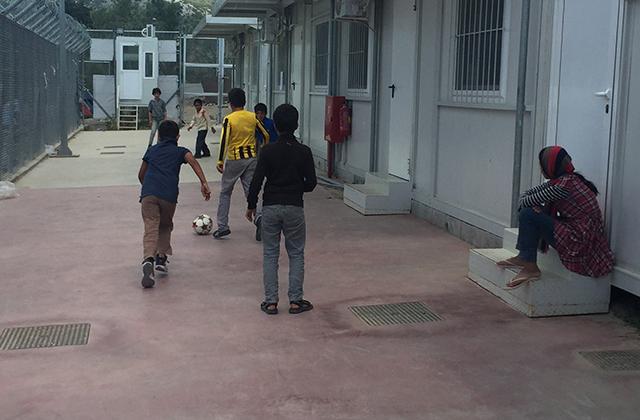
    In response to increased arrivals of asylum seekers, in 2015 the European Commission introduced the hotspot approach. Under this approach, the European Commission and EU agencies supported Greece and Italy in identifying, registering and fingerprinting newly arrived people. FRA regularly visited the initial reception facilities hosting them. This report looks back at the lessons learnt from 10 years of FRA visits. It identifies recurring risks to rights and highlights practical measures and promising practices to prevent or address them. These ‘lessons learnt’ can inform the implementation of the 2024 Pact on Migration and Asylum in line with the EU Charter of Fundamental Rights.
  • Report / Paper / Summary
    4
    December
    2025
    Artificial Intelligence comes with both benefits and risks. Safe AI use that accounts for fundamental rights is thus crucial. While the 2024 EU AI Act was a milestone in this regard, its broad definitions regarding AI systems and high-risk AI could introduce loopholes for fundamental rights compliance. This report offers an empirical basis for much-needed practical guidance on the Act’s implementation. Based on interviews with AI developers, sellers, and users, FRA addresses challenges of its use in critical domains, like asylum, education, and employment. Our findings help guide next steps in realising the AI Act’s potential to ensure responsible innovation.
  • Report / Paper / Summary
    27
    November
    2025
    This report looks at the breadth and depth of violence and neglect faced by people with disabilities living in institutions. It highlights the shortcomings by EU Member States in preventing violence and protecting those who are at a higher risk of experiencing it, in line with the UN Convention on the Rights of Persons with Disabilities. Based on research across all EU Member States and FRA observer candidate countries, the report calls for better protection, stronger prevention of violence, and clear accountability. It urges the EU and its Member States to implement their obligations around equality and fundamental rights.
  • In brief / Factsheet
    1
    September
    2025
    This factsheet focuses on the European arrest warrant and EU Member States obligations to respect fundamental rights. EU law and the European Convention on Human Rights sometimes overlap. The publication clarifies where there are similar principles in different legislation and provides examples of case law. In collaboration, the EU Agency for Fundamental Rights and the European Court of Human Rights produced this short publication. It is designed to aid lawyers and policymakers in understanding and applying the jurisprudence in this area. The August 2025 version now contains recent case-law developments.
  • Opinion / Position Paper
    23
    July
    2025
    This position paper examines how the EU can counter the instrumentalisation of migrants while also upholding fundamental rights. Instrumentalisation refers to countries outside the EU using migration to exert political pressure. This position paper defines the phenomenon, provides examples, and outlines legal obligations under EU law. It provides legal analysis and warns that some responses risk undermining fundamental rights at the EU’s external borders, including the right to asylum. To counter instrumentalisation and uphold fundamental rights, the position paper proposes practical measures for Member States to take, such as sanctions, border controls, and cooperation with private operators.
  • In brief / Factsheet
    27
    May
    2025
    This factsheet focuses on the European arrest warrant and EU Member States obligations to respect fundamental rights. EU law and the European Convention on Human Rights sometimes overlap. The publication clarifies where there are similar principles in different legislation and provides examples of case law. In collaboration, the EU Agency for Fundamental Rights and the European Court of Human Rights produced this short publication. It is designed to aid lawyers and policymakers in understanding and applying the jurisprudence in this area. The 2025 version now contains recent case-law developments.