Migration and Fundamental Rights Bulletin - 2/2026
Following regular reporting on fundamental rights issues related to migration and asylum from 2015 to 2023, FRA resumed the series in 2026 under the EU's 2024 Asylum and Migration Management Regulation, ahead of the June 2026 implementation of the EU Migration and Asylum Pact. The first bulletin, published in April 2026, covered developments from 1 January 2025 to 31 March 2026.
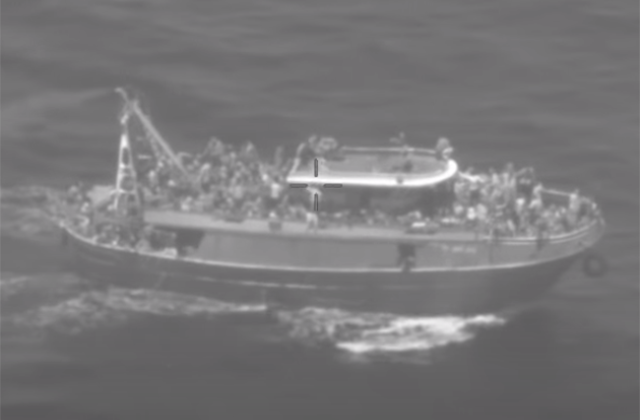
Loss of life at sea and pressure on humanitarian actors supporting migrants continue. Courts in some cases question the legality of restrictive measures against civil society organisations supporting migrants. Interceptions at sea and returns to Libya persist, exposing those brought back to a risk of serious harm.
While fewer people arrive, the number of fatalities remains high, according to the International Organisation for Migration (IOM). Between April and June 2026, at least 559 people were reported dead or missing on sea routes to Europe in the Mediterranean or via Atlantic Ocean crossings to the Spanish Canary Islands, including at least 15 children, according to data communicated by IOM on 10 July 2026. For example, over 80 people died or went missing in a shipwreck in the Central Mediterranean after departing from Libya with some 120 people on board at the beginning of April, according to IOM. The organisation considers 2026 the deadliest start to a year since 2014.
The Italian Red Cross stated that they estimate between 100,000 and 200,000 migrants dead in the Mediterranean in the past 10 years.
In the Central Mediterranean, civil society organisations (CSOs) involved in search and rescue operations at sea play a key role in saving lives but continue to face legal and administrative challenges. In June 2026, leading academic researchers published a policy paper calling for a common European approach to search and rescue in the Mediterranean, arguing for a formula that is fully compliant with international and EU law obligations, anchored in multi-stakeholder collaboration and fair sharing of responsibility.
PICUM’s 2025 report on Criminalisation of solidarity with migrants in the EU highlights the continued targeting of individuals and organisations providing humanitarian assistance. The report documents trends related to legal and administrative measures against those supporting migrants, confirming a pattern of criminalisation. According to the report, at least 110 individuals faced judicial proceedings, and 11 CSOs or similar entities faced administrative sanctions. PICUM also recorded 33 cases of non-judicial harassment. One group of targeted actors are CSOs involved in search and rescue operations at sea. These figures are likely an underestimation, due to limited official data and underreporting.
The Greek government responded to an analysis by the UN Special Rapporteur on Human Rights Defenders of the ‘legal migration law’ of February 2026, which expanded criminal liability of CSOs supporting migrants and increased pressure on them. While the UN Special Rapporteur sees a well-established pattern of stigmatisation and criminalisation of migrants’ rights, the Greek government posits that the law improves transparency and aggravated liability targets only abuse of CSO status, not humanitarian or rescue work.
The CSO Aegean Boat Report states that a Norwegian court blocked Greece’s extradition request for the CSO’s founder Tommy Olsen, ruling that the alleged acts are not punishable in Norway and warning of risks to freedom of expression. He was released pending appeal.
In Italy, after rescuing 44 people stranded on the abandoned Didon oil platform in the Mediterranean, Italian authorities detained Sea-Watch’s rescue vessel, Aurora, in Lampedusa for 45 days and imposed a fine of €7,500, SOS Humanity reported. According to Sea-Watch, Italy initiated a criminal investigation into the Sea-Watch 5 captain after the ship disembarked 166 rescued people in Brindisi. A proposed new immigration law that temporarily prohibits vessels from crossing Italian territorial waters in cases of ‘serious threat to public order or national security,’ including ‘exceptional migratory pressure’ is pending parliamentary approval. Non-compliance by the captain of a vessel foresees administrative fines of €10,000 to €50,000, with seizure of the vessel for repeated violations with the same boat
At the same time, judicial scrutiny of sanctions against search and rescue CSOs is growing. The Court of Agrigento in Sicily issued an interim decision on how the so-called Piantedosi Law should be applied, as stated by Sea-Watch via LinkedIn. Since 2023, this law has imposed stringent obligations and sanctions on CSOs engaged in SAR activities, if they do not comply with the duty to perform only one rescue at a time and to disembark rescued people at the assigned ports, even if these are far away. The court found that Italian authorities cannot use earlier cases to justify escalating sanctions, though such cases are still under judicial review.
In another example, in May 2026, SOS Méditerannée reported that the Court o Chieti annulled the 20-day administrative detention, fine and related sanctions imposed on the vessel Ocean Viking in November 2023 under the same law. The court found that the rescue of 34 people in the Libyan SAR region was lawful and urgently necessary after ineffective rescue coordination by the Libyan authorities. The court reaffirmed that international maritime law obligations prevail where lives are at risk, and that CSOs cannot be sanctioned when state coordination is absent or inadequate. Similarly, the Tribunal of Trapani annulled the detention and fine imposed on Mediterranea’s ship, Mare Jonio, finding the sanctions unlawful, as reported by ANSA, Italy’s leading news agency, in April 2026. The court rejected the argument that the CSO should have followed Libyan coordination, noting that Libya cannot be considered a place of safety for disembarkation.
Libyan authorities continue to pick up migrants and refugees at sea, bringing them back to Libya, where they are exposed to widespread abuse, as described in FRA’s April 2026 Quarterly Migration and Fundamental Rights Bulletin. From 1 January to 13 June 2026, some 9,934 migrants were intercepted and returned to Libya, including 202 children, according to IOM’s Libya Weekly Maritime Update 7 – 13 June 2026.
The Maltese authorities increasingly allow Libyan Coast Guard boats to enter the large Maltese search and rescue zone to intercept boats in distress and return them to Libya, as the transnational network of activists, journalists, academics and anti-racist organisations, ‘Migration Control’, reported in May 2026. The advocacy project 'Malta Migration Archive’ reports that the Armed Forces of Malta rescued people from just three boats out of 565 distress cases recorded in the country’s search and rescue zone in 2025. The project further reports that in April 2026, 48 people, including five children, were returned to Libya from within Malta's search and rescue zone.