eu-charter

EU Charter of Fundamental Rights

The Union shall respect cultural, religious and linguistic diversity.

Explanations

  • Text:

    This Article has been based on Article 6 of the Treaty on European Union and on Article 151(1) and (4) of the EC Treaty, now replaced by Article 167(1) and (4) of the Treaty on the Functioning of the European Union, concerning culture. Respect for cultural and linguistic diversity is now also laid down in Article 3(3) of the Treaty on European Union. The Article is also inspired by Declaration No 11 to the Final Act of the Amsterdam Treaty on the status of churches and nonconfessional organisations, now taken over in Article 17 of the Treaty on the Functioning of the European Union.

    Source:
    Official Journal of the European Union C 303/17 - 14.12.2007
    Preamble - Explanations relating to the Charter of Fundamental Rights:
    The These explanations were originally prepared under the authority of the Praesidium of the Convention which drafted the Charter of Fundamental Rights of the European Union. Although they do not as such have the status of law, they are a valuable tool of interpretation intended to clarify the provisions of the Charter.

Case Law References

National Constitutional Law

32 results found

  • Magyarország Alaptörvénye
    Country:
    Hungary

    VII. cikk (SZABADSÁG ÉS FELELŐSSÉG) (1) Mindenkinek joga van a gondolat, a lelkiismeret és a vallás szabadságához. Ez a jog magában foglalja a vallás vagy más meggyőződés szabad megválasztását vagy megváltoztatását és azt a szabadságot, hogy vallását vagy más meggyőződését mindenki vallásos cselekmények, szertartások végzése útján vagy egyéb módon, akár egyénileg, akár másokkal együttesen, nyilvánosan vagy a magánéletben kinyilvánítsa vagy kinyilvánítását mellőzze, gyakorolja vagy tanítsa. […]

    XV. cikk (SZABADSÁG ÉS FELELŐSSÉG)[…] (2) Magyarország az alapvető jogokat mindenkinek bármely megkülönböztetés, nevezetesen faj, szín, nem, fogyatékosság, nyelv, vallás, politikai vagy más vélemény, nemzeti vagy társadalmi származás, vagyoni, születési vagy egyéb helyzet szerinti különbségtétel nélkül biztosítja. […]

    XXIX. cikk (SZABADSÁG ÉS FELELŐSSÉG) (1) A Magyarországon élő nemzetiségek államalkotó tényezők. Minden, valamely nemzetiséghez tartozó magyar állampolgárnak joga van önazonossága szabad vállalásához és megőrzéséhez. A Magyarországon élő nemzetiségeknek joguk van az anyanyelvhasználathoz, a saját nyelven való egyéni és közösségi névhasználathoz, saját kultúrájuk ápolásához és az anyanyelvű oktatáshoz.
    (2) A Magyarországon élő nemzetiségek helyi és országos önkormányzatokat hozhatnak létre.
    (3) A Magyarországon élő nemzetiségek jogaira vonatkozó részletes szabályokat, a nemzetiségeket és a nemzetiségként való elismerés feltételeit, valamint a helyi és országos nemzetiségi önkormányzatok megválasztásának szabályait sarkalatos törvény határozza meg. Sarkalatos törvény a nemzetiségként való elismerést meghatározott idejű honossághoz és meghatározott számú, magát az adott nemzetiséghez tartozónak valló személy kezdeményezéséhez kötheti.

  • Official Language Law
    Country:
    Latvia

    Section 1The purpose of this Law is to ensure: 1) the maintenance, protection and development of the Latvian language; 2) the maintenance of the cultural and historic heritage of the Latvian nation; 3) the right to freely use the Latvian language in any sphere of life within the whole territory of Latvia; 4) the integration of members of ethnic minorities into the society of Latvia, while observing their rights to use their native language or other languages; 5) the increased influence of the Latvian language in the cultural environment of Latvia, to promote a more rapid integration of society.

  • Portugal / Constitution of the Portuguese Republic
    Country:
    Portugal

    Article 11 (National symbols and official language) (3) The official language is Portuguese.
    ...
    Article 41 (Freedom of conscience, of religion and of form of worship) (1) The freedom of conscience, of religion and of form of worship is inviolable. (2) No one may be persecuted, deprived of rights or exempted from civic obligations or duties because of his convictions or religious observance. (3) No authority may question anyone in relation to his convictions or religious observance, save in order to gather statistical data that cannot be individually identified, nor may anyone be prejudiced in any way for refusing to answer. (4) Churches and other religious communities are separate from the state and are free to organise themselves and to exercise their functions and form of worship. (5) The freedom to teach any religion within the ambit of the religious belief in question and to use the religion’s own media for the pursuit of its activities is guaranteed. (6) The right to be a conscientious objector, as laid down by law, is guaranteed.

    Article 42 (Freedom of cultural creation) (1) There shall be freedom of intellectual, artistic and scientific creation. (2) This freedom comprises the right to invent, produce and divulge scientific, literary and artistic work and includes the protection of copyright by law.

    Article 43 (Freedom to learn and to teach) (1) The freedom to learn and to teach is guaranteed. (2) The state may not programme education and culture in accordance with any philosophical, aesthetic, political, ideological or religious directives. (3) Public education shall not be linked to a religious belief. (4) The right to create private and cooperative schools is guaranteed.
    ...
    Article 73 (Education, culture and science) (1) Everyone has the right to education and culture. (2) The state shall promote the democratisation of education and the other conditions needed for an education conducted at school and via other means of training to contribute to equal opportunities, the overcoming of economic, social and cultural inequalities, the development of the personality and the spirit of tolerance, mutual understanding, solidarity and responsibility, to social progress and to democratic participation in collective life. (3) In cooperation with the media, cultural associations and foundations, cultural and recreational groups, cultural heritage associations, residents’ organisations and other cultural agents, the state shall promote the democratisation of culture by encouraging and ensuring access by all citizens to cultural enjoyment and creation. (4) The state shall encourage and support scientific research and creation and technological innovation, in such a way as to ensure their freedom and autonomy, strengthen competitivity and ensure articulation between scientific institutions and enterprises.
    ...
    Article 78 (Cultural enjoyment and creation) (1) Everyone has the right to cultural enjoyment and creation, together with the duty to preserve, defend and enhance the cultural heritage. (2) In cooperation with all cultural agents, the state is charged with: (a) Encouraging and ensuring access by all citizens to the means and instruments required for cultural activities, and correcting the country’s existing asymmetries in this respect; (b) Supporting initiatives that stimulate individual and collective creation in its multiple forms and expressions, and more travel by high quality cultural works and items; (c) Promoting the safeguarding and enhancement of the cultural heritage and making it an element that inspires and gives life to a common cultural identity; (d) Developing cultural relations with all peoples, especially those that speak Portuguese, and ensuring the defence and promotion of Portuguese culture abroad; (e) Articulating the cultural policy with the other sectoral policies.

  • Romania / Constitution of Romania
    Country:
    Romania

    Article 6(1) The State recognizes and guarantees the right of persons belonging to national minorities to the preservation, development and expression of their ethnic, cultural, linguistic and religious identity. (2) The protection measures taken by the Romanian State for the preservation, development and expression of identity of the persons belonging to national minorities shall conform to the principles of equality and non-discrimination in relation to the other Romanian citizens. Article 13In Romania, the official language is Romanian.

    Article 33(1) The access to culture is guaranteed under the law. (2) A person's freedom to develop his/her spirituality and to get access to the values of national and universal culture shall not be limited. (3) The State must make sure that spiritual identity is preserved, national culture is supported, arts are stimulated, cultural legacy is protected and preserved, contemporary creativity is developed, and Romania's cultural and artistic values are promoted throughout the world.

  • Slovakia / Constitution of the Slovak Republic
    Country:
    Slovakia

     Article 6 (1) The State language of the Slovak Republic is the Slovak language. (2) The use of languages other than the State language in official communications shall be laid down by law.

    Article 12 (…) (3) Everyone has the right to freely decide on his national belonging. Any influence on this decision and any form of pressure aimed at suppressing of anyone’s national belonging are forbidden. (...)

    Article 33 Membership in any national minority, or ethnic group, must not be to anyone's detriment.

    Article 34 (1) Citizens belonging to national minorities or ethnic groups in the Slovak Republic shall be guaranteed their comprehensive development, particularly the rights to promote their culture together with other members of the minority or group, to disseminate and receive information in their mother tongues, to associate in national minority associations, to establish and maintain educational and cultural institutions. Details shall be laid down by law. (2) In addition to the right to master the state language, citizens belonging to national minorities, or ethnic groups, also have, under conditions defined by law, a guaranteed a) right to education in their own language, b) right to use their language in official communications, c) right to participate in the decision-making in affairs concerning national minorities and ethnic groups. (3) The exercise of the rights of citizens belonging to national minorities and ethnic groups that are guaranteed in this Constitution cannot jeopardize the sovereignty and territorial integrity of the Slovak Republic, and to discriminate against other inhabitants.

  • Slovenia / Constitution of the Republic of Slovenia
    Country:
    Slovenia

    Article 5 In its own territory, the state shall protect human rights and fundamental freedoms. It shall protect and guarantee the rights of the autochthonous Italian and Hungarian national communities. It shall maintain concern for autochthonous Slovene national minorities in neighbouring countries and for Slovene emigrants and workers abroad and shall foster their contacts with the homeland. It shall provide for the preservation of the natural wealth and cultural heritage and create opportunities for the harmonious development of society and culture in Slovenia.Slovenes not holding Slovene citizenship may enjoy special rights and privileges in Slovenia. The nature and extent of such rights and privileges shall be regulated by law.

    Article 61 Everyone has the right to freely express affiliation with his nation or national community, to foster and give expression to his culture and to use his language and script.

    Article 62 Everyone has the right to use his language and script in a manner provided by law in the exercise of his rights and duties and in procedures before state and other bodies performing a public function.

    Article 64 The autochthonous Italian and Hungarian national communities and their members shall be guaranteed the right to use their national symbols freely and, in order to preserve their national identity, the right to establish organisations and develop economic, cultural, scientific and research activities, as well as activities in the field of public media and publishing. In accordance with laws, these two national communities and their members have the right to education and schooling in their own languages, as well as the right to establish and develop such education and schooling. The geographic areas in which bilingual schools are compulsory shall be established by law. These national communities and their members shall be guaranteed the right to foster relations with their nations of origin and their respective countries. The state shall provide material and moral support for the exercise of these rights. (...)

    Article 65 The status and special rights of the Romany community living in Slovenia shall be regulated by law.

  • Spain / Constitution of the Kingdom of Spain
    Country:
    Spain

    Section 3 (1) Castilian is the official Spanish language of the State. All Spaniards have the duty to know it and the right to use it. (2) The other Spanish languages shall also be official in the respective Self-governing Communities in accordance with their Statutes. (3) The richness of the different linguistic modalities of Spain is a cultural heritage which shall be specially respected and protected.

  • Suomen perustuslaki
    Country:
    Finland

    6 § Yhdenvertaisuus (...) Ketään ei saa ilman hyväksyttävää perustetta asettaa eri asemaan sukupuolen, iän, alkuperän, kielen, uskonnon, vakaumuksen, mielipiteen, terveydentilan, vammaisuuden tai muun henkilöön liittyvän syyn perusteella. 11 § Uskonnon ja omantunnon vapaus Jokaisella on uskonnon ja omantunnon vapaus. Uskonnon ja omantunnon vapauteen sisältyy oikeus tunnustaa ja harjoittaa uskontoa, oikeus ilmaista vakaumus ja oikeus kuulua tai olla kuulumatta uskonnolliseen yhdyskuntaan. Kukaan ei ole velvollinen osallistumaan omantuntonsa vastaisesti uskonnon harjoittamiseen. 17 § Oikeus omaan kieleen ja kulttuuriin Suomen kansalliskielet ovat suomi ja ruotsi. Jokaisen oikeus käyttää tuomioistuimessa ja muussa viranomaisessa asiassaan omaa kieltään, joko suomea tai ruotsia, sekä saada toimituskirjansa tällä kielellä turvataan lailla. Julkisen vallan on huolehdittava maan suomen- ja ruotsinkielisen väestön sivistyksellisistä ja yhteiskunnallisista tarpeista samanlaisten perusteiden mukaan. Saamelaisilla alkuperäiskansana sekä romaneilla ja muilla ryhmillä on oikeus ylläpitää ja kehittää omaa kieltään ja kulttuuriaan. Saamelaisten oikeudesta käyttää saamen kieltä viranomaisessa säädetään lailla. Viittomakieltä käyttävien sekä vammaisuuden vuoksi tulkitsemis- ja käännösapua tarvitsevien oikeudet turvataan lailla.

  • The Fundamental Law of Hungary
    Country:
    Hungary

    Article VII (Freedom and Responsibility) (1) Everyone shall have the right to freedom of thought, conscience and religion. This right
    shall include the freedom to choose or change one’s religion or other belief, and the freedom
    of everyone to manifest, abstain from manifesting, practise or teach his or her religion or
    other belief through religious acts, rites or otherwise, either individually or jointly with
    others, either in public or in private life. [...] Article XV (Freedom and Responsibility) [...] (2) Hungary shall guarantee fundamental rights to everyone without discrimination and in particular without discrimination on grounds of race, colour, sex, disability, language, religion, political or other opinion, national or social origin, property, birth or any other status. [...] Article XXIX (Freedom and Responsibility) (1) National minorities living in Hungary shall be constituent parts of the State. Every
    Hungarian citizen belonging to a national minority shall have the right to freely express and preserve his or her identity. National minorities living in Hungary shall have the right to use their mother tongue, to use names in their own languages individually and collectively, to nurture their own cultures, and to receive education in their mother tongues.
    (2) National minorities living in Hungary shall have the right to establish their selfgovernment at both local and national level. (3) The detailed rules relating to the rights of national minorities living in Hungary, the national minorities, the requirements for recognition as a national minority, and the rules for the election of the self-governments of national minorities at local and national level shall be laid down in a cardinal Act. A cardinal Act may provide that recognition as a national minority shall be subject to a certain length of time of presence and to the initiative of a certain number of persons declaring to be members of the national minority concerned.

  • Ustav Republike Hrvatske
    Country:
    Croatia

    Članak 15.
    (1)U Republici Hrvatskoj jamči se ravnopravnost pripadnicima svih nacionalnih manjina.
    (4)Pripadnicima svih nacionalnih manjina jamči se sloboda izražavanja nacionalne pripadnosti, slobodno služenje svojim jezikom i pismom i kulturna autonomija.

    Članak 41.
    Sve vjerske zajednice jednake su pred zakonom i odvojene od države.
    Vjerske zajednice slobodne su, u skladu sa zakonom, javno obavljati vjerske obrede, osnivati škole, učilišta, druge zavode, socijalne i dobrotvorne ustanove te upravljati njima, a u svojoj djelatnosti uživaju zaštitu i pomoć države.

  • Το Σύνταγμα της Ελλάδας
    Country:
    Greece

    Άρθρο 5 (2) Όλoι όσoι βρίσκoνται στην Eλληνική Eπικράτεια απoλαμβάνoυν την απόλυτη πρoστασία της ζωής, της τιμής και της ελευθερίας τoυς, χωρίς διάκριση εθνικότητας, φυλής, γλώσσας και θρησκευτικών ή πoλιτικών πεπoιθήσεων. Eξαιρέσεις επιτρέπoνται στις περιπτώσεις πoυ πρoβλέπει τo διεθνές δίκαιo. [...]

  • КОНСТИТУЦИЯ на Република България
    Country:
    Bulgaria

    Чл. 3. Официалният език в републиката е българският. Чл. 6. (1) Всички хора се раждат свободни и равни по достойнство и права.(2) Всички граждани са равни пред закона. Не се допускат никакви ограничения на правата или привилегии, основани на раса, народност, етническа принадлежност, пол, произход, религия, образование, убеждения, политическа принадлежност, лично и обществено положение или имуществено състояние.Чл. 11. [...] (4) Не могат да се образуват политически партии на етническа, расова или верска основа, както и партии, които си поставят за цел насилствено завземане на държавната власт.Чл. 13. (1) Вероизповеданията са свободни.(2) Религиозните институции са отделени от държавата.(3) Традиционна религия в Република България е източноправославното вероизповедание.(4) Религиозните общности и институции, както и верските убеждения не могат да се използват за политически цели.Чл. 36. (1) Изучаването и ползването на българския език е право и задължение на българските граждани. (2) Гражданите, за които българският език не е майчин, имат право наред със задължителното изучаване на българския език да изучават и ползват своя език.(3) Случаите, в които се използва само официалният език, се посочват в закона.

EU Law

7 results found

  • Directive (EU) 2024/1346 of the European Parliament and of the Council of 14 May 2024 laying down standards for the reception of applicants for international protection

    Preamble 


    (31) Applicants who are in detention should be treated with full respect for human dignity and their reception should be specifically designed to meet their needs in that situation. In particular, Member States should ensure that Article 24 of the Charter and Article 37 of the 1989 United Nations Convention on the Rights of the Child are applied.


    (38) In applying this Directive, Member States should seek to ensure full respect for the principles of the best interests of the child and of family unity, in accordance with the Charter, the 1989 United Nations Convention on the Rights of the Child, the European Convention for the Protection of Human Rights and Fundamental Freedoms and, where applicable, the Council of Europe Convention on Preventing and Combating Violence against Women and Domestic Violence.


    (75) This Directive respects the fundamental rights and observes the principles recognised in particular by the Charter. In particular, this Directive seeks to ensure full respect for human dignity and to promote the application of Articles 1, 4, 6, 7, 18, 21, 24 and 47 of the Charter and has to be implemented accordingly.

    Article 19: General rules on material reception conditions and health care

    2.   Member States shall ensure that material reception conditions and health care received in accordance with Article 22 provide an adequate standard of living for applicants, which guarantees their subsistence, protects their physical and mental health and respects their rights under the Charter.

    Article 21: Reception conditions in a Member State other than the one in which the applicant is required to be present

    From the moment applicants have been notified of a decision to transfer them to the Member State responsible in accordance with Regulation (EU) 2024/1351, they shall not be entitled to the reception conditions set out in Articles 17 to 20 of this Directive in any Member State other than the one in which they are required to be present in accordance with Regulation (EU) 2024/1351. This shall be without prejudice to the need to ensure a standard of living in accordance with Union law, including the Charter, and international obligations.

  • Council Directive 2000/43/EC of 29 June 2000 implementing the principle of equal treatment between persons irrespective of racial or ethnic origin

    Preamble 

    (3) The right to equality before the law and protection against discrimination for all persons constitutes a universal right recognised by the Universal Declaration of Human Rights, the United Nations Convention on the Elimination of all forms of Discrimination Against Women, the International Convention on the Elimination of all forms of Racial Discrimination and the United Nations Covenants on Civil and Political Rights and on Economic, Social and Cultural Rights and by the European Convention for the Protection of Human Rights and Fundamental Freedoms, to which all Member States are signatories.

    (9) Discrimination based on racial or ethnic origin may undermine the achievement of the objectives of the EC Treaty, in particular the attainment of a high level of employment and of social protection, the raising of the standard of living and quality of life, economic and social cohesion and solidarity. It may also undermine the objective of developing the European Union as an area of freedom, security and justice.

    (13) To this end, any direct or indirect discrimination based on racial or ethnic origin as regards the areas covered by this Directive should be prohibited throughout the Community. This prohibition of discrimination should also apply to nationals of third countries, but does not cover differences of treatment based on nationality and is without prejudice to provisions governing the entry and residence of third-country nationals and their access to employment and to occupation.

    (14) In implementing the principle of equal treatment irrespective of racial or ethnic origin, the Community should, in accordance with Article 3(2) of the EC Treaty, aim to eliminate inequalities, and to promote equality between men and women, especially since women are often the victims of multiple discrimination.

    (19) Persons who have been subject to discrimination based on racial and ethnic origin should have adequate means of legal protection. To provide a more effective level of protection, associations or legal entities should also be empowered to engage, as the Member States so determine, either on behalf or in support of any victim, in proceedings, without prejudice to national rules of procedure concerning representation and defence before the courts.

    Article 1: Purpose

    The purpose of this Directive is to lay down a framework for combating discrimination on the grounds of racial or ethnic origin, with a view to putting into effect in the Member States the principle of equal treatment.

    Article 2: Concept of discrimination

    1. For the purposes of this Directive, the principle of equal treatment shall mean that there shall be no direct or indirect discrimination based on racial or ethnic origin.

    2. For the purposes of paragraph 1:

    (a) direct discrimination shall be taken to occur where one person is treated less favourably than another is, has been or would be treated in a comparable situation on grounds of racial or ethnic origin;

    (b) indirect discrimination shall be taken to occur where an apparently neutral provision, criterion or practice would put persons of a racial or ethnic origin at a particular disadvantage compared with other persons, unless that provision, criterion or practice is objectively justified by a legitimate aim and the means of achieving that aim are appropriate and necessary.

    3. Harassment shall be deemed to be discrimination within the meaning of paragraph 1, when an unwanted conduct related to racial or ethnic origin takes place with the purpose or effect of violating the dignity of a person and of creating an intimidating, hostile, degrading, humiliating or offensive environment. In this context, the concept of harassment may be defined in accordance with the national laws and practice of the Member States.

    4. An instruction to discriminate against persons on grounds of racial or ethnic origin shall be deemed to be discrimination within the meaning of paragraph 1.

    Article 7: Defence of rights

    1. Member States shall ensure that judicial and/or administrative procedures, including where they deem it appropriate conciliation procedures, for the enforcement of obligations under this Directive are available to all persons who consider themselves wronged by failure to apply the principle of equal treatment to them, even after the relationship in which the discrimination is alleged to have occurred has ended.

    2. Member States shall ensure that associations, organisations or other legal entities, which have, in accordance with the criteria laid down by their national law, a legitimate interest in ensuring that the provisions of this Directive are complied with, may engage, either on behalf or in support of the complainant, with his or her approval, in any judicial and/or administrative procedure provided for the enforcement of obligations under this Directive.

  • European Parliament resolution of 13 November 2018 on minimum standards for minorities in the EU (2018/2036(INI))

    .

  • Treaty on the European Union

    Article 3

    (ex Article 2 TEU)

    3. The Union shall establish an internal market. It shall work for the sustainable development of Europe based on balanced economic growth and price stability, a highly competitive social market economy, aiming at full employment and social progress, and a high level of protection and improvement of the quality of the environment. It shall promote scientific and technological advance.

    It shall combat social exclusion and discrimination, and shall promote social justice and protection, equality between women and men, solidarity between generations and protection of the rights of the child.

    It shall promote economic, social and territorial cohesion, and solidarity among Member States.

    It shall respect its rich cultural and linguistic diversity, and shall ensure that Europe's cultural heritage is safeguarded and enhanced.

  • Treaty on the European Union

    Article 6

    (ex Article 6 TEU)

    1. The Union recognises the rights, freedoms and principles set out in the Charter of Fundamental Rights of the European Union of 7 December 2000, as adapted at Strasbourg, on 12 December 2007, which shall have the same legal value as the Treaties.

    The provisions of the Charter shall not extend in any way the competences of the Union as defined in the Treaties.

    The rights, freedoms and principles in the Charter shall be interpreted in accordance with the general provisions in Title VII of the Charter governing its interpretation and application and with due regard to the explanations referred to in the Charter, that set out the sources of those provisions.

    2. The Union shall accede to the European Convention for the Protection of Human Rights and Fundamental Freedoms. Such accession shall not affect the Union's competences as defined in the Treaties.

    3. Fundamental rights, as guaranteed by the European Convention for the Protection of Human Rights and Fundamental Freedoms and as they result from the constitutional traditions common to the Member States, shall constitute general principles of the Union's law.

  • Treaty on the Functioning of the European Union

    Article 17

    1. The Union respects and does not prejudice the status under national law of churches and religious associations or communities in the Member States.

    2. The Union equally respects the status under national law of philosophical and non-confessional organisations.

    3. Recognising their identity and their specific contribution, the Union shall maintain an open, transparent and regular dialogue with these churches and organisations.

  • Treaty on the Functioning of the European Union

    Article 167

    (ex Article 151 TEC)

    1. The Union shall contribute to the flowering of the cultures of the Member States, while respecting their national and regional diversity and at the same time bringing the common cultural heritage to the fore.

    4. The Union shall take cultural aspects into account in its action under other provisions of the Treaties, in particular in order to respect and to promote the diversity of its cultures.

International Law

0 results found

Publications and data

  • Report / Paper / Summary
    21
    January
    2021
    All language versions now available
    16 April 2021
    National Human Rights Institutions (NHRIs) are a vital part of the country-level human rights protection system. By raising awareness, providing advice, monitoring and holding authorities to account, they have a central role in navigating the great human rights challenges of our day – tackling both persistent concerns like discrimination and inequality, and novel issues such as the rights implications of artificial intelligence and of the COVID-19 pandemic.
  • Report / Paper / Summary
    3
    September
    2020
    Summary version now available
    21 January 2021
    National Human Rights Institutions (NHRIs) are a vital part of the country-level human rights protection system. This report, published 10 years after FRA’s first in-depth study on NHRIs, looks at such bodies in the EU, as well as the Republic of North Macedonia, the Republic of Serbia, and the United Kingdom of Great Britain and Northern Ireland. It explores relevant developments, challenges to their effectiveness and ways to maximise their impact.
  • Report / Paper / Summary
    3
    November
    2022
    Antisemitic incidents and hate crimes violate fundamental rights, especially the right to human dignity, the right to equality of treatment and the freedom of thought, conscience and religion. This report provides an overview of available data on antisemitism as recorded by official and unofficial sources in the EU Member States and in Albania, North Macedonia and Serbia. The data provided by the countries are supplemented with information from international organisations.
  • Fundamental Rights Report
    8
    June
    2022
    FRA’s Fundamental Rights Report 2022 reviews major developments in the field in 2021, identifying both achievements and areas of concern. It also presents FRA’s opinions on these developments, including a synopsis of the evidence supporting these opinions.
  • Report / Paper / Summary
    9
    November
    2021
    Antisemitic incidents and hate crimes violate fundamental rights, especially the right to human dignity, the right to equality of treatment, and the freedom of thought, conscience and religion. This report provides an overview of available data on antisemitism as recorded by official and unofficial sources in the EU Member States as well as Albania, North Macedonia and Serbia. The data provided by the countries are supplemented with information from international organisations.
  • Report / Paper / Summary
    23
    September
    2020
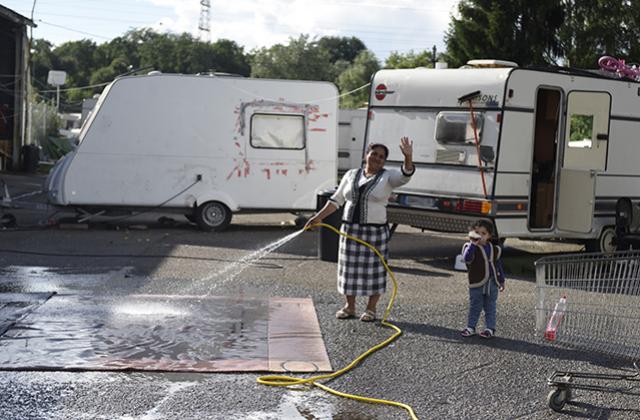
    This report presents findings from FRA’s 2019 survey on Roma and Travellers in Belgium, France, Ireland, the Netherlands, Sweden and the United Kingdom. The survey included interviews with almost 4,700 Roma and Travellers, collecting information on more than 8,200 individuals living in their households.
  • Report / Paper / Summary
    12
    September
    2019
    FRA’s second EU Minorities and Discrimination survey (EU-MIDIS II) collected information from over 25,000 respondents with different ethnic minority and immigrant backgrounds across all 28 EU Member States. The main findings from the survey, published in 2017, pointed to a number of differences in the way women and men with immigrant backgrounds across the European Union (EU) experience how their rights are respected. This report summarises some of the most relevant survey findings in this regard, which show the need for targeted, gender-sensitive measures that promote the integration of – specifically – women who are immigrants or descendants of immigrants.
  • Easy-to-read report
    3
    January
    2018
    More than 20 million immigrants lived in the European Union in 2016. This means that 1 person in 25 was an immigrant. Having more immigrants and refugees makes it even more important for the governments to have plans to help them to integrate.
  • Report / Paper / Summary
    15
    March
    2017
    Integrating migrants, refugees and their descendants is of critical importance for the future of the European Union. This report examines Member States’ integration policies and action plans for promoting their participation in society, focusing on non-discrimination, education, employment, language learning and political engagement.
  • Report / Paper / Summary
    29
    September
    2011
    This report examines what the Treaty of Lisbon means for the protection of minorities, and the policies the EU has recently adopted in this field. It provides evidence of the still persistent phenomenon of discrimination found in many areas of life, including employment, housing, healthcare and education.