Newsroom

FRA will hold a meeting to prepare for the second part of its Procedural safeguards for children who are suspects or accused in criminal proceedings project.
FRA has just released key findings from its consultation with its Fundamental Rights Platform on the impact of COVID-19 measures on the work of human rights civil society.
Women in Europe continue to face widespread harassment and violence. Many limit where they go and whom they meet out of worry of being attacked. And when attacked, they often do not report it. These are some of the findings of the Fundamental Rights Agency’s (FRA) recent survey into people’s experiences with different types of crimes. On International Women’s Day, FRA calls for better support for women to ensure they can access their rights.
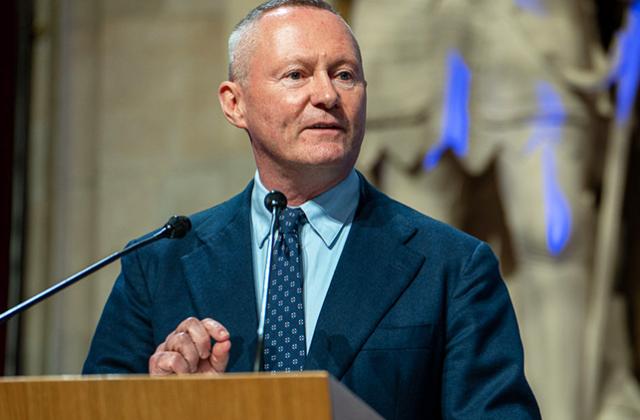
FRA Director Michael O'Flaherty visited the Canary Islands in March 2021 to get a sense of the migration situation there. He highlights the need to support the Canary Islands in relocating unaccompanied children and providing clear procedures on asylum applications.
On 11 March, FRA will give a virtual lecture about the EU justice system and its legal bodies to the EU Delegation to Turkmenistan. FRA will give an overview on the EU policy system, the Agency’s work and how it protects human rights in the EU.
FRA will present findings from its work on the impact of COVID-19 on fundamental rights during the UNECE Regional Forum on Sustainable Development. It will be part of discussions on 10 March on how human rights can guide sustainable recovery. FRA will also draw on its work on implementing the Sustainable Development Goals in the EU. The event focuses on how to ensure that the principle of leaving no-one behind is entrenched in COVID-19 recovery strategies and plans.
FRA will give a presentation during a meeting on victims’ participation in criminal proceedings and access to justice. FRA will draw on its recently-published results from the Fundamental Rights Survey, as well as other FRA research.
The FRA Director will meet Werner Amon, one of the three Heads of the Austrian NHRI (Volksanwaltschaft) on 9 March.
The FRA Director will exchange views with EU Ministers of Justice during their informal videoconference on 11 March.
News Item
FRA’s Management Board issued its opinion on the agency’s thematic work areas for 2023-2027.
Two days of stimulating discussions, over 145 different sessions, 6 locations – that was the Fundamental Rights Forum 2021 in a nutshell. With over 3,000 people joining the Forum in Vienna and online, it was the biggest human rights event in Europe this year.

FRA will present its research findings during a side meeting at the UN Crime Congress. It will draw on results from its violence against women survey and fundamental rights survey.
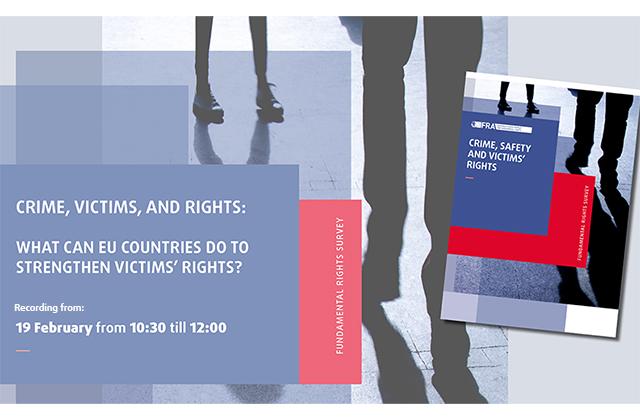
Crime can touch any of us – as witnesses or as victims. But no matter who you are, we all have rights when it comes to justice. It is for this reason that the European Union Agency for Fundamental Rights asked 35,000 people across Europe about their experiences of crime in its Fundamental Rights Survey, and the results are in.
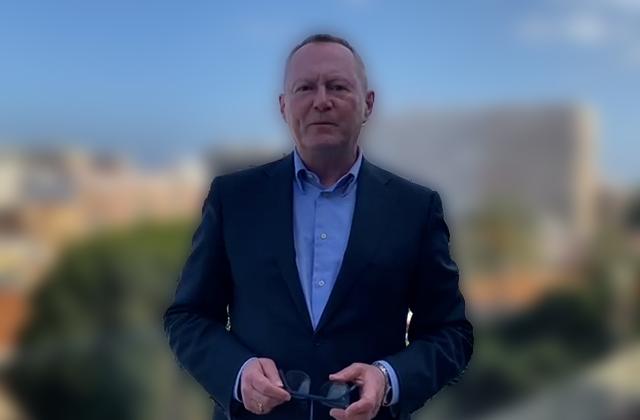
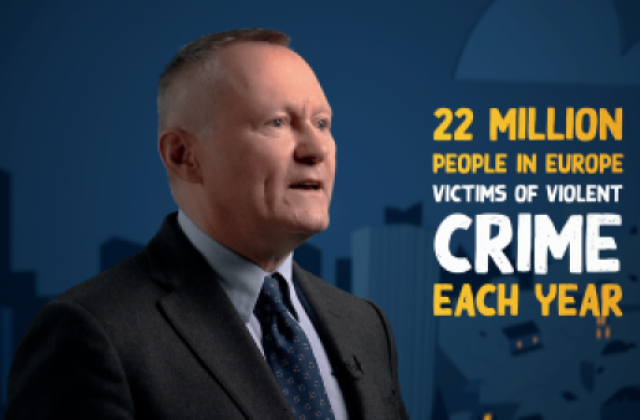
We don’t all experience crime in the same way, and we might deal with it differently. But it’s vital – as victims or witnesses – that our rights are guaranteed, because access to justice is our fundamental right. Watch FRA Director Michael O’Flaherty speaking on the Fundamental Rights Survey report on crime, safety and victims’ rights.
Video
In his latest vlog FRA Director Michael O'Flaherty calls for making Covid-19 vaccine equality a top priority for 2021.
More than one in four Europeans were victims of harassment and 22 million were physically attacked in one year. But crime victims typically do not report their experiences. They often have difficulties accessing their rights and may feel voiceless. These are the results of the first-ever EU-wide survey on the general population’s experience of crime, carried out by the EU Agency for Fundamental Rights (FRA). The results reveal how targeted measures can help governments support victims and make it easier to report crime and receive justice.
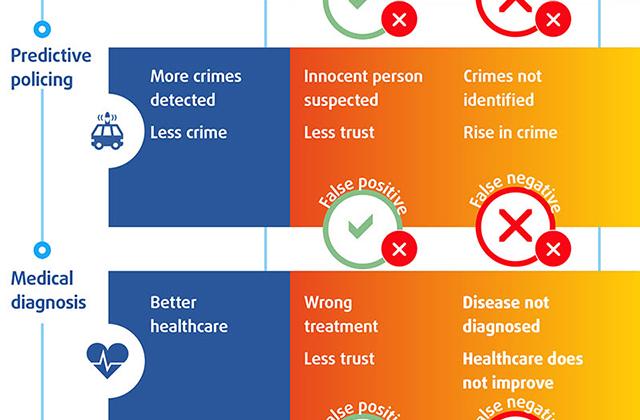
Artificial intelligence (AI) already plays a role in many decisions that affect our daily lives. From deciding what unemployment benefits someone gets to where a burglary is likely to take place. But we need to make sure to fully uphold fundamental rights standards when using AI. Drawing on the ‘Getting the future right – Artificial intelligence and fundamental rights’ report, FRA explores the potential benefits and possible errors that can occur focusing on four core areas – social benefits, predictive policing, health services and targeted advertising.
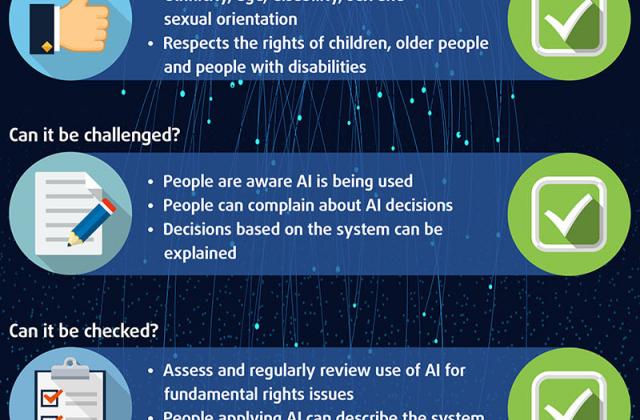
Artificial intelligence (AI) already plays a role in many decisions that affect our daily lives. From deciding what unemployment benefits someone gets to where a burglary is likely to take place. But we need to make sure to fully uphold fundamental rights standards when using AI. Drawing on the ‘Getting the future right – Artificial intelligence and fundamental rights’ report, FRA presents a number of key considerations to help businesses and administrations respect fundamental rights when using AI.