In today’s media landscape the way in which journalists and editors receive, process and publish news is constantly changing. Journalists face immense time pressure, as news frequently breaks online To facilitate training on the coverage of migration news, this Trainer’s Manual is a tool to be used together with the e-Media Toolkit.
This report looks at five core aspects of detention conditions in EU Member States: the size of cells; the amount of time detainees can spend outside of these cells, including outdoors; sanitary conditions; access to healthcare; and whether detainees are protected from violence. For each of these aspects of detention conditions, the report first summarises the minimum standards at international and European levels. It then looks at how these standards are translated into national laws and other rules of the EU Member States.
Over 2.5 million people applied for international protection in the 28 EU Member States in 2015 and 2016. Many of those who were granted some form of protection are young people, who are likely to stay and settle in the EU. The EU Agency for Fundamental Rights interviewed some of them, as well as professionals working with them in 15 locations across six EU Member States: Austria, France, Germany, Greece, Italy and Sweden. This report presents the result of FRA’s fieldwork research, focusing on young people between the
ages of 16 and 24.
Child rights come first. Measures to ensure child protection and participation apply to all children in the EU. This brochure guides you to relevant FRA reports and tools that can support you when promoting and protecting the rights of all children in the EU.
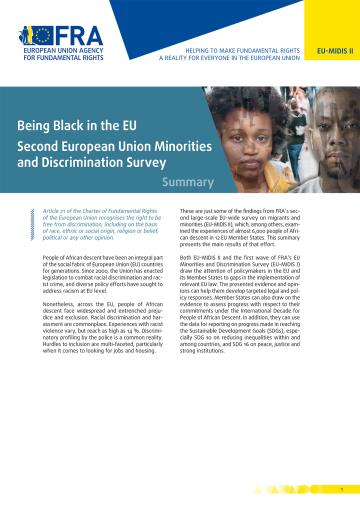
Across the EU, people of African descent face widespread and entrenched prejudice and exclusion. Racial discrimination and harassment are commonplace. Experiences with racist violence vary, but reach as high as 14 %. Discriminatory profiling by the police is a common reality. Hurdles to inclusion are multi-faceted, particularly when it comes to looking for jobs and housing.
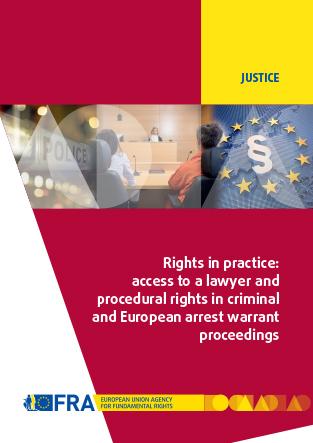
Protecting the rights of anyone suspected or accused of a crime is an essential element of the rule of law. Courts, prosecutors and police officers need certain powers to enforce the law – but trust in the outcomes of their efforts will quickly erode without effective safeguards. Such safeguards take on various forms, and include the right to certain information and to a lawyer.
Individuals who are not entitled to stay in the European Union are typically subject to being returned to their home countries. This includes children who are not accompanied by their parents or by another primary caregiver. But returning such children, or finding another durable solution, is a delicate matter, and doing so in full compliance with fundamental rights protections can be difficult. This focus paper therefore aims to help national authorities involved in return-related tasks, including child-protection services, to ensure full rights compliance.
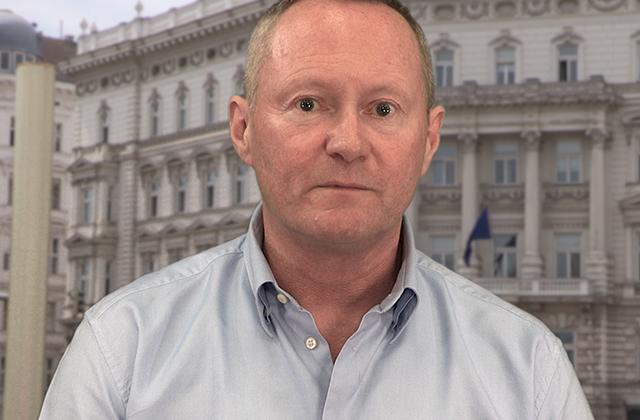
In the latest edition of his video blog, FRA Director Michael O'Flaherty focuses on the migration situation in the Mediterranean Sea and makes three proposals.
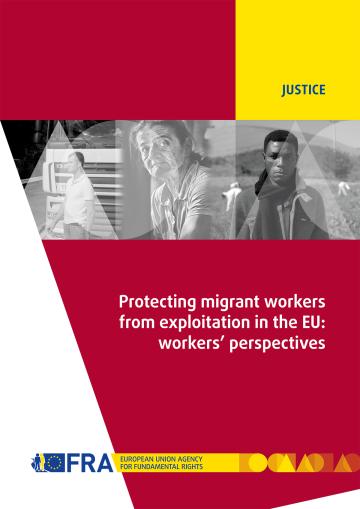
This report is the EU Fundamental Rights Agency’s fourth on the topic of severe labour exploitation. Based on interviews with 237 exploited workers, it paints a bleak picture of severe exploitation and abuse. The workers include both people who came to the EU, and EU nationals who moved to another EU country. They were active in diverse sectors, and their legal status also varied.
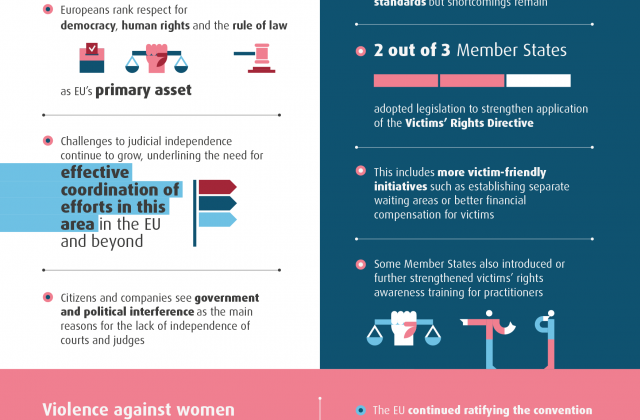
Fundamental Rights Report 2019: In some Member States access to justice faces challenges. Judicial independence continues to cause
concerns. Victims’ procedural rights need more effective implementation. Gaps in preventing
violence against women and domestic violence remain.
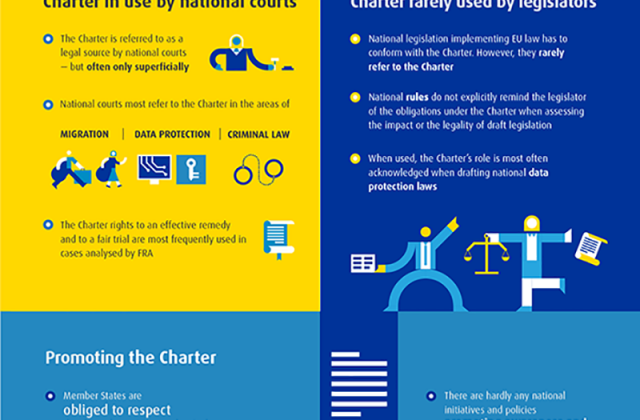
Fundamental Rights Report 2019: The Charter of Fundamental Rights is the EU’s bill of human rights. These rights and principles have to be respected and promoted by EU institutions and Member States whenever they act within EU law. Approaching the Charter’s 10th anniversary, Member States do not yet make full use of the potential it offers.
The Consolidated Annual Activity Report (CAAR) 2018 provides an overview of the activities and achievements of the European Union Agency for Fundamental Rights (FRA) in that year. It follows the guidelines established by the European Commission.
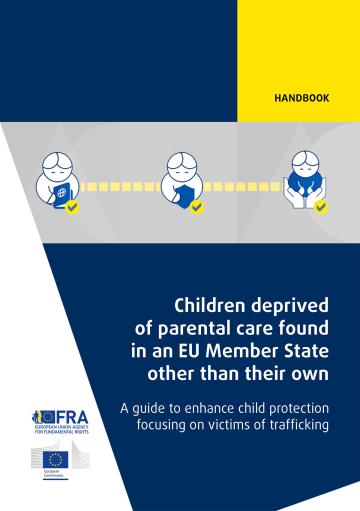
Children deprived of parental care found in another EU Member State other than their own aims to strengthen the response of all relevant actors for child protection. The protection of those girls and boys is paramount and an obligation for EU Member States, derived from the international and European legal framework. The guide includes a focus on child victims of trafficking and children at risk, implementing an action set forth in the 2017 Communication stepping up EU action against trafficking in human beings, and takes into account identified patterns, including with respect to the gender specificity of the crime.
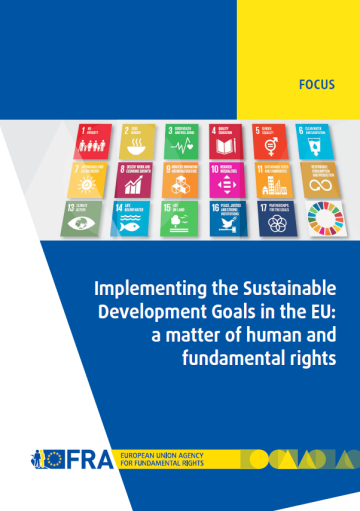
This year’s focus explores the interrelationship between the human and fundamental rights framework and the Sustainable
Development Goals (SDGs) of the global Agenda 2030 in the context of Member States’ and the EU’s internal policies.
It takes a closer look at the SDGs related to reducing inequality (SDG 10) and promoting peace, justice and strong
institutions (SDG 16).
In the latest edition of his video blog, FRA Director Michael O'Flaherty talks about discrimination on the basis of age in the EU and calls for more respect for Human- and Fundamental Rights of older people.
Member States have an explicit duty to promote the Charter’s application. These country-sheets support that effort by giving examples of the Charter’s use and highlighting how it adds value.
This Opinion aims to inform the European Parliament’s position on the legislative proposal for a Regulation on preventing the dissemination of terrorist content online, presented by the European Commission on 12 September 2018.
This summary report presents the key findings of the fieldwork to identify and understand the operation of barriers to and drivers of successful investment in Roma inclusion and the FRA opinions stemming from them.