This Opinion by FRA aims to inform the European Parliament’s position on the legislative proposal for a recast Directive on common standards and procedures in Member States for returning illegally staying third country nationals (Return Directive), presented by the European Commission on 12 September 2018.
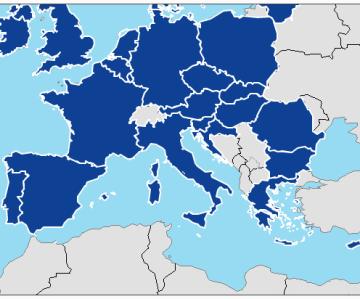
This report outlines the main findings of FRA’s second survey on Jewish people’s experiences with hate crime, discrimination and antisemitism in the European Union – the biggest survey of Jewish people ever conducted worldwide. Covering 12 EU Member States, the survey reached almost 16,500 individuals who identify as being Jewish. It follows up on the agency’s first survey, conducted in seven countries in 2012.
This Opinion by the European Union Agency for Fundamental Rights (FRA) aims to inform
the European Parliament’s position on the legislative proposal on the European Border and
Coast Guard (EBCG) presented by the European Commission on 12 September 2018.
This guide explains what profiling is, the legal frameworks that regulate it, and why conducting profiling lawfully is both necessary to comply with fundamental rights and crucial for effective policing and border management. The guide also provides practical guidance on how to avoid unlawful profiling in police and border management operations.
Almost twenty years after adoption of EU laws forbidding discrimination, people of African descent in the EU face widespread and entrenched prejudice and exclusion. This report outlines selected results from FRA's second large-scale EU-wide survey on migrants and minorities (EU-MIDIS II) carried out in 2016. It examines the experiences of almost 6,000 people of African descent in 12 EU Member States.
This report presents the main insights gained during the EU Fundamental Rights Agency’s project on local engagement for Roma inclusion, which explores how to best involve Roma in integration efforts at the local level. Bringing together local authorities and residents, especially Roma, it investigated what aspects work, which ones do not, and why this is the case.
The EU Agency for Fundamental Rights’ 2018 Fundamental Rights Forum
brought together more than 700 human rights champions at a time of
widening social divisions and increasingly polarised politics across
Europe.
As a very modern human rights catalogue containing many rights not found in established bills of rights, the Charter indeed looks good on paper. Those familiar with the main principles of EU law can usually quickly recite that the Charter is always binding on the EU, and binding on Member States only when they are "implementing EU law". But what does this often-quoted language from Article 51 of the Charter actually mean?
This note draws attention to the recent trend of criminalising search and rescue operations (SAR) in the Mediterranean Sea carried out by non-governmental organisations (NGOs) or other private entities. This includes seizing rescue vessels, as well as arrests for crew members, in some EU Member States. Most of such incidents concerned NGOs operating in the Central Mediterranean Sea.
These 10 keys sum up the core points
communicators and practitioners in various fields
raised in FRA’s expert meetings, practitioners’
seminars and focus groups in 2017 and 2018.
In November 2017, the European Commission requested FRA’s support in evaluating the impact on fundamental rights of the European Border Surveillance System (Eurosur) Regulation. Further to this request, FRA reviewed the work of the European Border and Coast Guard Agency (Frontex) and analysed cooperation agreements concluded by EU Member States with third countries which are relevant for the exchange of information for the purposes of Eurosur. This report presents the main findings of such review.
The Consolidated Annual Activity Report (CAAR) 2017
provides an overview of the activities and achievements
of the European Union Agency for Fundamental
Rights (FRA) in that year. It follows the guidelines of
the European Union (EU) Agencies Network.
European societies are not getting any younger! It is a simple truth we must face both about ourselves and Europe as a whole. In two generations, by 2080, those aged 65 or above will account for almost 30% of the European Union’s population.
The year 2017 brought both progress and setbacks in terms of rights protection. The European Pillar of Social Rights marked an important move towards a more ‘social Europe’. But, as experiences with the EU Charter of Fundamental Rights underscore, agreement on a text is merely a first step. Even in its eighth year as the EU's binding bill of rights, the Charter's potential was not fully exploited, highlighting the need to more actively promote its use.
The right to access justice and all other relevant procedural rights are not just rights in themselves; they also protect against violations of every other right. Respect for children’s rights in the area of justice is therefore essential. International treaties, the Charter of Fundamental Rights of the European Union, European Union (EU) secondary law, and national legislation provide a number of relevant rights.
Despite ambitious initiatives, the fundamental rights situation of Roma in the EU remains profoundly troubling. This report examines the persisting phenomenon of anti-Gypsyism and its effect on Roma inclusion efforts. It first presents data on key manifestations of anti-Gypsyism, namely discrimination, harassment and hate crime.
This report outlines the fundamental rights implications of collecting, storing and using
biometric and other data in EU IT systems in the area of asylum and migration.
European non-discrimination law, as constituted in particular by the EU non-discrimination directives, and Article 14 of and Protocol 12 to the European Convention on Human Rights, prohibits discrimination across a range of contexts and grounds. This handbook examines European non-discrimination law stemming from these two sources as complementary systems, drawing on them interchangeably to the extent that they overlap, while highlighting differences where these exist.
In this third edition of his video blog FRA Director, Michael O'Flaherty, focuses on bolstering our human rights communications to underline why human rights matter to us all.
Civil society organisations in the European Union play a crucial role in promoting fundamental rights, but it has become harder for them to do so – due to both legal and practical restrictions. This report looks at the different types and patterns of challenges faced by civil society organisations working on human rights in the EU.