Since September 2020, three National Human Rights Institutions (NHRIs) had a change in their accreditation status, two new institutions were created and nine have had a change in tasks covered by their mandates. Following up on the September 2020 report “Strong and effective national human rights institutions – challenges, promising practices and opportunities”, this update provides an overview of developments in the accreditation status and mandates of NHRIS in the past 12 months. The update covers the 27 EU Member States as well as three additional states within FRA’s mandate (Albania, North Macedonia and Serbia).
This note sets out human rights standards stemming from both the European Convention on Human Rights and European Union (EU) law that apply to effective remedies for human rights violations at borders, together with those on complaints mechanisms and investigations into complaints of rights violations at borders.
Τα εγκλήματα μίσους που υποκινούνται από τον ρατσισμό, την ξενοφοβία, τη θρησκευτική μισαλλοδοξία ή την αναπηρία ενός ατόμου, τον γενετήσιο προσανατολισμό, την ταυτότητα φύλου, την έκφραση φύλου και τα χαρακτηριστικά του φύλου αποτελούν σοβαρές εκφράσεις διακρίσεων. Εκτός από την παραβίαση των δικαιωμάτων των μεμονωμένων θυμάτων, ένα τέτοιο έγκλημα αποδυναμώνει την κοινωνική συνοχή και βλάπτει το κοινωνικό σύνολο.
This report examines why victims do not report bias-motivated incidents and the barriers that they face when reporting incidents through national crime reporting systems. By mapping existing practices that have a bearing on the victim’s experiences when reporting bias-motivated violence and harassment, it aims to provide evidence to support national efforts to encourage and facilitate reporting – and ultimately assist Member States in delivering on their duties with regard to combating hate crime.
La presente relazione esamina i motivi per cui le vittime non denunciano gli episodi motivati da pregiudizi e le barriere che incontrano quando denunciano gli episodi attraverso i sistemi nazionali di denuncia dei reati. Mappando le prassi esistenti che hanno un impatto sulle esperienze delle vittime quando denunciano la violenza e le molestie motivate da pregiudizi, si vuole fornire prove a sostegno degli sforzi nazionali per incoraggiare e facilitare la denuncia — e in definitiva aiutare gli Stati membri ad adempiere ai loro obblighi in materia di lotta contro i reati d’odio.
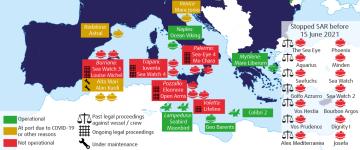
The International Organization for Migration estimates that about 813 people died or went missing crossing the Mediterranean Sea to reach Europe to escape war, persecution or to pursue a better life in 2021, up to 15 June. This is an average of almost five people per day. The EU Agency for Fundamental Rights (FRA) collects data on NGO ships involved in search and rescue in the Mediterranean, legal proceedings against them, as well as difficulties in disembarking migrants in safe ports.
FRA’s Fundamental Rights Report 2021 reviews major developments in the field in 2020, identifying both achievements and areas of concern. It also presents FRA’s opinions on these developments, including a synopsis of the evidence supporting these opinions. This year’s focus chapter explores the impact of the COVID-19 pandemic on fundamental rights. The remaining chapters cover: the EU Charter of Fundamental Rights; equality and non-discrimination; racism, xenophobia and related intolerance; Roma equality and inclusion; asylum, borders and migration; information society, privacy and data protection; rights of the child; access to justice; and the implementation of the Convention on the Rights of Persons with Disabilities.
There are many reasons for the police to stop someone. But prejudice should not be one of them. Find out what FRA is doing to end discriminatory police stops.
This paper presents statistical survey data for the EU on how often people are stopped by the police, in what kind of situations they are stopped, the action taken by the police during stops, and views on whether or not the police acted respectfully.
This opinion illustrates the extent and nature of lived experiences of inequality and discrimination across the EU. It does so with reference to the grounds of discrimination and areas of life covered by the racial and employment equality directives, as well as in relation to the grounds and areas covered by the proposed Equal Treatment Directive.
This report looks at the practical implementation of the presumption of innocence in criminal proceedings, and related rights, in 9 EU Member States (Austria, Belgium, Bulgaria, Cyprus, Germany, Italy, Lithuania, Poland and Portugal). Article 48 of the EU Charter of Fundamental Rights guarantees the presumption of innocence – but, as FRA’s research underscores, it can be undermined in many ways.
There are many reasons why adults may find themselves in a situation of vulnerability - because of their age, health or disability. Vulnerable people are at greater risk of unfair treatment, exploitation or abuse. And cross-border settings can lead to additional obstacles. It's time to address these challenges and identify the needs of vulnerable adults so everyone can enjoy their fundamental rights.
FRA Director Michael O'Flaherty, in his latest vlog, reflects on the migration situation at the EU’s external borders. He highlights the need for sustained joined-up efforts from all relevant bodies, including civil society, to protect the wellbeing and human rights of migrants. He underlines the importance of working with local communities as we receive migrants into our communities. He also points to room for improvement is our treatment of unaccompanied children.
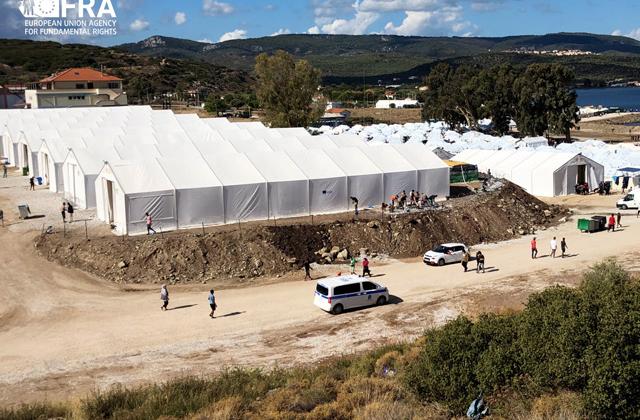
This note outlines how to help ensure a dignified stay for third-country nationals who are apprehended or intercepted at external borders. Specifically, FRA identifies twelve points for protection-sensitive and fundamental rights-compliant planning and design of initial-reception facilities at such borders. These are based on the agency’s work at external borders, including data collection and research activities.
В настоящото резюме се представят основните
изводи от втория основен доклад на FRA, които
се базират на проучването ѝ за основните
права. В проучването са събрани данни от около
35 000 лица относно техния опит, възприятия
и мнения по редица въпроси, които са
обхванати по различен начин от правата на
човека.
Toto shrnutí představuje hlavní poznatky z druhé
hlavní zprávy agentury FRA, která vychází
z průzkumu o základních právech. Průzkum
shromáždil od přibližně 35 000 osob údaje o jejich
zkušenostech, vnímání a názorech na celou řadu
otázek, které různým způsobem zasahují do oblasti
lidských práv.
Dette sammendrag fremlægger den vigtigste
information fra FRA’s anden hovedrapport, der er
baseret på agenturets undersøgelse om
grundlæggende rettigheder. I undersøgelsen blev
der indsamlet data fra ca. 35 000 personer om
deres oplevelser, opfattelse og holdninger
vedrørende en række problemstillinger, der på
forskellig vis er omfattet af
menneskerettighederne.
Η παρούσα περίληψη παρουσιάζει τα κυριότερα
στοιχεία της δεύτερης κύριας έκθεσης του Οργανισμού
Θεμελιωδών Δικαιωμάτων της Ευρωπαϊκής Ένωσης
(FRA) η οποία βασίζεται στην έρευνά του για τα
θεμελιώδη δικαιώματα. Για τις ανάγκες της έρευνας
συλλέχθηκαν δεδομένα από περίπου 35 000 πολίτες
σχετικά με τις εμπειρίες, τις αντιλήψεις και τη γνώμη
τους για μια σειρά θεμάτων που άπτονται με ποικίλους
τρόπους των ανθρωπίνων δικαιωμάτων.
This summary presents the main insights from FRA’s second main report based on its Fundamental Rights Survey. The survey collected data from around 35,000 people about their experiences, perceptions and opinions on a range of issues that are variously encompassed by human rights.
Este resumen presenta las principales percepciones
del segundo informe de la FRA basado en su
Encuesta sobre los derechos fundamentales. La
encuesta recabó datos de unas 35 000 personas
sobre sus experiencias, percepciones y opiniones
en relación con una serie de cuestiones
relacionadas, de diversas maneras, con los
derechos humanos.