European non-discrimination law, as constituted in particular by the EU non-discrimination directives, and Article 14 of and Protocol 12 to the European Convention on Human Rights, prohibits discrimination across a range of contexts and grounds. This handbook examines European non-discrimination law stemming from these two sources as complementary systems, drawing on them interchangeably to the extent that they overlap, while highlighting differences where these exist.
Seventeen years after adoption of EU laws that forbid discrimination, immigrants, descendants of immigrants, and minority ethnic groups continue to face widespread discrimination across the EU and in all areas of life – most often when seeking employment. For many, discrimination is a recurring experience. This is just one of the findings of FRA’s second European Union Minorities and Discrimination Survey (EU-MIDIS II), which collected information from over 25,500 respondents with different ethnic minority and immigrant backgrounds across all 28 EU Member States.
Diverse efforts at both EU and national levels sought to bolster fundamental rights protection in 2016, while some measures threatened to undermine such protection.
Diverse efforts at both EU and national levels sought to bolster fundamental rights protection in 2016, while some measures threatened to undermine such protection.
This year marks the 10th anniversary of the EU Agency for Fundamental Rights. Such a milestone offers an opportunity for reflection – both on the progress that provides cause for celebration and on the lingering shortcomings that must be addressed.
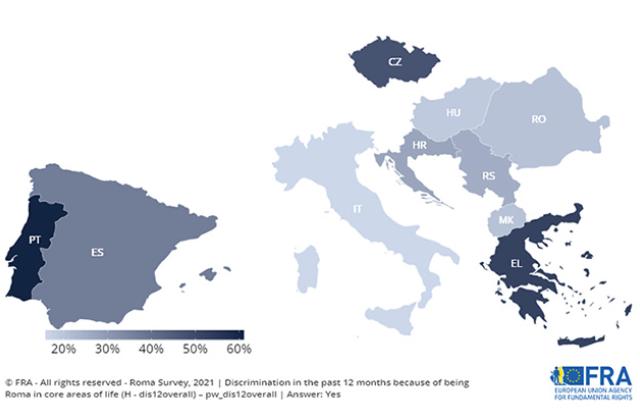
Some 80% of Roma surveyed live below their country’s at-risk-of-poverty threshold; every third Roma lives in housing without tap water; every third Roma child lives in a household where someone went to bed hungry at least once in the previous month; and 50% of Roma between the ages of six and 24 do not attend school. This EU-MIDIS II report underscores an unsettling but unavoidable reality: the European Union’s largest ethnic minority continues to face intolerable discrimination and unequal access to vital services.


 Report / Paper / Summary2October2025