eu-charter

EU Charter of Fundamental Rights

1. Everyone has the right to engage in work and to pursue a freely chosen or accepted occupation.
2. Every citizen of the Union has the freedom to seek employment, to work, to exercise the right of establishment and to provide services inany Member State
3. Nationals of third countries who are authorised to work in the territories of the Member States are entitled to working conditions equivalent to those of citizens of the Union.

Explanations

  • Text:

    Freedom to choose an occupation, as enshrined in Article 15(1), is recognised in Court of Justice case law (see inter alia judgment of 14 May 1974, Case 4/73 Nold [1974] ECR 491, paragraphs 12 to 14 of the grounds; judgment of 13 December 1979, Case 44/79 Hauer [1979] ECR 3727; judgment of 8 October 1986, Case 234/85 Keller [1986] ECR 2897, paragraph 8 of the grounds).

    This paragraph also draws upon Article 1(2) of the European Social Charter, which was signed on 18 October 1961 and has been ratified by all the Member States, and on point 4 of the Community Charter of the Fundamental Social Rights of Workers of 9 December 1989. The expression "working conditions" is to be understood in the sense of Article 156 of the Treaty on Functioning of the European Union.

    Paragraph 2 deals with the three freedoms guaranteed by Articles 26, 45, 499 and 56 of the Treaty on Functioning of the European Union, namely freedom of movement for workers, freedom of establishment and freedom to provide services.

    Paragraph 3 is based on Article 153(1) (g) of the Treaty on Functioning of the European Union and on Article 19(4) of the European Social Charter signed on 18 October 1961 and ratified by all the Member States. Article 52(2) of the Charter is therefore applicable. The question of recruitment of seamen having the nationality of third States for the crews of vessels flying the flag of a Member State of the Union is governed by Community law and national legislation and practice.

    Source:
    Official Journal of the European Union C 303/17 - 14.12.2007
    Preamble - Explanations relating to the Charter of Fundamental Rights:
    These explanations were originally prepared under the authority of the Praesidium of the Convention which drafted the Charter of Fundamental Rights of the European Union. Although they do not as such have the status of law, they are a valuable tool of interpretation intended to clarify the provisions of the Charter.

Case Law References

National Constitutional Law

41 results found

  • КОНСТИТУЦИЯ на Република България
    Country:
    Bulgaria

    Чл. 16. Трудът се гарантира и защитава от закона. Чл. 48. (1) Гражданите имат право на труд. Държавата се грижи за създаване на условия за осъществяване на това право. [...] (3) Всеки гражданин свободно избира своята професия и място на работа.

EU Law

14 results found

  • Directive 2014/36/EU of the European Parliament and of the Council of 26 February 2014 on the conditions of entry and stay of third-country nationals for the purpose of employment as seasonal workers

    Preamble

    ‘(46) Third-country national seasonal workers should be granted equal treatment in respect of those branches of social security listed in Article 3 of Regulation (EC) No 883/2004 of the European Parliament and of the Council (13). This Directive does not harmonise the social security legislation of Member States and does not cover social assistance. It is limited to applying the principle of equal treatment in the field of social security to the persons falling within its scope. This Directive should not confer more rights than those already provided in existing Union legislation in the field of social security for third-country nationals who have cross-border interests between Member States.
    Due to the temporary nature of the stay of seasonal workers and without prejudice to Regulation (EU) No 1231/2010 of the European Parliament and of the Council (14), Member States should be able to exclude family benefits and unemployment benefits from equal treatment between seasonal workers and their own nationals and should be able to limit the application of equal treatment in relation to education and vocational training, as well as tax benefits.
    This Directive does not provide for family reunification. Furthermore, this Directive does not grant rights in relation to situations which lie outside the scope of Union law such as, for example, situations where family members reside in a third country. That should not, however, affect the right of survivors who derive rights from the seasonal worker to receive survivor’s pensions when residing in a third country. This should be without prejudice to the non-discriminatory application by Member States of national law providing for de minimis rules on contributions to pension systems. Mechanisms should be in place in order to ensure effective social security coverage during the stay and the exporting of acquired rights of the seasonal workers, where applicable.
    (47) Union law does not limit the power of the Member States to organise their social security schemes. In the absence of harmonisation at Union level, it is for each Member State to lay down the conditions under which social security benefits are granted, as well as the amount of such benefits and the period for which they are granted. However, when exercising that power, Member States should comply with Union law.‘

    (52) This Directive respects the fundamental rights and observes the principles recognised by the Charter of Fundamental Rights of the European Union, in particular, Articles 7, 15(3), 17, 27, 28, 31 and 33(2) thereof, in accordance with Article 6 TEU

    Article 23 - Right to equal treatment

    ‘1. Seasonal workers shall be entitled to equal treatment with nationals of the host Member State at least with regard to:
    (a) terms of employment, including the minimum working age, and working conditions, including pay and dismissal, working hours, leave and holidays, as well as health and safety requirements at the workplace;
    (b) the right to strike and take industrial action, in accordance with the host Member State’s national law and practice, and freedom of association and affiliation and membership of an organisation representing workers or of any organisation whose members are engaged in a specific occupation, including the rights and benefits conferred by such organisations, including the right to negotiate and conclude collective agreements, without prejudice to the national provisions on public policy and public security;
    (c) back payments to be made by the employers, concerning any outstanding remuneration to the third-country national;
    (d) branches of social security, as defined in Article 3 of Regulation (EC) No 883/2004;
    (e) access to goods and services and the supply of goods and services made available to the public, except housing, without prejudice to the freedom of contract in accordance with Union and national law;
    (f) advice services on seasonal work afforded by employment offices;
    (g) education and vocational training;
    (h) recognition of diplomas, certificates and other professional qualifications in accordance with the relevant national procedures;
    (i) tax benefits, in so far as the seasonal worker is deemed to be resident for tax purposes in the Member State concerned.
    Seasonal workers moving to a third country, or the survivors of such seasonal workers residing in a third-country deriving rights from the seasonal worker, shall receive statutory pensions based on the seasonal worker’s previous employment and acquired in accordance with the legislation set out in Article 3 of Regulation (EC) No 883/2004, under the same conditions and at the same rates as the nationals of the Member States concerned when they move to a third country.
    2. Member States may restrict equal treatment:
    (i) under point (d) of the first subparagraph of paragraph 1 by excluding family benefits and unemployment benefits, without prejudice to Regulation (EU) No 1231/2010;
    (ii) under point (g) of the first subparagraph of paragraph 1 by limiting its application to education and vocational training which is directly linked to the specific employment activity and by excluding study and maintenance grants and loans or other grants and loans;
    (iii) under point (i) of the first subparagraph of paragraph 1 with respect to tax benefits by limiting its application to cases where the registered or usual place of residence of the family members of the seasonal worker for whom he/she claims benefits, lies in the territory of the Member State concerned.
    3. The right to equal treatment provided for in paragraph 1 shall be without prejudice to the right of the Member State to withdraw or to refuse to extend or renew the authorisation for the purpose of seasonal work in accordance with Articles 9 and 15.‘

  • Directive (EU) 2016/801 of the European Parliament and of the Council of 11 May 2016 on the conditions of entry and residence of third-country nationals for the purposes of research, studies, training, voluntary service, pupil exchange schemes or educa...

    Article 23 - Teaching by researchers
    ‘Researchers may, in addition to research activities, teach in accordance with national law. Member States may set a maximum number of hours or of days for the activity of teaching.‘
    Article 24 - Economic activities by students
    ‘1. Outside their study time and subject to the rules and conditions applicable to the relevant activity in the Member State concerned, students shall be entitled to be employed and may be entitled to exercise self-employed economic activity, subject to the limitations provided for in paragraph 3.
    2. Where necessary, Member States shall grant students and/or employers prior authorisation in accordance with national law.
    3. Each Member State shall determine the maximum number of hours per week or days or months per year allowed for such an activity, which shall not be less than 15 hours per week, or the equivalent in days or months per year. The situation of the labour market in the Member State concerned may be taken into account.‘
    Article 25 - Stay for the purpose of job-searching or entrepreneurship for researchers and students
    ‘1. The completion of research or studies, researchers and students shall have the possibility to stay on the territory of the Member State that issued an authorisation under Article 17, on the basis of the residence permit referred to in paragraph 3 of this Article, for a period of at least nine months in order to seek employment or set up a business. [...]‘

  • Directive 2014/54/EU of the European Parliament and of the Council of 16 April 2014 on measures facilitating the exercise of rights conferred on workers in the context of freedom of movement for workers Text with EEA relevance

    Preamble:
    ‘(3) The free movement of workers gives every citizen of the Union, irrespective of his or her place of residence, the right to move freely to another Member State in order to work there and/or to reside there for work purposes. It protects them against discrimination on grounds of nationality as regards access to employment, conditions of employment and work, in particular with regard to remuneration, dismissal, and tax and social advantages, by ensuring their equal treatment, under national law, practice and collective agreements, in comparison to nationals of that Member State. Such rights should be enjoyed without discrimination by all Union citizens exercising their right to free movement, including permanent, seasonal and frontier workers. The free movement of workers needs to be distinguished from the freedom to provide services, which includes the right of undertakings to provide services in another Member State, for which they may post their own workers to another Member State temporarily in order for them to carry out the work necessary to provide services in that Member State.‘
    ‘(17) Protection against discrimination based on the grounds of nationality would itself be strengthened by the existence of effective bodies with appropriate expertise in each Member State with competence to promote equal treatment, to analyse the problems faced by Union workers and members of their family, to study possible solutions and to provide specific assistance to them. The competence of those bodies should include, inter alia, the provision to Union workers and members of their family of independent legal and/or other assistance, such as the provision of legal advice on the application to them of the relevant Union and national rules on free movement of workers, of information about complaint procedures, and of help to protect the rights of workers and members of their family. It may also include assistance in legal proceedings.‘

  • Directive 2014/66/EU of the European Parliament and of the Council of 15 May 2014 on the conditions of entry and residence of third-country nationals in the framework of an intra-corporate transfer

    Preamble:
    ‘(25) This Directive aims to facilitate mobility of intra-corporate transferees within the Union (‘intra-EU mobility’) and to reduce the administrative burden associated with work assignments in several Member States. For this purpose, this Directive sets up a specific intra-EU mobility scheme whereby the holder of a valid intra-corporate transferee permit issued by a Member State is allowed to enter, to stay and to work in one or more Member States in accordance with the provisions governing short-term and long-term mobility under this Directive. [...]‘

International Law

5 results found

  • Committee on Economic, Social and Cultural Rights, General comment No. 23 (2016) on the right to just and favourable conditions of work (article 7 of the International Covenant on Economic, Social and Cultural Rights)
  • Human Rights Council resolution 22/3 (2013) - The work and employment of persons with disabilities
  • Human Rights Council resolution 28/15 (2015) - The right to work
  • Human Rights Council Resolution 31/15 (2016) - The right to work
  • R205 - Employment and Decent Work for Peace and Resilience Recommendation, 2017 (No. 205)

    ‘7. In taking measures on employment and decent work in response to crisis situations arising from conflicts and disasters, and with a view to prevention, Members should take into account the following:
    (a) the promotion of full, productive, freely chosen employment and decent work which are vital to promoting peace, preventing crises, enabling recovery and building resilience;
    (b) the need to respect, promote and realize the fundamental principles and rights at work, other human rights and other relevant international labour standards, and to take into account other international instruments and documents, as appropriate and applicable; [...].‘

Publications and data

  • Fundamental Rights Report
    10
    June
    2021
    This focus looks at COVID-19’s impact on fundamental rights. It underscores that a human rights-based approach to tackling the pandemic requires balanced measures that are based on law, necessary, temporary and proportional. It also requires addressing the pandemic’s socio-economic impact, protecting the vulnerable and fighting racism.
  • Fundamental Rights Report
    10
    June
    2021
    FRA’s Fundamental Rights Report 2021 reviews major developments in the field in 2020, identifying both achievements and areas of concern. It also presents FRA’s opinions on these developments, including a synopsis of the evidence supporting these opinions. This year’s focus chapter explores the impact of the COVID-19 pandemic on fundamental rights. The remaining chapters cover: the EU Charter of Fundamental Rights; equality and non-discrimination; racism, xenophobia and related intolerance; Roma equality and inclusion; asylum, borders and migration; information society, privacy and data protection; rights of the child; access to justice; and the implementation of the Convention on the Rights of Persons with Disabilities.
  • Periodic updates / Series
    30
    November
    2020
    This report outlines some of the measures EU Member States have put in place to protect public health as Europe faces the ‘second wave’ of the Coronavirus pandemic. It highlights how these may affect fundamental rights, especially social rights.
  • Periodic updates / Series
    29
    September
    2020
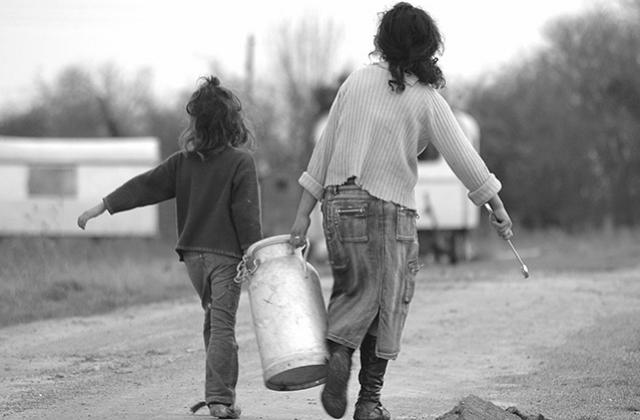
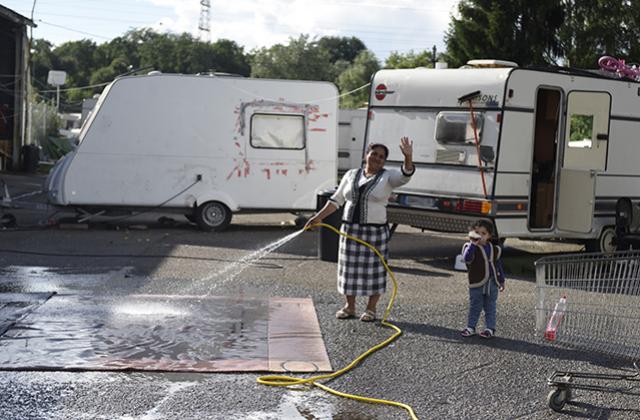
    Often living in substandard and overcrowded housing conditions, Roma and Travellers face an increased risk of contracting COVID-19. They are also disproportionately affected by measures taken to contain the virus. This FRA Bulletin takes a closer look at this reality in 15 EU Member States, focusing on education; employment; poverty; healthcare; housing; and anti-Gypsyism. It also outlines civil society efforts to tackle the diverse challenges triggered by the Coronavirus pandemic.
  • Report / Paper / Summary
    23
    September
    2020
    This report presents findings from FRA’s 2019 survey on Roma and Travellers in Belgium, France, Ireland, the Netherlands, Sweden and the United Kingdom. The survey included interviews with almost 4,700 Roma and Travellers, collecting information on more than 8,200 individuals living in their households.
  • Periodic updates / Series
    29
    July
    2020
    As we enter the second half of 2020, the constraints on our daily lives brought about by the Coronavirus pandemic have become a firm reality. New local lockdowns and the reintroduction of restrictive measures prompted by fresh outbreaks of the virus are a stark reminder that COVID-19 continues to shape our lives – and our enjoyment of fundamental rights – in profound ways. There is compelling evidence of how the pandemic has exacerbated existing challenges in our societies. This FRA Bulletin outlines some of the measures EU Member States adopted to safely reopen their societies and economies while continuing to mitigate the spread of COVID-19. It highlights the impact these measures may have on civil, political and socioeconomic rights.
  • Periodic updates / Series
    30
    June
    2020
    The Coronavirus pandemic continues to interrupt everyday life in the EU in unprecedented ways. But the way it affects our societies is shifting. As governments gradually lift some of the measures put in place to contain the spread of COVID-19, new fundamental rights concerns arise: how to ensure that the rights to life and health are upheld as daily life transitions to a ‘new normal’. This Bulletin looks at declarations of states of emergency, or equivalent, and how they came under scrutiny. It considers
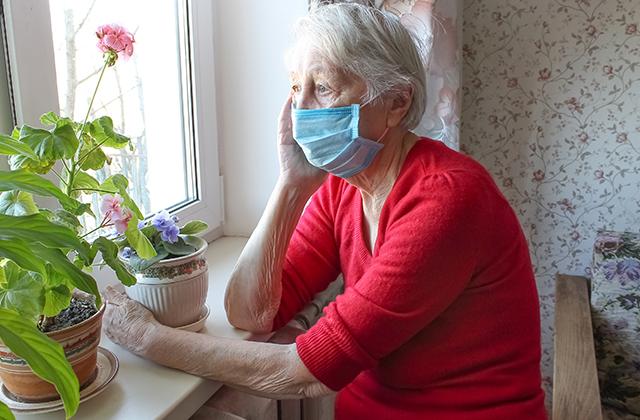
    the impact on fundamental rights in important areas of daily life, and includes a thematic focus on the pandemic's impact on older people.
  • Periodic updates / Series
    28
    May
    2020
    The Coronavirus pandemic continues to interrupt everyday life in the EU in unprecedented ways. But the way it affects our societies is shifting. As governments gradually lift some of the measures put in place to contain the spread of COVID-19, new fundamental rights concerns arise: how to ensure that the rights to life and health are upheld as daily life transitions to a ‘new normal’. This Bulletin looks at declarations of states of emergency, or equivalent, and how they came under scrutiny. It considers the impact on fundamental rights in important areas of daily life, and includes a thematic focus on the processing of users’ data to help contain COVID-19, particularly by contact-tracing apps. It covers the period 21 March – 30 April 2020.
  • Periodic updates / Series
    8
    April
    2020
    The outbreak of COVID-19 affects people’s daily life in the 27 EU Member States. As the number of infected people in the EU territory began to mount rapidly in February and March, governments put in place a raft of measures – often introduced in a period of only a few days – in an effort to contain the spread of the virus. Many of these measures reflect how, in exceptional emergency situations, the urgent need to save lives justifies restrictions on other rights, such as the freedom of movement and of assembly. This report outlines some of the measures EU Member States have put in place to protect public health during the COVID-19 pandemic. It covers the period 1 February – 20 March 2020.
  • Report / Paper / Summary
    11
    November
    2019
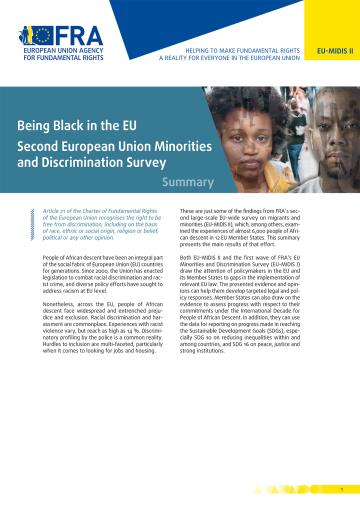
    Across the EU, people of African descent face widespread and entrenched prejudice and exclusion. Racial discrimination and harassment are commonplace. Experiences with racist violence vary, but reach as high as 14 %. Discriminatory profiling by the police is a common reality. Hurdles to inclusion are multi-faceted, particularly when it comes to looking for jobs and housing.