eu-charter

EU Charter of Fundamental Rights

The right to marry and the right to found a family shall be guaranteed in accordance with the national laws governing the exercise of these rights.

Explanations

  • Text:

    This Article is based on Article 12 of the ECHR, which reads as follows: "Men and women of marriageable age have the right to marry and to found a family according to the national laws governing the exercising of this right." The wording of the Article has been modernised to cover cases in which national legislation recognises arrangements other than marriage for founding a family. This Article neither prohibits nor imposes the granting of the status of marriage to unions between people of the same sex. This right is thus similar to that afforded by the ECHR, but its scope may be wider when national legislation so provides.

    Source:
    Official Journal of the European Union C 303/17 - 14.12.2007
    Preamble - Explanations relating to the Charter of Fundamental Rights:
    These explanations were originally prepared under the authority of the Praesidium of the Convention which drafted the Charter of Fundamental Rights of the European Union. Although they do not as such have the status of law, they are a valuable tool of interpretation intended to clarify the provisions of the Charter.

Case Law References

National Constitutional Law

34 results found

  • Act No. 36/2005 on family and on amendment of some other acts
    Country:
    Slovakia
  • Constitution of Ireland
    Country:
    Ireland

    Article 41.1.1.The State recognises the Family as the natural primary and fundamental unit group of Society, and as a moral institution possessing inalienable and imprescriptible rights, antecedent and superior to all positive law. Article 41.1.2. The State, therefore, guarantees to protect the Family in its constitution and authority, as the necessary basis of social order and as indispensable to the welfare of the Nation and the State.Article 41.2.1. In particular, the State recognises that by her life within the home, woman gives to the State a support without which the common good cannot be achieved. Article 41.2.2. The State shall, therefore, endeavour to ensure that mothers shall not be obliged by economic necessity to engage in labour to the neglect of their duties in the home. Article 41.3.1. The State pledges itself to guard with special care the institution of Marriage, on which the Family is founded, and to protect it against attack. Article 41.3.2. A Court designated by law may grant a dissolution of marriage where, but only where, it is satisfied that­ i. at the date of the institution of the proceedings, the spouses have lived apart from one another for a period of, or periods amounting to, at least four years during the five years, ii. there is no reasonable prospect of a reconciliation between the spouses, iii. such provision as the Court considers proper having regard to the circumstances exists or will be made for the spouses, any children of either or both of them and any other person prescribed by law, and iv. any further conditions prescribed by law are complied with. Article 41.3.3. 3. No person whose marriage has been dissolved under the civil law of any other state but is a subsisting valid marriage under the law for the time being in force within the jurisdiction of the
    Government and Parliament established by this constitution shall be capable of contracting a valid marriage within that jurisdiction during the lifetime of the other party to the marriage so dissolved. Article 42.4 Marriage may be contracted in accordance with law by two persons without distinction as to their sex.

  • Constitution of the Hellenic Republic
    Country:
    Greece

    Article 21 (1). The family, being the cornerstone of the preservation and the advancement of the Nation, as well as marriage, motherhood and childhood, shall be under the protection of the State. (2). Families with many children, disabled war and peace-time veterans, war victims, widows
    and orphans, as well as persons suffering from incurable bodily or mental ailments are entitled to the special care of the State. [...]

  • Constitution of the Italian Republic
    Country:
    Italy

    Art. 29. The Republic recognises the rights of the family as a natural society founded on marriage. Marriage is based on the moral and legal equality of the spouses within the
    limits laid down by law to guarantee the unity of the family.

  • Constitution of the Republic of Bulgaria
    Country:
    Bulgaria

    Art. 46. (1) Matrimony shall be a free union between a man and a woman. Only a civil marriage shall be legal. (2) Spouses shall have equal rights and obligations in matrimony and the family. (3) The form of a marriage, the conditions and procedure for its conclusion and termination, and all private and material relations between the spouses shall be established by law.

  • Constitution of the Republic of Estonia
    Country:
    Estonia

    Article 27. The family, which is fundamental to the preservation and growth of the nation and which constitutes the foundation of society, enjoys the protection of the government. Spouses have equal rights. Parents have the right and the duty to raise their children and to provide for them. The protection of parents and children is provided by law. The family is required to provide for its members who are in need.

  • Constitution of the Republic of Latvia
    Country:
    Latvia

    110. The State shall protect and support marriage, the family, the rights of parents and rights of the child. The State shall provide special support to disabled children, children left without parental care or who have suffered from violence.

  • Constitution of the Republic of Lithuania
    Country:

    Article 38. The family shall be the basis of society and the State. Family, motherhood, fatherhood, and childhood shall be under the protection and care of the State. Marriage shall be concluded upon the free mutual consent of man and woman. The State shall register marriages, births, and deaths. The State shall also recognise the church registration of marriages. In the family, the rights of spouses shall be equal.The right and duty of parents shall be to bring up their children to be honest people and faithful citizens, and to support them until they reach the age of majority. The duty of children shall be to respect their parents, to take care of them in their old age, and to preserve their heritage.

  • Constitution of the Republic of Poland
    Country:
    Poland

    Article 18 Marriage, being a union of a man and a woman, as well as the family, motherhood and parenthood, shall be placed under the protection and care of the Republic of Poland.

  • Costituzione della Repubblica Italiana
    Country:
    Italy

    Art. 29. La Repubblica riconosce i diritti della famiglia come società naturale fondata sul matrimonio.Il matrimonio è ordinato sull'eguaglianza morale e giuridica dei coniugi, con i limiti stabiliti dalla legge a garanzia dell'unità familiare. Art. 31 La Repubblica agevola con misure economiche e altre provvidenze la formazione della famiglia e l'adempimento dei compiti relativi, con particolare riguardo alle famiglie numerose. Protegge la maternità e l'infanzia e la gioventù, favorendo gli istituti necessari a tale scopo.

  • Czechia / Charter of Fundamental Rights and Freedoms
    Country:
    Czechia

    Article 32 (1) Parenthood and the family are under the protection of the law. Special protection is guaranteed to children and adolescents. (2) Pregnant women are guaranteed special care, protection in labor relations, and suitable labor conditions.
    (3) Children, whether born in or out of wedlock, enjoy equal rights. (4) It is the parents’ right to care for and bring up their children; children have the right to parental upbringing and care. Parental rights may be limited and minor children may be removed from their parents’ custody against the latters’ will only by the decision of a court on
    the basis of the law. (5) Parents who are raising children have the right to assistance from the state. (6) Detailed provisions shall be set by law.

  • De Belgische Grondwet
    Country:
    Belgium

    Artikel 21 (...) Het burgerlijk huwelijk moet altijd aan de huwelijksinzegening voorafgaan, behoudens de uitzonderingen door de wet te stellen, indien daartoe redenen zijn.

  • Eesti Vabariigi Põhiseadus
    Country:
    Estonia

    § 27. Perekond rahva püsimise ja kasvamise ning ühiskonna alusena on riigi kaitse all. Abikaasad on võrdõiguslikud. Vanematel on õigus ja kohustus kasvatada oma lapsi ja hoolitseda nende eest. Seadus sätestab vanemate ja laste kaitse. Perekond on kohustatud hoolitsema oma abivajavate liikmete eest.

  • European Convention on Human Rights - Article 12
    Country:
    Austria

    Article 12

    Men and women of marriageable age have the right to marry and to found a family, according to the national laws governing the exercise of this right.

  • Grundgesetz für die Bundesrepublik Deutschland
    Country:
    Germany

    Artikel 6 (1) Ehe und Familie stehen unter dem besonderen Schutze der staatlichen Ordnung. (2) Pflege und Erziehung der Kinder sind das natürliche Recht der Eltern und die zuvörderst ihnen obliegende Pflicht. Über ihre Betätigung wacht die staatliche Gemeinschaft. (3) Gegen den Willen der Erziehungsberechtigten dürfen Kinder nur auf Grund eines Gesetzes von der Familie getrennt werden, wenn die Erziehungsberechtigten versagen oder wenn die Kinder aus anderen Gründen zu verwahrlosen drohen. (4) Jede Mutter hat Anspruch auf den Schutz und die Fürsorge der Gemeinschaft. (5) Den unehelichen Kindern sind durch die Gesetzgebung die gleichen Bedingungen für ihre leibliche und seelische Entwicklung und ihre Stellung in der Gesellschaft zu schaffen wie den ehelichen Kindern.

  • Konstytucja Rzeczypospolitej Polskiej
    Country:
    Poland

    Art. 18Małżeństwo jako związek kobiety i mężczyzny, rodzina, macierzyństwo i rodzicielstwo znajdują się pod ochroną i opieką Rzeczypospolitej Polskiej.

  • Konvention zum Schutze der Menschenrechte und Grundfreiheiten
    Country:
    Austria

    Artikel 12 Mit Erreichung des heiratsfähigen Alters haben Männer und Frauen gemäß den einschlägigen nationalen Gesetzen das Recht, eine Ehe einzugehen und eine Familie zu gründen.

  • La Constitution Belge
    Country:
    Belgium

    Article 21 (...) Le mariage civil devra toujours précéder la bénédiction nuptiale, sauf les exceptions à établir par la loi, s'il y a lieu.

  • Latvijas Republikas Satversme
    Country:
    Latvia

    110. Valsts aizsargā un atbalsta laulību — savienību starp vīrieti un sievieti, ģimeni, vecāku un bērna tiesības. Valsts īpaši palīdz bērniem invalīdiem, bērniem, kas palikuši bez vecāku gādības vai cietuši no varmācības.

  • Lietuvos Respublikos Konstitucija
    Country:
    Lithuania

    38 straipsnis. Šeima yra visuomenės ir valstybės pagrindas. Valstybė saugo ir globoja šeimą, motinystę, tėvystę ir vaikystę. Santuoka sudaroma laisvu vyro ir moters sutarimu. Valstybė registruoja santuoką, gimimą ir mirtį. Valstybė pripažįsta ir bažnytinę santuokos registraciją. Sutuoktinių teisės šeimoje lygios. Tėvų teisė ir pareiga - auklėti savo vaikus dorais žmonėmis ir ištikimais piliečiais, iki pilnametystės juos išlaikyti. Vaikų pareiga - gerbti tėvus, globoti juos senatvėje ir tausoti jų palikimą.

EU Law

2 results found

  • Council Regulation (EU) 2016/1103 of 24 June 2016 implementing enhanced cooperation in the area of jurisdiction, applicable law and the recognition and enforcement of decisions in matters of matrimonial property regimes

    [...]

    (73) This Regulation respects fundamental rights and observes the principles recognised in the Charter, in particular Articles 7, 9, 17, 21 and 47 concerning, respectively, respect for private and family life, the right to marry and to found a family according to national laws, property rights, the principle of non-discrimination and the right to an effective remedy and to a fair trial. This Regulation should be applied by the courts and other competent authorities of the Member States in compliance with those rights and principles.

    [...]

  • Council Resolution of 4 December 1997 on measures to be adopted on the combating of marriages of convenience

    1. For the purposes of this resolution, a 'marriage of convenience` means a marriage concluded between a national of a Member State or a third-country national legally resident in a Member State and a third-country national, with the sole aim of circumventing the rules on entry and residence of third-country nationals and obtaining for the third-country national a residence permit or authority to reside in a Member State.

    2. Factors which may provide grounds for believing that a marriage is one of convenience are in particular:

    - the fact that matrimonial cohabitation is not maintained,

    - the lack of an appropriate contribution to the responsibilities arising from the marriage,

    - the spouses have never met before their marriage,

    - the spouses are inconsistent about their respective personal details (name, address, nationality and job), about the circumstances of their first meeting, or about other important personal information concerning them,

    - the spouses do not speak a language understood by both,

    - a sum of money has been handed over in order for the marriage to be contracted (with the exception of money given in the form of a dowry in the case of nationals of countries where the provision of a dowry is common practice),

    - the past history of one or both of the spouses contains evidence of previous marriages of convenience or residence anomalies.

    In this context, such information may result from:

    - statements by those concerned or by third parties,

    - information from written documentation, or

    - information obtained from inquiries carried out.

    3. Where there are factors which support suspicions for believing that a marriage is one of convenience, Member States shall issue a residence permit or an authority to reside to the third-country national on the basis of the marriage only after the authorities competent under national law have checked that the marriage is not one of convenience, and that the other conditions relating to entry and residence have been fulfilled. Such checking may involve a separate interview with each of the two spouses.

    4. Should the authorities competent under national law find the marriage to be one of convenience, the residence permit or authority to reside granted on the basis of the third-country national's marriage shall as a general rule be withdrawn, revoked or not renewed.

    5. The third-country national shall have an opportunity to contest or to have reviewed, as provided for by national law, either before a court or before a competent administrative authority, a decision to refuse, withdraw, revoke or not renew a residence permit or authority to reside.

    6. Member States shall have regard to this resolution in any proposals to amend their national legislation. They shall furthermore endeavour to bring their national legislation into line with this resolution by 1 January 1999. The Council shall review the implementation of this resolution once a year, starting from 1 January 1999.

International Law

4 results found

  • European Convention on Human Rights - Article 12

    Article 12 – Right to marry

    Men and women of marriageable age have the right to marry and to found a family, according to the national laws governing the exercise of this right

  • Committee on the Rights of Persons with Disabilities, General comment No. 1 (2014)

    Preamble:
    ‘8. [...] The right to equal recognition before the law implies that legal capacity is a universal attribute inherent in all persons by virtue of their humanity and must be upheld for persons with disabilities on an equal basis with others. Legal capacity is indispensable for the exercise of civil, political, economic, social and cultural rights. It acquires a special significance for persons with disabilities when they have to make fundamental decisions regarding their health, education and work. The denial of legal capacity to persons with disabilities has, in many cases, led to their being deprived of many fundamental rights, including the right to vote, the right to marry and found a family, reproductive rights, parental rights, the right to give consent for intimate relationships and medical treatment, and the right to liberty.‘
    ‘29. [...] (f) Support in decision-making must not be used as justification for limiting other fundamental rights of persons with disabilities, especially the right to vote, the right to marry, or establish a civil partnership, and found a family, reproductive rights, parental rights, the right to give consent for intimate relationships and medical treatment, and the right to liberty;‘

  • UN General Assembly Resolution 70/138 (2016) - The girl child

    ‘Paragraph 13. Urges all States to enact, uphold and strictly enforce laws and policies aimed at preventing and ending child, early and forced marriage and protecting those at risk and to ensure that marriage is entered into only with the informed, free and full consent of the intending spouses, to enact and strictly enforce laws concerning the minimum legal age of consent and the minimum age for marriage, to raise the minimum age for marriage, engage all relevant stakeholders, including girls, where necessary, [...]‘

  • UN General Assembly Resolution 71/175 (2016) - Child, early and forced marriage

    ‘3. Further calls upon States to strengthen their efforts to ensure the timely registration of births and marriages, especially for individuals living in rural and remote areas, including by identifying and removing all physical, administrative, procedural and any other barriers that impede access to registration and by providing, where lacking, mechanisms for the registration of customary and religious marriages;‘
    ‘4. Calls upon States to enact, build awareness of, enforce and uphold laws concerning a minimum age of marriage and to progressively amend laws with lower ages of marriage and/or ages of majority;‘

Publications and data

  • Fundamental Rights Report
    11
    June
    2026
    The Fundamental Rights Report: Challenges and Achievements in 2025 is FRA’s flagship annual publication. It provides an overview of the state of fundamental rights in the EU and highlights selected critical developments from 2025. This year, it focuses on four areas: rights protection in a rapidly changing digital environment; the housing crisis and rising homelessness rates; employment challenges for people from non-EU countries; and the implementation of the EU Charter of Fundamental Rights. The publication is a valuable resource for those seeking to stay informed about the EU’s shifting landscape of fundamental rights.
  • Report / Paper / Summary
    19
    February
    2021
    This is the second main report from FRA’s Fundamental Rights Survey, which collected data from 35,000 people on a range of issues. This report focuses on respondents’ experiences as victims of selected types of crime, including violence, harassment, and property crime. The report also examines how often these crimes are reported to the police, and presents further details relating to harassment and violence, such as the perpetrators and where the incidents took place.
  • Report / Paper / Summary
    23
    September
    2020
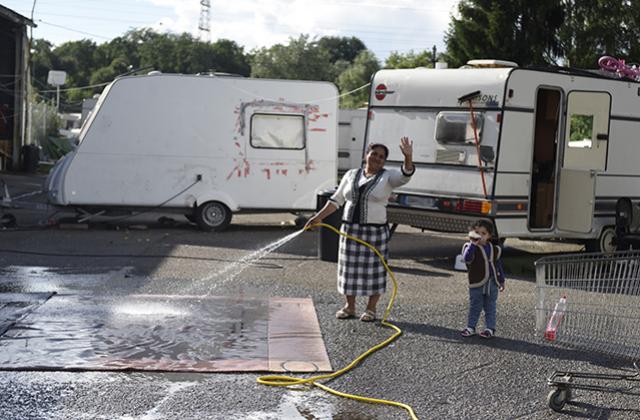
    This report presents findings from FRA’s 2019 survey on Roma and Travellers in Belgium, France, Ireland, the Netherlands, Sweden and the United Kingdom. The survey included interviews with almost 4,700 Roma and Travellers, collecting information on more than 8,200 individuals living in their households.
  • Report / Paper / Summary
    11
    December
    2015
    While awareness of the rights of lesbian, gay, bisexual, transgender and intersex (LGBTI) persons is on the rise across the European Union, hurdles to their full enjoyment of their fundamental rights remain. This report updates FRA’s 2010 report on homophobia, transphobia and discrimination on grounds of sexual orientation and gender identity.
  • Report / Paper / Summary
    12
    May
    2015
    This paper examines the legal situation of intersex people from a fundamental rights perspective. It draws on evidence from the Agency’s updated legal analysis on homophobia, transphobia, and discrimination on grounds of sexual orientation and gender identity, which now includes a section on intersex issues.
  • Report / Paper / Summary
    25
    October
    2011
    This report is the second publication from the legal study carried out in the context of the European Union Agency for Fundamental Rights' (FRA) project on the ‘Fundamental rights of persons with intellectual disabilities and persons with mental health problems'.
  • Report / Paper / Summary
    23
    June
    2011
    The European Union (EU) is founded on the values of equality and non-discrimination, and through its policies works to combat discrimination, including discrimination based on sexual orientation or gender identity. This report of the European Union Agency for Fundamental Rights (FRA) twins its research findings in the field with the relevant EU standards in a short and easy-to-read publication designed to equip those who shape policy with the information they need to develop a coherent and systematic approach to the protection of lesbian, gay, bisexual and transsexual (LGBT) rights.
  • Report / Paper / Summary
    30
    November
    2010
    This report updates the FRA comparative legal analysis of discrimination on the basis of sexual orientation and gender identity first published in June 2008. It presents the situation as it stood at the end of 2009, though information gathered in 2010 has been incorporated to the greatest possible extent. Five main trends among EU Member States can be noted from the information presented in this report.