eu-charter

EU Charter of Fundamental Rights

The Union shall respect cultural, religious and linguistic diversity.

Explanations

  • Text:

    This Article has been based on Article 6 of the Treaty on European Union and on Article 151(1) and (4) of the EC Treaty, now replaced by Article 167(1) and (4) of the Treaty on the Functioning of the European Union, concerning culture. Respect for cultural and linguistic diversity is now also laid down in Article 3(3) of the Treaty on European Union. The Article is also inspired by Declaration No 11 to the Final Act of the Amsterdam Treaty on the status of churches and nonconfessional organisations, now taken over in Article 17 of the Treaty on the Functioning of the European Union.

    Source:
    Official Journal of the European Union C 303/17 - 14.12.2007
    Preamble - Explanations relating to the Charter of Fundamental Rights:
    The These explanations were originally prepared under the authority of the Praesidium of the Convention which drafted the Charter of Fundamental Rights of the European Union. Although they do not as such have the status of law, they are a valuable tool of interpretation intended to clarify the provisions of the Charter.

Case Law References

National Constitutional Law

32 results found

  • Sweden / Instrument of Government
    Country:
    Sweden

    Chapter 1 - Basic principles of the form of government:

    Article 2 (…)The public institutions shall promote the opportunity for all to attain participation and equality in society (...) The public institutions shall combat discrimination of persons on grounds of gender, colour, national or ethnic origin, linguistic or religious affiliation, functional disability, sexual orientation, age or other circumstance affecting the individual. The opportunities of the Sami people and ethnic, linguistic and religious minorities to preserve and develop a cultural and social life of their own shall be promoted;

    Chapter 2. Fundamental rights and freedoms

    Article 12 No act of law or other provision may imply the unfavourable treatment of anyone because they belong to a minority group by reason of ethnic origin, colour, or other similar circumstances or on account of their sexual orientation.

  • Constitution of Finland
    Country:
    Finland

    Section 6 Equality (...) No one shall, without an acceptable reason, be treated differently from other persons on the ground of sex, age, origin, language, religion, conviction, opinion, health, disability or other reason that concerns his or her person. Section 11 Freedom of religion and conscience Everyone has the freedom of religion and conscience. Freedom of religion and conscience entails the right to profess and practice a religion, the right to express one's convictions and the right to be a member of or decline to be a member of a religious community. No one is under the obligation, against his or her conscience, to participate in the practice of a religion. Section 17 Right to one's language and culture The national languages of Finland are Finnish and Swedish. The right of everyone to use his or her own language, either Finnish or Swedish, before courts of law and other authorities, and to receive official documents in that language, shall be guaranteed by an Act. The public authorities shall provide for the cultural and societal needs of the Finnish-speaking and Swedish-speaking populations of the country on an equal basis. The Sami, as an indigenous people, as well as the Roma and other groups, have the right to maintain and develop their own language and culture. Provisions on the right of the Sami to use the Sami language before the authorities are laid down by an Act. The rights of persons using sign language and of persons in need of interpretation or translation aid owing to disability shall be guaranteed by an Act.

  • Constitution of Ireland
    Country:
    Ireland

    Article 8.1. The irish language as the national language is the
    first official language. Article 8.2. the english language is recognised as a second
    official language. Article 8.3. Provision may, however, be made by law for the
    exclusive use of either of the said languages for any one or more official purposes, either
    throughout the state or in any part thereof. Article 44.1. The state acknowledges that the homage of public worship is due to almighty God. it shall hold his name in reverence, and shall respect and honour religion.
    Article 44.2.1. Freedom of conscience and the free profession and practice of religion are, subject to public order and morality, guaranteed to every citizen.
    Article 44.2.2. The state guarantees not to endow any religion.
    Article 44.2.3 The state shall not impose any disabilities or make any discrimination on the ground of religious profession, belief or status.

  • Constitution of Malta
    Country:
    Malta

    Article 5(1) The National language of Malta is the Maltese Language.(2) The Maltese and the English languages and such other language as may be prescribed by Parliament (by a law passed by not less than two-thirds of all the members of the House of Representatives) shall be the official languages of Malta and the Administration may for all official purposes use any of such languages: Provided that any person may address the Administration in any of the official languages and the reply of the Administration thereto shall be in such language.(3) The language of the Courts shall be the Maltese language: Provided that Parliament may make such provision for the use of the English language in such cases and under such conditions as it may prescribe.(4) The House of Representatives may, in regulating its own procedure, determine the language or languages that shall be used in Parliamentary proceedings and records. 8. The State shall promote the development of culture and scientific and technical research.

  • Constitution of the Hellenic Republic
    Country:
    Greece

    Article 5 (2) All persons living within the Greek territory shall enjoy full protection of their life, honour and liberty irrespective of nationality, race or language and of religious or political beliefs. Exceptions shall be permitted only in cases provided by international law. [...]

  • Constitution of the Italian Republic
    Country:
    Italy

    Art. 3. All citizens have equal social dignity and are equal before the law, without distinction of sex, race, language, religion, political opinion, personal and social conditions. (...) Art. 6. The Republic safeguards linguistic minorities by means of appropriate measures. Art. 8. All religious denominations are equally free before the law.
    Denominations other than Catholicism have the right to self-organisation according to their own statutes, provided these do not conflict with Italian law.
    Their relations with the State are regulated by law, based on agreements with their respective representatives.

  • Constitution of the Republic of Bulgaria
    Country:
    Bulgaria

    Art. 3. Bulgarian shall be the official language of the Republic. Art. 6. (1) All persons are born free and equal in dignity and rights.(2) All citizens shall be equal before the law. There shall be no privileges or restriction of rights on the grounds of race, national or social origin, ethnic self-identity, sex, religion, education, opinion, political affiliation, personal or social status or property status.Art. 11. [...] (4) There shall be no political parties on ethnic, racial or religious lines [...] Art. 13. (1) The practicing of any religion shall be unrestricted.(2) Religious institutions shall be separate from the State.(3) Eastern Orthodox Christianity shall be considered the traditional religion in the Republic of Bulgaria.(4) Religious institutions and communities, and religious beliefs shall not be used to political ends.Art. 36. (1) The study and use of the Bulgarian language shall be a right and an obligation of every Bulgarian citizen.(2) Citizens whose mother tongue is not Bulgarian shall have the right to study and use their own language alongside the compulsory study of the Bulgarian language.(3) The situations in which only the official language shall be used shall be established by law.

  • Constitution of the Republic of Croatia
    Country:
    Croatia

    Article 15
    (1)Equal rights for the members of all national minorities in the Republic of Croatia are guaranteed.
    (4)The freedom of the members of all national minorities to express their nationality, to use their language and script, and to exercise cultural autonomy shall be guaranteed.

    Article 41
    All religious communities shall be equal before the law and clearly separate from the state.
    Religious communities shall be free, in compliance with law, to publicly conduct religious services, open schools, academies or other institutions, and welfare and charitable organizations and to manage them, and they shall enjoy the protection and assistance of the state in their activities.

  • Constitution of the Republic of Estonia
    Country:
    Estonia

    Article 37. (…) Everyone has the right to be taught in Estonian. The language of teaching in national minority educational institutions is chosen by the educational institution. (…)
    Article 50. National minorities have the right, in the interests of their culture, to establish self-governing agencies under such conditions and pursuant to such procedure as are provided in the National Minorities Cultural Autonomy Act.
    Article 51. Everyone has the right to address government agencies, local authorities, and their officials in Estonian and to receive responses in Estonian.
    In localities where at least one half of the permanent residents belong to a national minority, everyone has the right to receive responses from government agencies, local authorities and their officials also in the language of the national minority.
    Article 52. The official language of government agencies and local authorities is Estonian.
    In localities where the language of the majority of the residents is not Estonian, local authorities may, to the extent and pursuant to a procedure provided by law, use the language of the majority of the permanent residents of the locality as their internal working language.
    The use of foreign languages, including the languages of national minorities, in government agencies, in courts and in pre-trial procedure is provided by law.

  • Constitution of the Republic of Latvia
    Country:
    Latvia

    114. Persons belonging to ethnic minorities have the right to preserve and develop their language and their ethnic and cultural identity.

  • Constitution of the Republic of Lithuania
    Country:
    Lithuania

    Article 14. Lithuanian shall be the State language. Article 37. Citizens belonging to ethnic communities shall have the right to foster their language, culture, and customs. Article 43. The State shall recognise the churches and religious organisations that are traditional in Lithuania, whereas other churches and religious organisations shall be recognised provided that they have support in society and their teaching and practices are not in conflict with the law and public morals. The churches and religious organisations recognised by the State shall have the rights of a legal person. Churches and religious organisations shall be free to proclaim their teaching, perform their practices, and have houses of prayer, charity establishments, and schools for the training of the clergy. Churches and religious organisations shall conduct their affairs freely according to their canons and statutes. The status of churches and other religious organisations in the State shall be established by agreement or by law. The teaching proclaimed by churches and religious organisations, other religious activities and houses of prayer may not be used for purposes which are in conflict with the Constitution and laws. There shall not be a State religion in Lithuania. Article 45Ethnic communities of citizens shall independently manage the affairs of their ethnic culture, education, charity, and mutual assistance. Ethnic communities shall be provided support by the State.

  • Constitution of the Republic of Poland
    Country:
    Poland

    Article 27 Polish shall be the official language in the Republic of Poland. This provision shall not infringe upon national minority rights resulting from ratified international agreements.Article 35.1. The Republic of Poland shall ensure Polish citizens belonging to national or ethnic minorities the freedom to maintain and develop their own language, to maintain customs and traditions, and to develop their own culture.2. National and ethnic minorities shall have the right to establish educational and cultural institutions, institutions designed to protect religious identity, as well as to participate in the resolution of matters connected with their cultural identity.

  • Costituzione della Repubblica Italiana
    Country:
    Italy

    Art. 3. Tutti i cittadini hanno pari dignità sociale e sono eguali davanti alla legge, senza distinzione di sesso, di razza, di lingua, di religione, di opinioni politiche, di condizioni personali e sociali.(...)Art. 6. La Repubblica tutela con apposite norme le minoranze linguistiche. Art. 8. Tutte le confessioni religiose sono egualmente libere davanti alla legge.Le confessioni religiose diverse dalla cattolica hanno diritto di organizzarsi secondo i propri statuti, in quanto non contrastino con l'ordinamento giuridico italiano.I loro rapporti con lo Stato sono regolati per legge sulla base di intese con le relative rappresentanze.

  • Czechia / Charter of Fundamental Rights and Freedoms
    Country:
    Czechia

    Article 25 (1) Citizens who constitute national or ethnic minorities are guaranteed all-round development, in particular the right to develop, together with other members of the minority, their own culture, the right to disseminate and receive information in their native language, and the right to associate in national associations. Detailed provisions shall be set down by law. (2) Citizens belonging to national and ethnic minority groups are also guaranteed, under the conditions set down by law: (a) the right to education in their own language, (b) the right to use their own language in their relations with officials, (c) the right to participate in the resolution of affairs that concern national and ethnic minorities.

  • Eesti Vabariigi Põhiseadus
    Country:
    Estonia

    § 37. (…) Igaühel on õigus saada eestikeelset õpetust. Õppekeele vähemusrahvuse õppeasutuses valib õppeasutus.(...)
    § 50. Vähemusrahvustel on õigus luua rahvuskultuuri huvides omavalitsusasutusi vähemusrahvuste kultuurautonoomia seaduses sätestatud tingimustel ja korras.
    § 51. Igaühel on õigus pöörduda riigiasutuste, kohalike omavalitsuste ja nende ametiisikute poole eesti keeles ja saada eestikeelseid vastuseid.
    Paikkondades, kus vähemalt pooled püsielanikest on vähemusrahvusest, on igaühel õigus saada riigiasutustelt ja kohalikelt omavalitsustelt ning nende ametiisikutelt vastuseid ka selle vähemusrahvuse keeles.
    § 52. Riigiasutuste ja kohalike omavalitsuste asjaajamiskeel on eesti keel.Paikkondades, kus elanike enamiku keel ei ole eesti keel, võivad kohalikud omavalitsused seaduses sätestatud ulatuses ja korras kasutada sisemise asjaajamiskeelena selle paikkonna püsielanike enamiku keelt.Võõrkeelte, sealhulgas vähemusrahvuste keelte kasutamise riigiasutuses ning kohtu- ja kohtueelses menetluses sätestab seadus.

  • Konstytucja Rzeczypospolitej Polskiej
    Country:
    Poland

    Art. 27 W Rzeczypospolitej Polskiej językiem urzędowym jest język polski. Przepis ten nie narusza praw mniejszości narodowych wynikających z ratyfikowanych umów międzynarodowych.Art. 35.1. Rzeczpospolita Polska zapewnia obywatelom polskim należącym do mniejszości narodowych i etnicznych wolność zachowania i rozwoju własnego języka, zachowania obyczajów i tradycji oraz rozwoju własnej kultury.2. Mniejszości narodowe i etniczne mają prawo do tworzenia własnych instytucji edukacyjnych, kulturalnych i instytucji służących ochronie tożsamości religijnej oraz do uczestnictwa w rozstrzyganiu spraw dotyczących ich tożsamości kulturowej.

  • Latvijas Republikas Satversme
    Country:
    Latvia

    114. Personām, kuras pieder pie mazākumtautībām, ir tiesības saglabāt un attīstīt savu valodu, etnisko un kultūras savdabību.

  • Law on the Unrestricted Development and Right to Cultural Autonomy of Latvia's Nationalities and Ethnic Groups
    Country:
    Latvia

    Within the Republic of Latvia live the Latvian nation, the ancient indigenous nationality, the Livs, as well as other nationalities and ethnic groups.This Law is adopted to guarantee to all nationalities and ethnic groups in the Republic of Latvia the rights to cultural autonomy and self-administration of their culture.

  • Lietuvos Respublikos Konstitucija
    Country:
    Lithuania

    14 straipsnis. Valstybinė kalba - lietuvių kalba. 37 straipsnis. Piliečiai, priklausantys tautinėms bendrijoms, turi teisę puoselėti savo kalbą, kultūrą ir papročius. 43 straipsnis. Valstybė pripažįsta tradicines Lietuvoje bažnyčias bei religines organizacijas, o kitas bažnyčias ir religines organizacijas - jeigu jos turi atramą visuomenėje ir jų mokymas bei apeigos neprieštarauja įstatymui ir dorai. Valstybės pripažintos bažnyčios bei kitos religinės organizacijos turi juridinio asmens teises. Bažnyčios bei religinės organizacijos laisvai skelbia savo mokslą, atlieka savo apeigas, turi maldos namus, labdaros įstaigas ir mokyklas dvasininkams rengti.Bažnyčios bei religinės organizacijos laisvai tvarkosi pagal savus kanonus ir statutus. Bažnyčių bei kitų religinių organizacijų būklė valstybėje nustatoma susitarimu arba įstatymu. Bažnyčių bei religinių organizacijų mokslo skelbimas, kita tikybinė veikla, taip pat maldos namai negali būti naudojami tam, kas prieštarauja Konstitucijai ir įstatymams. Lietuvoje nėra valstybinės religijos. 45 straipsnis. Piliečių tautinės bendrijos savo tautinės kultūros reikalus, švietimą, labdarą, savitarpio pagalbą tvarko savarankiškai. Tautinėms bendrijoms valstybė teikia paramą.

  • Luxembourg / Constitution of the Grand Ducal of Luxembourg
    Country:
    Luxembourg

    Art. 42. L’Etat garantit l’accès à la culture et le droit à l’épanouissement culturel. 

    L’Etat promeut la protection du patrimoine culturel.

EU Law

7 results found

  • Directive (EU) 2024/1346 of the European Parliament and of the Council of 14 May 2024 laying down standards for the reception of applicants for international protection

    Preamble 


    (31) Applicants who are in detention should be treated with full respect for human dignity and their reception should be specifically designed to meet their needs in that situation. In particular, Member States should ensure that Article 24 of the Charter and Article 37 of the 1989 United Nations Convention on the Rights of the Child are applied.


    (38) In applying this Directive, Member States should seek to ensure full respect for the principles of the best interests of the child and of family unity, in accordance with the Charter, the 1989 United Nations Convention on the Rights of the Child, the European Convention for the Protection of Human Rights and Fundamental Freedoms and, where applicable, the Council of Europe Convention on Preventing and Combating Violence against Women and Domestic Violence.


    (75) This Directive respects the fundamental rights and observes the principles recognised in particular by the Charter. In particular, this Directive seeks to ensure full respect for human dignity and to promote the application of Articles 1, 4, 6, 7, 18, 21, 24 and 47 of the Charter and has to be implemented accordingly.

    Article 19: General rules on material reception conditions and health care

    2.   Member States shall ensure that material reception conditions and health care received in accordance with Article 22 provide an adequate standard of living for applicants, which guarantees their subsistence, protects their physical and mental health and respects their rights under the Charter.

    Article 21: Reception conditions in a Member State other than the one in which the applicant is required to be present

    From the moment applicants have been notified of a decision to transfer them to the Member State responsible in accordance with Regulation (EU) 2024/1351, they shall not be entitled to the reception conditions set out in Articles 17 to 20 of this Directive in any Member State other than the one in which they are required to be present in accordance with Regulation (EU) 2024/1351. This shall be without prejudice to the need to ensure a standard of living in accordance with Union law, including the Charter, and international obligations.

  • Council Directive 2000/43/EC of 29 June 2000 implementing the principle of equal treatment between persons irrespective of racial or ethnic origin

    Preamble 

    (3) The right to equality before the law and protection against discrimination for all persons constitutes a universal right recognised by the Universal Declaration of Human Rights, the United Nations Convention on the Elimination of all forms of Discrimination Against Women, the International Convention on the Elimination of all forms of Racial Discrimination and the United Nations Covenants on Civil and Political Rights and on Economic, Social and Cultural Rights and by the European Convention for the Protection of Human Rights and Fundamental Freedoms, to which all Member States are signatories.

    (9) Discrimination based on racial or ethnic origin may undermine the achievement of the objectives of the EC Treaty, in particular the attainment of a high level of employment and of social protection, the raising of the standard of living and quality of life, economic and social cohesion and solidarity. It may also undermine the objective of developing the European Union as an area of freedom, security and justice.

    (13) To this end, any direct or indirect discrimination based on racial or ethnic origin as regards the areas covered by this Directive should be prohibited throughout the Community. This prohibition of discrimination should also apply to nationals of third countries, but does not cover differences of treatment based on nationality and is without prejudice to provisions governing the entry and residence of third-country nationals and their access to employment and to occupation.

    (14) In implementing the principle of equal treatment irrespective of racial or ethnic origin, the Community should, in accordance with Article 3(2) of the EC Treaty, aim to eliminate inequalities, and to promote equality between men and women, especially since women are often the victims of multiple discrimination.

    (19) Persons who have been subject to discrimination based on racial and ethnic origin should have adequate means of legal protection. To provide a more effective level of protection, associations or legal entities should also be empowered to engage, as the Member States so determine, either on behalf or in support of any victim, in proceedings, without prejudice to national rules of procedure concerning representation and defence before the courts.

    Article 1: Purpose

    The purpose of this Directive is to lay down a framework for combating discrimination on the grounds of racial or ethnic origin, with a view to putting into effect in the Member States the principle of equal treatment.

    Article 2: Concept of discrimination

    1. For the purposes of this Directive, the principle of equal treatment shall mean that there shall be no direct or indirect discrimination based on racial or ethnic origin.

    2. For the purposes of paragraph 1:

    (a) direct discrimination shall be taken to occur where one person is treated less favourably than another is, has been or would be treated in a comparable situation on grounds of racial or ethnic origin;

    (b) indirect discrimination shall be taken to occur where an apparently neutral provision, criterion or practice would put persons of a racial or ethnic origin at a particular disadvantage compared with other persons, unless that provision, criterion or practice is objectively justified by a legitimate aim and the means of achieving that aim are appropriate and necessary.

    3. Harassment shall be deemed to be discrimination within the meaning of paragraph 1, when an unwanted conduct related to racial or ethnic origin takes place with the purpose or effect of violating the dignity of a person and of creating an intimidating, hostile, degrading, humiliating or offensive environment. In this context, the concept of harassment may be defined in accordance with the national laws and practice of the Member States.

    4. An instruction to discriminate against persons on grounds of racial or ethnic origin shall be deemed to be discrimination within the meaning of paragraph 1.

    Article 7: Defence of rights

    1. Member States shall ensure that judicial and/or administrative procedures, including where they deem it appropriate conciliation procedures, for the enforcement of obligations under this Directive are available to all persons who consider themselves wronged by failure to apply the principle of equal treatment to them, even after the relationship in which the discrimination is alleged to have occurred has ended.

    2. Member States shall ensure that associations, organisations or other legal entities, which have, in accordance with the criteria laid down by their national law, a legitimate interest in ensuring that the provisions of this Directive are complied with, may engage, either on behalf or in support of the complainant, with his or her approval, in any judicial and/or administrative procedure provided for the enforcement of obligations under this Directive.

  • European Parliament resolution of 13 November 2018 on minimum standards for minorities in the EU (2018/2036(INI))

    .

  • Treaty on the European Union

    Article 3

    (ex Article 2 TEU)

    3. The Union shall establish an internal market. It shall work for the sustainable development of Europe based on balanced economic growth and price stability, a highly competitive social market economy, aiming at full employment and social progress, and a high level of protection and improvement of the quality of the environment. It shall promote scientific and technological advance.

    It shall combat social exclusion and discrimination, and shall promote social justice and protection, equality between women and men, solidarity between generations and protection of the rights of the child.

    It shall promote economic, social and territorial cohesion, and solidarity among Member States.

    It shall respect its rich cultural and linguistic diversity, and shall ensure that Europe's cultural heritage is safeguarded and enhanced.

  • Treaty on the European Union

    Article 6

    (ex Article 6 TEU)

    1. The Union recognises the rights, freedoms and principles set out in the Charter of Fundamental Rights of the European Union of 7 December 2000, as adapted at Strasbourg, on 12 December 2007, which shall have the same legal value as the Treaties.

    The provisions of the Charter shall not extend in any way the competences of the Union as defined in the Treaties.

    The rights, freedoms and principles in the Charter shall be interpreted in accordance with the general provisions in Title VII of the Charter governing its interpretation and application and with due regard to the explanations referred to in the Charter, that set out the sources of those provisions.

    2. The Union shall accede to the European Convention for the Protection of Human Rights and Fundamental Freedoms. Such accession shall not affect the Union's competences as defined in the Treaties.

    3. Fundamental rights, as guaranteed by the European Convention for the Protection of Human Rights and Fundamental Freedoms and as they result from the constitutional traditions common to the Member States, shall constitute general principles of the Union's law.

  • Treaty on the Functioning of the European Union

    Article 17

    1. The Union respects and does not prejudice the status under national law of churches and religious associations or communities in the Member States.

    2. The Union equally respects the status under national law of philosophical and non-confessional organisations.

    3. Recognising their identity and their specific contribution, the Union shall maintain an open, transparent and regular dialogue with these churches and organisations.

  • Treaty on the Functioning of the European Union

    Article 167

    (ex Article 151 TEC)

    1. The Union shall contribute to the flowering of the cultures of the Member States, while respecting their national and regional diversity and at the same time bringing the common cultural heritage to the fore.

    4. The Union shall take cultural aspects into account in its action under other provisions of the Treaties, in particular in order to respect and to promote the diversity of its cultures.

International Law

0 results found

Publications and data

  • Report / Paper / Summary
    21
    January
    2021
    All language versions now available
    16 April 2021
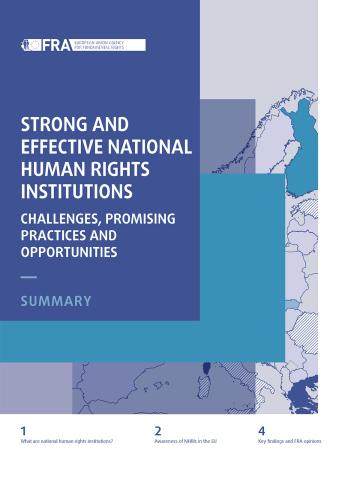
    National Human Rights Institutions (NHRIs) are a vital part of the country-level human rights protection system. By raising awareness, providing advice, monitoring and holding authorities to account, they have a central role in navigating the great human rights challenges of our day – tackling both persistent concerns like discrimination and inequality, and novel issues such as the rights implications of artificial intelligence and of the COVID-19 pandemic.
  • Report / Paper / Summary
    3
    September
    2020
    Summary version now available
    21 January 2021
    National Human Rights Institutions (NHRIs) are a vital part of the country-level human rights protection system. This report, published 10 years after FRA’s first in-depth study on NHRIs, looks at such bodies in the EU, as well as the Republic of North Macedonia, the Republic of Serbia, and the United Kingdom of Great Britain and Northern Ireland. It explores relevant developments, challenges to their effectiveness and ways to maximise their impact.
  • Report / Paper / Summary
    3
    November
    2022
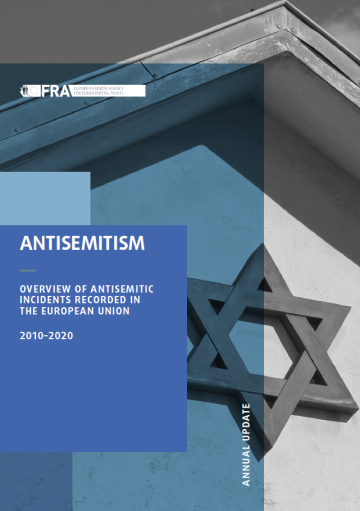
    Antisemitic incidents and hate crimes violate fundamental rights, especially the right to human dignity, the right to equality of treatment and the freedom of thought, conscience and religion. This report provides an overview of available data on antisemitism as recorded by official and unofficial sources in the EU Member States and in Albania, North Macedonia and Serbia. The data provided by the countries are supplemented with information from international organisations.
  • Fundamental Rights Report
    8
    June
    2022
    FRA’s Fundamental Rights Report 2022 reviews major developments in the field in 2021, identifying both achievements and areas of concern. It also presents FRA’s opinions on these developments, including a synopsis of the evidence supporting these opinions.
  • Report / Paper / Summary
    9
    November
    2021
    Antisemitic incidents and hate crimes violate fundamental rights, especially the right to human dignity, the right to equality of treatment, and the freedom of thought, conscience and religion. This report provides an overview of available data on antisemitism as recorded by official and unofficial sources in the EU Member States as well as Albania, North Macedonia and Serbia. The data provided by the countries are supplemented with information from international organisations.
  • Report / Paper / Summary
    23
    September
    2020
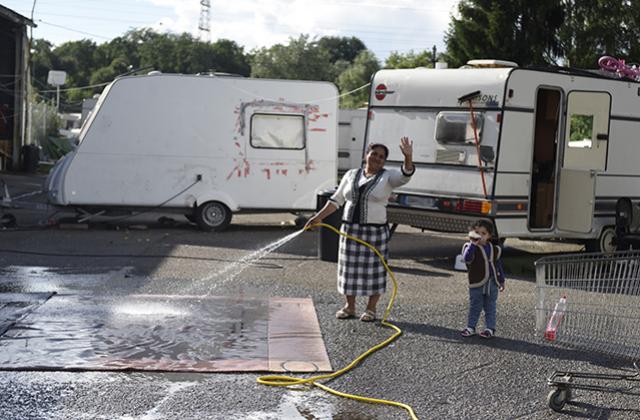
    This report presents findings from FRA’s 2019 survey on Roma and Travellers in Belgium, France, Ireland, the Netherlands, Sweden and the United Kingdom. The survey included interviews with almost 4,700 Roma and Travellers, collecting information on more than 8,200 individuals living in their households.
  • Report / Paper / Summary
    12
    September
    2019
    FRA’s second EU Minorities and Discrimination survey (EU-MIDIS II) collected information from over 25,000 respondents with different ethnic minority and immigrant backgrounds across all 28 EU Member States. The main findings from the survey, published in 2017, pointed to a number of differences in the way women and men with immigrant backgrounds across the European Union (EU) experience how their rights are respected. This report summarises some of the most relevant survey findings in this regard, which show the need for targeted, gender-sensitive measures that promote the integration of – specifically – women who are immigrants or descendants of immigrants.
  • Easy-to-read report
    3
    January
    2018
    More than 20 million immigrants lived in the European Union in 2016. This means that 1 person in 25 was an immigrant. Having more immigrants and refugees makes it even more important for the governments to have plans to help them to integrate.
  • Report / Paper / Summary
    15
    March
    2017
    Integrating migrants, refugees and their descendants is of critical importance for the future of the European Union. This report examines Member States’ integration policies and action plans for promoting their participation in society, focusing on non-discrimination, education, employment, language learning and political engagement.
  • Report / Paper / Summary
    29
    September
    2011
    This report examines what the Treaty of Lisbon means for the protection of minorities, and the policies the EU has recently adopted in this field. It provides evidence of the still persistent phenomenon of discrimination found in many areas of life, including employment, housing, healthcare and education.