EU-mandated migration-related fundamental rights monitoring and investigations - 2026 Update

TABLE OF CONTENT
Search inside this publication
This report of the European Union Agency for Fundamental Rights (FRA) provides a brief analysis of European Union (EU) mandated fundamental rights monitoring in the field of asylum, border management and returns. It also provides information on investigations into reported rights violations at borders.
Under EU law, certain migration-related activities carried out to implement EU law are subject to mandatory fundamental rights monitoring. The section presents the most salient information.
Monitoring under the Pact on Migration and Asylum
Member States must have an independent mechanism to monitor compliance with fundamental rights during the screening of third-country nationals and when assessing asylum claims at the external borders. This is set by Article 10 of the Screening Regulation and Article 43 (4) of the Asylum Procedure Regulation. Pursuant to Article 10 (2) of the Screening Regulation, in 2024, FRA issued guidance advising Member States on how to set up independent and effective national monitoring mechanisms.
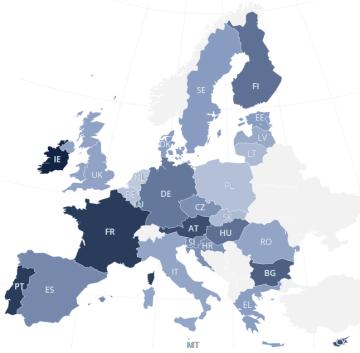
By 1 September 2026, twenty-two Member States had designated or appointed their national mechanism. However, not all mechanisms were yet fully operational. All EU Member States, except Hungary, Italy, Malta, Poland and Sweden, had designated the national entity in charge of monitoring or had pending legislation appointing such entity. Some appointed multiple actors. Despite FRA’s suggestion that the monitoring entity be designated by law, only 15 Member States had done so by 1 September 2026. Most Member States assigned the monitoring to national statutory human rights bodies. Exceptions are Croatia, Greece and Ireland, which have appointed other entities. Pursuant to the Screening Regulation, monitoring entities in these three countries must closely cooperate with national statutory human rights bodies but only Ireland has so far established a structured cooperation through an Advisory Board.
In the first few months of the Pact’s operation, national monitoring mechanisms focused on preparatory work. By 1 September 2026, monitoring visits had taken place in six Member States. Next to pending legal changes, resource and access issues emerged as the main challenges for effective monitoring.
Monitoring of forced returns
Article 8 (6) of the EU’s Return Directive (2008/115/EC) obliges Member States to have an effective forced return monitoring system. In 2026, the EU agreed on a new Return Regulation, which requires monitors to be independent. In Germany and Sweden, forced return monitors are part of the same authority responsible for parts of the return process. In Belgium, monitoring staff of the General Inspectorate of the Police include police officers seconded from other services. This raises questions of independence.
In 2025, France, Poland and Spain monitored only one national forced return operation. Austria did not monitor any national returns but monitored several return operations carried out by Frontex, reflecting Frontex’s increased role in forced returns.
Public findings from the forced return monitoring activities, though being a key aspect of effective monitoring, were only available in less than half of the Member States.
Frontex has a dedicated pool of forced return monitors. Although in practice this Frontex pool has operational autonomy, FRA suggested that for genuine oversight, the monitors should be managed by an independent body outside Frontex. Due to gaps with the operation of the Frontex pool, the Frontex fundamental rights officer had to provide his own monitors for many of such return flights.
The main fundamental rights issue when implementing forced returns remains the systematic application of restraint measures, such as handcuffs, during the initial phase of such operations. Restraint measures should only be used when necessary and proportionate, and not as a preventive measure.
Monitoring by EU agencies’ fundamental rights officers
Considering the risk that through its operational agencies the EU may engage in conduct that may not comply with EU and international fundamental rights law, the EU legislator has equipped the European Border and Coast Guard Agency (Frontex), the EU Agency for Asylum (EUAA) and the EU Agency for Law Enforcement Cooperation (Europol) with internal fundamental rights protection mechanisms. Fundamental rights officers in these three EU agencies monitor compliance with fundamental rights when implementing the respective agencies’ mandates. Given Frontex’s large operational presence across the EU, dedicated fundamental rights monitors regularly visit its operations, enabling the Frontex fundamental rights officer to provide meaningful, evidence-based advice.
As part of their respective agencies and provided with important independence safeguards, fundamental rights officers can give legally sound and operationally feasible advice. Their monitoring work mitigates the risk for the EU to violate fundamental rights during its operational activities and thus of litigation under Articles 268 and 340 of the Treaty on the Functioning of the European Union (action for damages for EU non-contractual liability).
In 2025, Frontex fundamental rights monitors identified serious issues relating to access to asylum, allegations of collective expulsions and excessive use of force. During the same year, the EUAA fundamental rights officer visited operations in five EU Member States and made observations concerning safeguards in asylum procedures, reception conditions, child protection and support for asylum applicants in vulnerable situations.
Investigations of reported rights violations at borders
Article 47 of the Charter of Fundamental Rights of the EU (the Charter) provides that everyone whose rights and freedoms guaranteed by EU law are violated has the right to an effective remedy before a tribunal. Past recommendations from the Schengen evaluation and monitoring mechanism under Regulation (EU) 2022/922 had flagged the insufficient nature of investigations into rights violations at borders. Since 2024, FRA has been issuing updates on judicial and disciplinary investigations.
Based on data FRA could collect, between 2020 and 2025, judicial authorities in 12 EU Member States opened at least 322 preliminary criminal investigations. Only nine of the 322 criminal investigations led to a conviction, eight in Hungary and one in Spain. All new convictions FRA recorded in 2025 are from Hungary.
Most investigations are discontinued at preliminary investigations stage. In 2024, FRA acknowledged the challenges to investigate rights violations at borders, as evidence for what may have happened is often scarce. Although FRA offered guidance to overcome evidentiary obstacles, two years later, systemic gaps hindering effective investigation of rights abuses at borders remain. In Greece, for example, the National Commission for Human Rights described a recurring pattern, whereby cases remain pending for a prolonged time before being dismissed or archived. In Poland, the Prosecutor's Office did not prolong the mandate of the special team of prosecutors investigating alleged rights violations near the Polish-Belarus border. Incidents will be investigated by the locally responsible judicial authorities, contrary to FRA’s suggestion to entrust specific prosecutorial departments that are not in the same geographical location of the alleged incident.
From 2020 to 2025, FRA counted 192 disciplinary investigations across 12 Member States. In 2025, most disciplinary investigations were opened in Greece and in Croatia. National authorities also reported new investigations in Latvia and Lithuania. None of the investigations concluded in 2025 led to disciplinary sanctions.
The Frontex and the EUAA fundamental rights offices also examine complaints against actions by their respective agencies. Most of these complaints are inadmissible because the alleged breach did not occur within Frontex or EUAA operational activities. Nevertheless, some complaints raise serious fundamental rights issues, such as alleged ill-treatment or inadequate reception conditions, which remain largely unaddressed. There are also gaps in the follow up to Frontex’s serious fundamental rights incident reports, which typically entail allegations of inhuman or degrading treatment, violations of the right to life, lack of access to asylum and collective expulsion. Cases in which the Frontex fundamental rights officer established a violation or a likely violation of fundamental rights within Frontex operations by a national officer are not followed up at the national level through prompt and effective investigation. Better follow up by national bodies would improve access to justice for victims in line with Article 47 of the Charter as well as strengthen the credibility of Frontex’s protection mechanism.