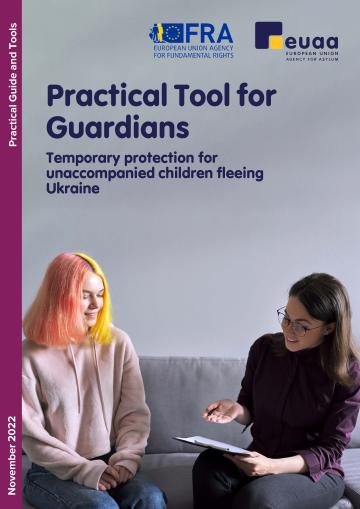
The European Union Agency for Fundamental Rights (FRA) and the European Union Agency for Asylum (EUAA) joined forces to create this tool focusing on temporary protection for unaccompanied children fleeing Ukraine.
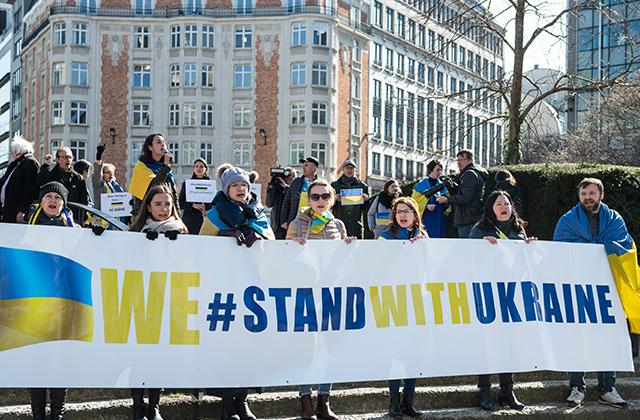
The Russian invasion of Ukraine triggered solidarity from EU governments, local authorities and society as they welcomed more than 7 million people fleeing the aggression. The European Union’s rapid response, activating the EU Temporary Protection Directive, offered welcome relief and much-needed support to those in need. It allowed displaced persons the opportunity to quickly settle and to work, travel and access services across the EU. But other pressing human rights issues have come to the fore and remain high on the EU’s agenda, such as human trafficking, sexual and gender-based violence, hate crime and hate-fuelled disinformation.
This bulletin looks at the fundamental rights situation of all persons fleeing the Russian war in Ukraine to the four EU Member States neighbouring Ukraine. This is primarily in terms of the application of the EU Temporary Protection Directive. It is based on findings of FRA’s field mission to Hungary, Poland, Romania and Slovakia at the beginning of March 2022. It is also based on weekly country reports prepared by Franet, the contracted research network of FRA between 1 March and 27 April 2022.
Діти є повноправними носіями прав. Вони є бенефіціарами всіх прав людини та основоположних прав, а також суб’єктами спеціального регулювання, враховуючи їхні специфічні особливості. Цей посібник має на меті проілюструвати, як європейське законодавство та судова практика враховують специфічні інтереси та потреби дітей. Він також ілюструє важливість батьків, опікунів та інших законних представників і, де це доречно, вказує на те, які права та обов’язки найчастіше покладаються на осіб, що здійснюють догляд за дітьми. Він є довідником з права Європейського Союзу (ЄС) та Ради Європи (РЄ), пов’язаного з цими питаннями, і пояснює, як кожне питання регулюється законодавством ЄС, включаючи Хартію основних прав Європейського Союзу, а також Європейською конвенцією з прав людини (ЄКПЛ), Європейською соціальною хартією (ЄСХ) та іншими інструментами РЄ.
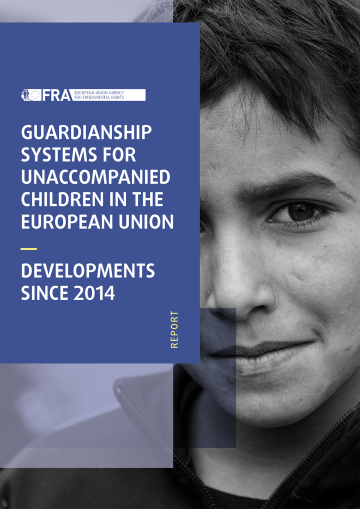
In 2015 and 2016, the numbers of unaccompanied children arriving in Europe increased dramatically, straining national guardianship systems. This report looks at how EU Member States, as well as North Macedonia and Serbia, have adapted their guardianship systems for unaccompanied children since that time.
This report sheds light on the realities faced by unaccompanied migrant children who are not in the care of child protection systems in the EU. Presented as a case study, it tells the story of children and young adults from Pakistan who travelled alone to the EU without their parents or other adults.
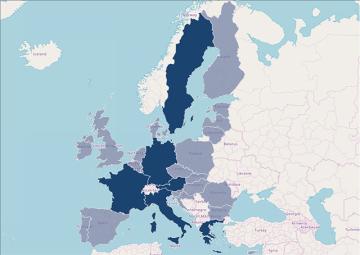
The EU Fundamental Rights Agency published in 2019 its report on the ‘Integration of young refugees in the EU’. The report explored the challenges of young people who fled armed conflict or persecution and arrived in the EU in 2015 and 2016. The report is based on 426 interviews with experts working in the area of asylum and integration, as well as 163 interviews with young people, aged 16 to 24, conducted between October 2017 and June 2018 in 15 regions and cities located in six Member States: Austria, France, Germany, Greece, Italy and Sweden. The links on this page provide a summary of the information collected during this period for each country about unaccompanied children turning 18 and the change in people’s legal status once international protection is granted. These two issues had at the time been identified as moments requiring sufficient, consistent and systematic support, particularly from lawyers, social workers and guardians, to ensure successful integration.
In recent years, thousands of girls and boys have reached Europe without their parents, and sought international protection. Many of them experienced violence, abuse and neglect in their home countries, and while in transit. They have the right to be protected in line with the provisions of the UN Convention on the Rights of the Child, the European Convention on Human Rights, and European Union law. This report explores the challenges and good practices gathered in the implementation of such relocation programmes. Based on information FRA collected in 10 EU Member States, it aims to help national authorities to support the relocation of unaccompanied children by taking measures that are fully rights compliant and practically feasible.
Children in migration are more vulnerable than adults, particularly when they are unaccompanied. Their vulnerability makes them more exposed to violence, exploitation and trafficking in human beings, as well as physical, psychological and sexual abuse. This report looks into challenges to the fundamental rights of children in migration throughout 2019. It pulls together the main issues identified in FRA’s Quarterly Bulletins on migration in selected EU Member States.


 Handbook / Guide / Manual1March2023