eu-charter

Carta dei diritti fondamentali dell’Unione europea

Articolo 41 - Diritto ad una buona amministrazione

Articolo 41 - Diritto ad una buona amministrazione

1. Ogni persona ha diritto a che le questioni che la riguardano siano trattate in modo imparziale ed equo ed entro un termine ragionevole dalle istituzioni, organi e organismi dell'Unione. 2. Tale diritto comprende in particolare: a) il diritto di ogni persona di essere ascoltata prima che nei suoi confronti venga adottato un provvedimento individuale che le rechi pregiudizio; b) il diritto di ogni persona di accedere al fascicolo che la riguarda, nel rispetto dei legittimi interessi della riservatezza e del segreto professionale e commerciale; c) l'obbligo per l'amministrazione di motivare le proprie decisioni. 3. Ogni persona ha diritto al risarcimento da parte dell'Unione dei danni cagionati dalle sue istituzioni o dai suoi agenti nell'esercizio delle loro funzioni, conformemente ai principi generali comuni agli ordinamenti degli Stati membri. 4. Ogni persona può rivolgersi alle istituzioni dell'Unione in una delle lingue dei trattati e deve ricevere una risposta nella stessa lingua.

Spiegazioni

  • Text:

    L'articolo 41 è basato sull'esistenza dell'Unione in quanto comunità di diritto, le cui caratteristiche sono state sviluppate dalla giurisprudenza che ha consacrato segnatamente la buona amministrazione come principio generale di diritto (cfr. tra l'altro, la sentenza della Corte del 31 marzo 1992, causa C-255/90 P, Burban, Racc. 1992, pag. I-2253, e le sentenze del Tribunale di primo grado del 18 settembre 1995, causa T-167/94, Nölle, Racc.1995, pag. II-2589; del 9 luglio 1999, causa T-231/97, New Europe Consulting e altri, Racc. 1999, pag. II-2403). Le espressioni di questo diritto enunciate nei primi due paragrafi derivano dalla giurisprudenza (cfr. le sentenze della Corte del 15 ottobre 1987, causa 222/86, Heylens, Racc. 1987, pag. 4097, punto 15; del 18 ottobre 1989, causa 374/87, Orkem, Racc. 1989, pag. 3283; del 21 novembre 1991, causa C-269/90, TU München, Racc. 1991, pag. I-5469, e le sentenze del Tribunale di primo grado del 6 dicembre 1994, causa T-450/93, Lisrestal, Racc. 1994, pag. II-1177; del 18 settembre 1995, causa T-167/94, Nölle, Racc. 1995, pag. II-2589) e, per quanto attiene all'obbligo di motivare, dall'articolo 296 del trattato sul funzionamento dell'Unione europea (cfr. anche la base giuridica all'articolo 298 del trattato sul funzionamento dell'Unione europea per l'adozione di norme volte a garantire un'amministrazione europea aperta, efficace ed indipendente).

    Il paragrafo 3 riprende il diritto ora garantito all'articolo 340 del trattato sul funzionamento dell'Unione europea. Il paragrafo 4 riprende il diritto ora garantito all'articolo 20, paragrafo 2, lettera d) e all'articolo 25 del trattato sul funzionamento dell'Unione europea. Ai sensi dell'articolo 52, paragrafo 2, questi diritti si applicano alle condizioni e nei limiti definiti dai trattati.

    Il diritto a un ricorso effettivo, che costituisce un aspetto importante della questione, è garantito all'articolo 47 della presente Carta.

    Source:
    Gazzetta ufficiale dell'Unione europea C 303/17 - 14.12.2007
    Preamble - Explanations relating to the Charter of Fundamental Rights:
    Le presenti spiegazioni erano state elaborate, nella versione iniziale, sotto l'autorità del praesidium della Convenzione che aveva redatto la Carta dei diritti fondamentali dell’Unione europea e sono ora state aggiornate sotto la responsabilità del praesidium della Convenzione europea, sulla scorta degli adeguamenti redazionali che quest’ultima Convenzione ha apportato al testo della Carta (in particolare agli articoli 51 e 52) e dell’evoluzione del diritto dell’Unione. Benché non abbiano di per sé status di legge, esse rappresentano un prezioso strumento d’interpretazione destinato a chiarire le disposizioni della Carta.

Giurisprudenza

Diritto costituzionale nazionale

28 results found

  • Slovakia / Constitution of the Slovak Republic
    Paese:
    Slovakia

    Article 26 (...) (5) Public authority bodies are obliged to provide information on their activities in an appropriate manner and in the State language. The conditions and manner of execution shall be laid down by law.

    Article 46 (...) (2) Anyone who claims to have been deprived of his rights by a decision of a public administration body may turn to the court to have the lawfulness of such decision reexamined, unless laid down by law otherwise. The reexamination of decisions concerning basic rights and freedoms may not, however, be excluded from the court's authority. (3) Everyone is entitled to compensation for damage incurred as a result of an unlawful decision by a court, or another state or public administration body, or as a result of an incorrect official procedure.(4) Conditions and details concerning judicial and other legal protection shall be laid down by law.

  • Slovenia / Constitution of the Republic of Slovenia
    Paese:
    Slovenia

    Article 22 Everyone shall be guaranteed equal protection of rights in any proceeding before a court and before other state authorities, local community authorities, and bearers of public authority that decide on his rights, duties, or legal interests.

    Article 26 - Right to Compensation Everyone has the right to compensation for damage caused through unlawful actions in connection with the performance of any function or other activity by a person or body performing such function or activity under state authority, local community authority or as a bearer of public authority.Any person suffering damage has the right to demand, in accordance with the law, compensation also directly from the person or body that has caused damage.

    Article 39 - Freedom of Expression Freedom of expression of thought, freedom of speech and public appearance, of the press and other forms of public communication and expression shall be guaranteed. Everyone may freely collect, receive and disseminate information and opinions.Except in such cases as are provided by law, everyone has the right to obtain information of a public nature in which he has a well founded legal interest under law.

    Article 40 - Right to Correction and Reply The right to correct published information which has damaged a right or interest of an individual, organisation or body shall be guaranteed, as shall be the right to reply to such published information.

  • Suomen perustuslaki
    Paese:
    Finland

    17 § Oikeus omaan kieleen ja kulttuuriin (...) Jokaisen oikeus käyttää tuomioistuimessa ja muussa viranomaisessa asiassaan omaa kieltään, joko suomea tai ruotsia, sekä saada toimituskirjansa tällä kielellä turvataan lailla. (...) Saamelaisten oikeudesta käyttää saamen kieltä viranomaisessa säädetään lailla. Viittomakieltä käyttävien sekä vammaisuuden vuoksi tulkitsemis- ja käännösapua tarvitsevien oikeudet turvataan lailla. 21 § Oikeusturva Jokaisella on oikeus saada asiansa käsitellyksi asianmukaisesti ja ilman aiheetonta viivytystä lain mukaan toimivaltaisessa tuomioistuimessa tai muussa viranomaisessa sekä oikeus saada oikeuksiaan ja velvollisuuksiaan koskeva päätös tuomioistuimen tai muun riippumattoman lainkäyttöelimen käsiteltäväksi. Käsittelyn julkisuus sekä oikeus tulla kuulluksi, saada perusteltu päätös ja hakea muutosta samoin kuin muut oikeudenmukaisen oikeudenkäynnin ja hyvän hallinnon takeet turvataan lailla.

  • The Constitution of the Republic of Cyprus
    Paese:
    Cyprus

    Article 29
    1. Every person has the right individually or jointly with others to address written requests or complaints to any competent public authority and to have them attended to and decided expeditiously; an immediate notice of any such decision taken duly reasoned shall be given to the person making the request or complaint and in any event within a period not exceeding thirty days.
    2. Where any interested person is aggrieved by any such decision or where no such decision is notified to such person within the period specified in paragraph 1 of this Article, such person may have recourse to a competent court in the matter of such request or complaint.

  • The Fundamental Law of Hungary
    Paese:
    Hungary

    Article XXIV (Freedom and Responsibility)
    (1) Everyone shall have the right to have his or her affairs handled impartially, fairly and within a reasonable time by the authorities. Authorities shall be obliged to give the reasons for their decisions, as provided for by an Act.
    (2) Everyone shall have the right to compensation for any damage unlawfully caused to him or her by the authorities in the performance of their duties, as provided for by an Act.

    Article XXV (Freedom and Responsibility)
    Everyone shall have the right to submit, either individually or jointly with others, written applications, complaints or proposals to any organ exercising public power.

  • Tο Σύνταγμα της Κυπριακής Δημοκρατίας
    Paese:
    Cyprus

    ΑΡΘΡΟΝ 29
    1. Έκαστος έχει το δικαίωμα ατομικώς ή ομού μετ’ άλλων να υποβάλλη εγγράφους αιτήσεις ή παράπονα προς οιανδήποτε αρμοδίαν δημοσίαν αρχήν δικαιούμενος ν’ απαιτήση, όπως αύτη επιληφθή αυτών και αποφασίση ταχέως. Η απόφασις της αρχής ταύτης, δεόντως ητιολογημένη, γνωστοποιείται εγγράφως αμέσως εις τον υποβαλόντα την αίτησιν ή τα παράπονα εν πάση περιπτώσει ενός προθεσμίας μη υπερβαινούσης τας τριάκοντα ημέρας.
    2. Εφ’ όσον ο ενδιαφερόμενος δεν ικανοποιείται εκ της αποφάσεως ή οσάκις ουδεμία απόφασις γνωστοποιήται προς αυτόν εντός της καθοριζομένης εν τη πρώτη παραγράφω του παρόντος άρθρου προθεσμίας δύναται ο ενδιαφερόμενος ν’ αγάγη ενώπιον αρμοδίου δικαστηρίου διά προσφυγής την υπόθεσιν, εις ην αφορά η αίτησις ή το παράπονον αυτού.

  • Ustav Republike Hrvatske
    Paese:
    Croatia

    Članak 46.
    Svatko ima pravo slati predstavke i pritužbe, davati prijedloge državnim i drugim javnim tijelima i dobiti na njih odgovor.

    Članak 93.
    (2)Svatko može podnijeti pritužbu pučkom pravobranitelju ako smatra da su, uslijed nezakonitog ili nepravilnog rada državnih tijela, tijela lokalne i područne (regionalne) samouprave i tijela s javnim ovlastima, ugrožena ili povrijeđena njegova ustavna ili zakonska prava.

    Članak 146.
    Državljani Republike Hrvatske su građani Europske unije i uživaju prava koja im jamči pravna stečevina Europske unije, a osobito:
    (...)
    – pravo podnošenja peticija Europskom parlamentu, predstavki Europskom ombudsmanu te pravo obraćanja institucijama i savjetodavnim tijelima Europske unije na hrvatskom jeziku, kao i na svim službenim jezicima Europske unije, te pravo dobiti odgovor na istom jeziku.
    Sva prava ostvaruju se u skladu s uvjetima i ograničenjima propisanima ugovorima na kojima se temelji Europska unija te mjerama prihvaćenima na temelju tih ugovora.
    U Republici Hrvatskoj sva prava zajamčena pravnom stečevinom Europske unije uživaju svi građani Europske unije.

  • КОНСТИТУЦИЯ на Република България
    Paese:
    Bulgaria

    Чл. 7. Държавата отговаря за вреди, причинени от незаконни актове или действия на нейни органи и длъжностни лица.

Diritto dell'UE

11 results found

  • Regulation (EU, Euratom) No 883/2013 of the European Parliament and of the Council of 11 September 2013 concerning investigations conducted by the European Anti-Fraud Office (OLAF) and repealing Regulation (EC) No 1073/1999 of the European Parliament a...

    Article 1 - Objectives and tasks
    ‘1. In order to step up the fight against fraud, corruption and any other illegal activity affecting the financial interests of the European Union and of the European Atomic Energy Community (hereinafter referred to collectively, when the context so requires, as ‘the Union’), the European Anti-Fraud Office established by Decision 1999/352/EC, ECSC, Euratom (‘the Office’) shall exercise the powers of investigation conferred on the Commission by:
    (a) the relevant Union acts; and
    (b) the relevant cooperation and mutual assistance agreements concluded by the Union with third countries and international organisations. [...]‘
    ‘4. Within the institutions, bodies, offices and agencies established by, or on the basis of, the Treaties (‘institutions, bodies, offices and agencies’), the Office shall conduct administrative investigations for the purpose of fighting fraud, corruption and any other illegal activity affecting the financial interests of the Union. To that end, it shall investigate serious matters relating to the discharge of professional duties constituting a dereliction of the obligations of officials and other servants of the Union liable to result in disciplinary or, as the case may be, criminal proceedings, or an equivalent failure to discharge obligations on the part of members of institutions and bodies, heads of offices and agencies or staff members of institutions, bodies, offices or agencies not subject to the Staff Regulations (hereinafter collectively referred to as ‘officials, other servants, members of institutions or bodies, heads of offices or agencies, or staff members’). [...]‘

Diritto internazionale

6 results found

Prodotti

  • Report / Paper / Summary
    4
    December
    2025
    Artificial Intelligence comes with both benefits and risks. Safe AI use that accounts for fundamental rights is thus crucial. While the 2024 EU AI Act was a milestone in this regard, its broad definitions regarding AI systems and high-risk AI could introduce loopholes for fundamental rights compliance. This report offers an empirical basis for much-needed practical guidance on the Act’s implementation. Based on interviews with AI developers, sellers, and users, FRA addresses challenges of its use in critical domains, like asylum, education, and employment. Our findings help guide next steps in realising the AI Act’s potential to ensure responsible innovation.
  • Report / Paper / Summary
    27
    November
    2025
    This report looks at the breadth and depth of violence and neglect faced by people with disabilities living in institutions. It highlights the shortcomings by EU Member States in preventing violence and protecting those who are at a higher risk of experiencing it, in line with the UN Convention on the Rights of Persons with Disabilities. Based on research across all EU Member States and FRA observer candidate countries, the report calls for better protection, stronger prevention of violence, and clear accountability. It urges the EU and its Member States to implement their obligations around equality and fundamental rights.
  • Fundamental Rights Report
    10
    June
    2025
    The Fundamental Rights Report 2025 is the annual report of the European Union Agency for Fundamental Rights (FRA). It provides an overview of the state of fundamental rights in the EU and highlights selected critical developments and trends in 2024. The report covers issues such as inclusive elections, gender-based violence, and the implementation of the EU Charter of Fundamental Rights. It presents FRA’s opinions on these developments, setting out the actions that the EU and Member States should take. This annual publication is a valuable resource for those seeking to stay informed about the EU’s shifting landscape of fundamental rights.
  • Handbook / Guide / Manual
    19
    September
    2024
    I presenti orientamenti pratici aiutano gli Stati membri dell'UE a istituire o designare meccanismi nazionali indipendenti per monitorare il rispetto dei diritti fondamentali durante gli accertamenti dei cittadini di paesi terzi e l'esame delle domande di asilo nelle procedure di frontiera.
  • Fundamental Rights Report
    5
    June
    2024
    FRA’s Fundamental Rights Report 2024 analyses the year’s developments in fundamental rights. It focuses on the most pressing fundamental rights concerns facing Europe in 2023: the cost-of-living crisis, rights concerns at the EU’s external borders and migration, and threats to democracy. Re-structured, this year’s new approach is a shorter and sharper analysis. It also presents FRA’s opinions on these developments, including a summary of the evidence supporting these opinions.
  • Report / Paper / Summary
    29
    May
    2024
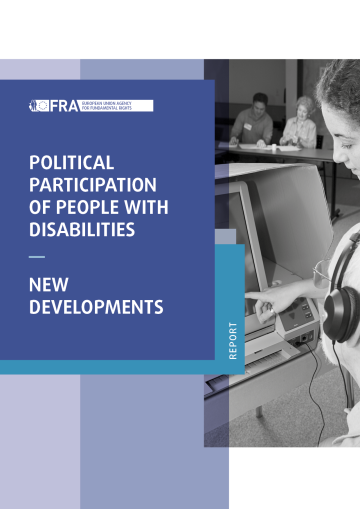
    Ahead of the EU elections, this report explores the political participation of people with disabilities. Although some Member States removed restrictions on the right to vote and to stand for elections, barriers still exist. This report is an update of new developments following FRA’s last report published in 2014. It sets out ways forward to ensure people with disabilities have equal opportunities, in line with the EU Charter of Fundamental Rights and the Convention on the Rights of Persons with Disabilities.
    Lisa F. Young/Adobe Stock
  • Report / Paper / Summary
    13
    September
    2023
    Europe’s ageing population is ever-increasing, and our societies are becoming more digitalised. Many public services are now available online, with many more services in the process of being digitalised. But the digitalisation of public services poses a risk of exclusion for older persons. In this new report, FRA explores the impact of digitalisation on the fundamental rights of older persons. The report maps the current legislation, policies and practices fostering digital inclusion. It provides an overview of the laws at the national level that provide for equal access to public services, both online and offline. The findings show how Member States safeguard older person’s rights to access services undergoing digitalisation. It outlines how Member States can support digital skills and ensure older people can fully participate in public life.

  • Report / Paper / Summary
    6
    September
    2023
    Integration and social inclusion are important aspects of EU migration and asylum policy. The fundamental rights of long-term residents in the EU are explored through this report, focussing on the Long-Term Residence Directive. EU long-term resident status includes rights to move and reside in other EU Member States. This report examines the reasons behind the low uptake of EU long-term resident permits, despite them typically giving more rights than national long-term resident permits.
  • Fundamental Rights Report
    8
    June
    2023
    FRA’s Fundamental Rights Report 2023 reviews major developments in the field in 2022, identifying both achievements and areas of concern. It also presents FRA’s opinions on these developments, including a synopsis of the evidence supporting these opinions.
  • Handbook / Guide / Manual
    14
    October
    2022
    Il monitoraggio dei diritti fondamentali alle frontiere esterne dell’UE dovrebbe essere effettuato sistematicamente e regolarmente per una serie di attività di gestione delle frontiere, tra cui la sorveglianza delle frontiere, i fermi alle frontiere terrestri, marittime e aeree e la gestione dei meccanismi di indirizzamento, anche in caso di arrivi di massa. I presenti orientamenti generali forniscono assistenza agli Stati membri dell’Unione europea (UE) ai fini dell’istituzione di meccanismi nazionali indipendenti tesi a monitorare il rispetto dei diritti fondamentali alle frontiere esterne dell’UE, in linea con la proposta di regolamento sugli accertamenti presentata dalla Commissione europea il 23 settembre 2020. L’Agenzia dell’Unione europea per i diritti fondamentali ha elaborato i presenti orientamenti su richiesta della Commissione.