Prodotti

    Publications and Data

    Displaying results 131 - 140 of 284
    Report / Paper / Summary
    21
    September
    2017
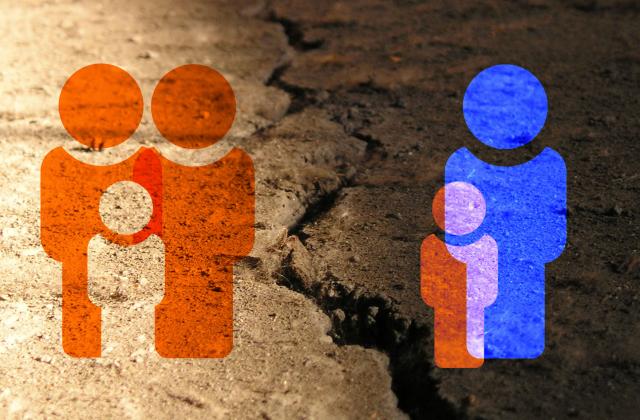
    Muslims living in the EU face discrimination in a broad range of settings – and particularly when looking for work, on the job, and when trying to access public or private services. The report examines how characteristics – such as an individual's first and last name, skin colour and the wearing of visible religious symbols like a headscarf, for example – may trigger discriminatory treatment and harassment.
    Report / Paper / Summary
    22
    June
    2017
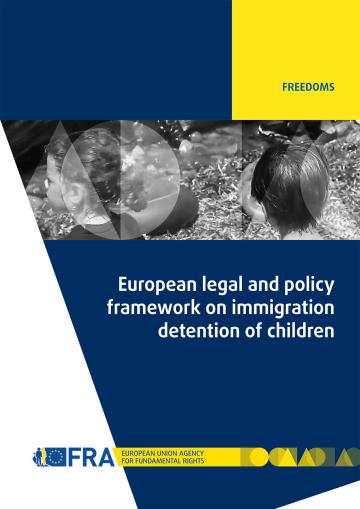
    Up to one third of migrants arriving in the European Union since the summer of 2015 have been children. The current emphasis on speedier asylum processing and making returns more effective may trigger increased use of immigration detention, possibly also affecting children. The detention of children implicates various fundamental rights and will only be in line with EU law if limited to exceptional cases. This report aims to support practitioners in implementing relevant polices in line with applicable law by outlining available safeguards against unlawful and arbitrary detention and highlighting promising practices.
    Report / Paper / Summary
    19
    May
    2017
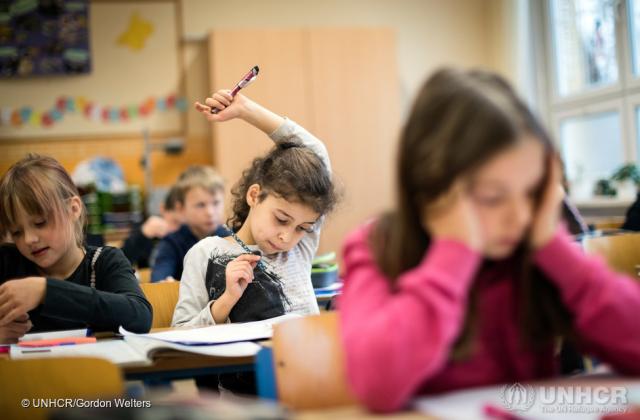
    This report assesses asylum seekers’ and refugees’ opportunities to access early
    childhood education and primary, secondary and tertiary education and training.
    It identifies measures available for their support, as well as possible areas for
    improvement.
    Report / Paper / Summary
    24
    March
    2017
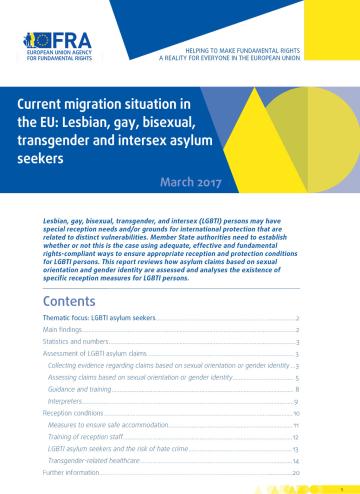
    This report reviews how asylum claims based on sexual
    orientation and gender identity are assessed and analyses the existence of
    specific reception measures for LGBTI persons.
    Report / Paper / Summary
    22
    February
    2017
    Around 2.5 million children participate in judicial proceedings across the European Union (EU) every year, affected by parental divorce or as victims of, or witnesses to, crime. Although their effective participation in such proceedings is vital for improving the operation of justice, the treatment of children in justice systems remains a concern. FRA investigated to what extent children’s rights to be heard, to be informed, to be protected, and to non-discrimination are fulfilled in practice.

    Report / Paper / Summary
    20
    December
    2016
    This focus section outlines the specific protection needs of separated children, and highlights current responses and promising practices among EU Member States.
    Report / Paper / Summary
    13
    December
    2016
    Antisemitism can be expressed in the form of verbal and physical attacks, threats,
    harassment, property damage and graffiti or other forms of text, including on the
    internet. The present report relates to manifestations of antisemitism as they are
    recorded by international organisations, and by official and unofficial sources in the
    28 EU Member States.
    Opinion / Position Paper
    8
    December
    2016
    This opinion analyses the effects on children of the proposed recast Dublin Regulation. It covers child-specific rules as well as provisions relating to all asylum applicants that significantly affect children.
    Report / Paper / Summary
    29
    November
    2016
    Con l’80 % dei Rom intervistati che vive al di sotto della soglia di rischio di povertà del proprio Stato membro di residenza, uno su tre che abita in alloggi privi di acqua corrente, un bambino o adolescente Rom su tre in una famiglia in cui un membro si è coricato affamato almeno una volta nel corso del mese precedente e i bambini Rom che restano indietro rispetto ai compagni non Rom in tutti gli indicatori relativi all’istruzione, questa relazione sottolinea una realtà tanto inquietante quanto inevitabile: la più numerosa minoranza etnica dell’Unione europea continua a essere vittima di discriminazione e accesso non paritario a diversi servizi fondamentali.
    Report / Paper / Summary
    17
    November
    2016
    Media content and political discourse in EU Member States, whether online or
    offline, show incitement to discrimination, hatred or violence on different
    grounds, as evidence collected by FRA reveals. The growing reliance on the internet as the main source of
    information for many enables the fast spread of often unverified statements
    that could also incite to hatred.