Displaying 1 - 9 of 9
  • Fundamental Rights Report
    11
    June
    2026
    The Fundamental Rights Report: Challenges and Achievements in 2025 is FRA’s flagship annual publication. It provides an overview of the state of fundamental rights in the EU and highlights selected critical developments from 2025. This year, it focuses on four areas: rights protection in a rapidly changing digital environment; the housing crisis and rising homelessness rates; employment challenges for people from non-EU countries; and the implementation of the EU Charter of Fundamental Rights. The publication is a valuable resource for those seeking to stay informed about the EU’s shifting landscape of fundamental rights.
  • Handbook / Guide / Manual
    21
    November
    2024
    This manual is designed to be used by workplace inspection staff in the Member States. It is intended to empower them to enforce the protective standards in EU law that safeguard the rights of third-country workers, including seasonal workers, migrant workers with temporary permits and migrants in an irregular situation. Third-country workers are nationals who are not from a Member State or from Iceland, Liechtenstein, Norway or Switzerland.
  • Periodic updates / Series
    29
    September
    2023
    Russia’s invasion of Ukraine posed new challenges for the EU. Millions were forced to flee the war. As a result of the scale of people’s displacement, the EU activated for the first time the Temporary Protection Directive (TPD). More than 1.3 million children sought international protection in the EU. This bulletin explores the respect, protection and fulfilment of the fundamental rights of displaced children and ways to safeguard their rights. The third in a series, this bulletin builds on the evidence in FRA’s Bulletin #1 and #2 on the experiences of displaced people seeking safety in the EU.
  • Periodic updates / Series
    21
    October
    2022
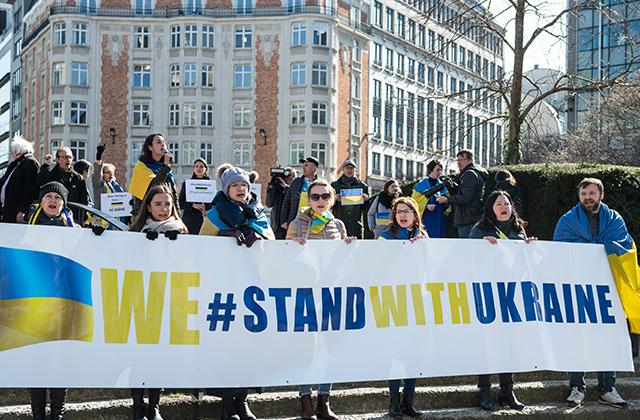
    The Russian invasion of Ukraine triggered solidarity from EU governments, local authorities and society as they welcomed more than 7 million people fleeing the aggression. The European Union’s rapid response, activating the EU Temporary Protection Directive, offered welcome relief and much-needed support to those in need. It allowed displaced persons the opportunity to quickly settle and to work, travel and access services across the EU. But other pressing human rights issues have come to the fore and remain high on the EU’s agenda, such as human trafficking, sexual and gender-based violence, hate crime and hate-fuelled disinformation.

  • Report / Paper / Summary
    24
    June
    2021
    The Employers Sanctions Directive was primarily enacted to dissuade employers from recruiting migrants in an irregular situation, but it also contains provisions to protect workers. It facilitates access to justice for exploited workers and sets out workers’ rights to claim back payment of outstanding wages. The directive also contains provisions to enhance the effectiveness of labour inspections. This report describes how the 25 Member States bound by the directive have been implementing its protective provisions, focusing on the impact these provisions have on migrant workers in an irregular situation who are victims of exploitation and other labour
    law violations.
  • Report / Paper / Summary
    17
    March
    2016
    Worker exploitation is not an isolated or marginal phenomenon. But despite its pervasiveness
    in everyday life, severe labour exploitation and its adverse effects on third-country nationals
    and EU citizens - as workers, but also as consumers - have to date not received much
    attention from researchers. This report identifies risk factors contributing to such exploitation and
    discusses means of improving the situation and highlights the challenges EU institutions and
    Member States face in making the right of workers who have moved within or into the EU
    to decent working conditions a reality.
  • Rapport / Publication / Résumé
    17
    March
    2016
    L’exploitation de la main d’oeuvre n’est pas un phénomène isolé ou marginal. Toutefois,
    en dépit de leur omniprésence dans la vie quotidienne, les formes graves d’exploitation
    au travail et leurs effets préjudiciables sur les ressortissants des pays tiers et les citoyens
    de l’UE - en tant que travailleurs, mais également en tant que consommateurs - n’ont pas
    à ce jour suscité beaucoup d’intérêt de la part des chercheurs. Ce rapport
    identifie les facteurs de risque qui contribuent à ce type d’exploitation et discute des
    moyens d’améliorer la situation, tout en soulignant les défis auxquels sont confrontés les
    institutions et les États membres de l’UE pour veiller à ce que le droit à des conditions de
    travail décentes des travailleurs provenant de l’UE ou de pays tiers soit réellement appliqué.
  • Report / Paper / Summary
    17
    March
    2016
    Die Ausbeutung von Arbeitskräften ist kein vereinzelt auftretendes oder nebensächliches
    Phänomen. Aber ungeachtet ihrer weiten Verbreitung und Alltäglichkeit haben schwere Arbeitsausbeutung
    und ihre negativen Auswirkungen auf Drittstaatsangehörige und EU-BürgerInnen –
    als Arbeitskräfte, aber auch als VerbraucherInnen – bislang bei WissenschaftlerInnen kaum
    Beachtung gefunden. Im Rahmen der umfangreichen Feld- und Sekundärforschung der FRA
    wurden die unterschiedlichen strafrechtlich relevanten Formen der schweren Ausbeutung von
    Arbeitskräften aus anderen EU-Mitgliedstaaten oder Drittstaaten erstmals umfassend untersucht. Ziel war es, die diesbezüglichen Wissenslücken zu schließen und das derzeit herrschende
    Klima der stillschweigenden Akzeptanz schwerer Arbeitsausbeutung in Frage zu stellen.
  • Report / Paper / Summary
    2
    June
    2015
    Worker exploitation is not an isolated or marginal phenomenon. But despite its pervasiveness in everyday life, severe labour exploitation and its adverse effects on third-country nationals and EU citizens - as workers, but also as consumers - have to date not received much attention from researchers.
Displaying 1 - 9 of 9