• Report / Paper / Summary
    14
    April
    2026
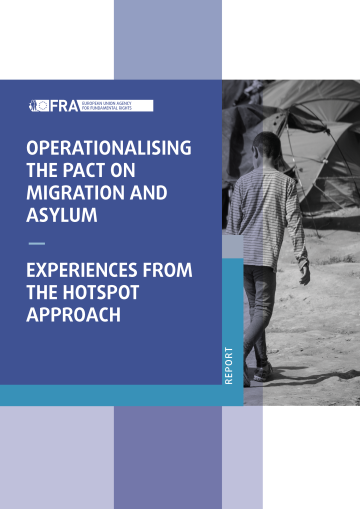
    In response to increased arrivals of asylum seekers, in 2015 the European Commission introduced the hotspot approach. Under this approach, the European Commission and EU agencies supported Greece and Italy in identifying, registering and fingerprinting newly arrived people. FRA regularly visited the initial reception facilities hosting them. This report looks back at the lessons learnt from 10 years of FRA visits. It identifies recurring risks to rights and highlights practical measures and promising practices to prevent or address them. These ‘lessons learnt’ can inform the implementation of the 2024 Pact on Migration and Asylum in line with the EU Charter of Fundamental Rights.
  • Report / Paper / Summary
    31
    March
    2026
    Civic space is a crucial component of democracy and of societies founded on respect for fundamental rights and the rule of law. Civil society organisations across the EU face increasing pressure that limits their ability to operate. This report presents FRA opinions on how EU Member States can better protect civic space and support civil society organisations in safeguarding fundamental rights. The findings are based on data and information collected by FRANET, FRA’s multidisciplinary research network, and FRA’s consultation with CSOs participating in its Fundamental Rights Platform. It is complemented by desk research, interviews, stakeholder meetings and exchanges with intergovernmental organisations. It covers all EU Member States, as well as Albania, North Macedonia and Serbia.
  • Report / Paper / Summary
    27
    March
    2026
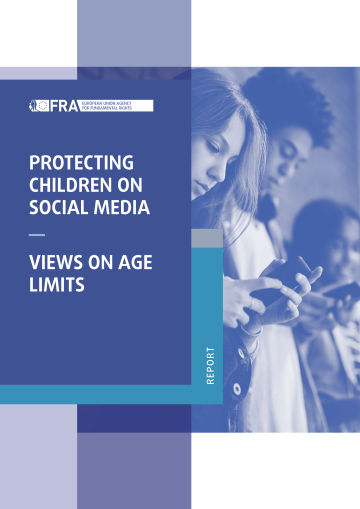
    This publication presents findings from an EU-wide survey on public attitudes to children’s use of social media. It presents people’s key concerns and their views on the minimum age limits for accessing social media platforms. The survey draws on the views of both teenagers and adults – those most directly affected. The findings offer a useful evidence base for policy discussions on social media age restrictions in the EU.
  • Report / Paper / Summary
    3
    March
    2026
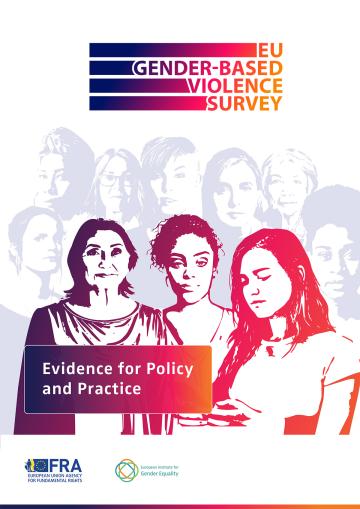
    Violence against women remains widespread in the European Union (EU). This joint report by the EU Agency for Fundamental Rights (FRA) and the European Institute for Gender Equality (EIGE) presents detailed findings from the EU gender-based violence survey. It offers in-depth analysis of the scale, nature and drivers of violence and exposes the structural gender inequality. Building on the 2024 publication, EU gender-based violence survey - Key results, and following up on FRA’s 2014 report, Violence against women: an EU-wide survey, this report tracks trends over the last decade across the EU. Eurostat, FRA, and EIGE jointly conducted the survey. It is based on over 100,000 interviews covering all 27 EU Member States.

  • Report / Paper / Summary
    24
    February
    2026
    The start of Russia’s war of aggression against Ukraine on 24 February 2022 shocked the global community and gave rise to a
    series of urgent fundamental rights challenges across Europe. While much attention has focused on the scale of devastation and its wider impact on all Ukrainians, the war has also inflicted profound personal harm. This report sheds light on the violence, sexual harassment and exploitation experienced by women displaced from Ukraine. Drawing on a survey and in-depth interviews with women from Ukraine, the report documents the prevalence, forms and patterns of gender-based violence and sets out practical measures to improve safety, access to justice and support.
  • Report / Paper / Summary
    27
    January
    2026
    This report looks at antisemitism in the EU, focusing on what can be done to address gaps in recording and inconsistencies in data collection. It highlights existing tools and guidance for Member States to improve their recording systems. The analysis is based on official administrative data and information from publicly available sources across EU Member States, as well as Albania, North Macedonia, and Serbia. Detailed country overviews are available for all countries covered. Antisemitism has been monitored by FRA since 2004. This report builds on the 2024 publication, ‘Jewish People’s Experiences and Perceptions of Antisemitism’.
  • Report / Paper / Summary
    22
    January
    2026
    Online terrorist content is a threat to fundamental rights, rule of law and democracy. EU measures to tackle such content aim to prevent terrorism while upholding these values. FRA’s report looks at how online terrorist content is detected and removed under EU legislation. It highlights challenges in interpreting rules, risks of over-removal and potential impacts on freedom of expression. It finds that moderation practices by authorities and platforms can disproportionately affect certain groups, such as Muslims and Arabic speakers, while far-right content often receives less scrutiny. The findings, based on research and expert interviews with those addressing online terrorist content, offer ways to improve transparency in content moderation and to better balance public security and fundamental rights, contributing to wider debates on regulating online content responsibly.
  • Leaflet / Flyer
    23
    December
    2025
    A list of all FRA reports, translations and other outputs published in 2025.
  • Periodic updates / Series
    19
    December
    2025
    The EU Agency for Fundamental Rights (FRA) publishes annual updates on the forced return monitoring systems set up by EU Member States under Article 8(6) of the EU Return Directive (2008/115/EC). This project has been ongoing since 2014.
    The latest report covers the period until the end of 2024.
  • Video
  • In brief / Factsheet
    15
    December
    2025
    This factsheet outlines key judgments of the Court of Justice of the European Union (CJEU) and the European Court of Human Rights (ECtHR) relating to the intersection of climate change and human rights. The issues examined include territorial jurisdiction, standards of protection, standing and victim status, and procedural guarantees in climate-related cases, including the rights of access to information. It is intended to assist legal practitioners, policymakers, and researchers in understanding and applying the evolving human rights jurisprudence in the context of climate change within the European legal space.
  • Report / Paper / Summary
    12
    December
    2025
    As the EU prepares to join the European Convention on Human Rights (ECHR), this report outlines the main changes that accession would bring, offering an overview of the legal and operational implications. Presented in a Q&A format, it provides answers to 19 key questions for legal professionals and a broader audience. It describes the steps needed to conclude accession, the expected benefits for protecting rights, and some of the challenges that may come up. This legal analysis contributes to the current discussions on EU accession.
  • Report / Paper / Summary
    8
    December
    2025
    This report examines how human rights impact assessments (HRIAs) are built into lawmaking across the EU and its Member States. It highlights that, although progress has been made, the use of HRIAs remains uneven and often superficial. In many EU countries, the EU Charter of Fundamental Rights is frequently overlooked. The report identifies insufficient consultation with external experts, limited stakeholder participation and a lack of evaluation once laws are in force. To address these gaps, it offers practical recommendations for more systematic, inclusive and evidence-based HRIAs that strengthen human rights protection and ensure better, more accountable legislation throughout the EU.