Equality

Έγκλημα μίσους

    Προϊοντα

    Publications and Data

    Displaying results 41 - 50 of 74
    Fundamental Rights Report
    30
    May
    2016
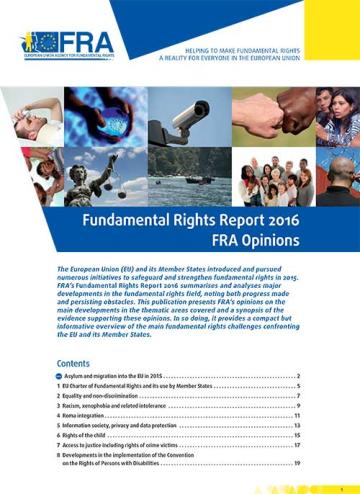
    The European Union (EU) and its Member States introduced and pursued
    numerous initiatives to safeguard and strengthen fundamental rights in 2015.
    FRA’s Fundamental Rights Report 2016 summarises and analyses major
    developments in the fundamental rights field, noting both progress made
    and persisting obstacles. This publication presents FRA’s opinions on the
    main developments in the thematic areas covered and a synopsis of the
    evidence supporting these opinions. In so doing, it provides a compact but
    informative overview of the main fundamental rights challenges confronting
    the EU and its Member States.
    Report / Paper / Summary
    28
    April
    2016
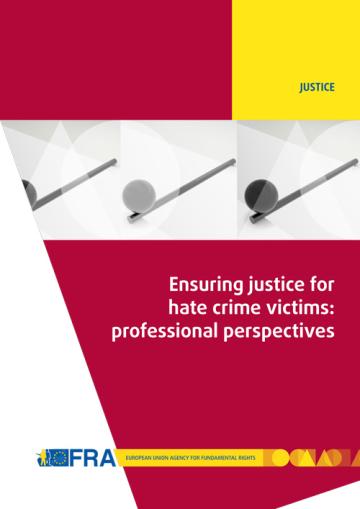
    Hate crime is the most severe expression of discrimination, and a core fundamental rights abuse. Various initiatives target such crime, but most hate crime across the EU remains unreported and unprosecuted, leaving victims without redress. To counter this trend, it is essential for Member States to improve access to justice for victims. Drawing on interviews with representatives from criminal courts, public prosecutors’ offices, the police, and NGOs involved in supporting hate crime victims, this report sheds light on the diverse hurdles that impede victims’ access to justice and the proper recording of hate crime.

    Report / Paper / Summary
    2
    December
    2015
    Children with disabilities face significant barriers to enjoying their fundamental rights. They are often excluded from society, sometimes living in facilities far from their families. They are also denied access to basic services, such as health care and education, and endure stigma and discrimination, as well as sexual, physical and psychological violence. FRA scrutinised the important but underreported issue of violence against children with disabilities, carrying out desk research and conducting interviews with knowledgeable stakeholders. This report presents the results of that research.
    Report / Paper / Summary
    30
    September
    2015
    Antisemitism can be expressed in the form of verbal and physical attacks, threats, harassment, property damage, graffiti or other forms of text, including on the internet. This report relates to manifestations of antisemitism as they are recorded by official and unofficial sources in the 28 European Union (EU) Member States.
    Report / Paper / Summary
    30
    September
    2015
    Regardless of ethnic origin, religion or belief, everyone living in the Union has a fundamental right to be treated equally, to be respected and to be protected from violence. This contribution paper to the Annual Colloquium
    on Fundamental Rights provides evidence of the fact that such respect is lacking, and suggests ways in which governments can ensure they fulfil their duty to safeguard this right for everyone living in the EU.
    Fundamental Rights Report
    25
    June
    2015
    European Union (EU) Member States and institutions introduced a number of legal and policy measures in 2014 to safeguard fundamental rights in the EU. Notwithstanding these efforts, a great deal remains to be done, and it can be seen that the situation in some areas is alarming: the number of migrants rescued or apprehended at sea as they were trying to reach Europe’s borders quadrupled over 2013; more than a quarter of children in the EU are at risk of poverty or social exclusion; and an increasing number of political parties use xenophobic and anti-immigrant rhetoric in their campaigns, potentially increasing some people’s vulnerability to becoming victims of crime or hate crime.
    Page
    Report / Paper / Summary
    12
    May
    2015
    Trans persons, or those whose gender identity and/or gender expression differs from the sex assigned them at birth, face frequent discrimination, harassment and violence across the European Union (EU) today. This reality triggers fears that persuade many to hide or disguise their true selves. This report examines issues of equal treatment and discrimination on two grounds, namely sexual orientation and gender identity.