Equality

Roma

Highlights

    Táirgí

    Publications and Data

    Displaying results 41 - 50 of 69
    Report / Paper / Summary
    6
    January
    2014
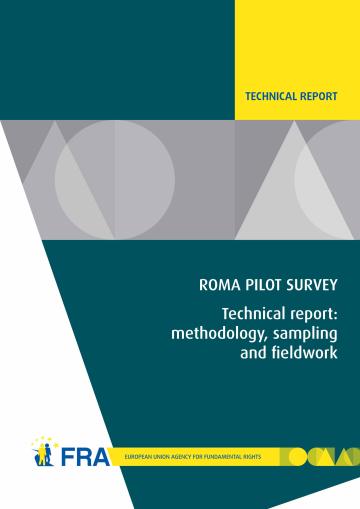
    This Technical report describes how the FRA Roma Pilot survey was carried out and the fieldwork outcomes in 11 EU Member States.
    Opinion / Position Paper
    22
    October
    2013
    The Opinion assesses the impact of the Framework Decision on the rights of the victims of crimes motivated by hatred and prejudice, including racism and xenophobia.
    Opinion / Position Paper
    1
    October
    2013
    Drawing on evidence gathered in its surveys and reports, FRA submits a set of opinions aimed at improving the protection against discrimination. These could be taken into account in the implementation and the eventual reform of the EU legal framework on the protection against discrimination.
    Report / Paper / Summary
    18
    September
    2013
    This paper provides an analysis of data collected through FRA’s Roma Survey broken down by gender and covering the core areas of employment, education, housing and health, as well as any other gender‐sensitive policy areas. The paper is the result of a request made by the President of the European Parliament to the European Union Agency for Fundamental Rights (FRA) on 27 June 2013.
    Report / Paper / Summary
    18
    June
    2013
    This year’s summary of the FRA Annual report – Highlights 2012 – puts the spotlight on key legal and policy developments in the field of fundamental rights in 2012.
    Fundamental Rights Report
    18
    June
    2013
    Against a backdrop of rising unemployment and increased deprivation, this FRA Annual report closely examines the situation of those, such as children, who are vulnerable to budget cuts, impacting important fields such as education, healthcare and social services. It looks at the discrimination that Roma continue to face and the mainstreaming of elements of extremist ideology in political and public discourse. It considers the impact the crises have had on the basic principle of the rule of law, as well as stepped up EU Member State efforts to ensure trust in justice systems.

    Report / Paper / Summary
    11
    March
    2013
    Certain people are seen as particularly vulnerable to unequal treatment, because they share a combination of characteristics that may trigger discrimination. A Roma woman sterilised without her informed consent, for example, has suffered discrimination not just because of her sex, as all women do not face this treatment, nor just because she is Roma, as Roma men may not face this treatment. The discriminatory treatment is based specifically on the intersection of her sex and ethnic origin.
    In brief / Factsheet
    11
    March
    2013
    The FRA report 'Inequalities and multiple discrimination in access to and quality of healthcare' examines experiences of unequal treatment on more than one ground in healthcare, providing evidence of discrimination or unfair treatment.
    Report / Paper / Summary
    27
    November
    2012
    Discrimination and intolerance persist in the European Union (EU) despite the best efforts of Member States to root them out, FRA research shows. Verbal abuse, physical attacks and murders motivated by prejudice target EU society in all its diversity, from visible minorities to those with disabilities. This FRA report is designed to help the EU and its Member States to tackle these fundamental rights violations both by making them more visible and bringing perpetrators to account.
    Report / Paper / Summary
    27
    November
    2012
    This EU-MIDIS Data in focus report 6 presents data on respondents’ experiences of victimisation across five crime types: theft of or from a vehicle; burglary or attempted burglary; theft of personal property not involving force or threat (personal theft); assault or threat; and serious harassment. The European Union Minorities and Discrimination Survey (EU-MIDIS) is the first EU-wide survey to ask 23,500 individuals with an ethnic and minority background about their experiences of discrimination and criminal victimisation in everyday life.