Displaying 1 - 20 of 57
  • Periodic updates / Series
    29
    September
    2023
    Russia’s invasion of Ukraine posed new challenges for the EU. Millions were forced to flee the war. As a result of the scale of people’s displacement, the EU activated for the first time the Temporary Protection Directive (TPD). More than 1.3 million children sought international protection in the EU. This bulletin explores the respect, protection and fulfilment of the fundamental rights of displaced children and ways to safeguard their rights. The third in a series, this bulletin builds on the evidence in FRA’s Bulletin #1 and #2 on the experiences of displaced people seeking safety in the EU.
  • Periodic updates / Series
    30
    May
    2023
    Over the span of nearly eight years, there have been developments in showing respect for the human rights of those who arrive at the EU’s borders. Russia’s war of aggression against Ukraine has shown how a large and sudden influx of people can be managed effectively and respectfully. Notwithstanding the improvements, the growing number of people crossing or attempting to enter the EU pose a wide range of fundamental rights challenges.

    In this bulletin, FRA takes stock of concerns and improvements regarding the fundamental rights of migrants, asylum seekers and refugees. It highlights the EU Member States’ legal and practical responses. It identifies key trends, promising practices, long-standing and emerging patterns, and persistent concerns.
  • Periodic updates / Series
    21
    October
    2022
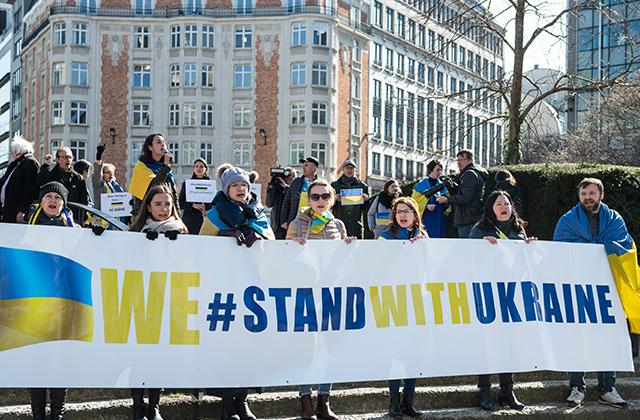
    The Russian invasion of Ukraine triggered solidarity from EU governments, local authorities and society as they welcomed more than 7 million people fleeing the aggression. The European Union’s rapid response, activating the EU Temporary Protection Directive, offered welcome relief and much-needed support to those in need. It allowed displaced persons the opportunity to quickly settle and to work, travel and access services across the EU. But other pressing human rights issues have come to the fore and remain high on the EU’s agenda, such as human trafficking, sexual and gender-based violence, hate crime and hate-fuelled disinformation.
  • Periodic updates / Series
    4
    March
    2022
    The EU Agency for Fundamental Rights has been regularly collecting data on asylum and migration since September 2015. This report focuses on the fundamental rights situation of people arriving in Member States and EU candidate countries particularly affected by migration. It addresses fundamental rights concerns between 1 October and 31 December 2021.
  • Periodic updates / Series
    17
    December
    2021
    The EU Agency for Fundamental Rights has been regularly collecting data on asylum and migration since September 2015. This report focuses on the fundamental rights situation of people arriving in Member States and EU candidate countries particularly affected by migration. It addresses fundamental rights concerns between 1 July and 30 September 2021.
  • Periodic updates / Series
    24
    September
    2021
    The EU Agency for Fundamental Rights has been regularly collecting data on asylum and migration since September 2015. This report focuses on the fundamental rights situation of people arriving in Member States and EU candidate countries particularly affected by migration. It addresses fundamental rights concerns between 1 January and 30 June 2021.
  • Periodic updates / Series
    25
    February
    2021
    The EU Agency for Fundamental Rights has been regularly collecting data on asylum and migration since September 2015. This report focuses on the fundamental rights situation of people arriving in Member States and EU candidate countries particularly affected by migration. It addresses fundamental rights concerns between 1 October and 31 December 2020.
  • Periodic updates / Series
    6
    November
    2020
    The EU Agency for Fundamental Rights has been regularly collecting data on asylum and migration since September 2015. This report focuses on the fundamental rights situation of people arriving in Member States and EU candidate countries particularly affected by migration. It addresses fundamental rights concerns between 1 July and 30 September 2020.
  • Country sheets
    20
    October
    2020
    The EU Fundamental Rights Agency published in 2019 its report on the ‘Integration of young refugees in the EU’. The report explored the challenges of young people who fled armed conflict or persecution and arrived in the EU in 2015 and 2016. The report is based on 426 interviews with experts working in the area of asylum and integration, as well as 163 interviews with young people, aged 16 to 24, conducted between October 2017 and June 2018 in 15 regions and cities located in six Member States: Austria, France, Germany, Greece, Italy and Sweden. The links on this page provide a summary of the information collected during this period for each country about unaccompanied children turning 18 and the change in people’s legal status once international protection is granted. These two issues had at the time been identified as moments requiring sufficient, consistent and systematic support, particularly from lawyers, social workers and guardians, to ensure successful integration.

  • Periodic updates / Series
    27
    July
    2020
    The EU Agency for Fundamental Rights has been regularly collecting data on asylum and migration since September 2015. This report focuses on the fundamental rights situation of people arriving in Member States and EU candidate countries particularly affected by migration. It addresses fundamental rights concerns between 1 April and 30 June 2020.
  • Periodic updates / Series
    27
    May
    2020
    The EU Agency for Fundamental Rights has been regularly collecting data on migration since September 2015. This report focuses on the fundamental rights situation of people arriving in Member States and EU candidate countries particularly affected by large migration movements. It addresses key fundamental rights concerns between 1 January and 31 March 2020.
  • Periodic updates / Series
    18
    February
    2020
    The EU Agency for Fundamental Rights has been regularly collecting data on migration since September 2015. This report focuses on the fundamental rights situation of people arriving in Member States and EU candidate countries particularly affected by large migration movements. It addresses key fundamental rights concerns between 1 October and 31 December 2019.
  • Report / Paper / Summary
    19
    November
    2019
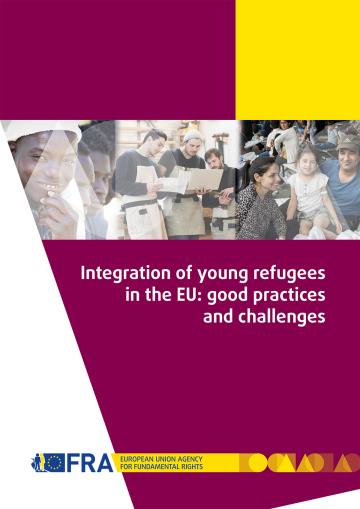
    Over 2.5 million people applied for international protection in the 28 EU Member States in 2015 and 2016. Many of those who were granted some form of protection are young people, who are likely to stay and settle in the EU. The EU Agency for Fundamental Rights interviewed some of them, as well as professionals working with them in 15 locations across six EU Member States: Austria, France, Germany, Greece, Italy and Sweden. This report presents the result of FRA’s fieldwork research, focusing on young people between the
    ages of 16 and 24.
  • Periodic updates / Series
    4
    November
    2019
    The EU Agency for Fundamental Rights has been regularly collecting data on asylum and
    migration since September 2015. This report focuses on the fundamental rights situation
    of people arriving in Member States and EU candidate countries particularly affected by
    migration. It addresses fundamental rights concerns between 1 July and 30 September 2019.
  • Periodic updates / Series
    27
    March
    2019
    This report looks into the fundamental rights situation of asylum applicants and beneficiaries of international protection in the EU throughout 2018. It pulls together the main issues identified in FRA’s regular updates on fundamental rights related to asylum, migration and borders in selected EU Member States, which the agency has been publishing since September 2015.
  • Report / Paper / Summary
    24
    March
    2017
    This report reviews how asylum claims based on sexual
    orientation and gender identity are assessed and analyses the existence of
    specific reception measures for LGBTI persons.
  • Report / Paper / Summary
    5
    December
    2016
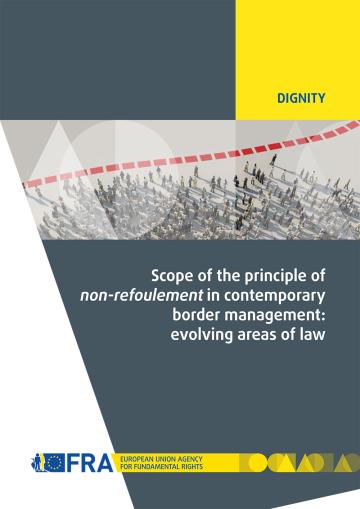
    EU Member States are increasingly involved in border management activities on the high seas, within – or i cooperation with – third countries, and at the EU’s borders. Such activities entail risks of violating the principle of non-refoulement, the cornerstone of the international legal regime for the protection of refugees, which prohibits returning individuals to a risk of persecution. This report aims to encourage fundamental-rights compliant approaches to border management, including by highlighting potential grey areas.
  • Handbook / Guide / Manual
    5
    December
    2016
    Die EU-Mitgliedstaaten beteiligen sich immer häufiger an Maßnahmen des Grenzmanagements auf hoher See, die in oder in Zusammenarbeit mit Drittländern und an den EU Grenzen stattfinden. Derartige Maßnahmen bergen die Gefahr, gegen den Grundsatz der Nichtzurückweisung zu verstoßen. Dieser Eckpfeiler des internationalen Rechtsrahmens für den Schutz von Flüchtlingen verbietet die Rückführung von Personen in ein Land, in dem ihnen Verfolgung droht. Die vorliegenden Leitlinien enthalten konkrete Vorschläge, wie das Risiko der Zurückweisung in solchen Situationen verringert werden kann – ein praktisches Instrument, das unter Mitwirkung von ExpertInnen anlässlich eines Treffens in Wien im März 2016 entwickelt wurde.
  • Handbook / Guide / Manual
    5
    December
    2016
    EU Member States are increasingly involved in border management activities on the high seas, within – or in cooperation with – third countries, and at the EU’s borders. Such activities entail risks of violating the principle of non-refoulement, the cornerstone of the international legal regime for the protection of refugees, which prohibits returning individuals to a risk of persecution. This guidance outlines specific suggestions on how to reduce the risk of refoulement in these situations – a practical tool developed with the input of experts during a meeting held in Vienna in March of 2016.
  • Handbook / Guide / Manual
    5
    December
    2016
    Les États membres de l’UE participent de plus en plus à des activités de gestion des frontières en haute mer, sur le territoire de pays tiers, ou en coopération avec ces derniers, ainsi qu’aux frontières de l’UE. Ces activités peuvent comporter des risques de violation du principe de non-refoulement, la pierre angulaire du régime international juridique assurant la protection des réfugiés, qui interdit le retour d’individus vers une situation de risque de persécution. Ces orientations présentent des suggestions spécifiques sur les moyens de réduire les risques de refoulement dans ces situations. Elles constituent un outil pratique élaboré à l’aide de contributions d’experts réunis à Vienne en mars 2016.
Displaying 1 - 20 of 57