This report looks at antisemitism in the EU, focusing on what can be done to address gaps in recording and inconsistencies in data collection. It highlights existing tools and guidance for Member States to improve their recording systems. The analysis is based on official administrative data and information from publicly available sources across EU Member States, as well as Albania, North Macedonia, and Serbia. Detailed country overviews are available for all countries covered. Antisemitism has been monitored by FRA since 2004. This report builds on the 2024 publication, ‘Jewish People’s Experiences and Perceptions of Antisemitism’.
Antisemitism is still a reality for many Jewish people in the EU today. Faced with prejudice and hostility, most feel unable to live openly Jewish lives. This report presents the results of FRA’s third EU survey of Jewish people’s experiences and perceptions of antisemitism. The survey took place before the Hamas attacks in October 2023 and the war in Gaza; however, it includes evidence from a consultation with national and European Jewish umbrella organisations since. It covers 13 EU Member States that together account for around 96 % of the EU’s Jewish population.
FRA's first Being Black in the EU report exposed widespread and entrenched racism against people of African descent in Europe. Now updated with new data, this report revisits the situation revealing persistent racial discrimination, harassment and violence. Overall, experiences of racial discrimination increased in the EU countries since 2016, reaching as high as 77%. The lack of progress is alarming despite binding anti-discrimination law in the EU since 2000 and significant EU policy developments since then.
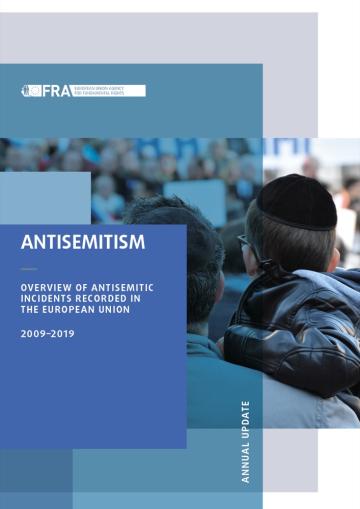
Antisemitic incidents and hate crimes violate fundamental rights, especially the right to human dignity, the right to equality of treatment and the freedom of thought, conscience and religion. This report provides an overview of available data on antisemitism as recorded by official and unofficial sources in the EU Member States and in Albania, North Macedonia and Serbia. The data provided by the countries are supplemented with information from international organisations.
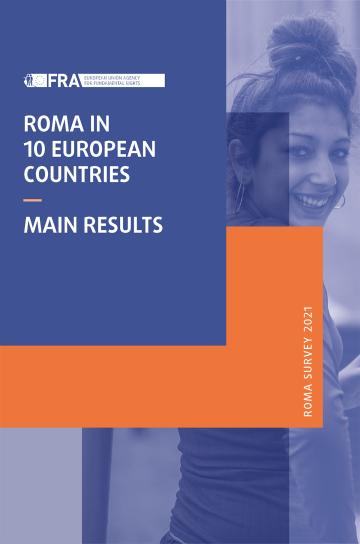
This report presents findings from FRA’s 2021 survey on Roma in Croatia, Czechia, Greece, Hungary, Italy, Portugal, Romania and Spain, as well as in North Macedonia and Serbia. The survey includes interviews with more than 8,400 Roma, collecting information on more than 20,000 individuals living in their households. By focusing on Roma, the survey provides unique data and information that are not available from European general population surveys, which do not disaggregate on grounds of ethnic origin. The findings present a bleak but familiar picture of exclusion, deprivation, discrimination and racism.
Τα εγκλήματα μίσους που υποκινούνται από τον ρατσισμό, την ξενοφοβία, τη θρησκευτική μισαλλοδοξία ή την αναπηρία ενός ατόμου, τον γενετήσιο προσανατολισμό, την ταυτότητα φύλου, την έκφραση φύλου και τα χαρακτηριστικά του φύλου αποτελούν σοβαρές εκφράσεις διακρίσεων. Εκτός από την παραβίαση των δικαιωμάτων των μεμονωμένων θυμάτων, ένα τέτοιο έγκλημα αποδυναμώνει την κοινωνική συνοχή και βλάπτει το κοινωνικό σύνολο.
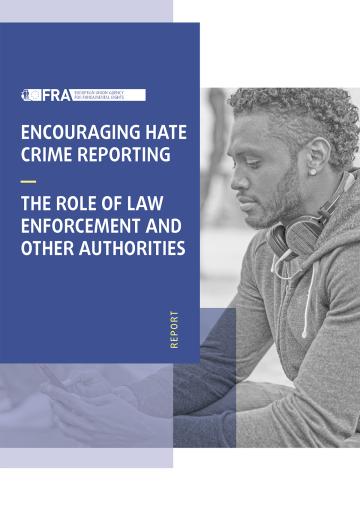
This report examines why victims do not report bias-motivated incidents and the barriers that they face when reporting incidents through national crime reporting systems. By mapping existing practices that have a bearing on the victim’s experiences when reporting bias-motivated violence and harassment, it aims to provide evidence to support national efforts to encourage and facilitate reporting – and ultimately assist Member States in delivering on their duties with regard to combating hate crime.
La presente relazione esamina i motivi per cui le vittime non denunciano gli episodi motivati da pregiudizi e le barriere che incontrano quando denunciano gli episodi attraverso i sistemi nazionali di denuncia dei reati. Mappando le prassi esistenti che hanno un impatto sulle esperienze delle vittime quando denunciano la violenza e le molestie motivate da pregiudizi, si vuole fornire prove a sostegno degli sforzi nazionali per incoraggiare e facilitare la denuncia — e in definitiva aiutare gli Stati membri ad adempiere ai loro obblighi in materia di lotta contro i reati d’odio.
Antisemitism can be expressed in the form of verbal and physical attacks, threats, harassment, discrimination and unequal treatment, property damage and graffiti or other forms of speech or text, including on the internet. Antisemitic incidents and hate crimes violate fundamental rights, especially the right to human dignity, the right to equality of treatment and the freedom of thought, conscience and religion.
This annual overview provides an update of the most recent figures on antisemitic incidents, covering the period 1 January 2008 – 31 December 2018, across the EU Member States, where data are available. It includes a section that presents evidence from international organisations. In addition, for the first time, it provides an overview of how Member States that have adopted or endorsed the non-legally binding working definition of antisemitism adopted by the International Holocaust Remembrance Alliance (IHRA) (2016) use or intend to use it.
Based on FRA’s second large-scale survey on experiences and perceptions of antisemitism, this report focuses on the perspectives of young Jewish Europeans (aged 16-34) living in twelve EU Member States. It first describes this particular group and takes a look at defining antisemitism and understanding the place of Israel in it.
Настоящият доклад очертава основните констатации от Второто проучване на FRA
относно преживяванията на евреите, свързани с престъпления от омраза, дискри-
минация и антисемитизъм в Европейския съюз — най-голямото проучване за евре-
ите, провеждано в света досега.
Tato zpráva shrnuje hlavní zjištění druhého průzkumu FRA o zkušenostech Židů se zločiny
z nenávisti, s diskriminací a antisemitismem v Evropské unii – největšího průzkumu zaměřeného
na židovské obyvatele, který kdy byl proveden na celém světě.
Dette resumé beskriver de vigtigste resultater af
FRA’s anden undersøgelse af jødiske samfunds oplevelser
af hadforbrydelser i Den Europæiske Union
— den største undersøgelse af jødiske samfund, der
nogensinde er gennemført internationalt.
Diese Zusammenfassung gibt einen Einblick in die
wichtigsten Ergebnisse der zweiten Erhebung der
FRA zu den Erfahrungen der jüdischen Bevölkerung
mit Hasskriminalität, Diskriminierung und Antisemitismus
in der Europäischen Union – der größten Erhebung
unter Menschen jüdischen Glaubens, die jemals
weltweit durchgeführt wurde.
Στην παρούσα έκθεση παρουσιάζονται τα κύρια ευρήματα της δεύτερης έρευνας του
FRA σχετικά με τις εμπειρίες Εβραίων σε σχέση με εγκλήματα μίσους, διακρίσεις και
αντισημιτισμό στην Ευρωπαϊκή Ένωση – η οποία αποτελεί τη μεγαλύτερη έρευνα για
τους Εβραίους που έχει διεξαχθεί ποτέ σε παγκόσμιο επίπεδο.
This summary outlines the main findings of FRA’s second survey on Jewish people’s experiences with hate crime, discrimination and antisemitism in the European Union – the biggest survey of Jewish people ever conducted worldwide.
El presente resumen describe las principales conclusiones
de la segunda encuesta de la FRA sobre las
experiencias de los judíos en relación con los delitos
de odio, la discriminación y el antisemitismo en la
Unión Europea. Supone la mayor encuesta en relación
con el pueblo judío jamás realizada a escala mundial.
Käesolevas raportis antakse ülevaade põhitulemustest, milleni jõuti FRA teises uuringus
juutide kogemuste kohta vihakuritegude, diskrimineerimise ja antisemitismiga Euroopa
Liidus – ajaloo suurimas juudi rahvusest inimeste uuringus.
Tässä yhteenvedossa esitetään juutalaisten kokemuksia viharikoksista, syrjinnästä ja antisemitismistä Euroopan unionissa koskevan FRA:n toisen tutkimuksen tärkeimmät tulokset. Tutkimus on maailmanlaajuisesti suurin koskaan tehty tutkimus juutalaisista.