Equality

Reliġjon u twemmin

Highlights

    Prodotti

    Publications and Data

    Displaying results 21 - 30 of 40
    Report / Paper / Summary
    21
    September
    2017
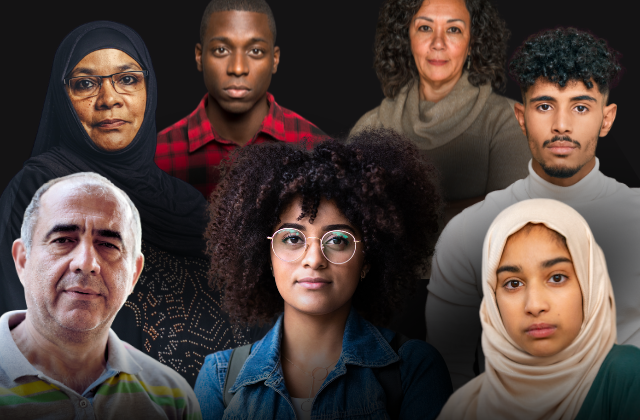
    Muslims living in the EU face discrimination in a broad range of settings – and particularly when looking for work, on the job, and when trying to access public or private services. The report examines how characteristics – such as an individual's first and last name, skin colour and the wearing of visible religious symbols like a headscarf, for example – may trigger discriminatory treatment and harassment.
    Report / Paper / Summary
    17
    November
    2016
    Media content and political discourse in EU Member States, whether online or
    offline, show incitement to discrimination, hatred or violence on different
    grounds, as evidence collected by FRA reveals. The growing reliance on the internet as the main source of
    information for many enables the fast spread of often unverified statements
    that could also incite to hatred.
    Opinion / Position Paper
    22
    October
    2013
    The Opinion assesses the impact of the Framework Decision on the rights of the victims of crimes motivated by hatred and prejudice, including racism and xenophobia.
    Opinion / Position Paper
    1
    October
    2013
    Drawing on evidence gathered in its surveys and reports, FRA submits a set of opinions aimed at improving the protection against discrimination. These could be taken into account in the implementation and the eventual reform of the EU legal framework on the protection against discrimination.
    Report / Paper / Summary
    26
    January
    2010
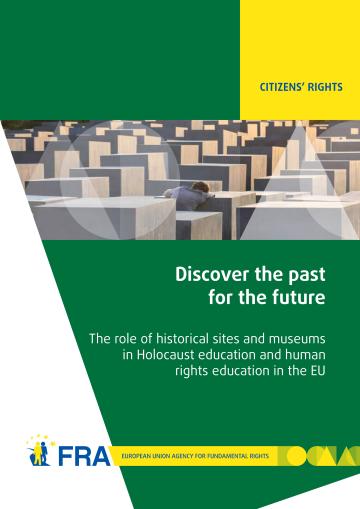
    In 2009, the FRA conducted the first EU-wide study of the role that European memorial sites, museums and exhibitions play with respect to educating young Europeans about the Holocaust and human rights. The findings of the study were presented at a Conference in Auschwitz on the 27 January bringing together Education Ministers from across Europe.
    Report / Paper / Summary
    11
    March
    2013
    Certain people are seen as particularly vulnerable to unequal treatment, because they share a combination of characteristics that may trigger discrimination. A Roma woman sterilised without her informed consent, for example, has suffered discrimination not just because of her sex, as all women do not face this treatment, nor just because she is Roma, as Roma men may not face this treatment. The discriminatory treatment is based specifically on the intersection of her sex and ethnic origin.

    In brief / Factsheet
    11
    March
    2013
    The FRA report 'Inequalities and multiple discrimination in access to and quality of healthcare' examines experiences of unequal treatment on more than one ground in healthcare, providing evidence of discrimination or unfair treatment.