Ενόψει των εντεινόμενων απειλών της τρομοκρατίας, των επιθέσεων στον κυβερνοχώρο και των εξελιγμένων διασυνοριακών εγκληματικών δικτύων, το έργο των υπηρεσιών πληροφοριών έχει αποκτήσει πιο επείγοντα, σύνθετο και διεθνή χαρακτήρα. Το έργο αυτό μπορεί να επέμβει σε μεγάλο βαθμό στα θεμελιώδη δικαιώματα, ιδίως στο δικαίωμα της ιδιωτικής ζωής και της προστασίας των δεδομένων. Αν και οι συνεχείς τεχνολογικές εξελίξεις πιθανώς επιδεινώνουν τον κίνδυνο τέτοιου είδους παρεμβάσεων, η ύπαρξη αποτελεσματικών μέσων εποπτείας και έννομης προστασίας μπορεί να περιορίσει την πιθανότητα παραβιάσεων.
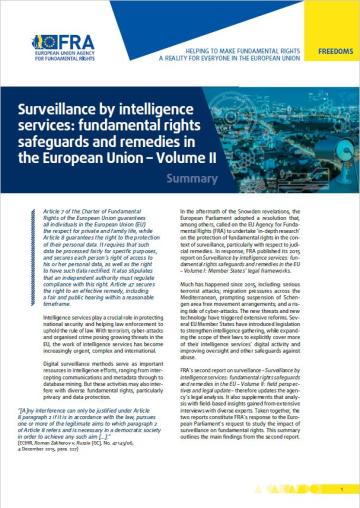
With terrorism, cyber-attacks and sophisticated cross-border criminal networks posing growing threats, the work of intelligence services has become more urgent, complex and international. Such work can strongly interfere with fundamental rights, especially privacy and data protection. While continuous technological advances potentially exacerbate the threat of such interference, effective oversight and remedies can curb the potential for abuse.
Terrorismin, kyberhyökkäysten ja kehittyneiden rajat ylittävien rikollisverkostojen EU:lle aiheuttama uhka kasvaa kasvamistaan, mikä lisää tiedustelupalvelujen työn kiireellisyyttä, monimutkaisuutta ja kansainvälisyyttä. Tällainen työ voi häiritä suuresti perusoikeuksia, erityisesti yksityisyyttä ja tietosuojaa. Jatkuvat tekniset edistysaskeleet voivat pahentaa tällaisen häirinnän uhkaa, mutta tehokkaalla valvonnalla ja oikeussuojakeinoilla voidaan lieventää väärinkäytösten mahdollisuutta.
Azzal, hogy a terrorizmus, a kibertámadások és a határokon átnyúló kifinomult bűnözői hálózatok egyre növekvő veszélyt jelentenek az EU-ban, a hírszerző szolgálatok munkája sürgetőbbé, összetettebbé és nemzetközibbé vált. Egy ilyen munka komolyan sértheti az alapvető jogokat, különösen a magánélethez és a személyes adatok védelméhez fűződő jogokat. Míg a folyamatos technológiai fejlődés súlyosbíthatja e jogsértések veszélyét, a hatékony felügyelet és jogorvoslat korlátozhatja a visszaélések lehetőségét.
Med tiltagende trusler i form af terrorisme, internetangreb og sofistikerede grænseoverskridende kriminelle netværk er efterretningstjenesternes arbejde blevet mere påtrængende, komplekst og internationalt. Dette arbejde kan kraftigt forstyrre de grundlæggende rettigheder, især beskyttelsen af personoplysninger og privatlivets fred. Selvom den fortsatte teknologiske udvikling potentielt
forværrer risikoen for en sådan forstyrrelse, kan et effektivt tilsyn og effektive retsmidler bremse muligheden for misbrug.
Terorizmus, kybernetické útoky a sofistikované cezhraničné zločinecké siete predstavujú rastúcu hrozbu. Preto sa práca spravodajských služieb stáva čoraz viac naliehavejšou a komplexnejšou, pričom sa posilňuje jej medzinárodný charakter. Môže dôrazne zasahovať do základných práv, najmä na ochranu súkromia a údajov. Kým neustály technologický pokrok potenciálne zhoršuje hrozbu takéhoto zásahu, účinný dohľad a prostriedky nápravy môžu obmedziť potenciál zneužitia.
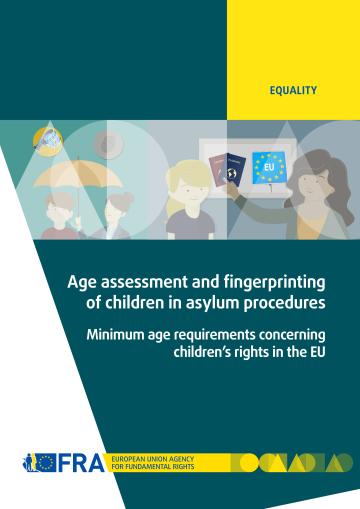
The methods used to determine the age of
an applicant may include “invasive” medical tests which interfere with the rights of the child, including their right to dignity,
integrity and privacy. It is often a challenge to find the right balance between protecting children from harm and promoting
their participation in these procedures. This report provides important insights and identifies the implications of collecting
children’s biometric data and conducting age assessments.
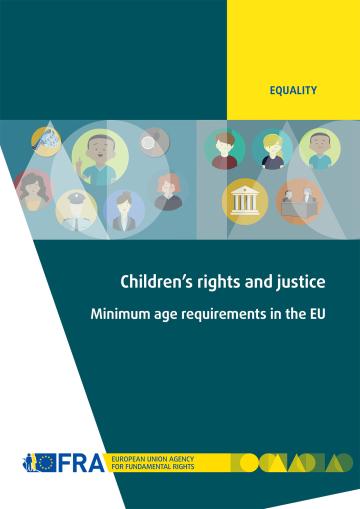
This report outlines Member States’ approaches to age requirements and limits
regarding child participation in judicial proceedings; procedural safeguards for, and rights of, children involved in criminal
proceedings; as well as issues related to depriving children of their liberty.
The right to access justice and all other relevant procedural rights are not just rights in themselves; they also protect against violations of every other right. Respect for children’s rights in the area of justice is therefore essential. International treaties, the Charter of Fundamental Rights of the European Union, European Union (EU) secondary law, and national legislation provide a number of relevant rights.
This Opinion by the European Union Agency for Fundamental Rights (FRA) aims to inform the European Parliament position concerning legislative proposals on interoperability between EU information technology systems (IT systems) presented on 12 December 2017 and currently discussed by the EU legislators.
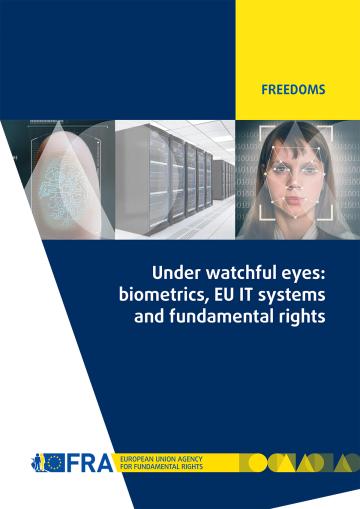
This report outlines the fundamental rights implications of collecting, storing and using
biometric and other data in EU IT systems in the area of asylum and migration.
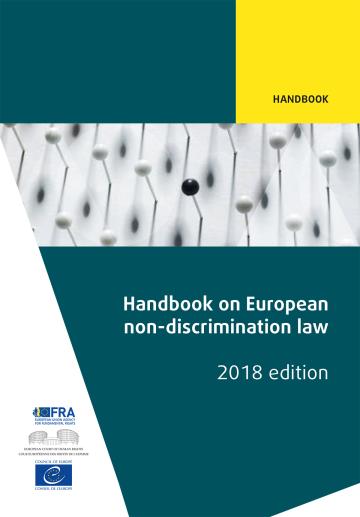
European non-discrimination law, as constituted in particular by the EU non-discrimination directives, and Article 14 of and Protocol 12 to the European Convention on Human Rights, prohibits discrimination across a range of contexts and grounds. This handbook examines European non-discrimination law stemming from these two sources as complementary systems, drawing on them interchangeably to the extent that they overlap, while highlighting differences where these exist.
Het Europese non-discriminatierecht, dat met name wordt gevormd door de EU-richtlijnen inzake non-discriminatie en door artikel 14 van en protocol 12 bij het Europese Verdrag tot bescherming van de rechten van de mens, verbiedt discriminatie op basis van diverse contexten en gronden. Dit handboek onderzoekt het Europees non-discriminatierecht dat voortvloeit uit deze twee complementaire bronnen, en maakt daarbij geen onderscheid tussen beide, tenzij daar waar ze van elkaar afwijken.
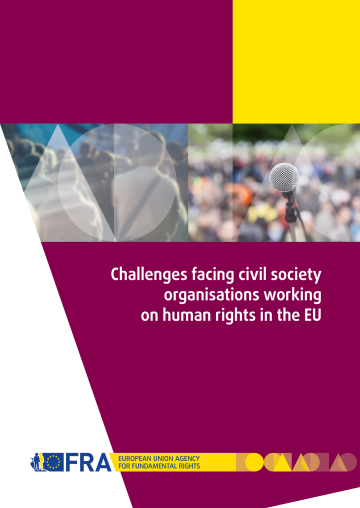
Civil society organisations in the European Union play a crucial role in promoting fundamental rights, but it has become harder for them to do so – due to both legal and practical restrictions. This report looks at the different types and patterns of challenges faced by civil society organisations working on human rights in the EU.
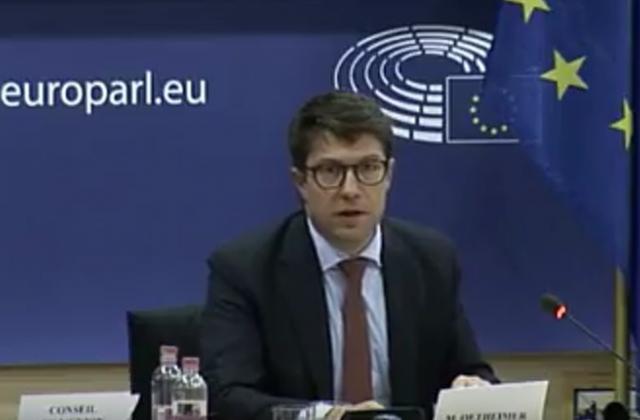
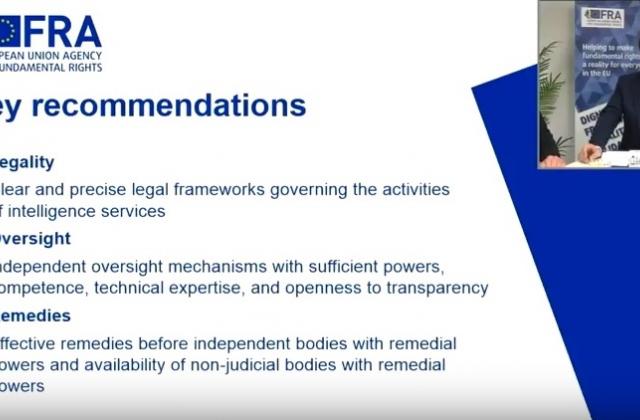
Mario Oetheimer presented FRA’s second surveillance report to the European Parliament’s Civil Liberties, Justice and Home Affairs (LIBE) Committee on 21 November in Brussels.
This is the recording of the online press briefing about mass surveillance as presented by the EU Agency for Fundamental Rights (FRA) on 16 October 2017.
FRA’s Second European Union Minorities and Discrimination Survey surveys around 26,000 individuals from different ethnic minority and immigrant backgrounds across all 28 EU Member States. This technical report presents a detailed overview of the research methods used by FRA when collecting the survey data.
This report is FRA’s second publication addressing a European Parliament request for in-depth research on the impact of surveillance on fundamental rights. It updates FRA’s 2015 legal analysis on the topic, and supplements that analysis with field-based insights gained from extensive interviews with diverse experts in intelligence and related fields, including its oversight.