Προϊοντα

    Publications and Data

    Displaying results 191 - 200 of 240
    Infographic
    Handbook / Guide / Manual
    20
    November
    2015
    Τα παιδιά είναι πλήρεις κάτοχοι δικαιωμάτων. Χαίρουν του συνόλου των ανθρωπίνων και
    θεμελιωδών δικαιωμάτων και τυγχάνουν ειδικής κανονιστικής μεταχείρισης, λόγω των
    ιδιαίτερων χαρακτηριστικών τους. Το παρόν εγχειρίδιο επιχειρεί να καταδείξει τον τρόπο με τον
    οποίο η ευρωπαϊκή νομοθεσία και νομολογία επιλαμβάνεται των συγκεκριμένων συμφερόντων
    και των αναγκών των παιδιών.
    Handbook / Guide / Manual
    22
    October
    2015
    Processing biometric data for immigration, asylum and border management purposes has become common. This focus paper looks at measures authorities can take to enforce the obligation of newly arrived asylum seekers and migrants in an irregular situation to provide fingerprints for inclusion in Eurodac.
    Report / Paper / Summary
    16
    October
    2015
    This report explores the key features of guardianship systems put in place to cater for the needs of all children in need of protection, including child victims and those at risk of becoming victims of trafficking in human beings or of other forms of exploitation. The research covers four specific areas, namely the type of guardianship systems in place, the profile of appointed guardians, the appointment procedures, and the tasks of the guardians.
    Report / Paper / Summary
    9
    October
    2015
    For asylum and return (i.e. expulsion) procedures to be implemented effectively, people need to be at the disposal of the authorities so that any measure requiring their presence can be taken without delay. To achieve this, EU Member States may decide to hold people in closed facilities. Less intrusive measures, which are usually referred to as alternatives to detention, reduce the risk that deprivation of liberty is resorted to excessively.
    Periodic updates / Series
    28
    September
    2015
    In view of the increasing numbers of refugees, asylum seekers and migrants entering the EU, the European Commission asked FRA to collect data about the fundamental rights situation of people arriving in those Member States that have been particularly affected by large migration movements. The countries covered in 2015 are Austria, Bulgaria, Croatia, Germany, Greece, Hungary, Italy and Slovenia.
    Report / Paper / Summary
    3
    September
    2015
    The right to health is a basic social right. However, its understanding and application differs
    across the European Union (EU) Member States, which results in different healthcare services
    being offered to migrants in an irregular situation. This summary looks into the potential costs of providing migrants in
    an irregular situation with timely access to health screening and treatment, compared to
    providing medical treatment only in emergency cases.
    Report / Paper / Summary
    3
    September
    2015
    This report aims to estimate the economic cost of providing timely access to screening and treatment for migrants in an irregular situation, compared with providing treatment only in emergency cases. It presents an economic model to calculate such costs for two medical conditions: hypertension and prenatal care. To better illustrate its application in practice, the model is applied to three European Union (EU) Member States – Germany, Greece and Sweden.
    Fundamental Rights Report
    25
    June
    2015
    European Union (EU) Member States and institutions introduced a number of legal and policy measures in 2014 to safeguard fundamental rights in the EU. Notwithstanding these efforts, a great deal remains to be done, and it can be seen that the situation in some areas is alarming: the number of migrants rescued or apprehended at sea as they were trying to reach Europe’s borders quadrupled over 2013; more than a quarter of children in the EU are at risk of poverty or social exclusion; and an increasing number of political parties use xenophobic and anti-immigrant rhetoric in their campaigns, potentially increasing some people’s vulnerability to becoming victims of crime or hate crime.
    Report / Paper / Summary
    19
    June
    2015
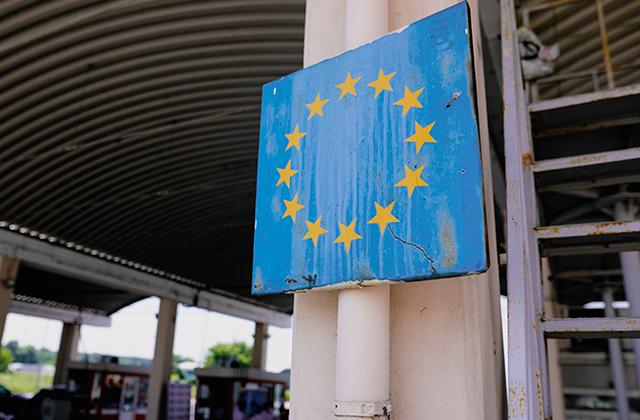
    The situation at land border crossing points into the EU has received less attention than
    Europe’s southern sea borders, where migrants’ lives are at risk. Although FRA research
    shows that land border checks of third-country nationals are generally conducted routinely
    and take place without incident, a number of challenges affect travellers’ fundamental
    rights.