Newsroom

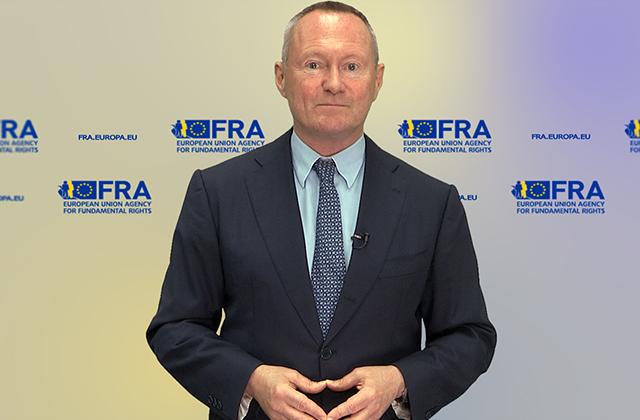
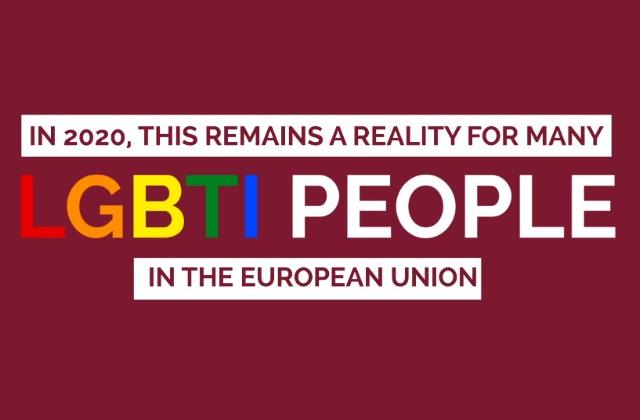
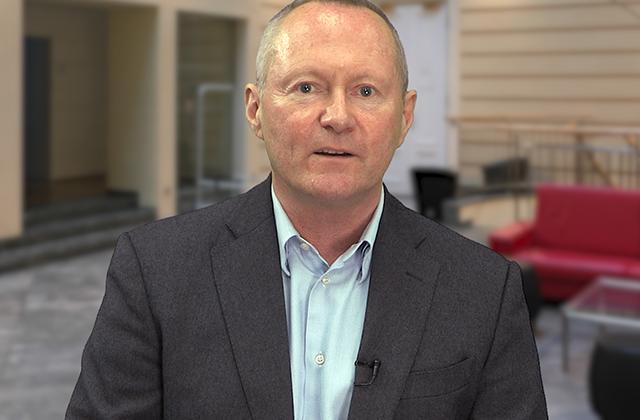
Although many steps have been taken in recent years to change LGBTI people’s lives for the better in the EU, there is still a long way to go, notes FRA Director Michael O'Flaherty in this video message to Athens Pride 2020.
Michael O'Flaherty
Keynote speech delivered by FRA Director Michael O’Flaherty on 10 September at a German Presidency of the Council of the EU conference on ‘Working together to fight antisemitism in Europe: Structures and strategies for a holistic approach’. He addressed the panel that explored monitoring antisemitism and developing prevention measures.
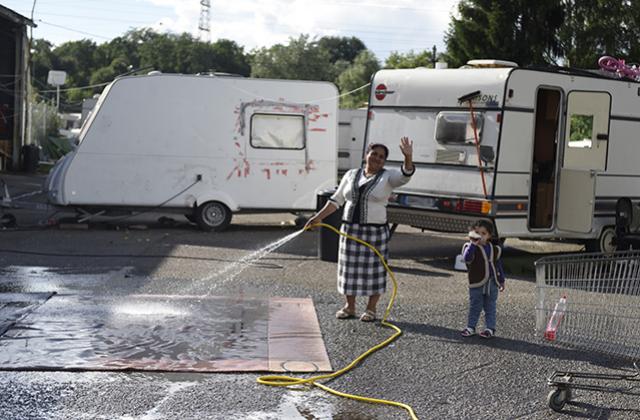
Living in some of the richest countries in the world, a quarter of Roma and Travellers in Western Europe cannot afford basic items such as heating or healthy food, and up to a fifth of their children go to bed hungry, reveal the results of the EU Fundamental Rights Agency’s (FRA) new survey. Rampant discrimination coupled with early school leaving also leads to lack of job opportunities and widespread poverty for many. As a result, the life expectancy of Roma and Travellers is 10 years below the expectancy of the general population. These findings should drive policy responses at EU and national level and support policymakers to work with Roma and Travellers to tackle exclusion and poverty.
National human rights institutions (NHRIs) are crucial for the protection and promotion of fundamental rights across the EU but their full potential remains untapped, finds a new report from the EU Agency for Fundamental Rights (FRA). It suggests next steps to boost NHRIs’ impact and efficiency, such as providing adequate resources, strong powers and clear mandates in line with the United Nations Paris Principles.
Video
This video statement by FRA Director Michael O’Flaherty was recorded on the occasion of the Holocaust Memorial Day for Sinti and Roma on 2 August 2020.
This video was produced for the launch of the Fundamental Rights Survey in June 2020 and gives an overview of the main results.
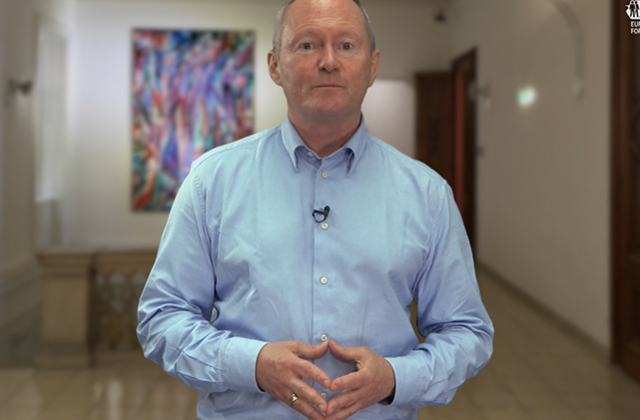
Michael O'Flaherty introduces the July edition of FRA's bulletin on the impact for fundamental rights of Covid-19. In this vlog he talks about the important role that people play who are engaged with the promotion and the protection of human rights in these times.
The July edition of the COVID-19 bulletin will be available from 30 July.
What are the next steps in the digitalisation of justice and of access to justice? This impulse video statement by FRA Director Michael O’Flaherty was recorded for the online conference “Access to Justice in the Digital Age”. The conference takes place on 16 July and is organised by the German Federal Ministry for Justice and Consumer Protection during the German Council Presidency.
In this video message to the Equality2020 conference on 29 June, FRA Director Michael O'Flaherty speaks about our shared struggle for a Europe that honours everybody in their diversity, in their equality and in their dignity.
Michael O'Flaherty
FRA’s Director addressed a conference on 18 June 2020 on Fighting discrimination on grounds of religion and ethnicity: vulnerabilities of Muslim communities and the effects of COVID-19 crisis. the vulnerabilities of Muslim communities in the EU. The conference was a joint initiative by the Croatian Presidency of the Council of the EU, the European Commission and the European network of Equality bodies, Equinet. Tommaso Chiamparino, European Commission Coordinator on combating anti-Muslim hatred chaired the event.
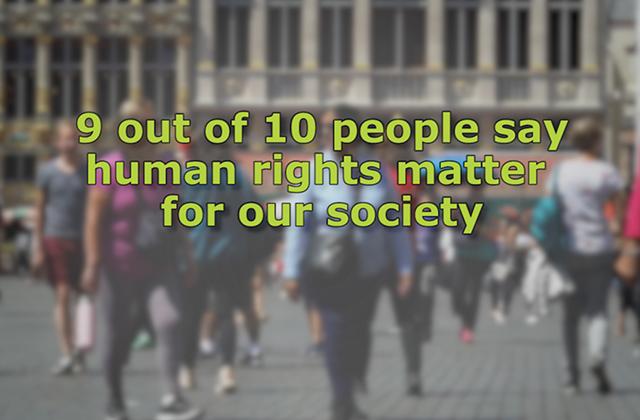
In his latest vlog Michael O'Flaherty introduces FRA's survey of 35,000 people on attitudes to human and fundamental rights.
Racist harassment, violence and discriminatory ethnic profiling are commonplace in Europe. Following the current protests that are spreading across the continent, the EU Agency for Fundamental Rights (FRA) calls on EU Member States to step up their efforts and effectively fight discrimination, harassment and violence against black people.
Growing intolerance and attacks on people’s fundamental rights continue to erode the considerable progress achieved over the years, finds FRA’s Fundamental Rights Report 2020. As Europe begins to emerge from the COVID-19 pandemic we see a worsening of existing inequalities and threats to societal cohesion.
Many governments are looking to technology to help monitor and track the spread of COVID-19, as a new Fundamental Rights Agency (FRA) report shows. Governments’ using technology to protect public health and overcome the pandemic need to respect everyone’s fundamental rights.
In this vlog Michael O'Flaherty outlines fundamental rights considerations when developing technological responses to public health, as he introduces the focus of FRA's next COVID-19 bulletin.
In 2019 the EU Agency for Fundamental Rights (FRA) carried out the world’s biggest ever survey of lesbian, gay, bisexual, trans and intersex people’s life experiences. Almost 140,000 LGBTI people told us about their lives – in their own words.
Today, the European Union Agency for Fundamental Rights launches the second LGBTI survey, mapping the experience of what it is to be LGBTI in the EU.
Michael O’Flaherty
FRA's Director, Michael O'Flaherty, delivered a keynote speech during a webinar on 7 May 2020 hosted by the European Parliament's Anti-Racism and Diversity Intergroup and B’nai B’rith International. The webinar focused on racism and the COVID-19 pandemic. The EU Equality Commissioner Helena Dalli also delivered a keynote speech during the seminar.
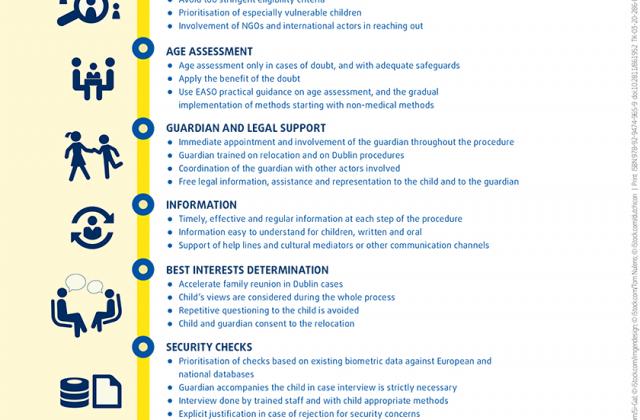
Based on the lessons learned from relocation
experiences and on existing international and EU legal
standards, FRA has developed a number of practical
suggestions for the adjustment of relocation efforts to
the protection needs of unaccompanied children. This
guidance aims to be a practical tool for Member States
that wish to engage in the relocation of unaccompanied
children and in any future responsibility-sharing
mechanisms, and to gain knowledge on how this can
be done while respecting the child’s best interests.
More lesbian, gay, bisexual, trans and intersex (LGBTI) people are now open about who they are but fear, violence and discrimination remain high, show the results of the EU Fundamental Rights Agency’s survey on experiences of LGBTI people in Europe. With 140,000 respondents, it is the largest ever survey on hate crime and discrimination against LGBTI people. The findings should drive policy measures to further protect and promote the rights of LGBTI people.