Infotehnoloogia hoogne areng on teravdanud vajadust tugeva isikuandmete kaitse järele, sest õigus
isikuandmete kaitsele on sätestatud nii Euroopa Liidu kui ka Euroopa Nõukogu õigusaktides. Selle olulise
õiguse tagamisel tekib uusi ja olulisi probleeme, sest tehnika areng laiendab selliseid valdkondi nagu seire,
side pealtkuulamine ja andmete säilitamine. Käsiraamatu eesmärk on tutvustada andmekaitset kui arenevat
õigusvaldkonda juristidele, kes ei ole andmekaitse spetsialistid.
Dėl sparčios informacinių technologijų plėtros padidėjo poreikis užtikrinti patikimą asmens duomenų apsaugą
taikant tiek Europos Sąjungos, tiek Europos Tarybos priemones. Siekiant užtikrinti šią svarbią teisę, kyla naujų
ir svarbių uždavinių, nes dėl technologinės pažangos plečiamos tokių sričių, kaip stebėjimas, ryšių perėmimas
ir duomenų saugojimas, ribos. Šis vadovas parengtas siekiant supažindinti teisės specialistus, kurie neturi
itin daug žinių apie duomenų apsaugą, su šia naujai besiformuojančia teisės sritimi.
A rápida evolução das tecnologias da informação exacerbou a necessidade de uma proteção sólida dos dados pessoais, cujo direito é garantido por instrumentos da União Europeia (UE) e do Conselho da Europa (CdE). A salvaguarda deste importante direito implica importantes novos desafios porque os avanços tecnológicos expandem as fronteiras de áreas como a vigilância, a interceção das comunicações e o armazenamento dos dados. O presente manual destina-se a familiarizar os profissionais do Direito que não são especializados em proteção de dados com esta área emergente do Direito.
Informations- och kommunikationsteknikens snabba utveckling har gjort att det mer akut behövs ett ordentligt skydd av personuppgifter, en rättighet som garanteras av instrument från både Europeiska unionen (EU) och Europarådet. Att slå vakt om denna betydelsefulla rättighet medför nya och markanta utmaningar, då de tekniska framstegen bryter in på områden som övervakning, avlyssning av kommunikation och datalagring. Den här handboken är utformad för att jurister som inte är specialiserade på dataskydd ska kunna bekanta sig med detta framväxande område inom juridiken.
The methods used to determine the age of
an applicant may include “invasive” medical tests which interfere with the rights of the child, including their right to dignity,
integrity and privacy. It is often a challenge to find the right balance between protecting children from harm and promoting
their participation in these procedures. This report provides important insights and identifies the implications of collecting
children’s biometric data and conducting age assessments.
This report outlines Member States’ approaches to age requirements and limits
regarding child participation in judicial proceedings; procedural safeguards for, and rights of, children involved in criminal
proceedings; as well as issues related to depriving children of their liberty.
The right to access justice and all other relevant procedural rights are not just rights in themselves; they also protect against violations of every other right. Respect for children’s rights in the area of justice is therefore essential. International treaties, the Charter of Fundamental Rights of the European Union, European Union (EU) secondary law, and national legislation provide a number of relevant rights.
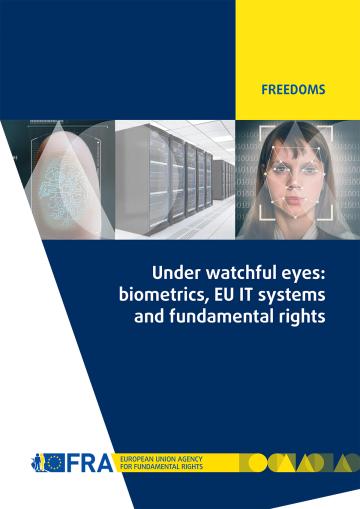
This Opinion by the European Union Agency for Fundamental Rights (FRA) aims to inform the European Parliament position concerning legislative proposals on interoperability between EU information technology systems (IT systems) presented on 12 December 2017 and currently discussed by the EU legislators.
This report outlines the fundamental rights implications of collecting, storing and using
biometric and other data in EU IT systems in the area of asylum and migration.
Den europæiske lovgivning om ikke-forskelsbehandling, som består af EU’s direktiver om ikkeforskelsbehandling og artikel 14 i den europæiske menneskerettighedskonvention (EMRK) samt protokol nr. 12 hertil, forbyder forskelsbehandling i en række sammenhænge og af en række årsager. I denne håndbog ser vi på EU-lovgivningen om ikke-forskelsbehandling i henhold til disse to kilder som komplementære systemer, idet de vil blive brugt i flæng, hvis de overlapper hinanden, mens evt. forskelle vil blive fremhævet.
European non-discrimination law, as constituted in particular by the EU non-discrimination directives, and Article 14 of and Protocol 12 to the European Convention on Human Rights, prohibits discrimination across a range of contexts and grounds. This handbook examines European non-discrimination law stemming from these two sources as complementary systems, drawing on them interchangeably to the extent that they overlap, while highlighting differences where these exist.
Diskrimineerimine eri kontekstides ja alustel on keelatud Euroopa võrdse kohtlemise õigusega, mille moodustavad ELi võrdse kohtlemise direktiivid ning Euroopa inimõiguste ja põhivabaduste kaitse konventsiooni artikkel 14 ja konventsiooni protokoll nr 12. Käesolevas käsiraamatus vaadeldakse nendest kahest allikast lähtuvaid Euroopa võrdse kohtlemise õigusnorme üksteist täiendavate süsteemidena, tuginedes neile vaheldumisi ja rõhutades samas ka erinevusi (kui neid esineb).
Pagal Europos nediskriminavimo teisę, kurią sudaro pirmiausia ES nediskriminavimo direktyvos ir
Žmogaus teisių ir pagrindinių laisvų apsaugos konvencijos 14 straipsnis bei Protokolas Nr. 12,
draudžiama diskriminuoti įvairiomis aplinkybėmis ir įvairiais pagrindais. Šiame vadove iš šių dviejų
šaltinių kilusi Europos nediskriminavimo teisė nagrinėjama kaip viena kitą papildančios sistemos;
jomis pakaitomis remiamasi – tiek, kiek jos sutampa, ir atkreipiamas dėmesys į skirtumus, jei jų
yra.
A legislação europeia antidiscriminação, constituída, em particular, pelas diretivas da UE em matéria
de não discriminação, pelo artigo 14.o da Convenção Europeia dos Direitos do Homem e pelo
Protocolo n.o 12 a esta convenção, proíbe a discriminação em diversos contextos e com base em
diversos motivos. O presente manual examina a legislação europeia neste domínio, tal como
decorre dessas duas fontes, remetendo indiferenciadamente para um ou outro destes sistemas
jurídicos complementares nas situações em que os mesmos se sobrepõem, ou assinalando as
diferenças onde estas existem.
Den europeiska icke-diskrimineringslagstiftningen, som i huvudsak består av EU:s ickediskrimineringsdirektiv och artikel 14 i och protokoll nr 12 till Europakonventionen om de mänskliga rättigheterna, förbjuder diskriminering på en rad olika grunder och i olika sammanhang. Den här handboken innehåller en genomgång av den europeiska icke-diskrimineringslagstiftning som härrör från dessa två källor. De ses som två kompletterande system som delvis överlappar varandra. I de fall de skiljer sig åt påpekas detta.
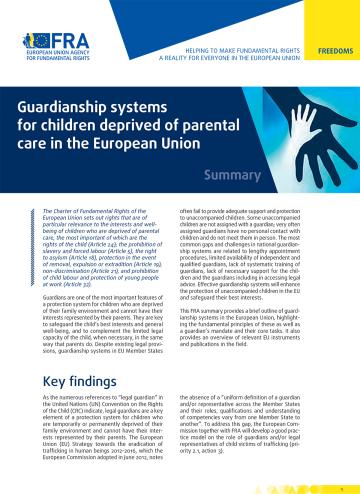
Guardians are a key element of a protection system for children who are temporarily or
permanently deprived of their family environment and cannot have their interests represented
by their parents. Great disparities exist between the types of guardianship provided
to children in and within European Union (EU) Member States. This report explores the key
features of guardianship systems put in place to cater for the needs of all children in need
of protection, including child victims and those at risk of becoming victims of trafficking in
human beings or of other forms of exploitation.
The transition from institution- to community-based support for persons with disabilities is a complex process that requires multifaceted efforts. These include putting in place commitments and structures for achieving deinstitutionalisation and measuring outcomes for persons with disabilities. This report shows that effectively funding the deinstitutionalisation process is a vital element.
Discussions are under way at the European Union (EU) and national levels about how best to realise the transition from institutional to community-based support. This report contributes to these by bringing together some of the key issues that have emerged from the EU Agency for Fundamental Rights’ (FRA) human rights indicators on Member States’ political and practical commitment to deinstitutionalisation.
This report assesses to what extent Member States have implemented the right to independent living, focusing on the effect commitments and funds are having on persons with disabilities’ daily lives. Taken together, the reports provide important insights that can support ongoing processes of change.