Het Europese non-discriminatierecht, dat met name wordt gevormd door de EU-richtlijnen inzake non-discriminatie en door artikel 14 van en protocol 12 bij het Europese Verdrag tot bescherming van de rechten van de mens, verbiedt discriminatie op basis van diverse contexten en gronden. Dit handboek onderzoekt het Europees non-discriminatierecht dat voortvloeit uit deze twee complementaire bronnen, en maakt daarbij geen onderscheid tussen beide, tenzij daar waar ze van elkaar afwijken.
A legislação europeia antidiscriminação, constituída, em particular, pelas diretivas da UE em matéria
de não discriminação, pelo artigo 14.o da Convenção Europeia dos Direitos do Homem e pelo
Protocolo n.o 12 a esta convenção, proíbe a discriminação em diversos contextos e com base em
diversos motivos. O presente manual examina a legislação europeia neste domínio, tal como
decorre dessas duas fontes, remetendo indiferenciadamente para um ou outro destes sistemas
jurídicos complementares nas situações em que os mesmos se sobrepõem, ou assinalando as
diferenças onde estas existem.
Európske antidiskriminačné právo ustanovené antidiskriminačnými smernicami EÚ, ako aj článkom
14 Európskeho dohovoru Rady Európy o ochrane ľudských práv a základných slobôd a jeho protokolu
č. 12 zakazuje diskrimináciu v celom rade súvislostí a na základe rozmanitých dôvodov. V tejto
príručke sa skúma európske antidiskriminačné právo prameniace z týchto dvoch zdrojov ako
komplementárnych systémov, pričom sa z nich striedavo vychádza v rozsahu, v akom sa prekrývajú,
a zdôrazňujú sa prípadné rozdiely.
Evropsko protidiskriminacijsko pravo, kot ga določajo zlasti protidiskriminacijske direktive Evropske
unije, člen 14 Evropske konvencije o človekovih pravicah in 12. Protokol k tej konvenciji, prepoveduje
diskriminacijo na različnih področjih in zaradi različnih razlogov. Ta priročnik pojasnjuje evropsko
protidiskriminacijsko pravo, kot izhaja iz navedenih dveh komplementarnih sistemov. Izmenjuje
navaja področja, kjer se ureditvi vsebinsko prekrivata, in izpostavlja razlike med njima.
Den europeiska icke-diskrimineringslagstiftningen, som i huvudsak består av EU:s ickediskrimineringsdirektiv och artikel 14 i och protokoll nr 12 till Europakonventionen om de mänskliga rättigheterna, förbjuder diskriminering på en rad olika grunder och i olika sammanhang. Den här handboken innehåller en genomgång av den europeiska icke-diskrimineringslagstiftning som härrör från dessa två källor. De ses som två kompletterande system som delvis överlappar varandra. I de fall de skiljer sig åt påpekas detta.
Европейското право в областта на недискриминацията, както е предвидено в директивите
на ЕС относно недискриминацията, в член 14 и в Протокол 12 към Европейската конвенция
за правата на човека, забранява дискриминацията в рамките на широк набор от видове
контекст и основания. В настоящия наръчник се разглежда европейско право в областта на
недискриминацията, което произхожда от тези два източника като допълващи се системи.
Те му служат взаимозаменяемо дотолкова, че се припокриват, като същевременно се
подчертават съществуващите разлики.
Evropské antidiskriminační právo, které tvoří směrnice EU o zákazu diskriminace a článek 14 a protokol č. 12 Evropské úmluvy o ochraně lidských práv a základních svobod, zakazuje diskriminaci v celé řadě situací a z celé řady důvodů. Tato příručka zkoumá evropské antidiskriminační právo vycházející z uvedených dvou zdrojů jako vzájemně se doplňující systémy, využívá jejich vzájemné zaměnitelnosti v míře, v jaké se tyto systémy překrývají, a upozorňuje na jejich rozdíly, pokud existují.
Den europæiske lovgivning om ikke-forskelsbehandling, som består af EU’s direktiver om ikkeforskelsbehandling og artikel 14 i den europæiske menneskerettighedskonvention (EMRK) samt protokol nr. 12 hertil, forbyder forskelsbehandling i en række sammenhænge og af en række årsager. I denne håndbog ser vi på EU-lovgivningen om ikke-forskelsbehandling i henhold til disse to kilder som komplementære systemer, idet de vil blive brugt i flæng, hvis de overlapper hinanden, mens evt. forskelle vil blive fremhævet.
This report looks at what the EU and the 28 countries have agreed to do to move people with disabilities from living in institutions to living in their local community with support.
Guardians are a key element of a protection system for children who are temporarily or
permanently deprived of their family environment and cannot have their interests represented
by their parents. Great disparities exist between the types of guardianship provided
to children in and within European Union (EU) Member States. This report explores the key
features of guardianship systems put in place to cater for the needs of all children in need
of protection, including child victims and those at risk of becoming victims of trafficking in
human beings or of other forms of exploitation.
This meeting report distils the discussions held during a high-level expert meeting organised by FRA, which explored the shared space between religion and human rights.
FRA’s Second European Union Minorities and Discrimination Survey surveys around 26,000 individuals from different ethnic minority and immigrant backgrounds across all 28 EU Member States. This technical report presents a detailed overview of the research methods used by FRA when collecting the survey data.
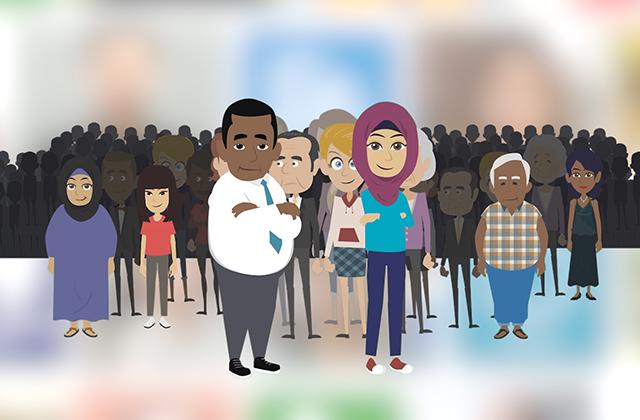
Seventeen years after adoption of EU laws that forbid discrimination, immigrants, descendants of immigrants, and minority ethnic groups continue to face widespread discrimination across the EU and in all areas of life – most often when seeking employment. For many, discrimination is a recurring experience. This is just one of the findings of FRA’s second European Union Minorities and Discrimination Survey (EU-MIDIS II), which collected information from over 25,500 respondents with different ethnic minority and immigrant backgrounds across all 28 EU Member States.
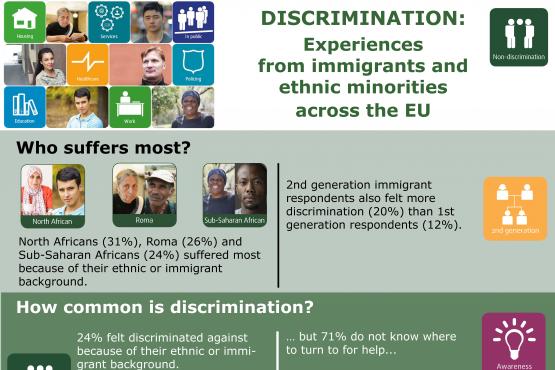
This infographic illustrates the main experiences immigrants and ethnic minorities across the EU have when it comes to discrimination. It draws from the findings from FRA's EU-MIDIS II survey.
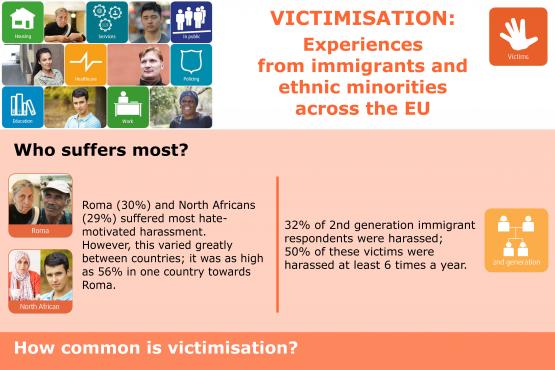
This infographic illustrates the main experiences immigrants and ethnic minorities across the EU have when it comes to victimisation. It draws from the findings from FRA's EU-MIDIS II survey.
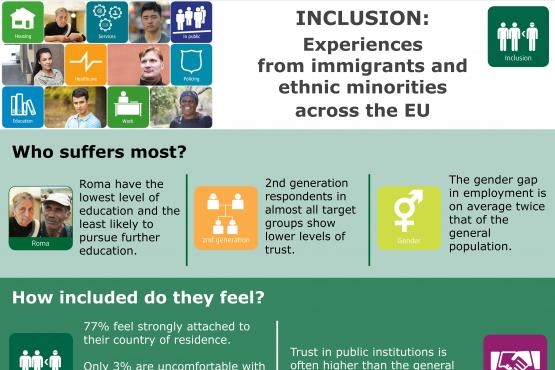
This infographic illustrates the main experiences immigrants and ethnic minorities across the EU have when it comes to inclusion. It draws from the findings from FRA's EU-MIDIS II survey.