Il manuale Minori privati delle cure genitoriali trovati in uno Stato membro dell’UE diverso dal proprio
mira a rafforzare la risposta di tutti i soggetti coinvolti nella protezione dei minori. La protezione di
questi ragazzi e queste ragazze è di primaria importanza ed è un obbligo per gli Stati membri dell’UE
sancito dal quadro giuridico internazionale e dell’UE. Il manuale dedica un’attenzione particolare
ai minori vittime della tratta e ai minori a rischio, dando applicazione a un’azione definita nella
comunicazione della Commissione europea sull’intensificazione dell’azione dell’UE di lotta alla tratta
degli esseri umani del 2017, e tiene conto dei modelli individuati, anche rispetto alla specificità di
genere che caratterizza il reato.
Algorithms used in machine learning systems and artificial intelligence (AI) can only be as good as the data used for their development. High quality data are essential for high quality algorithms. Yet, the call for high quality data in discussions around AI often remains without any further specifications and guidance as to what this actually means.
Il 2018 è stato caratterizzato sia da progressi che da battute d’arresto in termini di tutela dei diritti fondamentali. La Relazione sui diritti fondamentali 2019 della FRA fa il punto della situazione sui principali sviluppi in materia, individuando i risultati ottenuti e i settori che destano ancora preoccupazione.
Despite efforts by the European Union (EU) and its Member States to reduce gender inequalities among citizens of Roma origin, important gender differences persist. Drawing on FRA’s own EU-MIDIS II survey research in nine EU Member States this report highlights the position of Roma women in education, employment and health, as well as the extent to which they experience hate-motivated discrimination, harassment and physical violence.
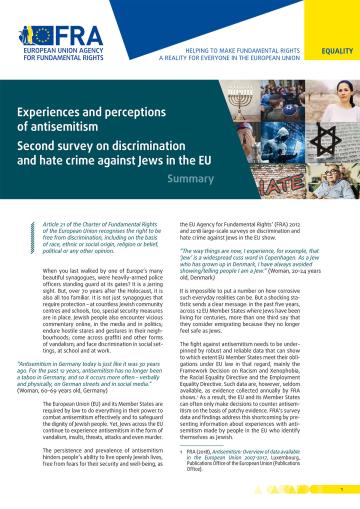
La presente sintesi illustra i principali risultati della seconda indagine della FRA sulle esperienze della popolazione ebraica riguardo ai reati generati dall’odio, alla discriminazione e all’antisemitismo nell’Unione europea; si tratta della più vasta indagine condotta sulla popolazione ebraica a livello mondiale.
This paper discusses the evolution of European Court of Human Rights case law relating
to hate crime, providing an update on the most recent rulings. Approaching hate crime
from a fundamental rights perspective, it shows how Member State authorities’ duty to
effectively investigate the bias motivation of crimes flows from key human rights
instruments, such as the European Convention on Human Rights.
This report outlines the main findings of FRA’s second survey on Jewish people’s experiences with hate crime, discrimination and antisemitism in the European Union – the biggest survey of Jewish people ever conducted worldwide. Covering 12 EU Member States, the survey reached almost 16,500 individuals who identify as being Jewish. It follows up on the agency’s first survey, conducted in seven countries in 2012.
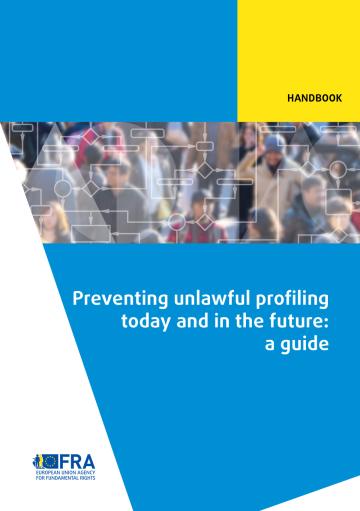
La presente guida spiega che cos’è la profilazione, illustra i quadri giuridici che la disciplinano ed espone i motivi per cui l’applicazione della profilazione entro i limiti stabiliti dalla legge è necessaria per rispettare i diritti fondamentali ed essenziale per un’efficace attività di polizia e gestione delle frontiere. La guida fornisce inoltre indicazioni pratiche su come evitare la profilazione illecita nelle operazioni di polizia e di gestione delle frontiere.
The Convention on the Rights of Persons with Disabilities commits both the EU and all of its Member States to realising the right of persons with disabilities to live independently in the community – which includes achieving deinstitutionalisation for those residing in institutional settings. But much remains to be done to make this a reality in practice. This report presents the main insights gained during fieldwork on the drivers of and barriers to deinstitutionalisation. Focusing on the local level, it gives voice to a diverse set of actors – most importantly, to people with disabilities themselves.


 Report / Paper / Summary3March2026
 Report / Paper / Summary27January2026
 Report / Paper / Summary27November2025