This report is the EU Fundamental Rights Agency’s fourth on the topic of severe labour exploitation. Based on interviews with 237 exploited workers, it paints a bleak picture of severe exploitation and abuse. The workers include both people who came to the EU, and EU nationals who moved to another EU country. They were active in diverse sectors, and their legal status also varied.
This technical report presents in detail all the stages
of the survey and the relevant information needed to
assess the quality and reliability of the data, as well
as considerations for interpreting the survey results.
The following chapters of the report cover the procedures
used in the development and administration
of the survey.
Algorithms used in machine learning systems and artificial intelligence (AI) can only be as good as the data used for their development. High quality data are essential for high quality algorithms. Yet, the call for high quality data in discussions around AI often remains without any further specifications and guidance as to what this actually means.
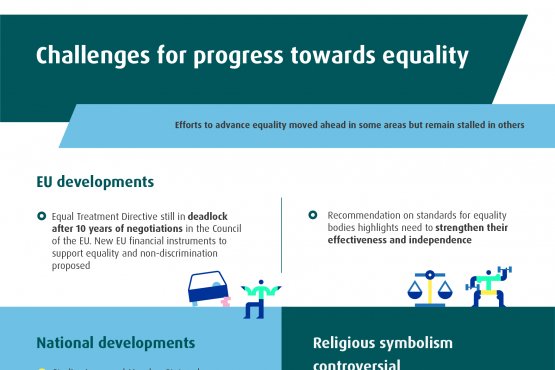
How much progress can we expect in a decade? Various rights-related instruments had been in place for 10 years in 2018, prompting both sobering and encouraging reflection on this question.
Despite efforts by the European Union (EU) and its Member States to reduce gender inequalities among citizens of Roma origin, important gender differences persist. Drawing on FRA’s own EU-MIDIS II survey research in nine EU Member States this report highlights the position of Roma women in education, employment and health, as well as the extent to which they experience hate-motivated discrimination, harassment and physical violence.
This summary report presents the key findings of the fieldwork to identify and understand the operation of barriers to and drivers of successful investment in Roma inclusion and the FRA opinions stemming from them.
This report outlines the main findings of FRA’s second survey on Jewish people’s experiences with hate crime, discrimination and antisemitism in the European Union – the biggest survey of Jewish people ever conducted worldwide. Covering 12 EU Member States, the survey reached almost 16,500 individuals who identify as being Jewish. It follows up on the agency’s first survey, conducted in seven countries in 2012.
В настоящото ръководство се обяснява какво представлява профилирането, правните рамки, които го регулират и защо правомерното извършване на профилиране е необходимо за спазването на основните права и е от решаващо значение за ефективната дейност на полицейските и граничните органи. В ръководството също така са предоставени практически насоки за това как да се избегне неправомерно профилиране при операции на полицейските и граничните органи.
Tento průvodce vysvětluje, co je to profilování, jaké právní rámce je upravují a proč je zákonné provádění profilování jednak nezbytné pro dodržování základních práv a jednak klíčové pro účinný výkon činnosti policie a činnosti v oblasti správy hranic. Tento průvodce rovněž poskytuje praktické pokyny k tomu, jak předcházet nezákonnému profilování v činnosti policie a v oblasti správy hranic.
I denne vejledning forklares, hvad der forstås ved profilering, de retlige rammer, der regulerer profilering, og hvorfor det er både nødvendigt at foretage profilering lovligt for at overholde de grundlæggende rettigheder og afgørende for et effektivt politiarbejde og en effektiv grænseforvaltning. Vejledningen indeholder også praktiske retningslinjer om, hvordan ulovlig profilering kan undgås i forbindelse med politi- og grænseforvaltningsoperationer.
This guide explains what profiling is, the legal frameworks that regulate it, and why conducting profiling lawfully is both necessary to comply with fundamental rights and crucial for effective policing and border management. The guide also provides practical guidance on how to avoid unlawful profiling in police and border management operations.
En esta guía se explica qué es la elaboración de perfiles, los marcos jurídicos que la regulan, y por qué llevarla a cabo de manera lícita no solo es necesario para respetar los derechos fundamentales, sino también crucial para la eficacia de la actuación policial y la gestión de fronteras. Esta guía contiene también orientaciones prácticas sobre cómo evitar la utilización ilícita de perfiles en las operaciones de vigilancia policial y gestión de fronteras.
Käesolevas juhendis selgitatakse, mida profiilide koostamine endast kujutab, milliste õigusaktidega seda reguleeritakse ning miks on nii profiilide koostamise seaduslikkus põhiõiguste tagamiseks kui ka politseitegevuse ja piirihalduse tõhus toimimine olulised. Juhendis antakse ka praktilisi soovitusi selle kohta, kuidas vältida politsei- ja piirivalvetoimingutes ebaseaduslikku profiilide koostamist.
Tässä oppaassa selitetään, mitä profilointi on ja millä oikeudellisilla kehyksillä profilointia säännellään. Siinä myös osoitetaan, miksi profiloinnin tekeminen lainmukaisesti on sekä välttämätöntä perusoikeuksien noudattamiseksi että ratkaisevan tärkeää tehokkaan poliisitoiminnan ja rajaturvallisuuden varmistamiseksi. Oppaassa annetaan käytännön ohjeita siitä, miten laitonta profilointia voidaan välttää poliisi- ja rajaturvallisuustoimissa.
U ovom se vodiču objašnjava što je izrada profila, opisuju pravni okviri kojima se ona uređuje i objašnjava zašto je zakonita izrada profila nužna da bi se poštovala temeljna prava, ali i ključna za djelotvoran rad policije i upravljanje granicama. Vodič sadržava i praktične smjernice o tome kako izbjeći nezakonitu izradu profila u policijskim operacijama i operacijama upravljanja granicama.
Az útmutató ismerteti, mi a profilalkotás, milyen jogi keretek szabályozzák, és miért tekinthető úgy, hogy a profilalkotás jogszerű elvégzése az alapvető jogoknak való megfeleléshez is szükséges, és az eredményes rendészeti fellépés és határigazgatás szempontjából is kulcsfontosságú. Az útmutató emellett gyakorlati iránymutatást kínál azzal kapcsolatban, hogy miként kerülhető el a jogellenes profilalkotás a rendőrségi és a határigazgatási műveletek során.
La presente guida spiega che cos’è la profilazione, illustra i quadri giuridici che la disciplinano ed espone i motivi per cui l’applicazione della profilazione entro i limiti stabiliti dalla legge è necessaria per rispettare i diritti fondamentali ed essenziale per un’efficace attività di polizia e gestione delle frontiere. La guida fornisce inoltre indicazioni pratiche su come evitare la profilazione illecita nelle operazioni di polizia e di gestione delle frontiere.
Šiame vadove paaiškinama, kas yra profiliavimas, kokios teisinės sistemos jį reglamentuoja ir kodėl teisėtai vykdyti profiliavimą yra būtina siekiant užtikrinti pagrindines teises ir ypač veiksmingą viešąją tvarką bei sienų valdymą. Vadove pateikiama ir praktinių patarimų, kaip išvengti neteisėto profiliavimo vykdant policijos ir sienų valdymo operacijas.
Šajā ceļvedī ir paskaidrots, kas ir profilēšana, kāds ir tās tiesiskais regulējums un kāpēc profilēšana ir gan nepieciešama, lai ievērotu pamattiesības, gan būtiska efektīvai policijas darbībai un robežu pārvaldībai. Ceļvedī ir sniegti arī praktiski norādījumi par to, kā novērst nelikumīgu profilēšanu policijas un robežu pārvaldības operācijās.