Search and rescue operations in the Central Mediterranean and fundamental rights - June 2026 update
Italy’s Mare Nostrum rescue programme in the Central Mediterranean ended in 2014. Non-governmental organisations (NGOs) have since been deploying search and rescue (SAR) vessels and reconnaissance aircraft to assist and rescue migrants and asylum seekers in distress at sea.
The Migrant Offshore Aid Stationdeployed the first vessel, Phoenix, in August 2014. Since then, NGOs have deployed 49 rescue vessels and seven reconnaissance aircraft — both active and retired — primarily in the Central Mediterranean.
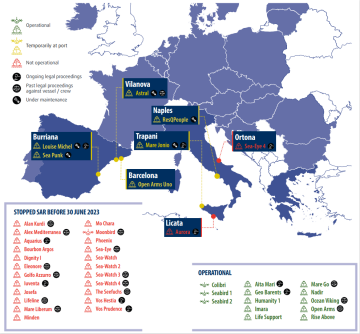
Figure 1 provides an overview of vessels and aircraft deployed by NGOs between August 2014 and 30 June 2026. The below figure also indicates if assets are operational or stopped working and whether they were or are subject to legal proceedings.
Figure 1 – Non-governmental organisation assets involved in search and rescue operations in the Mediterranean Sea, August 2014 – 30 June 2026

Alternative text: The figure lists the names of the 21 vessels and five aircraft which were operational on 30 June 2026 (one of the 21 vessels was under maintenance). It also lists the 28 SAR vessels and two aircraft active in the past but not operational anymore in June 2026. For each of them, it shows whether they had legal proceedings (past or ongoing).
Source: FRA (2026), based on public sources and civil society input.
By the end of June 2026, there were 21 operational NGO vessels and five operational reconnaissance aircraft. One of the vessels, the Oyvon, was under maintenance. This is a small increase compared to 2025. In last year’s update, FRA reported that 17 vessels and three reconnaissance aircraft were operational. In addition, three NGOs announced the deployment of new vessels: Humanity 2, Lifeline SAR and Thetis II.
Reconnaissance aircraft conduct maritime monitoring activities, which support the early detection of distress cases and alerts competent authorities. They do not themselves engage in SAR.