eu-charter

Carta de los Derechos Fundamentales de la Unión Europea

Artículo 25 - Derechos de las personas mayores

Artículo 25 - Derechos de las personas mayores

La Unión reconoce y respeta el derecho de las personas mayores a llevar una vida digna e independiente y a participar en la vida social y cultural.

Explicaciones

  • Text:

    Este artículo se inspira en el artículo 23 de la Carta Social Europea revisada y en los puntos 24 y 25 de la Carta Comunitaria de los Derechos Sociales Fundamentales de los Trabajadores. La participación en la vida social y cultural incluye por supuesto la participación en la vida política.

    Source:
    Diario Oficial de la Unión Europea C 303/17 - 14.12.2007
    Preamble - Explanations relating to the Charter of Fundamental Rights:
    Las presentes explicaciones fueron elaboradas inicialmente bajo la responsabilidad del Praesidium de la Convención que redactó la Carta de los Derechos Fundamentales de la Unión Europea. Han sido actualizadas bajo la responsabilidad del Praesidium de la Convención Europea, a la vista de las adaptaciones de la redacción del texto de la Carta realizadas por la Convención (en particular, los artículos 51 y 52) y de la evolución del Derecho de la Unión. Si bien no tienen por sí mismas valor jurídico, constituyen un valioso instrumento de interpretación con objeto de aclarar las disposiciones de la Carta.

Jurisprudencia

Derecho constitucional nacional

30 results found

  • Constitution of the Italian Republic
    País:
    Italy

    Art. 38. (...) Workers have the right to be assured adequate means for their needs and necessities in the case of accidents, illness, disability, old age and involuntary unemployment. (…)

  • Sweden / Instrument of Government
    País:
    Sweden

    Chapter 1 - Basic principles of the form of government:
    Article 2 (…) The public institutions shall combat discrimination of persons on grounds of gender, colour, national or ethnic origin, linguistic or religious affiliation, functional disability, sexual orientation, age or other circumstance affecting the individual. (...)

  • Constitution of Finland
    País:
    Finland

    Section 19 The right to social security [...] Everyone shall be guaranteed by an Act the right to basic subsistence in the event of unemployment, illness, and disability and during old age as well as at the birth of a child or the loss of a provider.

  • Constitution of Ireland
    País:
    Ireland

    Article 45.4.1. The state pledges itself to safeguard with especial care the economic interests of the weaker sections of the community, and, where necessary,
    to contribute to the support of the infirm, the
    widow, the orphan, and the aged. Article 45.4.2. The state shall endeavour to ensure that the strength and health of workers, men and women, and the tender age of children shall not be abused and that citizens shall not be forced by economic necessity to enter avocations unsuited to their sex, age or strength.

  • Constitution of Malta
    País:
    Malta

     Constitution of MaltaArticle 17(…) (2) Workers are entitled to reasonable insurance on a contributory basis for their requirements in case of accident, illness, disability, old-age and involuntary unemployment. (…)

  • Constitution of the Republic of Bulgaria
    País:
    Bulgaria

    Art. 51. [...] (3) The aged without relatives and unable to support themselves [...] shall receive special protection from the State and society.

  • Constitution of the Republic of Croatia
    País:
    Croatia

    Article 64
    (4)Children shall be obliged to take care of their elderly and infirm parents.

    Article 65
    (1)Everyone shall have the duty to protect children and infirm persons.

  • Constitution of the Republic of Estonia
    País:
    Estonia

    Article 28. (…) Every citizen of Estonia is entitled to government assistance in the case of old age, incapacity for work, loss of provider, or need. The categories and extent of the assistance, and the conditions and procedure for its allocation are provided by law. Unless otherwise provided by law, citizens of foreign states and stateless persons in Estonia enjoy this right equally with citizens of Estonia. (…)

  • Constitution of the Republic of Latvia
    País:
    Latvia

    109. Everyone has the right to social security in old age, for work disability, for unemployment and in other cases as provided by law.

  • Constitution of the Republic of Lithuania
    País:
    Lithuania

    Article 38. The duty of children shall be to respect their parents, to take care of them in their old age, and to preserve their heritage. Article 52. The State shall guarantee its citizens the right to receive old-age and disability pensions, as well as social assistance in the event of unemployment, sickness, widowhood, the loss of the breadwinner, and in other cases provided for by law.

  • Constitution of the Republic of Poland
    País:
    Poland

    Article 19The Republic of Poland shall take special care of veterans of the struggle for independence, particularly war invalids. Article 671. A citizen shall have the right to social security whenever incapacitated for work by reason of sickness or invalidism as well as having attained retirement age.(...)Article 68(...)3. Public authorities shall ensure special health care to children, pregnant women, handicapped people and persons of advanced age.

  • Costituzione della Repubblica Italiana
    País:
    Italy

    Art. 38. (...) I lavoratori hanno diritto che siano preveduti ed assicurati mezzi adeguati alle loro esigenze di vita in caso di infortunio, malattia, invalidità e vecchiaia, disoccupazione involontaria.

  • Czechia / Charter of Fundamental Rights and Freedoms
    País:
    Czechia

    Article 30 (1) Citizens have the right to adequate material security in old age and during periods of work incapacity, as well as in the case of the loss of their provider. (2) Everyone who suffers from material need has the right to such assistance as is necessary to ensure her a basic living standard. (3) Detailed provisions shall be set by law.

  • De Belgische Grondwet
    País:
    Belgium

    Art. 22. Ieder heeft recht op eerbiediging van zijn privé-leven en zijn gezinsleven, behoudens in de gevallen en onder de voorwaarden door de wet bepaald.
    De wet, het decreet of de in artikel 134 bedoelde regel waarborgen de bescherming van dat recht. Art. 23.Ieder heeft het recht een menswaardig leven te leiden. (...)

  • Eesti Vabariigi Põhiseadus
    País:
    Estonia

    § 28. (...) Eesti kodanikul on õigus riigi abile vanaduse, töövõimetuse, toitjakaotuse ja puuduse korral. Abi liigid, ulatuse ning saamise tingimused ja korra sätestab seadus. Kui seadus ei sätesta teisiti, siis on see õigus võrdselt Eesti kodanikuga ka Eestis viibival välisriigi kodanikul ja kodakondsuseta isikul. (...)

  • Konstytucja Rzeczypospolitej Polskiej
    País:
    Poland

    Art. 19 Rzeczpospolita Polska specjalną opieką otacza weteranów walk o niepodległość, zwłaszcza inwalidów wojennych. Art. 671. Obywatel ma prawo do zabezpieczenia społecznego w razie niezdolności do pracy ze względu na chorobę lub inwalidztwo oraz po osiągnięciu wieku emerytalnego.(...)Art. 68(...)3. Władze publiczne są obowiązane do zapewnienia szczególnej opieki zdrowotnej dzieciom, kobietom ciężarnym, osobom niepełnosprawnym i osobom w podeszłym wieku.

  • La Constitution Belge
    País:
    Belgium

    Art. 22. Chacun a droit au respect de sa vie privée et familiale, sauf dans les cas et conditions fixés par la loi.
    La loi, le décret ou la règle visée à l'article 134 garantissent la protection de ce droit. Art. 23. Chacun a le droit de mener une vie conforme à la dignité humaine. (...)

  • Latvijas Republikas Satversme
    País:
    Latvia

    109. Ikvienam ir tiesības uz sociālo nodrošinājumu vecuma, darbnespējas, bezdarba un citos likumā noteiktajos gadījumos.

  • Lietuvos Respublikos Konstitucija
    País:
    Lithuania

    38 straipsnis. Vaikų pareiga - gerbti tėvus, globoti juos senatvėje ir tausoti jų palikimą. 52 straipsnisValstybė laiduoja piliečių teisę gauti senatvės ir invalidumo pensijas, socialinę paramą nedarbo, ligos, našlystės, maitintojo netekimo ir kitais įstatymų numatytais atvejais.

  • Magyarország Alaptörvénye
    País:
    Hungary

    XV. cikk (SZABADSÁG ÉS FELELŐSSÉG) [...] (5) Magyarország külön intézkedésekkel védi a gyermekeket, a nőket, az időseket és a fogyatékkal élőket. XIX. cikk (SZABADSÁG ÉS FELELŐSSÉG) [...] (4) Magyarország az időskori megélhetés biztosítását a társadalmi szolidaritáson alapuló egységes állami nyugdíjrendszer fenntartásával és önkéntesen létrehozott társadalmi intézmények működésének lehetővé tételével segíti elő. Törvény az állami nyugdíjra való jogosultság feltételeit a nők fokozott védelmének követelményére tekintettel is megállapíthatja. 40. cikk (Az Állam) A közteherviselés és a nyugdíjrendszer alapvető szabályait a közös szükségletek kielégítéséhez való kiszámítható hozzájárulás és az időskori létbiztonság érdekében sarkalatos törvény határozza meg.

Derecho de la UE

2 results found

  • Community Charter of the Fundamental Social Rights of Workers (not in force)

    25. Any person who has reached retirement age but who is not entitled to a pension or who does not have other means of subsistence, must be entitled to sufficient resources and to medical and social assistance specifically suited to his needs.

  • Community Charter of the Fundamental Social Rights of Workers (not in force)

    24. Every worker of the European Community must, at the time of retirement, be able to enjoy resources affording him or her a decent standard of living.

Derecho internacional

5 results found

Productos

  • Report / Paper / Summary
    21
    January
    2021
    German language version now available
    26 January 2021
    Las instituciones nacionales de derechos humanos (INDH) constituyen una parte esencial del sistema de protección de los derechos humanos en cada país. Con su trabajo de sensibilización, asesoramiento, supervisión y exigencia de rendición de
    cuentas a las autoridades, estas instituciones desempeñan un papel fundamental a la hora de abordar los grandes retos actuales en materia de derechos humanos, al ocuparse tanto de problemáticas recurrentes, tales como la discriminación y la
    desigualdad, como de problemas de reciente aparición como las implicaciones desde el punto de vista de los derechos de la inteligencia artificial y de la pandemia de la COVID-19.
  • Report / Paper / Summary
    3
    September
    2020
    Summary version now available
    21 January 2021
    National Human Rights Institutions (NHRIs) are a vital part of the country-level human rights protection system. This report, published 10 years after FRA’s first in-depth study on NHRIs, looks at such bodies in the EU, as well as the Republic of North Macedonia, the Republic of Serbia, and the United Kingdom of Great Britain and Northern Ireland. It explores relevant developments, challenges to their effectiveness and ways to maximise their impact.
  • Fundamental Rights Report
    6
    June
    2018
    Finnish version now available
    27 January 2020
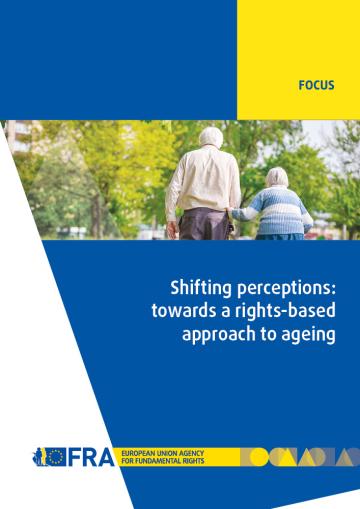
    European societies are not getting any younger! It is a simple truth we must face both about ourselves and Europe as a whole. In two generations, by 2080, those aged 65 or above will account for almost 30% of the European Union’s population.
  • Fundamental Rights Report
    11
    June
    2026
    The Fundamental Rights Report: Challenges and Achievements in 2025 is FRA’s flagship annual publication. It provides an overview of the state of fundamental rights in the EU and highlights selected critical developments from 2025. This year, it focuses on four areas: rights protection in a rapidly changing digital environment; the housing crisis and rising homelessness rates; employment challenges for people from non-EU countries; and the implementation of the EU Charter of Fundamental Rights. The publication is a valuable resource for those seeking to stay informed about the EU’s shifting landscape of fundamental rights.
  • Report / Paper / Summary
    14
    April
    2026
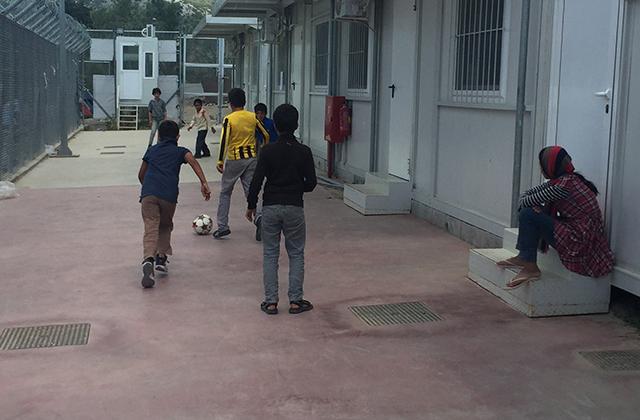
    In response to increased arrivals of asylum seekers, in 2015 the European Commission introduced the hotspot approach. Under this approach, the European Commission and EU agencies supported Greece and Italy in identifying, registering and fingerprinting newly arrived people. FRA regularly visited the initial reception facilities hosting them. This report looks back at the lessons learnt from 10 years of FRA visits. It identifies recurring risks to rights and highlights practical measures and promising practices to prevent or address them. These ‘lessons learnt’ can inform the implementation of the 2024 Pact on Migration and Asylum in line with the EU Charter of Fundamental Rights.
  • Report / Paper / Summary
    4
    December
    2025
    Artificial Intelligence comes with both benefits and risks. Safe AI use that accounts for fundamental rights is thus crucial. While the 2024 EU AI Act was a milestone in this regard, its broad definitions regarding AI systems and high-risk AI could introduce loopholes for fundamental rights compliance. This report offers an empirical basis for much-needed practical guidance on the Act’s implementation. Based on interviews with AI developers, sellers, and users, FRA addresses challenges of its use in critical domains, like asylum, education, and employment. Our findings help guide next steps in realising the AI Act’s potential to ensure responsible innovation.
  • Report / Paper / Summary
    13
    November
    2025
    FRA analysed 31 digital tools and systems across seven EU Member States, exploring potential positive and negative effects on victims, claimants and defendants. By identifying risks early, investing in skills and training, and embedding protections from the outset, policymakers and practitioners can build effective and inclusive justice systems. This report provides practical suggestions to help ensure that digitalised justice systems are accessible and deliver fair outcomes for all.
  • Handbook / Guide / Manual
    8
    October
    2025
    The Entry/Exit System (EES), launching in 2025, will register non-EU nationals crossing the EU’s external borders. This FRA guidance supports managers overseeing the operation of the new system. It helps them to ensure compliance with EU fundamental rights. It outlines operational considerations: clear communication, dignified biometric data collection and data protection. It also addresses staff training needs. Based on fieldwork at 10 border crossing points in 6 Member States, the guidance will ensure rights are respected under the new system. A separate guidance publication for border guards accompanies this publication.
  • Handbook / Guide / Manual
    8
    October
    2025
    The Entry/Exit System (EES), launching in 2025, will register non-EU nationals crossing the EU’s external borders. This FRA guidance helps border guards apply the new rules in line with EU fundamental rights. It offers practical tips on informing people, collecting biometric data and supporting people with specific needs. Based on fieldwork at 10 border crossing points in 6 Member States, the guidance will ensure rights are respected under the new system. A separate guidance publication for managers accompanies this publication.