eu-charter

Carta de los Derechos Fundamentales de la Unión Europea

Artículo 39 - Derecho de sufragio activo y pasivo en las elecciones al Parlamento Europeo

Artículo 39 - Derecho de sufragio activo y pasivo en las elecciones al Parlamento Europeo

1. Todo ciudadano de la Unión tiene derecho de sufragio activo y pasivo en las elecciones al Parlamento Europeo en el Estado miembro en que resida, en las mismas condiciones que los nacionales de dicho Estado. 2. Los diputados al Parlamento Europeo serán elegidos por sufragio universal libre, directo y secreto.

Explicaciones

  • Text:

    El artículo 39 se aplica en las condiciones establecidas en los Tratados, de conformidad con lo dispuesto en el apartado 2 del artículo 52 de la Carta. En efecto, el apartado 1 del artículo 39 corresponde al derecho garantizado en el apartado 2 del artículo 20 del Tratado de Funcionamiento de la Unión Europea (cf. asimismo la base jurídica contemplada en el artículo 22 para la adopción de las modalidades de ejercicio de este derecho) y el apartado 2 del artículo 39 corresponde al apartado 3 del artículo 14 del Tratado de la Unión Europea. El apartado 2 del artículo 39 enuncia los principios básicos del régimen electoral de un sistema democrático.

    Source:
    Diario Oficial de la Unión Europea C 303/17 - 14.12.2007
    Preamble - Explanations relating to the Charter of Fundamental Rights:
    Las presentes explicaciones fueron elaboradas inicialmente bajo la responsabilidad del Praesidium de la Convención que redactó la Carta de los Derechos Fundamentales de la Unión Europea. Han sido actualizadas bajo la responsabilidad del Praesidium de la Convención Europea, a la vista de las adaptaciones de la redacción del texto de la Carta realizadas por la Convención (en particular, los artículos 51 y 52) y de la evolución del Derecho de la Unión. Si bien no tienen por sí mismas valor jurídico, constituyen un valioso instrumento de interpretación con objeto de aclarar las disposiciones de la Carta.

Jurisprudencia

Derecho constitucional nacional

46 results found

  • Sweden / Instrument of Government
    País:
    Sweden

    Chapter 1 - Basic principles of the form of government:

    Article 1 All public power in Sweden proceeds from the people. Swedish democracy is founded on the free formation of opinion and on universal and equal suffrage. It is realised through a representative and parliamentary form of government and through local self-government. Public power is exercised under the law.

  • 2002/19/EC Directive of the European Parliament and of the Council (EU-DIRECTIVES)
    País:
    United Kingdom

    Entitlement to vote8. Persons entitled to vote(1) A person is entitled to vote as an elector at an election to the European Parliament in an electoral region if he is within any of subsections (2) to (5). (2) A person is within this subsection if on the day of the poll he would be entitled to vote as an elector at a parliamentary election in a parliamentary constituency wholly or partly comprised in the electoral region, and-(a) the address in respect of which he is registered in the relevant register of parliamentary electors is within the electoral region, or(b) his registration in the relevant register of parliamentary electors results from an overseas elector's declaration which specifies an address within the electoral region. (3) A person is within this subsection if-(a) he is a peer who on the day of the poll would be entitled to vote at a local government election in an electoral area wholly or partly comprised in the electoral region, and(b) the address in respect of which he is registered in the relevant register of local government electors is within the electoral region. (4) A person is within this subsection if he is entitled to vote in the electoral region by virtue of section 3 of the Representation of the People Act 1985 (c. 50) (peers resident outside the United Kingdom). (5) A person is within this subsection if he is entitled to vote in the electoral region by virtue of the European Parliamentary Elections (Franchise of Relevant Citizens of the Union) Regulations 2001 (S.I. 2001/1184) (citizens of the European Union other than Commonwealth and Republic of Ireland citizens). (6) Subsection (1) has effect subject to any provision of regulations made under this Act which provides for alterations made after a specified date in a register of electors to be disregarded. (7) In subsection (3) "local government election" includes a municipal election in the City of London (that is, an election to the office of mayor, alderman, common councilman or sheriff and also the election of any officer elected by the mayor, aldermen and liverymen in common hall).

  • Act C of 1997 on Electoral Procedure
    País:
    Hungary

    Pursuant to the Constitution of the Republic of Hungary, suffrage is universal and equal; voting is direct and secret. To ensure that the exercise of the right to vote, the process of elections, referendums and popular initiatives shall be democratic and based on proper guarantees, the Parliament shall make the following law: (...)

  • Basic Law for the Federal Republic of Germany
    País:
    Germany

    Article 38 (2) Any person who has attained the age of eighteen shall be entitled to vote; any person who has attained the age of majority may be elected.

  • Bundes-Verfassungsgesetz (B-VG)
    País:
    Austria

    Artikel 23a(1) Die Mitglieder des Europäischen Parlaments werden in Österreich auf Grund des gleichen, unmittelbaren, persönlichen, freien und geheimen Wahlrechtes der Männer und Frauen, die am Wahltag das 16. Lebensjahr vollendet haben und am Stichtag der Wahl entweder die österreichische Staatsbürgerschaft besitzen und nicht nach Maßgabe des Rechts der Europäischen Union vom Wahlrecht ausgeschlossen sind oder die Staatsangehörigkeit eines anderen Mitgliedstaates der Europäischen Union besitzen und nach Maßgabe des Rechts der Europäischen Union wahlberechtigt sind, nach den Grundsätzen der Verhältniswahl gewählt.(2) Das Bundesgebiet bildet für die Wahlen zum Europäischen Parlament einen einheitlichen Wahlkörper.(3) Wählbar sind die in Österreich zum Europäischen Parlament Wahlberechtigten, die am Wahltag das 18. Lebensjahr vollendet haben.

  • Constitution of Finland
    País:
    Finland

    Section 14 Electoral and participatory rights (...) Every Finnish citizen and every other citizen of the European Union resident in Finland, having attained eighteen years of age, has the right to vote in the European Parliamentary elections, as provided by an Act.

  • Constitution of the Hellenic Republic
    País:
    Greece

    Article 51(3). The Members of Parliament shall be elected through direct, universal and secret ballot by the citizens who have the right to vote, as specified by law. The law cannot abridge the right to vote except in cases where a minimum age has not been attained or in cases of legal incapacity or as a result of irrevocable criminal conviction for certain felonies. [...] (5). The exercise of the right to vote is compulsory [...]

  • Constitution of the Italian Republic
    País:
    Italy

    Art. 48. Any citizen, male or female, who has attained majority, is entitled to vote. The vote is personal and equal, free and secret. The exercise thereof is a civic duty.
    The law lays down the requirements and modalities for citizens residing abroad to exercise their right to vote and guarantees that this right is effective. A constituency of Italians abroad shall be established for elections to the Houses of Parliament; the number of seats of such constituency is set forth in a constitutional provision according to criteria established by law. The right to vote cannot be restricted except for civil incapacity or as a consequence of an irrevocable penal sentence or in cases of moral unworthiness as laid down by law. Art. 56. The Chamber of deputies is elected by direct and universal suffrage. (...)Art. 58. Senators are elected by universal and direct ballot by voters who are twenty-five years of age. (...)

  • Constitution of the Republic of Austria
    País:
    Austria

    Article 23a(1) The members to be delegated to the European Parliament by the Republic of Austria shall be elected in accordance with the principles of proportional representation on the basis of equal, direct, secret and personal suffrage for men and women who have completed their eighteenth year of life before 1 January of the election year and on the day appointed for elecation are either endowed with Austrian nationality and not excluded from suffrage under the provisos of European Union law or endowed with the nationality of another member state of the European Union and qualified to vote under the provisos of European Union Law. The more detailed provisions about the electoral procedure will be made by Federal law. (2) Federal territory constitutes for elections to the European Parliament a single electoral body.(3) Eligible for election are all men and women who have completed their nineteenth year of life before 1 January of the election year and on the day appointed for elecation are either endowed with Austrian nationality and not excluded from suffrage under the provisos of European Union law or endowed with the nationality of another member state of the European Union and qualified to vote under the provisos of European Union Law. The more detailed provisions about the electoral procedure will be made by Federal law.

  • Constitution of the Republic of Bulgaria
    País:
    Bulgaria

    Art. 10. All elections, and national and local referendums shall be held on the basis of universal, equal and direct suffrage by secret ballot.
    Art. 42(1) Every citizen above the age of 18, with the exception of those placed under judicial interdiction or serving a prison sentence, shall be free to elect state and local authorities and vote in referendums.(2) The organization and procedure for the holding of elections and referendums shall be established by law.(3) (new, SG 18/05) The elections for Members of the European Parliament and the participation of European Union citizens in the elections for local authorities shall be regulated by law.

  • Constitution of the Republic of Croatia
    País:
    Croatia

    Article 146
    Citizens of the Republic of Croatia shall be European Union citizens and shall enjoy the rights guaranteed by the European Union acquis communautaire, and in particular:
    (...)
    – active and passive voting rights in European parliamentary elections and in local elections in another Member State, in accordance with that Member State’s law,
    (...)
    All rights shall be exercised in compliance with the conditions and limitations laid down in the founding treaties of the European Union and the measures undertaken pursuant to such treaties.
    In the Republic of Croatia, all rights guaranteed by the European Union acquis
    communautaire shall be enjoyed by all citizens of the European Union.

    Article 45
    (1) All Croatian citizens who have reached the age of eighteen years (voters) shall be entitled to universal and equal suffrage in elections for the Croatian Parliament, the President of the Republic of Croatia and the European Parliament and in decision-making procedures by national referendum, in compliance with law.

    (3) In elections for the Croatian Parliament, the President of the Republic of Croatia and the European Parliament and in decision-making procedures by national referendum, suffrage
    shall be exercised in direct elections by secret ballot (...)
    (4)In elections for the Croatian Parliament, the President of the Republic of Croatia and the European Parliament and in decision-making procedures by national referendum, the Republic of Croatia shall secure exercise of suffrage for its citizens with registered domicile in the Republic of Croatia who are outside of its borders during elections such that they may vote in diplomatic-consular offices of the Republic of Croatia in the foreign countries in which they located or in some other manner as specified by law.

  • Constitution of the Republic of Latvia
    País:
    Latvia

     101. (..) Local governments shall be elected by Latvian citizens and citizens of the European Union who permanently reside in Latvia. Every citizen of the European Union who permanently resides in Latvia has the right, as provided by law, to participate in the work of local governments. (..)

  • Constitution of the Republic of Lithuania
    País:
    Lithuania

    Article 33. Citizens shall have the right to participate in the government of the State both directly and through their democratically elected representatives, as well as the right to enter into the State service of the Republic of Lithuania under equal conditions. Article 34. Citizens who, on the day of the election, have reached 18 years of age, shall have the electoral right. The right to be elected shall be established by the Constitution of the Republic of Lithuania and by the election laws. Citizens who are recognised as incapable by a court shall not participate in elections.

  • Constitution of the Republic of Poland
    País:
    Poland

    Article 62.1. If, no later than on the day of vote, he has attained 18 years of age, a Polish citizen shall have the right to participate in a referendum and the right to vote for the President of the Republic of Poland as well as representatives to the Sejm and Senate and organs of local self-government.Article 96.1. The Sejm shall be composed of 460 Deputies.2. Elections to the Sejm shall be universal, equal, direct and proportional and shall be conducted by secret ballot. Article 97.1. The Senate shall be composed of 100 Senators.2. Elections to the Senate shall be universal, direct and shall be conducted by secret ballot.Article 99.1. Every citizen having the right to vote, who, no later than on the day of the elections, has attained the age of 21 years, shall be eligible to be elected to the Sejm.(...)

  • Czechia / Charter of Fundamental Rights and Freedoms
    País:
    Czechia

    Article 21 (1) Citizens have the right to participate in the administration of public affairs either directly or through the free election of their representatives. (2) Elections must be held within terms not exceeding the regular electoral terms provided for by law. (3) The right to vote is universal and equal, and shall be exercised by secret ballot. The conditions for exercising the right to vote shall be provided for by law. (4) Citizens shall have access, on an equal basis, to any elective and other public office.

  • Czechia / Constitution of the Czech Republic
    País:
    Czechia

    Article 18 (1) Elections to the Chamber of Deputies shall be held by secret ballot on the basis of universal, equal and direct suffrage and under the principles of proportional representation. (2) Elections to the Senate shall be held by secret ballot on the basis of universal, equal and direct suffrage and under the principles of the majority system. (3) Every citizen of the Czech Republic who has attained the age of eighteen years shall have the right to vote. Article 19 (1) Every citizen of the Czech Republic who has the right to vote and who has attained the age of twenty-one years may be elected to the Chamber of Deputies. (2) Every citizen of the Czech Republic who has the right to vote and who has attained the age of forty years may be elected to the Senate. (3) The mandate of a Deputy or a Senator shall be established on his or her election. Article 21 Nobody may be at the same time member of both chambers of the Parliament. Article 22 (1) The office of Deputy or Senator shall be incompatible with the exercise of the office of the President of the Republic, of a judge or of other offices specified by law. (2) On the day when a Deputy or Senator assumes the office of President of the Republic or on the day when he or she assumes the office of judge or another office incompatible with the office of Deputy or Senator, his or her mandate as Deputy or Senator shall cease.

  • Danmarks Riges Grundlov
    País:
    Denmark

    § 29. Stk. 1. Valgret til folketinget har enhver, som har dansk indfødsret, fast bopæl i riget og har nået den i stk. 2 omhandlede valgretsalder, medmindre vedkommende er umyndiggjort. Det bestemmes ved lov, i hvilket omfang straf og understøttelse, der i lovgivningen betragtes som fattighjælp, medfører tab af valgret. Stk. 2. Valgretsalderen er den, som har opnået flertal ved folkeafstemning i overensstemmelse med lov af 25. marts 1953. Ændring af den til enhver tid gældende valgretsalder kan ske ved lov. Et af folketinget vedtaget forslag til en sådan lov kan først stadfæstes af kongen, når bestemmelsen om ændring af valgretsalderen i overensstemmelse med § 42, stk. 5, har været undergivet en folkeafstemning, der ikke har medført bestemmelsens bortfald.
    § 30. Stk. 1. Valgbar til folketinget er enhver, som har valgret til dette, medmindre vedkommende er straffet for en handling, der i almindeligt omdømme gør ham uværdig til at være medlem af folketinget.
    § 31. Stk. 1. Folketingets medlemmer vælges ved almindelige, direkte og hemmelige valg.
    § 33. Folketinget afgør selv gyldigheden af sine medlemmers valg samt spørgsmål om, hvorvidt et medlem har mistet sin valgbarhed.

  • De Belgische Grondwet
    País:
    Belgium

    Artikel 8De staat van Belg wordt verkregen, behouden en verloren volgens de regelen bij de burgerlijke wet gesteld.De Grondwet en de overige wetten op de politieke rechten bepalen welke de vereisten zijn waaraan men moet voldoen, benevens de staat van Belg, om die rechten te kunnen uitoefenen.In afwijking van het tweede lid kan de wet het stemrecht regelen van de burgers van de Europese Unie die niet de Belgische nationaliteit hebben, overeenkomstig de internationale en supranationale verplichtingen van België. Het stemrecht bedoeld in het vorige lid kan door de wet worden uitgebreid tot de in België verblijvende niet-Europese Unie onderdanen, onder de voorwaarden en op de wijze door haar bepaald.

  • Election Act (714/1998; amendments up to 218/2004 included)
    País:
    Finland

    Section 2 — Right to voteIn parliamentary elections, the Presidential election and European Parliamentary elections, every Finnish citizen is entitled to vote provided the person has reached the age of 18 not later than on the day of the election. In the Presidential election, the voting age must be reached not later than on the day of the first round of the Presidential election.In European Parliamentary elections, a citizen of another European Union Member State is also entitled to vote provided the person has reached the age of 18 not later than on the day of the election and whose municipality of residence referred to in the Municipality of Residence Act (201/1994) is in Finland provided the person has not lost the right to vote in European elections in the country of which he/she is a citizen (home state).Provisions regarding the right to vote in municipal electionsare laid down in the Constitution and the Municipalities Act.Voting by proxy is not allowed.

  • Election of Members of the European Parliament from the Republic of Slovenia Act Consolidated text
    País:
    Slovenia

    II. VOTING RIGHTArticle 10A female or male citizen (hereinafter: "a citizen") of the Republic of Slovenia who has the right to vote and to be elected a deputy of the National Assembly, shall have the right to vote and to be elected a MEP.Subject to the conditions from the previous paragraph, also a citizen of another EU Member State whose permanent residence is in the Republic of Slovenia shall have the right to vote and to be elected a MEP, provided that he/she has not been deprived of the voting right and provided that he/she is registered in the voting rights register.On the same elections to the European Parliament, a female or male voter (hereinafter: "a voter") may only vote once and may only stand as a candidate in the elections on one list of candidates.A citizen of the Republic of Slovenia who does not have a permanent residence in the Republic of Slovenia and who exercises the voting right for the elections of MEPs in another country, may not exercise the voting right for the elections of MEPs from the Republic of Slovenia.The voting rights register and the composition of electoral rolls shall be regulated by law.

Derecho de la UE

6 results found

  • Treaty on the European Union

    Article 14

    3. The members of the European Parliament shall be elected for a term of five years by direct universal suffrage in a free and secret ballot.

  • Treaty on the Functioning of the European Union

    Article 22

    (ex Article 19 TEC)

    1. Every citizen of the Union residing in a Member State of which he is not a national shall have the right to vote and to stand as a candidate at municipal elections in the Member State in which he resides, under the same conditions as nationals of that State. This right shall be exercised subject to detailed arrangements adopted by the Council, acting unanimously in accordance with a special legislative procedure and after consulting the European Parliament; these arrangements may provide for derogations where warranted by problems specific to a Member State.

    2. Without prejudice to Article 223(1) and to the provisions adopted for its implementation, every citizen of the Union residing in a Member State of which he is not a national shall have the right to vote and to stand as a candidate in elections to the European Parliament in the Member State in which he resides, under the same conditions as nationals of that State. This right shall be exercised subject to detailed arrangements adopted by the Council, acting unanimously in accordance with a special legislative procedure and after consulting the European Parliament; these arrangements may provide for derogations where warranted by problems specific to a Member State.

  • Treaty on the Functioning of the European Union

    Article 20

    (ex Article 17 TEC)

    2. Citizens of the Union shall enjoy the rights and be subject to the duties provided for in the Treaties. They shall have, inter alia:

    (a) the right to move and reside freely within the territory of the Member States;

    (b) the right to vote and to stand as candidates in elections to the European Parliament and in municipal elections in their Member State of residence, under the same conditions as nationals of that State;

    (c) the right to enjoy, in the territory of a third country in which the Member State of which they are nationals is not represented, the protection of the diplomatic and consular authorities of any Member State on the same conditions as the nationals of that State;

    (d) the right to petition the European Parliament, to apply to the European Ombudsman, and to address the institutions and advisory bodies of the Union in any of the Treaty languages and to obtain a reply in the same language.

    These rights shall be exercised in accordance with the conditions and limits defined by the Treaties and by the measures adopted thereunder.

  • 2002/772/EC, Euratom Council Decision (EU-DECISIONS)

    amending the Act concerning the election of the representatives of the European. Parliament by direct universal suffrage, annexed to Decision 76/787/ECSC, EEC, Euratom

  • 93/109/EC Council Directive (EU-DIRECTIVES)

    laying down detailed arrangements for the exercise of the right to vote and stand as a candidate in elections to the European Parliament for citizens of the Union residing in a Member State of which they are not nationals

  • Regulation (EU, Euratom) No 1141/2014 of the European Parliament and of the Council of 22 October 2014 on the statute and funding of European political parties and European political foundations

    Preamble
    ‘(33) For reasons of transparency, and in order to strengthen the scrutiny and the democratic accountability of European political parties and European political foundations, information considered to be of substantial public interest, relating in particular to their statutes, membership, financial statements, donors and donations, contributions and grants received from the general budget of the European Union, as well as information relating to decisions taken by the Authority and the Authorising Officer of the European Parliament on registration, funding and sanctions, should be published. Establishing a regulatory framework to ensure that this information is publicly available is the most effective means of promoting a level playing field and fair competition between political forces, and of upholding open, transparent and democratic legislative and electoral processes, thereby strengthening the trust of citizens and voters in European representative democracy and, more broadly, preventing corruption and abuses of power.‘

Derecho internacional

0 results found

Productos

  • Fundamental Rights Report
    10
    June
    2025
    The Fundamental Rights Report 2025 is the annual report of the European Union Agency for Fundamental Rights (FRA). It provides an overview of the state of fundamental rights in the EU and highlights selected critical developments and trends in 2024. The report covers issues such as inclusive elections, gender-based violence, and the implementation of the EU Charter of Fundamental Rights. It presents FRA’s opinions on these developments, setting out the actions that the EU and Member States should take. This annual publication is a valuable resource for those seeking to stay informed about the EU’s shifting landscape of fundamental rights.
  • Fundamental Rights Report
    5
    June
    2024
    FRA’s Fundamental Rights Report 2024 analyses the year’s developments in fundamental rights. It focuses on the most pressing fundamental rights concerns facing Europe in 2023: the cost-of-living crisis, rights concerns at the EU’s external borders and migration, and threats to democracy. Re-structured, this year’s new approach is a shorter and sharper analysis. It also presents FRA’s opinions on these developments, including a summary of the evidence supporting these opinions.
  • Report / Paper / Summary
    29
    May
    2024
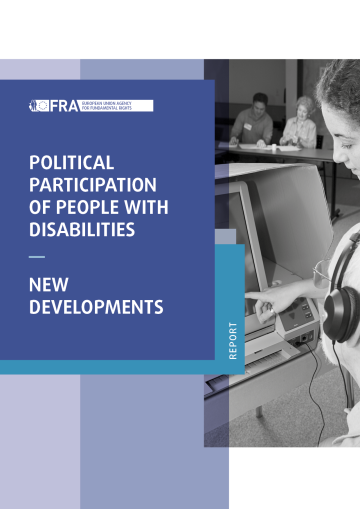
    Ahead of the EU elections, this report explores the political participation of people with disabilities. Although some Member States removed restrictions on the right to vote and to stand for elections, barriers still exist. This report is an update of new developments following FRA’s last report published in 2014. It sets out ways forward to ensure people with disabilities have equal opportunities, in line with the EU Charter of Fundamental Rights and the Convention on the Rights of Persons with Disabilities.
    Lisa F. Young/Adobe Stock
  • Fundamental Rights Report
    11
    June
    2020
    FRA’s Fundamental Rights Report 2020 reviews major developments in the field in 2019, identifying both achievements and areas of concern. It also presents FRA’s opinions on these developments, including a synopsis of the evidence supporting these opinions. This year’s focus chapter explores how to unlock the full potential of the EU Charter of Fundamental Rights.
  • Report / Paper / Summary
    21
    May
    2014
    The opportunity to be involved in political life, whether by standing for elected office, joining a political party, or following political news stories in the media, is at the heart of what it means to live in a democratic society. The report analyses data on the situation of political participation of persons with disabilities collected from across the 28 European Union (EU) Member States by the European Union Agency for Fundamental Rights (FRA) and the European Commission-funded Academic Network of European Disability Experts (ANED).
  • Report / Paper / Summary
    29
    April
    2014
    The report analyses data on the situation of political participation of persons with disabilities collected from across the 28 European Union (EU) Member States by the European Union Agency for Fundamental Rights (FRA) and the European Commission-funded Academic Network of European Disability Experts (ANED).
  • Report / Paper / Summary
    8
    November
    2010
    This report provides the first results from a legal study carried out by the European Union Agency for Fundamental Rights (FRA) in the context of its project on the "Fundamental rights of persons with intellectual disabilities and persons with mental health problems".
    FRA
  • Easy-to-read report
    November
    2010
    Information about the FRA and the project on fundamental rights of persons with intellectual disabilities and persons with mental health problems.
  • Easy-to-read report
    November
    2010
    Information about the FRA and their report about some of the laws in Europe.