Top Menu

  • Sobre la FRA
  • Cooperación
  • Newsroom
  • Cookies
  • Contact

Select site language

  • Български
  • Čeština
  • Dansk
  • Deutsch
  • Ελληνικά
  • English
  • Español
  • Eesti
  • Suomi
  • Français
  • Gaeilge
  • Hrvatski
  • Magyar
  • Italiano
  • Lietuvių
  • Latviešu
  • Malti
  • Nederlands
  • Polski
  • Português
  • Română
  • Slovenčina
  • Slovenščina
  • Svenska

Custom Topbar

Home

Search the FRA website

      • Work on rights
        • Justicia, derechos de las víctimas y cooperación judicial
          • Derechos de las víctimas
          • Derechos de los acusados
          • Justicia civil
          • Cooperación judicial y Estado de Derecho
          • Seguridad
          • Empresas y derechos humanos
        • Igualdad, no discriminación y racismo
          • Niños, niñas, jóvenes y personas mayores
          • Personas con discapacidad
          • Delito de odio
          • Origen racial y étnico
          • Religión y creencia
          • Personas romanís
          • Sexo, orientación sexual y género
        • Asilo, migración y fronteras
          • Acceso al asilo
          • Fronteras y sistemas de información
          • Protección de la infancia
          • Migración irregular, retorno e internamiento de inmigrantes
          • Migración legal e integración
          • Trata y explotación laboral
        • Protección de datos, privacidad y nuevas tecnologías
          • Inteligencia artificial y macrodatos
          • Fronteras y sistemas de información
          • Protección de datos
          • Elaboración ilícita de perfiles
        • Apoyo a los regímenes y a las personas que defienden los derechos humanos
          • Carta de los Derechos Fundamentales de la UE
          • Sistemas intergubernamentales de derechos humanos
          • Sistemas y órganos nacionales de derechos humanos
          • Sociedad civil
        • Environmental and social sustainability
          • Climate change and environmental protection
          • Just and green transition
          • Business and human rights
          • Human rights due diligence
          • Consumer protection
      • La Carta de los Derechos Fundamentales de la Unión Europea
        • ¿Cuáles son los derechos fundamentales?
        • What is the EU Charter of Fundamental Rights?
        • Preámbulo
        • Título I: Dignidad
          • 1 - Dignidad humana
          • 2 - Derecho a la vida
          • 3 - Derecho a la integridad de la persona
          • 4 - Prohibición de la tortura y de las penas o los tratos inhumanos o degradantes
          • 5 - Prohibición de la esclavitud y del trabajo forzado
        • Título II: Libertades
          • 6 - Derecho a la libertad y a la seguridad
          • 7 - Respeto de la vida privada y familiar
          • 8 - Protección de datos de carácter personal
          • 9 - Derecho a contraer matrimonio y derecho a fundar una familia
          • 10 - Libertad de pensamiento, de conciencia y de religión
          • 11 - Libertad de expresión y de información
          • 12 - Libertad de reunión y de asociación
          • 13 - Libertad de las artes y de las ciencias
          • 14 - Derecho a la educación
          • 15 - Libertad profesional y derecho a trabajar
          • 16 - Libertad de empresa
          • 17 - Derecho a la propiedad
          • 18 - Derecho de asilo
          • 19 - Protección en caso de devolución, expulsión y extradición
        • Título III: Igualdad
          • 20 - Igualdad ante la ley
          • 21 - No discriminación
          • 22 - Diversidad cultural, religiosa y lingüística
          • 23 - Igualdad entre mujeres y hombres
          • 24 - Derechos del niño
          • 25 - Derechos de las personas mayores
          • 26 - Integración de las personas discapacitadas
        • Título IV: Solidaridad
          • 27 - Derecho a la información y consulta de los trabajadores en la empresa
          • 28 - Derecho de negociación y de acción colectiva
          • 29 - Derecho de acceso a los servicios de colocación
          • 30 - Protección en caso de despido injustificado
          • 31 - Condiciones de trabajo justas y equitativas
          • 32 - Prohibition of child labour and protection of young people at work
          • 32 - Prohibición del trabajo infantil y protección de los jóvenes en el trabajo
          • 33 - Vida familiar y vida profesional
          • 34 - Seguridad social y ayuda social
          • 35 - Protección de la salud
          • 36 - Acceso a los servicios de interés económico general
          • 37 - Protección del medio ambiente
        • Título V: Ciudadanía
          • 38 - Protección de los consumidores
          • 39 - Derecho de sufragio activo y pasivo en las elecciones al Parlamento Europeo
          • 40 - Derecho de sufragio activo y pasivo en las elecciones municipales
          • 41 - Derecho a una buena administración
          • 42 - Derecho de acceso a los documentos
          • 43 - El defensor del pueblo europeo
          • 44 - Derecho de petición
          • 45 - Libertad de circulación y de residencia
        • Título VI: Justicia
          • 46 - Protección diplomática y consular
          • 47 - Derecho a la tutela judicial efectiva y a un juez imparcial
          • 48 - Presunción de inocencia y derechos de la defensa
          • 49 - Principios de legalidad y de proporcionalidad de los delitos y las penas
        • Título VII: Disposiciones generales
          • 50 - Derecho a no ser juzgado o condenado penalmente dos veces por la misma infracción
          • 51 - Ámbito de aplicación
          • 52 - Alcance e interpretación de los derechos y principios
          • 53 - Nivel de protección
      • Tools
        • EU Fundamental Rights Information System - EFRIS
        • Criminal detention database
        • Anti-Muslim hatred database
        • National human rights structures navigator
        • Case-law database
        • Charterpedia
        • FRA e-learning platform
        • Data visualisation
        • Equality data collection: promising practices
        • Fighting hate crime: promising practices
      • Publicaciones y datos
    • About FRA
      • Who we are
        • Structure of FRA
        • Management Board
          • Management Board members
          • Management Board meeting documents
        • Executive Board
        • Scientific Committee
          • Scientific Committee members
        • Director
        • Management team
      • What we do
        • Research and data
        • Capacity-building
        • Advising
        • Convening people
        • FRA for children
          • What are my rights?
          • Where do my rights come from?
        • Areas of work
          • Multi-annual Framework 2007-2022
        • Work Programme
          • Archive
        • Annual Activity report
          • Archive
        • Projects
      • Working at FRA
        • Vacancies and selections
          • Previous vacancies
        • What we offer
        • Work-life balance
        • Application instructions
        • Seconded National Experts
        • Traineeship
        • Study visits at FRA
      • Procurement
        • Ongoing procedures
        • Closed procedures
        • Contracts awarded
      • Finance and budget
        • Financial Rules
        • Financial documents
      • Acceso a los documentos
        • Access to documents
        • Solicitud de documentos
      • Data protection within FRA
        • Records registry
    • Cooperation
      • Las instituciones y otros órganos de la UE
        • European Parliament
        • Council of the European Union
        • European Commission
        • EU agencies
          • Justice and Home Affairs Agencies Network
        • European Committee of the Regions
        • European Economic and Social Committee
        • European Ombudsman
        • EU CRPD Framework
          • Promotion
          • Protection
          • Monitoring
          • Review process
          • Resources
      • Los Estados miembros de la UE
        • National Liaison Officers
        • National Parliaments
      • El Consejo de Europa
      • La sociedad civil y la Plataforma de Derechos Fundamentales
        • Activities
        • Civic space
        • Platform library
        • How to register
      • Instituciones nacionales de derechos humanos, organismos de igualdad e instituciones del Defensor del Pueblo
      • La ONU, la OSCE y otras organizaciones internacionales
        • EEA and Norway Grants
      • FRANET
    • Newsroom
      • Media contacts
      • News
      • Press releases
      • Stories
      • Events
        • Past Events
      • FRA products 2026
        • FRA products 2025
        • FRA products 2024
        • FRA products 2023
        • FRA products 2022
        • FRA products 2021
        • FRA Products 2020
        • FRA Products 2019
      • Multimedia
        • Videos
        • Infographics
        • Podcasts
      • Speeches
      • Press packs
        • EU LGBTIQ survey - Press pack
        • Fundamental Rights Survey
        • EU LGBTI survey II
        • From institutions to community living for persons with disabilities: perspectives from the ground
        • Second European Union Minorities and Discrimination Survey – Main results
        • Second European Union Minorities and Discrimination Survey (EU-MIDIS II) Muslims
        • Together in the EU: Promoting the participation of migrants and their descendants
        • Second European Union Minorities and Discrimination Survey (EU-MIDIS II) Roma
        • Severe labour exploitation in the EU
        • Child-friendly justice – perspectives and experiences of professionals: Press pack
        • Fundamental rights at EU borders
        • Violence against women press pack
        • Jewish people’s experiences and perceptions of hate crime, discrimination and antisemitism
        • EU LGBT Press pack
        • Child-friendly justice – perspectives and experiences of children
      • Newsletter
    • Account
      • Log in

Main menu

Home
  • Work on rights
    Work on rights
    • Justicia, derechos de las víctimas y cooperación judicial
      • Derechos de las víctimas
      • Derechos de los acusados
      • Justicia civil
      • Cooperación judicial y Estado de Derecho
      • Seguridad
      • Empresas y derechos humanos
    • Igualdad, no discriminación y racismo
      • Niños, niñas, jóvenes y personas mayores
      • Personas con discapacidad
      • Delito de odio
      • Origen racial y étnico
      • Religión y creencia
      • Personas romanís
      • Sexo, orientación sexual y género
    • Asilo, migración y fronteras
      • Acceso al asilo
      • Fronteras y sistemas de información
      • Protección de la infancia
      • Migración irregular, retorno e internamiento de inmigrantes
      • Migración legal e integración
      • Trata y explotación laboral
    • Protección de datos, privacidad y nuevas tecnologías
      • Inteligencia artificial y macrodatos
      • Fronteras y sistemas de información
      • Protección de datos
      • Elaboración ilícita de perfiles
    • Apoyo a los regímenes y a las personas que defienden los derechos humanos
      • Carta de los Derechos Fundamentales de la UE
      • Sistemas intergubernamentales de derechos humanos
      • Sistemas y órganos nacionales de derechos humanos
      • Sociedad civil
    • Environmental and social sustainability
      • Climate change and environmental protection
      • Just and green transition
      • Business and human rights
      • Human rights due diligence
      • Consumer protection
  • La Carta de los Derechos Fundamentales de la Unión Europea
    La Carta de los Derechos Fundamentales de la Unión Europea
    • ¿Cuáles son los derechos fundamentales?
    • What is the EU Charter of Fundamental Rights?
    • Preámbulo
    • Título I: Dignidad
      • 1 - Dignidad humana
      • 2 - Derecho a la vida
      • 3 - Derecho a la integridad de la persona
      • 4 - Prohibición de la tortura y de las penas o los tratos inhumanos o degradantes
      • 5 - Prohibición de la esclavitud y del trabajo forzado
    • Título II: Libertades
      • 6 - Derecho a la libertad y a la seguridad
      • 7 - Respeto de la vida privada y familiar
      • 8 - Protección de datos de carácter personal
      • 9 - Derecho a contraer matrimonio y derecho a fundar una familia
      • 10 - Libertad de pensamiento, de conciencia y de religión
      • 11 - Libertad de expresión y de información
      • 12 - Libertad de reunión y de asociación
      • 13 - Libertad de las artes y de las ciencias
      • 14 - Derecho a la educación
      • 15 - Libertad profesional y derecho a trabajar
      • 16 - Libertad de empresa
      • 17 - Derecho a la propiedad
      • 18 - Derecho de asilo
      • 19 - Protección en caso de devolución, expulsión y extradición
    • Título III: Igualdad
      • 20 - Igualdad ante la ley
      • 21 - No discriminación
      • 22 - Diversidad cultural, religiosa y lingüística
      • 23 - Igualdad entre mujeres y hombres
      • 24 - Derechos del niño
      • 25 - Derechos de las personas mayores
      • 26 - Integración de las personas discapacitadas
    • Título IV: Solidaridad
      • 27 - Derecho a la información y consulta de los trabajadores en la empresa
      • 28 - Derecho de negociación y de acción colectiva
      • 29 - Derecho de acceso a los servicios de colocación
      • 30 - Protección en caso de despido injustificado
      • 31 - Condiciones de trabajo justas y equitativas
      • 32 - Prohibition of child labour and protection of young people at work
      • 32 - Prohibición del trabajo infantil y protección de los jóvenes en el trabajo
      • 33 - Vida familiar y vida profesional
      • 34 - Seguridad social y ayuda social
      • 35 - Protección de la salud
      • 36 - Acceso a los servicios de interés económico general
      • 37 - Protección del medio ambiente
    • Título V: Ciudadanía
      • 38 - Protección de los consumidores
      • 39 - Derecho de sufragio activo y pasivo en las elecciones al Parlamento Europeo
      • 40 - Derecho de sufragio activo y pasivo en las elecciones municipales
      • 41 - Derecho a una buena administración
      • 42 - Derecho de acceso a los documentos
      • 43 - El defensor del pueblo europeo
      • 44 - Derecho de petición
      • 45 - Libertad de circulación y de residencia
    • Título VI: Justicia
      • 46 - Protección diplomática y consular
      • 47 - Derecho a la tutela judicial efectiva y a un juez imparcial
      • 48 - Presunción de inocencia y derechos de la defensa
      • 49 - Principios de legalidad y de proporcionalidad de los delitos y las penas
    • Título VII: Disposiciones generales
      • 50 - Derecho a no ser juzgado o condenado penalmente dos veces por la misma infracción
      • 51 - Ámbito de aplicación
      • 52 - Alcance e interpretación de los derechos y principios
      • 53 - Nivel de protección
  • Tools
    Tools
    • EU Fundamental Rights Information System - EFRIS
    • Criminal detention database
    • Anti-Muslim hatred database
    • National human rights structures navigator
    • Case-law database
    • Charterpedia
    • FRA e-learning platform
    • Data visualisation
    • Equality data collection: promising practices
    • Fighting hate crime: promising practices
  • Publicaciones y datos

You are here

  • Home
  • Work On Rights
  • Environmental and social sustainability
  • Just and green transition
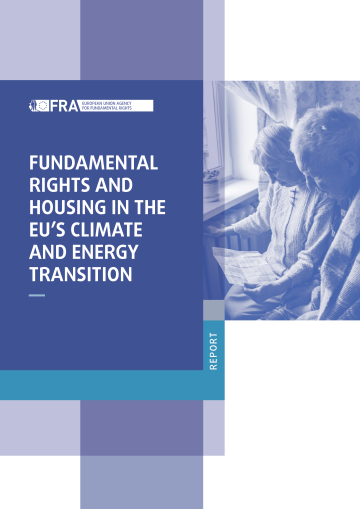
  • Fundamental rights and housing in the EU’s climate and energy transition
Cover with title and image showing elderly couple with blankets around their shoulders sitting in front of  radiator and holding a energy bill in their hand.
AdobeStock@Solarisys
29
January
2026

Fundamental rights and housing in the EU’s climate and energy transition

Just and green transition
Environmental and social sustainability
Making homes energy efficient and equipping them with clean energy can help the EU to reach its climate and energy goals. These measures improve living conditions and support fighting energy poverty, but they can also compromise affordability and displace low-income families. This report looks at housing renovation and clean energy installation programmes and wider EU climate and energy transition policies. It analyses their impact on fundamental rights. It finds that measures often inadvertently exclude people or risk exacerbating existing inequalities. Climate and social policies must comply with fundamental rights obligations. This report builds on FRA’s 2025 publication: Towards a fundamental rights-compliant European Green Deal.
Read Press Release
  • Read Online
  • Related
Export to PDF
Search inside this publication
  • Key findings and FRA opinions
    • Integrating fundamental rights into the climate and energy transition
      • FRA opinion 1
    • Strengthening fundamental rights safeguards in designing and implementing energy renovation policies
      • FRA opinion 2
      • FRA opinion 3
    • The lack of equal access to renovation measures impacts the right to housing
      • FRA opinion 4
    • Protecting the rights of tenants in energy renovations
      • FRA opinion 5
    • People confronted with housing deprivation are at risk of being left behind in the climate and energy transition
      • FRA opinion 6
    • Participation and stakeholder engagement in the energy transition is often a one-off exercise and is not inclusive
      • FRA opinion 7
    • Lack of transparency and information for complaint mechanisms hinder access to justice
      • FRA opinion 8
    • Need for integrated and systematic monitoring and data collection for a just climate and energy transition
      • FRA opinion 9
  • Introduction
  • 1. Access to energy and the right to housing in the climate and energy transition
    • 1.1 International framework on access to affordable and sustainable energy
    • 1.2 The link between the right to housing and sustainability
    • 1.3 Energy as an essential service in the European Union’s framework
      • 1.3.1 Addressing energy poverty to ensure health and an adequate standard of living
      • 1.3.2 Right of access to energy – including renewable energy – and users’ rights
    • 1.4 Energy renovations for achieving affordable and sustainable housing in the European Union
    • 1.5 Conclusion
  • 2. Fundamental rights in the European Union climate and energy governance
    • 2.1 Fundamental rights in the National Energy and Climate Plans
      • 2.1.1 Equality and non-discrimination in national energy and climate plans
      • 2.1.2 Gender equality
      • 2.1.3 Vulnerability and equal access to energy
      • 2.1.4 Access to affordable housing
    • 2.2 National Energy and Climate Progress Reports
    • 2.3 Conclusion
  • 3. Non-discrimination and leaving no one behind in the energy transition
    • 3.1 Equal access to renovation and energy transition measures
      • 3.1.1 Target groups and access criteria
      • 3.1.2 Tenure status and renovations: exclusion of tenants
      • 3.1.3 Support measures essential for ensuring equal access to the programmes in practice
      • 3.1.4 Funding is necessary to ensure access for people with lower incomes
    • 3.2 Energy poverty and attention to people in situations of vulnerability
      • 3.2.1 Risks and prevalence of energy poverty in the European Union
      • 3.2.2 Tackling energy poverty among people in vulnerable situations
    • 3.3 Conclusion
  • 4. Participation and stakeholder engagement in the energy transition
    • 4.1 Ensuring the right to information: transparency and awareness
    • 4.2 Participation and stakeholder engagement
    • 4.3 Conclusion
  • 5. Accountability: effective structures for fundamental-rights-compliant energy policy implementation
    • 5.1 Fundamental-rights-compliant funding and finances
    • 5.2 Monitoring and data collection
    • 5.3 Access to justice and complaints mechanisms
      • 5.3.1 Complaint and review mechanisms in energy renovation programmes lack consistency and transparency
      • 5.3.2 The role of ombudsperson institutions, equality bodies, national human rights institutions and other stakeholders
    • 5.4 Conclusion
  • Conclusions
  • Annex 1 – Methodology
  • Acronyms and abbreviations
  • About this publication


Acronyms and abbreviations


  • CJEU– Court of Justice of the European Union
  • CRPD– Convention on the Rights of Persons with Disabilities
  • EEA– European Environment Agency
  • EED– Energy Efficiency Directive
  • EPAH– Energy Poverty Advisory Hub
  • EPBD– Energy Performance of Buildings Directive
  • EPSR– European Pillar of Social Rights
  • ESC– European Social Charter
  • EU– European Union
  • FRA– European Union Agency for Fundamental Rights
  • GHG– Greenhouse gas
  • HRBA– Human-rights-based approach
  • ICESCR– International Covenant on Economic, Social and Cultural Rights
  • JRC– Joint Research Centre
  • NECP– National Energy and Climate Plan
  • NECPR– National Energy and Climate Progress Report
  • RRF– Recovery and Resilience Facility
  • SCP– Social Climate Plan
  • SCFR– Social Climate Fund Regulation
  • SDGs– Sustainable Development Goals
  • TEU – Treaty on European Union
  • TFEU– Treaty on the Functioning of the European Union
  • UN– United Nations

Country codes

  • AT– Austria
  • BE– Belgium
  • BG– Bulgaria
  • CY– Cyprus
  • CZ– Czechia
  • DE– Germany
  • DK– Denmark
  • EE– Estonia
  • EL– Greece
  • ES– Spain
  • FI– Finland
  • FR– France
  • HR– Croatia
  • HU– Hungary
  • IE– Ireland
  • IT– Italy
  • LT– Lithuania
  • LU– Luxembourg
  • LV– Latvia
  • MT– Malta
  • NL– Netherlands
  • PL– Poland
  • PT– Portugal
  • RO– Romania
  • SE– Sweden
  • SI– Slovenia
Annex 1 – MethodologyAbout this publication
Related
Planting a seedling
lovelyday12 / Adobestock
Report / Paper / Summary
Climate change and environmental protection
Business and human rights
Environmental and social sustainability
15
January
2025

Towards a fundamental rights-compliant European Green Deal

Climate change affects the daily lives of everyone in the EU and has significant environmental, economic, social and health impacts. To tackle this, the European Green Deal was adopted in 2019. This report examines the Green Deal from a fundamental rights perspective, with the aim of protecting the right to a safe, clean, healthy and sustainable environment for all. It highlights the lack of fundamental rights in EU climate policy and the need to incorporate these rights into future legislation. It also considers how applying a human-rights-based approach to climate policy could support a fair and inclusive transition.
Read news item
Sobre la FRA

Encontrará más información sobre la Agencia y su labor aquí.

  • Sobre la FRA
  • La Carta de los Derechos Fundamentales de la Unión Europea
  • Dónde buscar ayuda
  • Noticias
  • Suscribirse a actualizaciones
Datos de contacto
Address
European Union Agency for Fundamental Rights
Schwarzenbergplatz 11
A-1040 Vienna, Austria
E-mail
Póngase en contacto con nosotros
Newsletter
Suscribirse a actualizaciones
  • Facebook
  • Twitter
  • LinkedIn
  • YouTube
  • Newsletter
  • E-mail
  • RSS

© European Union Agency for Fundamental Rights, 2007-2026

  • About this website
  • Legal notice
  • Cookies
  • Data Protection
  • Accessibility