eu-charter

Cairt um Chearta Bunúsacha an Aontais Eorpaigh

Airteagal 51 - Raon feidhme

Airteagal 51 - Raon feidhme

1. Tá forálacha na Cairte seo dírithe ar institiúidí, comhlachtaí, oifigí agus gníomhaireachtaí an Aontais le hurraim chuí do phrionsabal na coimhdeachta, agus ar na Ballstáit an tráth a gcuireann siad dlí an Aontais chun feidhme, agus an tráth sin amháin. Dá dheasca sin, tabharfaidh siad aird ar na cearta, déanfaidh siad na prionsabail a urramú agus cuirfidh a gcur i bhfeidhm chun cinn i gcomhréir lena gcumhachtaí faoi seach agus na teorainneacha atá ar chumhachtaí an Aontais mar atá siad tugtha dó sna Conarthaí á n-urramú acu. 2. Ní dhéanann an Chairt seo raon feidhme dhlí an Aontais a fhorleathnú thar chumhachtaí an Aontais ná aon chumhacht ná aon chúram nua a bhunú don Aontas, ná cumhachtaí agus cúraimí atá sainithe sna Conarthaí a mhodhnú..

Mínithe

  • Text:

    Is é is aidhm d'Airteagal 51 raon feidhme na Cairte a chinneadh. Féachtar ann lena shuíomh go soiléir gur maidir le hinstitiúidí agus comhlachtaí an Aontais is mó atá feidhm ag an gCairt, de réir phrionsabal na coimhdeachta. Dréachtaíodh an fhoráil seo i gcomhréir le hAirteagal 6(2) den Chonradh ar an Aontas Eorpach, lenar cuireadh de cheangal ar an Aontas cearta bunúsacha a urramú, agus i gcomhréir leis an sainordú arna eisiúint ag Comhairle Eorpach Köln. Tá an téarma `institiúidí` cumhdaithe sna conarthaí. Is minic, sna conarthaí, a úsáidtear an abairt `comhlachtaí, oifigí agus gníomhaireachtaí` chun tagairt a dhéanamh do na heagrais uile arna mbunú leis na conarthaí nó le reachtaíocht thánaisteach (féach, mar shampla, Airteagal 15 nó Airteagal 16 den Chonradh ar Fheidhmiú an Aontais Eorpaigh).
    Maidir leis na Ballstáit, eascraíonn sé go glan soiléir as cásdlí na Cúirte Breithiúnais nach bhfuil an ceanglas maidir le cearta bunúsacha a urramú, a shainítear i gcomhthéacs an Aontais, ceangailteach ar na Ballstáit ach amháin nuair a ghníomhaíonn siad laistigh de raon feidhme dhlí an Aontais (breithiúnas an 13 Iúil 1989, Cás 5/88 Wachauf [1989] ECR 2609; breithiúnas an 18 Meitheamh 1991, Cás C-260/89 ERT [1991] ECR I-2925; breithiúnas an 18 Nollaig 1997 (C–309/96 Annibaldi [1997] ECR I–7493). Dhaingnigh an Chúirt Bhreithiúnais an cásdlí seo sna téarmaí seo a leanas: `Fairis sin, ba chóir a mheabhrú go bhfuil na ceanglais a eascraíonn ó chosaint ceart bunúsach i ndlíchóras an Chomhphobail ceangailteach freisin ar na Ballstáit nuair a chuireann siad rialacha Comhphobail chun feidhme ...` (breithiúnas an 13 Aibreán 2000, Cás C-292/97, [2000] ECR I-2737, mír 37 de na forais). Ar ndóigh, tá feidhm ag an riail seo, mar atá sí cumhdaithe sa Bhunreacht, maidir le húdaráis láir agus maidir le comhlachtaí réigiúnacha nó áitiúla, agus maidir le heagraíochtaí poiblí, nuair a chuireann siad chun feidhme dlí an Aontais.
    Daingníonn mír 2, i dteannta an dara habairt de mhír 1, nach bhféadfaidh sé a bheith de thoradh ar an gCairt go leathnaítear na cumhachtaí agus na cúraimí a thugtar don Aontas leis na conarthaí. Luaitear go sonrach anseo iarmhairtí loighciúla phrionsabal na coimhdeachta agus nach bhfuil de chumhachtaí ag an Aontas ach a bhfuil tugtha dó. Níl éifeacht ar bith leis na cearta bunúsacha mar a ráthaítear san Aontais iad seachas i gcomhthéacs na gcumhachtaí a chinntear leis na conarthaí. Dá bhrí sin, is laistigh de theorainneacha na gcumhachtaí céanna sin amháin a eascróidh aon oibleagáid a bheidh ar institiúidí an Aontais, de bhun an dara habairt de mhír 1, prionsabail a leagtar síos sa Chairt a chur chun cinn.
    Daingníonn mír 2 freisin nach bhféadfaidh sé a bheith de thoradh ar an gCairt raon feidhme dhlí an Aontais a leathnú níos faide ná cumhachtaí an Aontais mar atá arna mbunú sna conarthaí. Tá an riail seo bunaithe cheana ag an gCúirt Bhreithiúnais i dtaca leis na cearta bunúsacha a aithnítear mar chuid de dhlí an Aontais (breithiúnas an 17 Feabhra 1998, C–249/96 Grant [1998] ECR I–621, pointe 45 de na forais). I gcomhréir leis an riail seo, ní gá a rá nach féidir an tagairt don Chairt in Airteagal 6 den Chonradh ar an Aontas Eorpach a thuiscint mar ní a leathnaíonn as féin raon gníomhaíochta na mBallstát a mheasfar mar `chur chun feidhme dhlí an Aontais` (de réir bhrí mhír I agus an chásdlí thuasluaite).

    Source:
    Iris Oifigiúil an Aontais Eorpaigh C 303/17 - 14.12.2007
    Preamble - Explanations relating to the Charter of Fundamental Rights:
    Ullmhaíodh na mínithe seo i dtosach faoi údarás Praesidium an Choinbhinsiúin a dhréachtaigh an Chairt um Chearta Bunúsacha an Aontais Eorpaigh. Tugadh suas chun dáta iad faoi chúram Praesidium an Choinbhinsiúin Eorpaigh i bhfianaise na gcoigeartuithe dréachtaithe a rinne an Coinbhinsiún sin ar théacs na Cairte (go háirithe ar Airteagail 51 agus 52) agus i bhfianaise an fhoráis a tháinig ar dhlí an Aontais. Cé nach bhfuil stádas dlí acu iontu féin, is mór is fiú iad mar uirlis léirithe arb é is aidhm di forálacha na Cairte a shoiléiriú.

Cásdlí

National Constitutional Law

4 results found

  • Constitution of the Republic of Croatia
    Tír:
    Croatia
  • De Belgische Grondwet
    Tír:
    Belgium

    Artikel 191. Iedere vreemdeling die zich op het grondgebied van België bevindt, geniet de bescherming verleend aan personen en aan goederen, behoudens de bij de wet gestelde uitzonderingen.

  • La Constitution Belge
    Tír:
    Belgium

    Article 191; Tout étranger qui se trouve sur le territoire de la Belgique jouit de la protection accordée aux personnes et aux biens, sauf les exceptions établies par la loi

  • The Belgian Constitution
    Tír:
    Belgium

    Article 191. All foreigners on Belgian soil benefit from the protection provided to persons andproperty, except for those exceptions provided for by the law.

Dlí an AE

3 results found

Dlí idirnáisiúnta

0 results found

Táirgí

  • Fundamental Rights Report
    5
    June
    2024
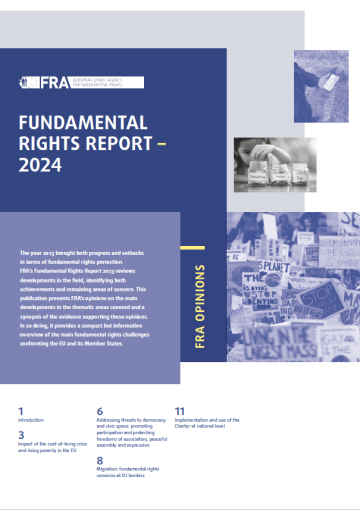
    Tógadh céimeanna chun tosaigh agus céimeanna ar gcúl araon i ndáil le cosaint ceart bunúsach sa bhliain 2023. In Fundamental Rights Report 2024 (Tuarascáil um Chearta Bunúsacha 2024) de chuid FRA, féachtar siar ar na forbairtí sa réimse agus sainaithnítear na héachtaí a bhí ann agus réimsí ar ábhair imní iad go fóill araon. San fhoilseachán seo, cuirtear i láthair tuairimí FRA faoi na príomhfhorbairtí sna réimsí téamacha a chumhdaítear agus déantar achoimre ar an bhfianaise a thacaíonn leis na tuairimí sin. Ar an gcaoi sin, tugtar forbhreathnú gairid, ach faisnéiseach, ar na príomhdhúshláin i dtaca le cearta bunúsacha atá roimh an AE agus na Ballstáit.
  • Fundamental Rights Report
    5
    June
    2024
    FRA’s Fundamental Rights Report 2024 analyses the year’s developments in fundamental rights. It focuses on the most pressing fundamental rights concerns facing Europe in 2023: the cost-of-living crisis, rights concerns at the EU’s external borders and migration, and threats to democracy. Re-structured, this year’s new approach is a shorter and sharper analysis. It also presents FRA’s opinions on these developments, including a summary of the evidence supporting these opinions.
  • Report / Paper / Summary
    29
    May
    2024
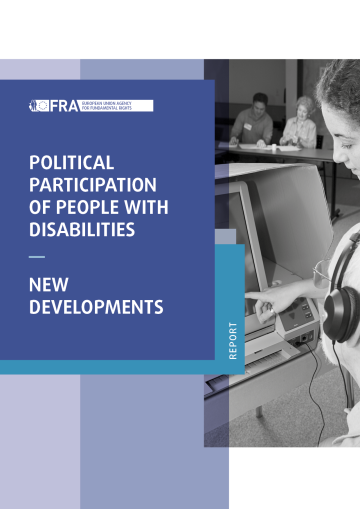
    Ahead of the EU elections, this report explores the political participation of people with disabilities. Although some Member States removed restrictions on the right to vote and to stand for elections, barriers still exist. This report is an update of new developments following FRA’s last report published in 2014. It sets out ways forward to ensure people with disabilities have equal opportunities, in line with the EU Charter of Fundamental Rights and the Convention on the Rights of Persons with Disabilities.
    Lisa F. Young/Adobe Stock
  • Report / Paper / Summary
    12
    December
    2023
    Russia’s invasion of Ukraine forced millions of people to flee. Arriving in EU countries, they received protection in EU law under the Temporary Protection Directive. Many have begun to build a new life in their host country and enrich our societies in new ways. Local authorities took the lead in ensuring access to fundamental rights under temporary protection. This report explores the measures to ensure access to housing, education, employment and healthcare in 26 cities and regional authorities across 12 EU Member States. Despite unprecedented coordination and cooperation to overcome challenges, many uncertainties remain. Longer-term solutions will be needed after the directive expires in March 2025. Based on the information collected, the report identifies 12 priority actions and builds on FRA’s bulletins and survey findings on experiences of people displaced from Ukraine.
  • Periodic updates / Series
    18
    October
    2023
    Civil society organisations struggle to maintain an environment safe from threats and attacks. FRA’s sixth annual update on civic space explores the challenges for organisations across the EU. While there has been significant development since FRA began monitoring the situation in 2018, civil society organisations remain under immense pressure. Abusive lawsuits and attacks against those involved in migrant search and rescue at sea are just some of the challenges identified. This report presents ways forward to protect civil society and human rights.
  • Periodic updates / Series
    29
    September
    2023
    Russia’s invasion of Ukraine posed new challenges for the EU. Millions were forced to flee the war. As a result of the scale of people’s displacement, the EU activated for the first time the Temporary Protection Directive (TPD). More than 1.3 million children sought international protection in the EU. This bulletin explores the respect, protection and fulfilment of the fundamental rights of displaced children and ways to safeguard their rights. The third in a series, this bulletin builds on the evidence in FRA’s Bulletin #1 and #2 on the experiences of displaced people seeking safety in the EU.
  • Report / Paper / Summary
    13
    September
    2023
    Europe’s ageing population is ever-increasing, and our societies are becoming more digitalised. Many public services are now available online, with many more services in the process of being digitalised. But the digitalisation of public services poses a risk of exclusion for older persons. In this new report, FRA explores the impact of digitalisation on the fundamental rights of older persons. The report maps the current legislation, policies and practices fostering digital inclusion. It provides an overview of the laws at the national level that provide for equal access to public services, both online and offline. The findings show how Member States safeguard older person’s rights to access services undergoing digitalisation. It outlines how Member States can support digital skills and ensure older people can fully participate in public life.

  • Fundamental Rights Report
    8
    June
    2023
    FRA’s Fundamental Rights Report 2023 reviews major developments in the field in 2022, identifying both achievements and areas of concern. It also presents FRA’s opinions on these developments, including a synopsis of the evidence supporting these opinions.
  • Report / Paper / Summary
    19
    July
    2022
    Civil society is a key component of Europe’s fundamental rights architecture. From supporting people affected by the pandemic to helping those fleeing the war in Ukraine, civil society plays a crucial role in upholding people’s rights. In so doing, it contributes to a healthy rule of law culture. FRA’s civic space report provides an overview of the many ways in which civil society contributes to the checks and balances that underpin the rule of law.
  • Opinion / Position Paper
    6
    December
    2021
    FRA Opinion 1/21 illustrates the extent and nature of lived experiences of inequality and discrimination across the EU. It does so with reference to the grounds of discrimination and areas of life covered by the racial and employment equality directives, as well as by the proposed Equal Treatment Directive. It was issued on 30 April 2021. This summary presents the main recommendations (‘Key findings and opinions’) outlined in FRA Opinion 1/21.