eu-charter

Karta tad-Drittijiet Fundamentali tal-Unjoni Ewropea

Artikolu 26 - L-integrazzjoni tal-persuni diżabbli

Artikolu 26 - L-integrazzjoni tal-persuni diżabbli

L-Unjoni tirrikonoxxi u tirrispetta d-drittijiet tal-persuni diżabbli li jibbenefikaw minn miżuri intiżi sabiex jiżguraw l-indipendenza, l-integrazzjoni soċjali u professjonali tagħhom, u l-parteċipazzjoni tagħhom fil-ħajja tal-komunità.

Spjegazzjonijiet

  • Text:

    Il-prinċipju stabbilit f'dan l-Artikolu hu bbażat fuq l-Artikolu 15 tal-Karta Soċjali Ewropea u huwa ispirat wkoll minn punt 26 tal-Karta Komunitarja dwar id-Drittijiet Soċjali Fundamentali tal-Ħaddiema.

    Source:
    Il-Ġurnal Uffiċjali ta’ l-Unjoni Ewropea C 303/17 - 14.12.2007
    Preamble - Explanations relating to the Charter of Fundamental Rights:
    Dawn l-ispjegazzjonijiet ġew imħejjija oriġinarjament taħt ir-responsabbiltà tal-Praesidium tal-Konvenzjoni li abbozza l-Karta tad-Drittijiet Fundamentali ta' l-Unjoni Ewropea. Huma ġew aġġornati taħt ir-responsabbiltà tal-Praesidium tal-Konvenzjoni Ewropea, fid-dawl ta' l-aġġustamenti li saru għat-test tal-Karta minn dik il-Konvenzjoni (partikolarment fl-Artikoli (51 U 52) u ta' l-evoluzzjoni fil-liġi ta' l-Unjoni. Għalkemm dawn l-ispjegazzjonijiet m'għandhomx fihom infushom l-istatus ta' liġi, huma mezz siewi ta' interpretazzjoni intiż sabiex ikunu ċċarati d-dispożizzjonijiet tal-Karta.

Każistika

Liġi kostituzzjonali nazzjonali

42 results found

  • Grundgesetz für die Bundesrepublik Deutschland
    Pajjiż:
    Germany

    Artikel 3 (3) (...) Niemand darf wegen seiner Behinderung benachteiligt werden.

  • Konstytucja Rzeczypospolitej Polskiej
    Pajjiż:
    Poland

    Art. 68 (...) 3. Władze publiczne są obowiązane do zapewnienia szczególnej opieki zdrowotnej dzieciom, kobietom ciężarnym, osobom niepełnosprawnym i osobom w podeszłym wieku. (...)Art. 69Osobom niepełnosprawnym władze publiczne udzielają, zgodnie z ustawą, pomocy w zabezpieczaniu egzystencji, przysposobieniu do pracy oraz komunikacji społecznej.

  • Latvijas Republikas Satversme
    Pajjiż:
    Latvia

    110. (..) Valsts īpaši palīdz bērniem invalīdiem, bērniem, kas palikuši bez vecāku gādības vai cietuši no varmācības.

  • Lietuvos Respublikos Konstitucija
    Pajjiż:
    Lithuania

    52 straipsnis. Valstybė laiduoja piliečių teisę gauti senatvės ir invalidumo pensijas, socialinę paramą nedarbo, ligos, našlystės, maitintojo netekimo ir kitais įstatymų numatytais atvejais.

  • Luxembourg / Constitution of the Grand Ducal of Luxembourg
    Pajjiż:
    Luxembourg

    Art. 15. ... (6) Toute personne handicapée a le droit de jouir de façon égale de tous les droits.

  • Magyarország Alaptörvénye
    Pajjiż:
    Hungary

    XV. cikk (SZABADSÁG ÉS FELELŐSSÉG)(…)(2) Magyarország az alapvető jogokat mindenkinek bármely megkülönböztetés, nevezetesen faj, szín, nem, fogyatékosság, nyelv, vallás, politikai vagy más vélemény , nemzeti vagy társadalmi származás, vagyoni, születési vagy egyéb helyzet szerinti kűlönbségtétel nélkül biztosítja.(…)(5) Magyarország külön intézkedésekkel védi a gyermekeket, a nőket, az időseket és a fogyatékkal élőket. XIX. cikk (SZABADSÁG ÉS FELELŐSSÉG) (1) Magyarország arra törekszik, hogy minden állampolgárának szociális biztonságot nyújtson. Anyaság, betegség, rokkantság, özvegység, árvaság és önhibáján kívül bekövetkezett munkanélküliség esetén minden magyar állampolgár törvényben meghatározott támogatásra jogosult.

  • Portugal / Constitution of the Portuguese Republic
    Pajjiż:
    Portugal

    Article 59 (Workers' rights) (2) It is the duty of the State to guarantee the conditions of work, remuneration and rest to which workers are entitled, in particular by: (c) Special protection at work for women during pregnancy and after childbirth, for minors and disabled person and for those engaged in especially strenuous activity or working in unhealthy, toxic or dangerous conditions.
    ...
    Article 71 (Disable citizens) (1) Citizens who have physical or mental disabilities shall enjoy all the rights and be subject to all the duties contained in this Constitution, except to the extent that their disability renders them unfit to exercise or perform them. (2) The State shall implement a national policy for the prevention of disability, and for the treatment, rehabilitation and integration of citizens with disabilities and support for their families, shall educate the community to be aware of its duties of respect for them and solidarity with them, and shall ensure that they enjoy their rights to the full extent subject to the rights and duties of their parents or guardians. (3) The State shall provide assistance to organisations for citizens with disabilities.

  • Preamble to the Constitution of 27 October 1946
    Pajjiż:
    France

    § 11.It shall guarantee to all, notably to children, mothers and elderly workers, protection of their health, material security, rest and leisure. All people who, by virtue of their age, physical or mental condition, or economic situation, are incapable of working, shall have to the right to receive suitable means of existence from society.

  • Préambule de la Constitution du 27 Octobre 1946
    Pajjiż:
    France

    § 11.Elle garantit à tous, notamment à l'enfant, à la mère et aux vieux travailleurs, la protection de la santé, la sécurité matérielle, le repos et les loisirs. Tout être humain qui, en raison de son âge, de son état physique ou mental, de la situation économique, se trouve dans l'incapacité de travailler a le droit d'obtenir de la collectivité des moyens convenables d'existence.

  • Puuetega inimeste sotsiaaltoetuse seadus
    Pajjiż:
    Estonia

    § 1. Seaduse reguleerimisala ja eesmärk.
    (1) Käesolev seadus sätestab puuetega inimeste sotsiaaltoetuste liigid, nende saamise tingimused, nende suurused ning määramise ja maksmise korra.
    (2) Käesoleva seaduse eesmärk on puuetega inimeste iseseisva toimetuleku, sotsiaalse integratsiooni ja võrdsete võimaluste toetamine ning õppimise ja töötamise soodustamine puudest tingitud lisakulude osalise hüvitamise kaudu.

  • Romania / Constitution of Romania
    Pajjiż:
    Romania

    Article 50 Disabled persons shall enjoy special protection. The State shall provide the accomplishment of a national policy of equal opportunities, disability prevention and treatment, so that disabled persons can effectively participate in community life, while observing the rights and duties of their parents or legal guardians.

  • Services and Assistance for the Disabled Act
    Pajjiż:
    Finland

    (3 April 1987/380)Purpose of the ActThe purpose of this Act is to improve the ability of a disabled person to live and act as a member of society in equality with others and to prevent and eliminate the disadvantages and obstacles caused by disability.

  • Slovakia / Constitution of the Slovak Republic
    Pajjiż:
    Slovakia

    Article 38 (1) Women, minors, and persons with disabilities are entitled to an enhanced protection of their health at work, as well as to special working conditions. (2) Minors and persons with disabilities are entitled to special protection in labor relations as well as to assistance in professional training. (3) Details concerning rights listed in paragraphs 1 and 2 shall be laid down by law.

  • Slovenia / Constitution of the Republic of Slovenia
    Pajjiż:
    Slovenia

    Article 52 Disabled persons shall be guaranteed protection and work-training in accordance with the law.Physically or mentally handicapped children and other severely disabled persons have the right to education and training for an active life in society.The education and training referred to in the preceding paragraph shall be financed from public funds.

  • Social Benefits for Disabled Persons Act
    Pajjiż:
    Estonia

    § 1. Scope of application and purpose of Act
    (1) This Act provides the classes of social benefits for disabled persons, the conditions of entitlement thereto, the amounts of benefits and the procedure for the grant and payment thereof.
    (2) The purpose of this Act is to support the ability of disabled persons to cope independently, social integration and equal opportunities and to promote studies and work through partial compensation for the additional expenses caused by the disability.

  • Spain / Constitution of the Kingdom of Spain
    Pajjiż:
    Spain

    Section 49 The public authorities shall carry out a policy of preventive care, treatment, rehabilitation and integration of the physically, sensorially and mentally handicapped by giving them the specialized care they require, and affording them special protection for the enjoyment of the rights granted by this Part to all citizens.

  • Suomen perustuslaki
    Pajjiż:
    Finland

    6 § Yhdenvertaisuus (...) Ketään ei saa ilman hyväksyttävää perustetta asettaa eri asemaan sukupuolen, iän, alkuperän, kielen, uskonnon, vakaumuksen, mielipiteen, terveydentilan, vammaisuuden tai muun henkilöön liittyvän syyn perusteella. 17 § Oikeus omaan kieleen ja kulttuuriin (...) Viittomakieltä käyttävien sekä vammaisuuden vuoksi tulkitsemis- ja käännösapua tarvitsevien oikeudet turvataan lailla. 19 § Oikeus sosiaaliturvaan Jokaisella, joka ei kykene hankkimaan ihmisarvoisen elämän edellyttämää turvaa, on oikeus välttämättömään toimeentuloon ja huolenpitoon.

  • The Fundamental Law of Hungary
    Pajjiż:
    Hungary

    Article XV (Freedom and Responsibility) […] (2) Hungary shall guarantee the fundamental rights to everyone without discrimination and in particular without discrimination on grounds of race, colour, sex, disability, language, religion, political or other opinion, national or social origin, property, birth or any other status. […]
    (5) By means of separate measures, Hungary shall protect families, children, women, the elderly and those living with disabilities.

    Article XIX (Freedom and Responsibility) (1) Hungary shall strive to provide social security to all of its citizens. Every Hungarian citizen shall be entitled to assistance in the event of maternity, illness, invalidity, disability, widowhood, orphanage and unemployment for reasons outside of his or her control, as provided for by an Act. […]

  • To Σύνταγμα της Ελλάδας
    Pajjiż:
    Greece

    Άρθρο 21(2) Πολύτεκνες οικογένειες, ανάπηροι πολέμου και ειρηνικής περιόδου, θύματα πολέμου, χήρες και ορφανά εκείνων που έπεσαν στον πόλεμο, καθώς και όσοι πάσχουν από ανίατη σωματική ή πνευματική νόσο έχουν δικαίωμα ειδικής φροντίδας από το Κράτος. [...] (6)Τα άτομα με αναπηρίες έχουν δικαίωμα να απολαμβάνουν μέτρων που εξασφαλίζουν την αυτονομία, την επαγγελματική ένταξη και τη συμμετοχή τους στην κοινωνική, οικονομική και πολιτική ζωή της Χώρας.

  • Ustav Republike Hrvatske
    Pajjiż:
    Croatia

    Članak 58.
    (2) Posebnu skrb država posvećuje zaštiti osoba s invaliditetom i njihovu uključivanju u društveni život.
    (3)Posebnu skrb država posvećuje zaštiti hrvatskih branitelja, hrvatskih ratnih vojnih invalida, udovica, roditelja i djece poginulih hrvatskih branitelja.

Liġi tal-UE

3 results found

  • Community Charter of the Fundamental Social Rights of Workers (not in force)

    Disabled persons
    26. All disabled persons, whatever the origin and nature of their disablement, must be entitled to additional concrete measures aimed at improving their social and professional integration. These measures must concern, in particular, according to the capacities of the beneficiaries, vocational training,
    ergonomics, accessibility, mobility, means of transport and housing.

  • Directive (EU) 2019/882 of the European Parliament and of the Council of 17 April 2019 on the accessibility requirements for products and services

    .

  • Council Directive 2000/78/EC of 27 November 2000 establishing a general framework for equal treatment in employment and occupation

    Preamble  

    (2) The principle of equal treatment between women and men is well established by an important body of Community law, in particular in Council Directive 76/207/EEC of 9 February 1976 on the implementation of the principle of equal treatment for men and women as regards access to employment, vocational training and promotion, and working conditions(5).

    (3) In implementing the principle of equal treatment, the Community should, in accordance with Article 3(2) of the EC Treaty, aim to eliminate inequalities, and to promote equality between men and women, especially since women are often the victims of multiple discrimination.

    (4) The right of all persons to equality before the law and protection against discrimination constitutes a universal right recognised by the Universal Declaration of Human Rights, the United Nations Convention on the Elimination of All Forms of Discrimination against Women, United Nations Covenants on Civil and Political Rights and on Economic, Social and Cultural Rights and by the European Convention for the Protection of Human Rights and Fundamental Freedoms, to which all Member States are signatories. Convention No 111 of the International Labour Organisation (ILO) prohibits discrimination in the field of employment and occupation.

    (6) The Community Charter of the Fundamental Social Rights of Workers recognises the importance of combating every form of discrimination, including the need to take appropriate action for the social and economic integration of elderly and disabled people.

    (8) The Employment Guidelines for 2000 agreed by the European Council at Helsinki on 10 and 11 December 1999 stress the need to foster a labour market favourable to social integration by formulating a coherent set of policies aimed at combating discrimination against groups such as persons with disability. They also emphasise the need to pay particular attention to supporting older workers, in order to increase their participation in the labour force.

    (10) On 29 June 2000 the Council adopted Directive 2000/43/EC(6) implementing the principle of equal treatment between persons irrespective of racial or ethnic origin. That Directive already provides protection against such discrimination in the field of employment and occupation.

    (11) Discrimination based on religion or belief, disability, age or sexual orientation may undermine the achievement of the objectives of the EC Treaty, in particular the attainment of a high level of employment and social protection, raising the standard of living and the quality of life, economic and social cohesion and solidarity, and the free movement of persons.

    (12) To this end, any direct or indirect discrimination based on religion or belief, disability, age or sexual orientation as regards the areas covered by this Directive should be prohibited throughout the Community. This prohibition of discrimination should also apply to nationals of third countries but does not cover differences of treatment based on nationality and is without prejudice to provisions governing the entry and residence of third-country nationals and their access to employment and occupation.

    Article 1: Purpose

    The purpose of this Directive is to lay down a general framework for combating discrimination on the grounds of religion or belief, disability, age or sexual orientation as regards employment and occupation, with a view to putting into effect in the Member States the principle of equal treatment.

    Article 2: Concept of discrimination

    1. For the purposes of this Directive, the "principle of equal treatment" shall mean that there shall be no direct or indirect discrimination whatsoever on any of the grounds referred to in Article 1.

    2. For the purposes of paragraph 1:

    (a) direct discrimination shall be taken to occur where one person is treated less favourably than another is, has been or would be treated in a comparable situation, on any of the grounds referred to in Article 1;

    (b) indirect discrimination shall be taken to occur where an apparently neutral provision, criterion or practice would put persons having a particular religion or belief, a particular disability, a particular age, or a particular sexual orientation at a particular disadvantage compared with other persons unless:

    (i) that provision, criterion or practice is objectively justified by a legitimate aim and the means of achieving that aim are appropriate and necessary, or

    (ii) as regards persons with a particular disability, the employer or any person or organisation to whom this Directive applies, is obliged, under national legislation, to take appropriate measures in line with the principles contained in Article 5 in order to eliminate disadvantages entailed by such provision, criterion or practice.

    3. Harassment shall be deemed to be a form of discrimination within the meaning of paragraph 1, when unwanted conduct related to any of the grounds referred to in Article 1 takes place with the purpose or effect of violating the dignity of a person and of creating an intimidating, hostile, degrading, humiliating or offensive environment. In this context, the concept of harassment may be defined in accordance with the national laws and practice of the Member States.

    Article 5: Reasonable accommodation for disabled persons

    In order to guarantee compliance with the principle of equal treatment in relation to persons with disabilities, reasonable accommodation shall be provided. This means that employers shall take appropriate measures, where needed in a particular case, to enable a person with a disability to have access to, participate in, or advance in employment, or to undergo training, unless such measures would impose a disproportionate burden on the employer. This burden shall not be disproportionate when it is sufficiently remedied by measures existing within the framework of the disability policy of the Member State concerned.

    Article 9: Defence of rights

    1. Member States shall ensure that judicial and/or administrative procedures, including where they deem it appropriate conciliation procedures, for the enforcement of obligations under this Directive are available to all persons who consider themselves wronged by failure to apply the principle of equal treatment to them, even after the relationship in which the discrimination is alleged to have occurred has ended.

    2. Member States shall ensure that associations, organisations or other legal entities which have, in accordance with the criteria laid down by their national law, a legitimate interest in ensuring that the provisions of this Directive are complied with, may engage, either on behalf or in support of the complainant, with his or her approval, in any judicial and/or administrative procedure provided for the enforcement of obligations under this Directive.

    3. Paragraphs 1 and 2 are without prejudice to national rules relating to time limits for bringing actions as regards the principle of equality of treatment.

Dritt internazzjonali

8 results found

Prodotti

  • Report / Paper / Summary
    13
    September
    2023
    Europe’s ageing population is ever-increasing, and our societies are becoming more digitalised. Many public services are now available online, with many more services in the process of being digitalised. But the digitalisation of public services poses a risk of exclusion for older persons. In this new report, FRA explores the impact of digitalisation on the fundamental rights of older persons. The report maps the current legislation, policies and practices fostering digital inclusion. It provides an overview of the laws at the national level that provide for equal access to public services, both online and offline. The findings show how Member States safeguard older person’s rights to access services undergoing digitalisation. It outlines how Member States can support digital skills and ensure older people can fully participate in public life.

  • Fundamental Rights Report
    8
    June
    2023
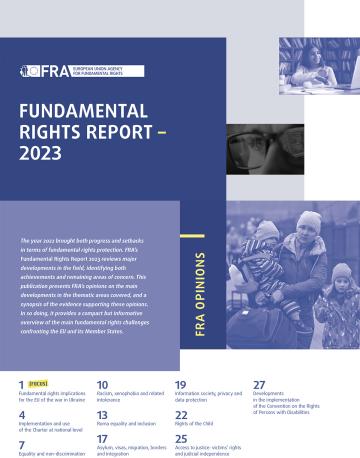
    Is-sena 2022 ġabet magħha kemm progress kif ukoll ostakli f’termini ta’ protezzjoni tad-drittijiet fundamentali. Ir-Rapport dwar id-Drittijiet Fundamentali 2023 tal-FRA jirrieżamina l-iżviluppi ewlenin fil-qasam, filwaqt li jidentifika kemm ilkisbiet kif ukoll l-oqsma ta’ tħassib li fadal. Din ilpubblikazzjoni tippreżenta l-opinjonijiet tal-FRA dwar
    l-iżviluppi ewlenin fl-oqsma tematiċi koperti u taqsira tal-evidenza li tappoġġa dawn l-opinjonijiet.
  • Handbook / Guide / Manual
    20
    March
    2023
    This guide helps independent national monitoring frameworks to fulfil their monitoring responsibility set out in Article 33 of the Convention on the Rights of Persons with Disabilities (CRPD). It focuses on the use of indicators. It does not deal with aspects such as compliance with the Paris Principles or the efficiency of complaints mechanisms. Its objective is to support national monitoring frameworks in designing or improving indicators for assessing progress of CRPD implementation at national level.
  • Fundamental Rights Report
    8
    June
    2022
    This focus looks at the impact of the pandemic on social rights. It examines the measures in national recovery and resilience plans that address the social vulnerabilities among a variety of population groups in the EU, including women, children and young people in situations of vulnerability, people with disabilities, older people, Roma and people in precarious working conditions.
  • Fundamental Rights Report
    8
    June
    2022
    FRA’s Fundamental Rights Report 2022 reviews major developments in the field in 2021, identifying both achievements and areas of concern. It also presents FRA’s opinions on these developments, including a synopsis of the evidence supporting these opinions.
  • Fundamental Rights Report
    10
    June
    2021
    FRA’s Fundamental Rights Report 2021 reviews major developments in the field in 2020, identifying both achievements and areas of concern. It also presents FRA’s opinions on these developments, including a synopsis of the evidence supporting these opinions. This year’s focus chapter explores the impact of the COVID-19 pandemic on fundamental rights. The remaining chapters cover: the EU Charter of Fundamental Rights; equality and non-discrimination; racism, xenophobia and related intolerance; Roma equality and inclusion; asylum, borders and migration; information society, privacy and data protection; rights of the child; access to justice; and the implementation of the Convention on the Rights of Persons with Disabilities.
  • Fundamental Rights Report
    10
    June
    2021
    Is-sena 2020 ġabet magħha kemm progress kif
    ukoll ostakli f’termini ta’ protezzjoni tad-drittijiet
    fundamentali. Ir-Rapport dwar id-Drittijiet
    Fundamentali 2021 tal-FRA jirrieżamina l-iżviluppi
    ewlenin fil-qasam, filwaqt li jidentifika kemm ilkisbiet
    kif ukoll l-oqsma ta’ tħassib li fadal.
  • Fundamental Rights Report
    10
    June
    2021
    This focus looks at COVID-19’s impact on fundamental rights. It underscores that a human rights-based approach to tackling the pandemic requires balanced measures that are based on law, necessary, temporary and proportional. It also requires addressing the pandemic’s socio-economic impact, protecting the vulnerable and fighting racism.
  • Periodic updates / Series
    29
    July
    2020
    As we enter the second half of 2020, the constraints on our daily lives brought about by the Coronavirus pandemic have become a firm reality. New local lockdowns and the reintroduction of restrictive measures prompted by fresh outbreaks of the virus are a stark reminder that COVID-19 continues to shape our lives – and our enjoyment of fundamental rights – in profound ways. There is compelling evidence of how the pandemic has exacerbated existing challenges in our societies. This FRA Bulletin outlines some of the measures EU Member States adopted to safely reopen their societies and economies while continuing to mitigate the spread of COVID-19. It highlights the impact these measures may have on civil, political and socioeconomic rights.
  • Periodic updates / Series
    30
    June
    2020
    The Coronavirus pandemic continues to interrupt everyday life in the EU in unprecedented ways. But the way it affects our societies is shifting. As governments gradually lift some of the measures put in place to contain the spread of COVID-19, new fundamental rights concerns arise: how to ensure that the rights to life and health are upheld as daily life transitions to a ‘new normal’. This Bulletin looks at declarations of states of emergency, or equivalent, and how they came under scrutiny. It considers
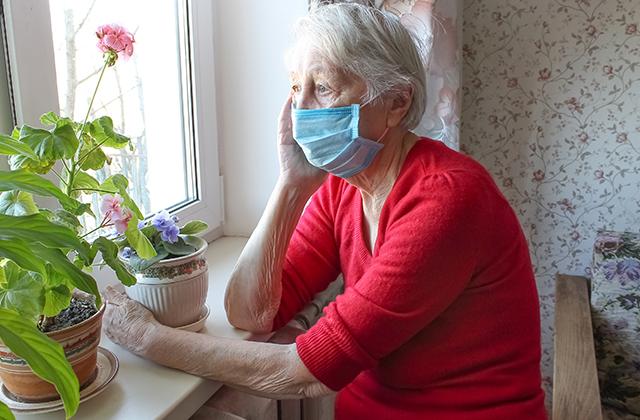
    the impact on fundamental rights in important areas of daily life, and includes a thematic focus on the pandemic's impact on older people.