eu-charter

Listina základních práv EU

Preambule

Národy Evropy, vytvářejíce mezi sebou stále těsnější unii, se rozhodly sdílet mírovou budoucnost založenou na společných hodnotách.

Unie, vědoma si svého duchovního a morálního dědictví, se zakládá na nedělitelných a všeobecných hodnotách lidské důstojnosti, svobody, rovnosti a solidarity; spočívá na zásadách demokracie a právního státu. Do středu své činnosti staví jednotlivce tím, že zavádí občanství Unie a vytváří prostor svobody, bezpečnosti a práva.
Unie přispívá k zachování a rozvíjení těchto společných hodnot při současném respektování rozmanitosti kultur a tradic národů Evropy, národní identity členských států a uspořádání jejich veřejné moci na státní, regionální a místní úrovni; usiluje o podporu vyváženého a udržitelného rozvoje a zajišťuje volný pohyb osob, služeb, zboží a kapitálu, jakož i svobodu usazování.
K tomuto účelu je nezbytné posílit ochranu základních práv s ohledem na společenský vývoj, sociální pokrok a vědeckotechnologický rozvoj zřetelnějším vyjádřením těchto práv v podobě listiny.
Při respektování pravomocí a úkolů Unie i zásady subsidiarity potvrzuje tato listina práva, která vyplývají především z ústavních tradic a mezinárodních závazků společných členským státům, z Evropské úmluvy o ochraně lidských práv a základních svobod, ze sociálních chart přijatých Unií a Radou Evropy a z judikatury Soudního dvora Evropské unie a Evropského soudu pro lidská práva. Tuto listinu budou v této souvislosti soudy Unie a členských států vykládat s náležitým zřetelem na vysvětlení vyhotovená pod vedením prezídia Konventu, jež vypracovalo tuto listinu, a doplněná pod vedením prezídia Evropského konventu.
Uplatňování těchto práv s sebou nese odpovědnost a povinnosti, jak ve vztahu k druhým, tak ve vztahu k lidskému společenství a budoucím generacím.
V důsledku toho uznává Unie práva, svobody a zásady, které jsou vyhlášeny níže.

Vysvětlivky

  • Text:
    Source:
    Preamble - Explanations relating to the Charter of Fundamental Rights:

Soudcovské právo

0 results found

Vnitrostátního ústavního práva

0 results found

Právo EU

0 results found

Mezinárodní právo

0 results found

Produkty

  • Report / Paper / Summary
    24
    May
    2023
    This report provides a partial update on the findings of the 2017 European Union Agency for Fundamental Rights (FRA) report Surveillance by intelligence services: Fundamental rights safeguards and remedies in the EU. It was prepared at the request of the European Parliament, which asked FRA to update its 2017 findings to support the work of its committee of inquiry to investigate the use of Pegasus and equivalent surveillance spyware (PEGA).
  • Handbook / Guide / Manual
    20
    March
    2023
    This guide helps independent national monitoring frameworks to fulfil their monitoring responsibility set out in Article 33 of the Convention on the Rights of Persons with Disabilities (CRPD). It focuses on the use of indicators. It does not deal with aspects such as compliance with the Paris Principles or the efficiency of complaints mechanisms. Its objective is to support national monitoring frameworks in designing or improving indicators for assessing progress of CRPD implementation at national level.
  • Handbook / Guide / Manual
    1
    March
    2023
    This manual is designed to help institutions, organisations and individuals to train guardians of unaccompanied children or to deliver ‘train-the-trainers’ courses. It can be used in a range of training contexts, such as professional and academic training, on-the-job training and continuing training. The manual is based on human and fundamental rights principles and ethical standards and recognises that the child and the guardian have their own personal stories, resources and capacities. It enhances guardians’ confidence to promote the child’s rights and best interests. It also enhances their confidence to act independently and impartially in relation to different state
    officials, service providers and other community members.
  • Report / Paper / Summary
    27
    February
    2023
    FRA’s 2021 survey on Roma was conducted in Croatia, Czechia, Greece, Hungary, Italy, Portugal, Romania, and Spain, as well as in North Macedonia and Serbia. It includes interviews with more than 8,400 Roma, collecting information on more than 20,000 individuals living in their households. This technical report provides a detailed overview of the survey methodology used by FRA when collecting the survey data.
  • Report / Paper / Summary
    22
    February
    2023
    Directive 2012/29/EU represents a milestone in the development of victims’ rights. It establishes minimum standards for the rights, support and protection of victims of crime. It defines the scope of support services, guarantees the right to effective protection against secondary victimisation and comprehensively regulates the measures required for this purpose. This report covers three core components underpinning victims’ rights: support services, crime reporting, and protection from secondary and repeat victimisation. Examples highlight the relevant legal provisions in Member States and how specific rights under the Victims’ Rights Directive work in practice.
  • Report / Paper / Summary
    2
    February
    2023
    Many cities throughout the European Union hosted people fleeing Russia’s war of aggression against Ukraine. The EU currently faces the largest displacement of people in Europe since World War II. Since February 2022, over seven million people came to the EU. The arrival of such large numbers of people thrust cities and local governments to the forefront of the EU and its Member States’ relief work. This short publication provides a snapshot of cities’ initiatives to address this humanitarian crisis.
  • Leaflet / Flyer
    19
    December
    2022
    A list of all FRA reports and translations published in 2022.
  • Periodic updates / Series
    13
    December
    2022
    National Human Rights Institutions (NHRIs) continue to play a key role in upholding fundamental rights. FRA keeps track of the accreditation status and the mandates of the NHRIs. In 2022, the NHRI in Cyprus was upgraded to an ‘A-status’ institution. In addition, the mandates of six NHRIs changed to include child protection or the protection of LGBTI people.
    babaroga/Adobe Stock
  • Report / Paper / Summary
    8
    December
    2022
    Artificial intelligence is everywhere and affects everyone – from deciding what content people see on their social media feeds to determining who will receive state benefits. AI technologies are typically based on algorithms that make predictions to support or even fully automate decision-making.
  • Periodic updates / Series
    24
    November
    2022
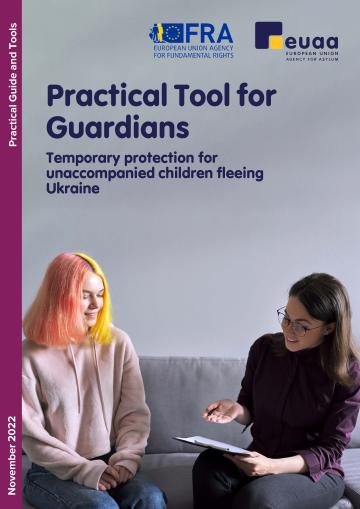
    Agentura Evropské unie pro otázky azylu (EUAA) a Agentura Evropské unie pro základní práva
    (FRA) spojily síly při vypracovávání řady praktických nástrojů pro opatrovníky dětí bez doprovodu, které potřebují mezinárodní ochranu. Cílem je podpořit opatrovníky v jejich každodenních úkolech a povinnostech během azylového řízení, včetně dublinského řízení a dočasné ochrany.