Russia’s military aggression against Ukraine triggered scenes not seen in Europe for decades. It has since caused death, immense destruction, and unspeakable suffering. It also set in motion a mass movement of people not seen since World War II. To protect them, the EU activated the Temporary Protection Directive for the first time. In doing so, all EU Member States must offer protection to those displaced from Ukraine.
Oroszország Ukrajnával szembeni katonai agressziója Európában évtizedek óta nem látott helyzeteket váltott ki. Halált, hatalmas pusztítást és elmondhatatlan szenvedést okoz. Emellett a II. világháború óta nem látott mértékű tömeges elvándorlást indított el. A lakóhelyüket elhagyni kényszerült személyek védelme érdekében az EU első alkalommal aktiválta az átmeneti védelemről szóló irányelvet. Ezzel összhangban valamennyi uniós tagállam köteles védelmet biztosítani az Ukrajnából menekülőknek.
Rosyjska napaść zbrojna na Ukrainę była początkiem scen niespotykanych w Europie od dziesięcioleci. Spowodowała śmierć, ogromne zniszczenia i niedające się opisać cierpienie. Wywołała również masowy przepływ ludzi, jakiego nie widziano od czasów drugiej wojny światowej. Aby ich chronić, UE uruchomiła unijną dyrektywę w sprawie tymczasowej ochrony. Tym samym wszystkie państwa członkowskie UE są zobowiązane do zapewnienia ochrony osobom przesiedlonym z Ukrainy.
Agresiunea militară a Rusiei împotriva Ucrainei a declanșat scene nemaivăzute în Europa de zeci de ani. De atunci a cauzat moarte, distrugeri masive și suferințe de nedescris. De asemenea, a declanșat o mișcare în masă de oameni, nemaiîntâlnită de la Al Doilea Război Mondial. Pentru a-i proteja, UE a activat pentru prima dată Directiva privind protecția temporară. Procedând astfel, toate statele membre ale UE sunt obligate să ofere protecție persoanelor strămutate din Ucraina.
Vojenská agresia Ruska voči Ukrajine vyvolala situácie, ktoré Európa celé desaťročia nezažila. Odvtedy prináša smrť, spôsobuje rozsiahle ničenie a neopísateľné utrpenie. Vyvolala aj masový pohyb ľudí, ktorý od druhej svetovej vojny nemá obdobu. V záujme ich ochrany EÚ prvýkrát aktivovala smernicu o dočasnej ochrane. Všetky členské štáty EÚ sú teda povinné poskytnúť ochranu osobám vysídleným z Ukrajiny.
Військова агресія Росії проти України призвела до подій, яких не бачили у Європі протягом десятиліть. Відтоді вона спричиняє смерть, величезні руйнування і невимовні страждання. Вона також призвела до масового переміщення людей, якого не траплялося з часів Другої світової війни. Щоб захистити їх, ЄС вперше активував Директиву про тимчасовий захист. Згідно з нею держави-члени ЄС повинні запропонувати переміщеним з України особам.
Военная агрессия России против Украины вызвала сцены, которые не наблюдались в Европе десятилетиями. С тех пор она привела к гибели людей, огромным разрушениям и невыразимым страданиям. Она также послужила началом массового перемещения людей, не виданного со времен Второй мировой войны. Для их защиты Евросоюз впервые ввел в действие Директиву о временной защите. В этом случае все государства–члены ЕС должны предоставить защиту лицам, перемещенным из Украины.
FRA’s 2021 survey on Roma was conducted in Croatia, Czechia, Greece, Hungary, Italy, Portugal, Romania, and Spain, as well as in North Macedonia and Serbia. It includes interviews with more than 8,400 Roma, collecting information on more than 20,000 individuals living in their households. This technical report provides a detailed overview of the survey methodology used by FRA when collecting the survey data.
Directive 2012/29/EU represents a milestone in the development of victims’ rights. It establishes minimum standards for the rights, support and protection of victims of crime. It defines the scope of support services, guarantees the right to effective protection against secondary victimisation and comprehensively regulates the measures required for this purpose. This report covers three core components underpinning victims’ rights: support services, crime reporting, and protection from secondary and repeat victimisation. Examples highlight the relevant legal provisions in Member States and how specific rights under the Victims’ Rights Directive work in practice.
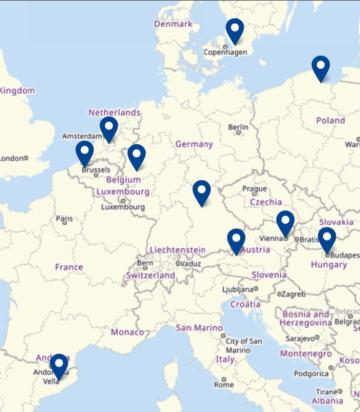
Many cities throughout the European Union hosted people fleeing Russia’s war of aggression against Ukraine. The EU currently faces the largest displacement of people in Europe since World War II. Since February 2022, over seven million people came to the EU. The arrival of such large numbers of people thrust cities and local governments to the forefront of the EU and its Member States’ relief work. This short publication provides a snapshot of cities’ initiatives to address this humanitarian crisis.
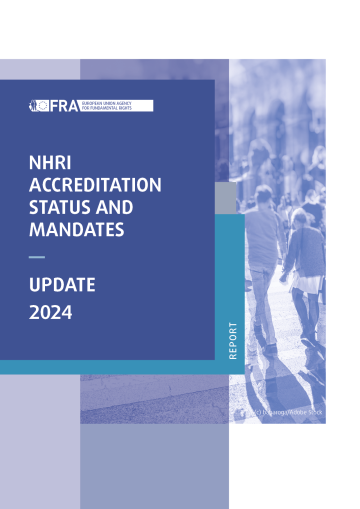
National Human Rights Institutions (NHRIs) continue to play a key role in upholding fundamental rights. FRA keeps track of the accreditation status and the mandates of the NHRIs. In 2022, the NHRI in Cyprus was upgraded to an ‘A-status’ institution. In addition, the mandates of six NHRIs changed to include child protection or the protection of LGBTI people.
In this vlog, FRA Director Michael O'Flaherty talks about the need to push back against the shocking levels of human rights abuse and violation across the world. On the occasion of Human Rights Day, he refers to the Universal Declaration of Human Rights and the need to standing up for human rights.
Artificial intelligence is everywhere and affects everyone – from deciding what content people see on their social media feeds to determining who will receive state benefits. AI technologies are typically based on algorithms that make predictions to support or even fully automate decision-making.
In this vlog, FRA Director Michael O'Flaherty talks about artificial intelligence and algorithms. While AI can be a powerful force for good, he points out that humans must supervise very closely the application of AI and a permanent testing of every possible application is needed. On 8 December, FRA is publishing a new report on bias in algorithms.
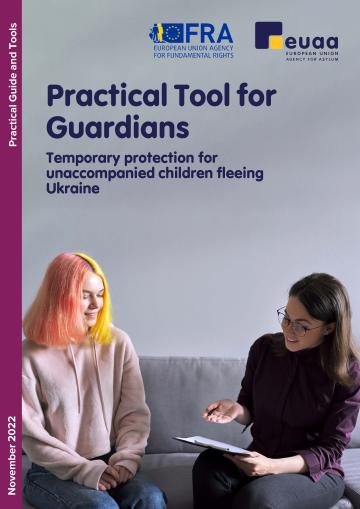
Агенцията на Европейския съюз в областта на убежището (EUAA) и Агенцията на Европейския съюз за основните права (FRA) обединиха усилия за разработването на поредица от практически инструменти за настойници на непридружени деца, нуждаещи се от международна закрила. Целта е да се подпомогнат настойниците в ежедневните им задачи и отговорности по време на процедурата за предоставяне на убежище, включително дъблинската процедура и предоставянето на временна закрила.
Agentura Evropské unie pro otázky azylu (EUAA) a Agentura Evropské unie pro základní práva
(FRA) spojily síly při vypracovávání řady praktických nástrojů pro opatrovníky dětí bez doprovodu, které potřebují mezinárodní ochranu. Cílem je podpořit opatrovníky v jejich každodenních úkolech a povinnostech během azylového řízení, včetně dublinského řízení a dočasné ochrany.
Ο Οργανισμός της Ευρωπαϊκής Ένωσης για το Άσυλο (EUAA) και ο Οργανισμός Θεμελιωδών Δικαιωμάτων της Ευρωπαϊκής Ένωσης (FRA) ένωσαν τις δυνάμεις τους για την ανάπτυξη σειράς πρακτικών εργαλείων για τους επιτρόπους ασυνόδευτων παιδιών με ανάγκες διεθνούς προστασίας. Στόχος είναι να υποστηριχθούν οι επίτροποι στα καθημερινά τους καθήκοντα και ευθύνες κατά τη διάρκεια της διαδικασίας χορήγησης ασύλου, της διαδικασίας του Δουβλίνου και της προσωρινής προστασίας.