Cílem příručky Děti bez rodičovské péče, které se nacházejí v jiném členském státě EU než ve
svém vlastním, je zlepšit schopnost všech příslušných subjektů reagovat v zájmu ochrany dětí.
Ochrana těchto dívek a chlapců je prvořadou povinností členských států EU, která vyplývá
z mezinárodního a evropského právního rámce. Příručka se zaměřuje na dětské oběti obchodování
s lidmi a ohrožené děti, a provádí tak opatření uvedená ve sdělení z roku 2017 o posílení opatření
EU v oblasti boje proti obchodování s lidmi, přičemž zohledňuje identifikované vzorce, mimo jiné
s ohledem na genderovou specifičnost této trestné činnosti.
Der Leitfaden Kinder ohne elterliche Fürsorge, die in einem anderen EU-Mitgliedstaat als ihrem
eigenen angetroffen werden hat das Ziel, die Handlungsfähigkeit aller im Bereich Kinderschutz
tätigen Akteure zu stärken. Der Schutz dieser Mädchen und Jungen ist von höchster Bedeutung und
stellt für die EU-Mitgliedstaaten eine Verpflichtung dar, die sich aus dem internationalen und dem
europäischen Rechtsrahmen ableitet. Der vorliegende Leitfaden legt den Schwerpunkt auf Kinder,
die Opfer von Menschenhandel geworden sind oder Gefahr laufen, dies zu werden, indem auf die
Umsetzung der Ziele eingegangen wird, die in der Mitteilung der Kommission zur Berichterstattung
über die Folgemaßnahmen zur Strategie der EU zur Beseitigung des Menschenhandels von
2017 beschrieben wurden. Dabei werden ermittelte Muster beleuchtet, auch im Hinblick auf die
geschlechtsspezifischen Besonderheiten von Straftaten.
The General Data Protection Regulation (GDPR) has applied across the European Union (EU) since 25 May 2018. One year on, this paper looks at how the new regulation has affected the daily work of civil society organisations (CSOs).
How much progress can we expect in a decade? Various rights-related instruments had been in place for 10 years in 2018, prompting both sobering and encouraging reflection on this question.
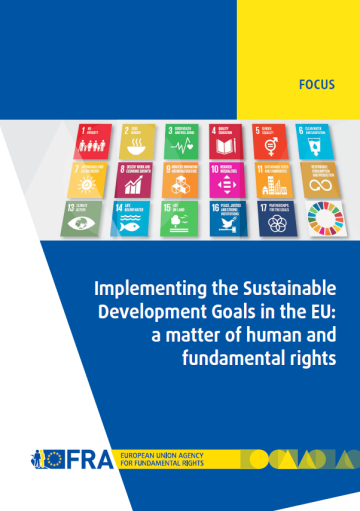
This year’s focus explores the interrelationship between the human and fundamental rights framework and the Sustainable
Development Goals (SDGs) of the global Agenda 2030 in the context of Member States’ and the EU’s internal policies.
It takes a closer look at the SDGs related to reducing inequality (SDG 10) and promoting peace, justice and strong
institutions (SDG 16).
The year 2018 brought both progress and setbacks in terms of fundamental rights protection. FRA’s Fundamental Rights Report 2019 reviews major developments in the field, identifying both achievements and remaining areas of concern. This publication presents FRA’s opinions on the main developments in the thematic areas covered, and a synopsis of the evidence supporting these
opinions.
The EU Agency for Fundamental Rights has been regularly collecting data on migration since
September 2015. This report focuses on the fundamental rights situation of people arriving in
Member States and EU candidate countries particularly affected by migration movements.
It addresses fundamental rights concerns between 1 January and 31 March 2019.
Victims of violent crime have various rights, including to protection and to access justice. But how are these rights playing out in practice? Are victims of violent crime properly seen, informed, empowered and heard? Do they tend to feel that justice has been done? Our four-part report series takes a closer look at these questions, based on interviews with victims, people working for victim support organisations, police officers, attorneys, prosecutors and judges.
Victims of violent crime have various rights, including to protection and to access justice. But how are these rights playing out in practice? Are victims of violent crime properly seen, informed, empowered and heard? Do they tend to feel that justice has been done? Our four-part report series takes a closer look at these questions, based on interviews with victims, people working for victim support organisations, police officers, attorneys, prosecutors and judges.
Despite efforts by the European Union (EU) and its Member States to reduce gender inequalities among citizens of Roma origin, important gender differences persist. Drawing on FRA’s own EU-MIDIS II survey research in nine EU Member States this report highlights the position of Roma women in education, employment and health, as well as the extent to which they experience hate-motivated discrimination, harassment and physical violence.
This report looks into the fundamental rights situation of asylum applicants and beneficiaries of international protection in the EU throughout 2018. It pulls together the main issues identified in FRA’s regular updates on fundamental rights related to asylum, migration and borders in selected EU Member States, which the agency has been publishing since September 2015.
Member States have an explicit duty to promote the Charter’s application. These country-sheets support that effort by giving examples of the Charter’s use and highlighting how it adds value.
In November 2016, FRA formulated 21 individual opinions to address the fundamental rights shortcomings identified in the implementation of the hotspot approach in Greece and Italy. Despite genuine efforts to improve the situation since November 2016, many of the suggestions contained in the 21 opinions FRA formulated at the time remain valid.
The EU Agency for Fundamental Rights has been regularly collecting data on migration since
September 2015. This report focuses on the fundamental rights situation of people arriving in
Member States and EU candidate countries particularly affected by large migration movements.
This Opinion by FRA aims to inform the European Parliament’s position on the legislative proposal for a recast Directive on common standards and procedures in Member States for returning illegally staying third country nationals (Return Directive), presented by the European Commission on 12 September 2018.
This paper discusses the evolution of European Court of Human Rights case law relating
to hate crime, providing an update on the most recent rulings. Approaching hate crime
from a fundamental rights perspective, it shows how Member State authorities’ duty to
effectively investigate the bias motivation of crimes flows from key human rights
instruments, such as the European Convention on Human Rights.
Această lucrare prezintă evoluția jurisprudenței Curții Europene a Drepturilor
Omului cu privire la infracțiunile motivate de ură, oferind o actualizare în ceea
ce privește cele mai recente hotărâri. Abordarea infracțiunilor motivate de ură
dintr-o perspectivă a drepturilor fundamentale arată cum datoria autorităților
statelor membre de a investiga în mod eficient motivarea bazată pe prejudecată
a infracțiunilor decurge din instrumentele cheie ale drepturilor omului, cum ar fi
Convenția europeană a drepturilor omului.
This Opinion by the European Union Agency for Fundamental Rights (FRA) aims to inform
the European Parliament’s position on the legislative proposal on the European Border and
Coast Guard (EBCG) presented by the European Commission on 12 September 2018.
В настоящото ръководство се обяснява какво представлява профилирането, правните рамки, които го регулират и защо правомерното извършване на профилиране е необходимо за спазването на основните права и е от решаващо значение за ефективната дейност на полицейските и граничните органи. В ръководството също така са предоставени практически насоки за това как да се избегне неправомерно профилиране при операции на полицейските и граничните органи.