eu-charter

Carta de los Derechos Fundamentales de la Unión Europea

Artículo 18 - Derecho de asilo

Artículo 18 - Derecho de asilo

Se garantiza el derecho de asilo dentro del respeto de las normas de la Convención de Ginebra de 28 de julio de 1951 y del Protocolo de 31 de enero de 1967 sobre el Estatuto de los Refugiados y de conformidad con el Tratado de la Unión Europea y con el Tratado de Funcionamiento de la Unión Europea (en lo sucesivo denominados "los Tratados").

Explicaciones

  • Text:

    El texto de este artículo se ha basado en el artículo 63 del Tratado CE, sustituido ahora por el artículo 78 del Tratado de Funcionamiento de la Unión Europea, que impone a la Unión el respeto de la Convención de Ginebra sobre los refugiados. Conviene remitirse a las disposiciones de los protocolos relativos al Reino Unido y a Irlanda, anejos a los Tratados, así como a Dinamarca, para determinar en qué medida estos Estados miembros aplican el Derecho de la Unión en la materia y en qué medida este artículo les es aplicable. Este artículo respeta el Protocolo sobre el asilo anejo a los Tratados.

    Source:
    Diario Oficial de la Unión Europea C 303/17 - 14.12.2007
    Preamble - Explanations relating to the Charter of Fundamental Rights:
    Las presentes explicaciones fueron elaboradas inicialmente bajo la responsabilidad del Praesidium de la Convención que redactó la Carta de los Derechos Fundamentales de la Unión Europea. Han sido actualizadas bajo la responsabilidad del Praesidium de la Convención Europea, a la vista de las adaptaciones de la redacción del texto de la Carta realizadas por la Convención (en particular, los artículos 51 y 52) y de la evolución del Derecho de la Unión. Si bien no tienen por sí mismas valor jurídico, constituyen un valioso instrumento de interpretación con objeto de aclarar las disposiciones de la Carta.

Jurisprudencia

Derecho constitucional nacional

27 results found

  • Slovakia / Constitution of the Slovak Republic
    País:
    Slovakia

    Article 53 The Slovak Republic grants asylum to foreign nationals persecuted for upholding political rights and freedoms. Asylum may be denied to those who acted in violation of basic human rights and freedoms. Details shall be laid down by law.

  • Slovenia / Constitution of the Republic of Slovenia
    País:
    Slovenia

    Article 48 Within the limits of the law, the right of asylum shall be recognised for foreign nationals and stateless persons who are subject to persecution for their commitment to human rights and fundamental freedoms.

  • España / Constitutión Española
    País:
    España

    Artículo 13 1. Los extranjeros gozarán en España de las libertades públicas que garantiza el presente Título en los términos que establezcan los tratados y la ley. 2*. Solamente los españoles serán titulares de los derechos reconocidos en el artículo 23, salvo lo que, atendiendo a criterios de reciprocidad, pueda establecerse por tratado o ley para el derecho de sufragio activo y pasivo en las elecciones municipales. *Redactado conforme a la reforma del artículo 13, apartado 2, de la Constitución Española, de 27 de agosto de 1992. 3. La extradición sólo se concederá en cumplimiento de un tratado o de la ley, atendiendo al principio de reciprocidad. Quedan excluidos de la extradición los delitos políticos, no considerándose como tales los actos de terrorismo. 4. La ley establecerá los términos en que los ciudadanos de otros paises y los apátridas podrán gozar del derecho de asilo en España.

  • Suomen perustuslaki
    País:
    Finland

    9 § Liikkumisvapaus Suomen kansalaisella ja maassa laillisesti oleskelevalla ulkomaalaisella on vapaus liikkua maassa ja valita asuinpaikkansa. Jokaisella on oikeus lähteä maasta. Tähän oikeuteen voidaan lailla säätää välttämättömiä rajoituksia oikeudenkäynnin tai rangaistuksen täytäntöönpanon varmistamiseksi taikka maanpuolustusvelvollisuuden täyttämisen turvaamiseksi. Suomen kansalaista ei saa estää saapumasta maahan, karkottaa maasta eikä vastoin tahtoaan luovuttaa tai siirtää toiseen maahan. Lailla voidaan kuitenkin säätää, että Suomen kansalainen voidaan rikoksen johdosta tai oikeudenkäyntiä varten taikka lapsen huoltoa tai hoitoa koskevan päätöksen täytäntöönpanemiseksi luovuttaa tai siirtää maahan, jossa hänen ihmisoikeutensa ja oikeusturvansa on taattu. Ulkomaalaisen oikeudesta tulla Suomeen ja oleskella maassa säädetään lailla. Ulkomaalaista ei saa karkottaa, luovuttaa tai palauttaa, jos häntä tämän vuoksi uhkaa kuolemanrangaistus, kidutus tai muu ihmisarvoa loukkaava kohtelu. 

  • The Fundamental Law of Hungary
    País:
    Hungary

    Article XIV (Freedom and Responsibility) [...] (3) Hungary shall, upon request, grant the right to asylum to non-Hungarian citizens being persecuted or
    having a well-founded fear of persecution in their native country or in the country of their
    habitual residence for reasons of race, nationality, membership of a particular social group, religious, political belief, if they do not receive protection from their country of origin or from any other country.

  • Ustav Republike Hrvatske
    País:
    Croatia

    Članak 33.
    Strani državljanin i osobe bez državljanstva mogu dobiti utočište u Republici Hrvatskoj, osim ako su progonjeni za nepolitičke zločine i djelatnosti oprečne temeljnim načelima međunarodnog prava.
    Stranac koji se zakonito nalazi na teritoriju Republike Hrvatske ne može biti protjeran ni izručen drugoj državi, osim kad se mora izvršiti odluka donesena u skladu s međunarodnim ugovorom i zakonom.

  • КОНСТИТУЦИЯ на Република България
    País:
    Bulgaria

    Чл. 26. [...] (2) Чужденците, които пребивават в Република България, имат всички права и задължения по тази Конституция с изключение на правата и задълженията, за които Конституцията и законите изискват българско гражданство. Чл. 27. (1) Чужденците, които пребивават в страната на законно основание, не могат да бъдат изгонвани от нея или предавани на друга държава против тяхната воля, освен при условията и по реда, определени със закон. (2) Република България дава убежище на чужденци, преследвани заради техните убеждения или дейност в защита на международно признати права и свободи. (3) Условията и редът за даване на убежище се уреждат със закон.

Derecho de la UE

14 results found

  • Treaty on the Functioning of the European Union

    Article 78 (ex Articles 63, points 1 and 2, and 64(2) TEC)

    1. The Union shall develop a common policy on asylum, subsidiary protection and temporary protection with a view to offering appropriate status to any third-country national requiring international protection and ensuring compliance with the principle of non-refoulement. This policy must be in accordance with the Geneva Convention of 28 July 1951 and the Protocol of 31 January 1967 relating to the status of refugees, and other relevant treaties.

    2. For the purposes of paragraph 1, the European Parliament and the Council, acting in accordance with the ordinary legislative procedure, shall adopt measures for a common European asylum system comprising:

    (a) a uniform status of asylum for nationals of third countries, valid throughout the Union;

    (b) a uniform status of subsidiary protection for nationals of third countries who, without obtaining European asylum, are in need of international protection;

    (c) a common system of temporary protection for displaced persons in the event of a massive inflow;

    (d) common procedures for the granting and withdrawing of uniform asylum or subsidiary protection status;

    (e) criteria and mechanisms for determining which Member State is responsible for considering an application for asylum or subsidiary protection;

    (f) standards concerning the conditions for the reception of applicants for asylum or subsidiary protection;

    (g) partnership and cooperation with third countries for the purpose of managing inflows of people applying for asylum or subsidiary or temporary protection.

    3. In the event of one or more Member States being confronted by an emergency situation characterised by a sudden inflow of nationals of third countries, the Council, on a proposal from the Commission, may adopt provisional measures for the benefit of the Member State(s) concerned. It shall act after consulting the European Parliament.

  • Regulation (EU) 2019/1896 of the European Parliament and of the Council of 13 November 2019 on the European Border and Coast Guard and repealing Regulations (EU) No 1052/2013 and (EU) 2016/1624

    Article 1

    Subject matter

    This Regulation establishes a European Border and Coast Guard to ensure European integrated border management at the external borders with a view to managing those borders efficiently in full compliance with fundamental rights and to increasing the efficiency of the Union return policy. This Regulation addresses migratory challenges and potential future challenges and threats at the external borders. It ensures a high level of internal security within the Union in full respect of fundamental rights, while safeguarding the free movement of persons within the Union. It contributes to the detection, prevention and combating of cross-border crime at the external borders.

  • Regulation (EU) 2019/1896 of the European Parliament and of the Council of 13 November 2019 on the European Border and Coast Guard and repealing Regulations (EU) No 1052/2013 and (EU) 2016/1624

    Preamble

    (103) This Regulation respects the fundamental rights and observes the principles recognised by Articles 2 and 6 TEU and by the Charter of Fundamental Rights of the European Union (‘the Charter’), in particular respect for human dignity, the right to life, the prohibition of torture and inhuman or degrading treatment or punishment, the prohibition of trafficking in human beings, the right to liberty and security, the right to the protection of personal data, the right of access to documents, the right to asylum and to protection against removal and expulsion, non-refoulement, non-discrimination and the rights of the child.

    Article 1: Subject matter

    This Regulation establishes a European Border and Coast Guard to ensure European integrated border management at the external borders with a view to managing those borders efficiently in full compliance with fundamental rights and to increasing the efficiency of the Union return policy.

    This Regulation addresses migratory challenges and potential future challenges and threats at the external borders. It ensures a high level of internal security within the Union in full respect of fundamental rights, while safeguarding the free movement of persons within the Union. It contributes to the detection, prevention and combating of cross-border crime at the external borders.

    Article 43: Instructions to the teams

    4.   Members of the teams shall, in the performance of their tasks and in the exercise of their powers, fully respect fundamental rights, including access to asylum procedures and human dignity, and shall pay particular attention to vulnerable persons. Any measures taken in the performance of their tasks and in the exercise of their powers shall be proportionate to the objectives pursued by such measures. While performing their tasks and exercising their powers, they shall not discriminate against persons on the basis of any grounds such as sex, race, colour, ethnic or social origin, genetic features, language, religion or belief, political or any other opinion, membership of a national minority, property, birth, disability, age or sexual orientation in line with Article 21 of the Charter.

  • Directive 2013/33/EU of the European Parliament and of the Council of 26 June 2013 laying down standards for the reception of applicants for international protection

Derecho internacional

5 results found

Productos

  • Report / Paper / Summary
    10
    November
    2014
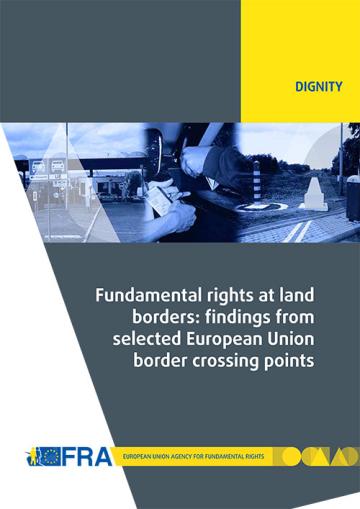
    Together with two FRA sister reports on the
    EU’s air and southern sea borders, this report’s findings serve to inform EU and Member State practitioners and
    policy makers of fundamental rights challenges that can emerge at land borders. Increased awareness should
    also help to create a shared understanding among border guards of what fundamental obligations mean for
    their daily work, ultimately enhancing fundamental rights compliance at the EU’s external borders.
  • Report / Paper / Summary
    10
    November
    2014
    The report examines the procedures for and conduct of checks that border guards carry out on third-country national passengers entering European Union (EU) territory at five international airports.
  • Report / Paper / Summary
    27
    October
    2014
    This summary, and the related full report, look at how fundamental rights obligations
    translate into practical border management tasks.
    The report points out challenges as well as promising practices of integrating fundamental
    rights compliance into operational tasks that do not compromise but instead enhance the
    effectiveness of border checks.
  • Handbook / Guide / Manual
    30
    June
    2014
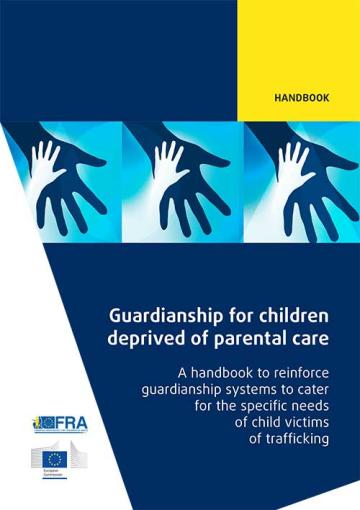
    This handbook aims to strengthen the protection of children, specifically addressing the particular needs of child victims of trafficking.
  • Handbook / Guide / Manual
    27
    June
    2014
    El Convenio Europeo para la Protección de los Derechos Humanos y de las Libertades Fundamentales (CEDH) y el Derecho de la Unión Europea (UE) constituyen un marco cada vez más importante para la protección de los derechos de los extranjeros. La legislación de la UE sobre
    asilo, fronteras e inmigración se está desarrollando rápidamente.
  • Report / Paper / Summary
    6
    August
    2013
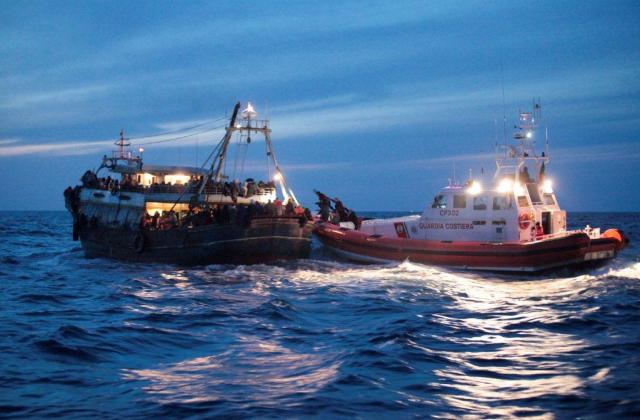
    This FRA report examines the conditions at Europe’s southern sea borders with respect to the most fundamental rights of a person, the right to life and the right not to be sent back to torture, persecution or inhuman treatment. It looks at sea border surveillance and disembarkation procedures, as well as general issues such as European Union (EU) policy, training and Frontex-coordinated operations, and examines practices across the EU Member States researched – Cyprus, Greece, Italy, Malta and Spain.
  • Report / Paper / Summary
    August
    2013
    The majority of irregular arrivals by sea to the European Union (EU) occur in the Mediterranean. Although the phenomenon is not widespread throughout the EU, it affects the EU as a whole. This publication reviews the solidarity measures the EU has established to support those countries most affected by irregular arrivals by sea. It will focus on the fundamental rights challenges raised by such measures but will not discuss whether these measures are sufficient and adequate for genuinely sharing the costs associated with the arrivals. This publication will also touch upon EU funding instruments and intra-EU relocation from Malta and more thoroughly describe the operational cooperation with Frontex.
  • Report / Paper / Summary
    27
    March
    2013
    This FRA report examines the conditions at Europe’s southern sea borders with respect to the most fundamental rights of a person, the right to life and the right not to be sent back to torture, persecution or inhuman treatment. It looks at sea border surveillance and disembarkation procedures, as well as training and Frontex-coordinated operations. It examines practices across the EU Member States researched – Cyprus, Greece, Italy, Malta and Spain.
  • Report / Paper / Summary
    8
    December
    2011
    The European Union Agency for Fundamental Rights held its annual Fundamental Rights Conference 'Dignity and rights of irregular migrants' in Warsaw on 21-22 November 2011. This paper summarises the discussions that took place during the conference and presents follow-up activities to be undertaken by FRA.
  • Report / Paper / Summary
    25
    October
    2011
    This report is the second publication from the legal study carried out in the context of the European Union Agency for Fundamental Rights' (FRA) project on the ‘Fundamental rights of persons with intellectual disabilities and persons with mental health problems'.