eu-charter

Carta de los Derechos Fundamentales de la Unión Europea

Artículo 24 - Derechos del niño

Artículo 24 - Derechos del niño

1. Los niños tienen derecho a la protección y a los cuidados necesarios para su bienestar. Podrán expresar su opinión libremente. Ésta será tenida en cuenta para los asuntos que les afecten, en función de su edad y madurez.
2. En todos los actos relativos a los niños llevados a cabo por autoridades públicas o instituciones privadas, el interés superior del niño constituirá una consideración primordial.
3. Todo niño tiene derecho a mantener de forma periódica relaciones personales y contactos directos con su padre y con su madre, salvo si ello es contrario a sus intereses.

Explicaciones

  • Text:

    Este artículo está basado en la Convención de Nueva York sobre los Derechos del Niño, firmada el 20 de noviembre de 1989 y ratificada por todos los Estados miembros, y, en particular, en sus artículos 3, 9, 12 y 13. En el apartado 3 se toma en consideración el hecho de que, como parte del establecimiento de un espacio de libertad, seguridad y justicia, la legislación de la Unión en asuntos civiles con repercusiones transfronterizas, para la cual el artículo 81 del Tratado de Funcionamiento de la Unión Europea confiere competencias, puede incluir en particular el derecho de visita que garantiza a los niños poder mantener de forma periódica contacto personal y directo con su padre y con su madre.

    Source:
    Diario Oficial de la Unión Europea C 303/17 - 14.12.2007
    Preamble - Explanations relating to the Charter of Fundamental Rights:
    Las presentes explicaciones fueron elaboradas inicialmente bajo la responsabilidad del Praesidium de la Convención que redactó la Carta de los Derechos Fundamentales de la Unión Europea. Han sido actualizadas bajo la responsabilidad del Praesidium de la Convención Europea, a la vista de las adaptaciones de la redacción del texto de la Carta realizadas por la Convención (en particular, los artículos 51 y 52) y de la evolución del Derecho de la Unión. Si bien no tienen por sí mismas valor jurídico, constituyen un valioso instrumento de interpretación con objeto de aclarar las disposiciones de la Carta.

Jurisprudencia

Derecho constitucional nacional

45 results found

  • Costituzione della Repubblica Italiana
    País:
    Italy

    Art. 30. E' dovere e diritto dei genitori, mantenere, istruire ed educare i figli, anche se nati fuori del matrimonio.Nei casi di incapacità dei genitori, la legge provvede a che siano assolti i loro compiti.La legge assicura ai figli nati fuori dal matrimonio ogni tutela giuridica e sociale, compatibile con i diritti dei membri della famiglia legittima.La legge detta le norme e i limiti per la ricerca della paternità. Art. 31 La Repubblica (...) Protegge la maternità e l'infanzia e la gioventù, favorendo gli istituti necessari a tale scopo. Art. 34. La scuola è aperta a tutti. L'istruzione inferiore, impartita per almeno otto anni, è obbligatoria e gratuita.I capaci e meritevoli, anche se privi di mezzi, hanno diritto di raggiungere i gradi più alti degli studi. La Repubblica rende effettivo questo diritto con borse di studio, assegni alle famiglie ed altre provvidenze, che devono essere attribuite per concorso.

  • De Belgische Grondwet
    País:
    Belgium

    Article 22Ieder heeft recht op eerbiediging van zijn privé-leven en zijn gezinsleven, behoudens in de gevallen en onder de voorwaarden door de wet bepaald.De wet, het decreet of de in artikel 134 bedoelde regel waarborgen de bescherming van dat recht. Article 22bisElk kind heeft recht op eerbiediging van zijn morele, lichamelijke, geestelijke en seksuele integriteit.Elk kind heeft het recht zijn mening te uiten in alle aangelegenheden die het aangaan; met die mening wordt rekening gehouden in overeenstemming met zijn leeftijd en zijn onderscheidingsvermogen. Elk kind heeft recht op maatregelen en diensten die zijn ontwikkeling bevorderen. Het belang van het kind is de eerste overweging bij elke beslissing die het kind aangaat. De wet, het decreet of de in artikel 134 bedoelde regel waarborgen deze rechten van het kind.

  • Eesti Vabariigi Põhiseadus
    País:
    Estonia

    § 26.Igaühel on õigus perekonna- ja eraelu puutumatusele. Riigiasutused, kohalikud omavalitsused ja nende ametiisikud ei tohi kellegi perekonna- ega eraellu sekkuda muidu, kui seaduses sätestatud juhtudel ja korras tervise, kõlbluse, avaliku korra või teiste inimeste õiguste ja vabaduste kaitseks, kuriteo tõkestamiseks või kurjategija tabamiseks.
    § 27.Perekond rahva püsimise ja kasvamise ning ühiskonna alusena on riigi kaitse all.Abikaasad on võrdõiguslikud.Vanematel on õigus ja kohustus kasvatada oma lapsi ja hoolitseda nende eest. Seadus sätestab vanemate ja laste kaitse. Perekond on kohustatud hoolitsema oma abivajavate liikmete eest. 

  • Federal Constitutional Act on the Rights of Children
    País:
    Austria

    Article 1 Each child shall be entitled to the protection and care that is necessary for his/her well-being, to optimal development and self-realisation as well as to the protection of his/her interests with regards to intergenerational equity. The wellbeing of the child shall be the primary consideration in respect of all measures affecting children that are taken by public and private institutions. Article 2 (1) Each child shall be entitled to have personal relations and direct contacts with both parents on a regular basis unless this is detrimental to the well-being of the child. Article 4 Each child has the right to adequate involvement and consideration of his/her opinion regarding all matters affecting the child in a manner that is commensurate with his/her age and development.

  • Grundgesetz für die Bundesrepublik Deutschland
    País:
    Germany

    Artikel 6 (...) (3) Gegen den Willen der Erziehungsberechtigten dürfen Kinder nur auf Grund eines Gesetzes von der Familie getrennt werden, wenn die Erziehungsberechtigten versagen oder wenn die Kinder aus anderen Gründen zu verwahrlosen drohen. (...) (5) Den unehelichen Kindern sind durch die Gesetzgebung die gleichen Bedingungen für ihre leibliche und seelische Entwicklung und ihre Stellung in der Gesellschaft zu schaffen wie den ehelichen Kindern.

  • Jugendwohlfahrtsgesetz 1989
    País:
    Austria
  • Konstytucja Rzeczypospolitej Polskiej
    País:
    Poland

    Art. 48.1. Rodzice mają prawo do wychowania dzieci zgodnie z własnymi przekonaniami. Wychowanie to powinno uwzględniać stopień dojrzałości dziecka, a także wolność jego sumienia i wyznania oraz jego przekonania. 2. Ograniczenie lub pozbawienie praw rodzicielskich może nastąpić tylko w przypadkach określonych w ustawie i tylko na podstawie prawomocnego orzeczenia sądu. Art. 68(...) 3. Władze publiczne są obowiązane do zapewnienia szczególnej opieki zdrowotnej dzieciom, kobietom ciężarnym, osobom niepełnosprawnym i osobom w podeszłym wieku.(...) 5. Władze publiczne popierają rozwój kultury fizycznej, zwłaszcza wśród dzieci i młodzieży.Art. 72.1. Rzeczpospolita Polska zapewnia ochronę praw dziecka. Każdy ma prawo żądać od organów władzy publicznej ochrony dziecka przed przemocą, okrucieństwem, wyzyskiem i demoralizacją.2. Dziecko pozbawione opieki rodzicielskiej ma prawo do opieki i pomocy władz publicznych.3. W toku ustalania praw dziecka organy władzy publicznej oraz osoby odpowiedzialne za dziecko są obowiązane do wysłuchania i w miarę możliwości uwzględnienia zdania dziecka.4. Ustawa określa kompetencje i sposób powoływania Rzecznika Praw Dziecka.

  • La Constitution Belge
    País:
    Belgium

    Artikel 22Chacun a droit au respect de sa vie privée et familiale, sauf dans les cas et conditions fixés par la loi.La loi, le décret ou la règle visée à l'article 134 garantissent la protection de ce droit. Article 22bisChaque enfant a droit au respect de son intégrité morale, physique, psychique et sexuelle.Chaque enfant a le droit de s'exprimer sur toute question qui le concerne; son opinion est prise en considération, eu égard à son âge et à son discernement. Chaque enfant a le droit de bénéficier des mesures et services qui concourent à son développement.Dans toute décision qui le concerne, l'intérêt de l'enfant est pris en considération de manière primordiale. La loi, le décret ou la règle visée à l'article 134 garantissent ces droits de l'enfant.

  • Lastekaitseseadus
    País:
    Estonia

    § 2. Seaduse eesmärk
    Käesolev seadus kehtestatakse last väärtustava ning lapse arengut soodustava käitumise ja elulaadi kujundamiseks ühiskonnas, last toetava keskkonna loomiseks, lapse huvide esikohale seadmiseks, lapse elukvaliteedi parendamiseks, lapse igakülgse arengu toetamiseks ning tervist ja heaolu ohustavates tingimustes olevale lapsele õigeaegse ja asjakohase abi ja hoolduse tagamiseks kooskõlas Ühinenud Rahvaste Organisatsiooni lapse õiguste konventsiooni ja selle lisaprotokollidega (edaspidi konventsioon) ning Euroopa Liidu põhiõiguste harta ja teiste asjakohaste õigusaktidega.
    § 3. Seaduse kohaldamisala
    (1) Käesolevas seaduses sätestatut kohaldatakse riigi ja kohaliku omavalitsuse üksuste ametiasutustele ning nende ametiisikutele, avalik-õiguslikele ja eraõiguslikele juriidilistele isikutele ning füüsilistele isikutele, kes oma tegevuses puutuvad kokku laste ja lastekaitsega.
    (2) Käesolev seadus peab lapseks iga alla 18-aastast isikut. Kui isiku vanus ei ole teada ja on põhjust arvata, et ta on alla 18-aastane, käsitatakse isikut lapsena, kuni ei ole tõendatud vastupidist.

  • Latvijas Republikas Satversme
    País:
    Latvia

    110. Valsts aizsargā un atbalsta laulību — savienību starp vīrieti un sievieti, ģimeni, vecāku un bērna tiesības. Valsts īpaši palīdz bērniem invalīdiem, bērniem, kas palikuši bez vecāku gādības vai cietuši no varmācības.

  • Lietuvos Respublikos Konstitucija
    País:
    Lithuania

    26 straipsnis. Tėvai ir globėjai nevaržomi rūpinasi vaikų ir globotinių religiniu ir doroviniu auklėjimu pagal savo įsitikinimus. 38 straipsnis. Šeima yra visuomenės ir valstybės pagrindas. Valstybė saugo ir globoja šeimą, motinystę, tėvystę ir vaikystę. Tėvų teisė ir pareiga - auklėti savo vaikus dorais žmonėmis ir ištikimais piliečiais, iki pilnametystės juos išlaikyti. Vaikų pareiga - gerbti tėvus, globoti juos senatvėje ir tausoti jų palikimą. 39 straipsnis. Nepilnamečius vaikus gina įstatymas.

  • Luxembourg / Constitution of the Grand Ducal of Luxembourg
    País:
    Luxembourg

    Art. 15.  ... (5) Dans toute décision qui le concerne, l’intérêt de l’enfant est pris en considération de manière primordiale. 

    Chaque enfant peut exprimer son opinion librement sur toute question qui le concerne. Son opinion est prise en considération, eu égard à son âge et à son discernement. 

    Chaque enfant a droit à la protection, aux mesures et aux soins nécessaires à son bien-être et son développement. 

    ...

  • Magyarország Alaptörvénye
    País:
    Hungary

    L) cikk (Alapvetés)
    (1) Magyarország védi a házasság intézményét mint férfi és nő között, önkéntes elhatározás alapján létrejött életközösséget, valamint a családot mint a nemzet fennmaradásának alapját. A családi kapcsolat alapja a házasság, illetve a szülő-gyermek viszony. […]

    XV. cikk (SZABADSÁG ÉS FELELŐSSÉG) […] (5) Magyarország külön intézkedésekkel védi a családokat, a gyermekeket, a nőket, az időseket és a fogyatékkal élőket.

    XVI. cikk (SZABADSÁG ÉS FELELŐSSÉG) (1) Minden gyermeknek joga van a megfelelő testi, szellemi és erkölcsi fejlődéséhez szükséges védelemhez és gondoskodáshoz.
    (2) A szülőknek joguk van megválasztani a gyermeküknek adandó nevelést.
    (3) A szülők kötelesek kiskorú gyermekükről gondoskodni. E kötelezettség magában foglalja gyermekük taníttatását.
    (4) A nagykorú gyermekek kötelesek rászoruló szüleikről gondoskodni.

    XXX. cikk (SZABADSÁG ÉS FELELŐSSÉG) […] (2) A közös szükségletek fedezéséhez való hozzájárulás mértékét a gyermeket nevelők esetében a gyermeknevelés kiadásainak figyelembevételével kell megállapítani.

  • Portugal / Constitution of the Portuguese Republic
    País:
    Portugal

    Article 36 (Family, marriage and filiation) (4) Children born outside marriage shall not be discriminated against on that ground; terms describing filiation that are discriminatory shall not be used by the law or by government departments. (6) Children shall not be separated from their parents unless the parents fail to perform their fundamental duties towards the children, and in that case only by judicial decision.
    ...
    Article 69 (Childhood) (1) With a view to their integral development, children shall possess the right to protection by society and the state, especially from all forms of abandonment, discrimination and oppression and from the abusive exercise of authority in the family or any other institution. (2) The state shall ensure special protection for children who are orphaned, abandoned or deprived of a normal family environment in any way. (3) Labour by minors of school age shall be prohibited as laid down by law.

    Article 70 (Youth) (1) In order to ensure the effective enjoyment of their economic, social and cultural rights, young people shall receive special protection, particularly: (a) In education, vocational training and culture; (b) In access to their first job, at work and in relation to social security; (c) In access to housing; (d) In physical education and sport; (e) In the use of their free time. (2) The priority objectives of the youth policy shall be the development of young people’s personality, the creation of the conditions needed for their effective integration into the active life, a love of free creativity and a sense of community service. (3) Acting in cooperation with families, schools, businesses, residents’ organisations, cultural associations and foundations and cultural and recreational groups, the state shall foster and support youth organisations in the pursuit of the said objectives, as well as international youth exchanges.

  • Romania / Constitution of Romania
    País:
    Romania

    Article 49(1) Children and young people shall enjoy special protection and assistance in the pursuit of their rights. (2) The State shall grant allowances for children and benefits for the care of ill or disabled children. Other forms of social protection for children and young people shall be established by law. (3) The exploitation of minors, their employment in activities that might be harmful to their health, or morals, or might endanger their life and normal development are prohibited. (4) Minors under the age of fifteen may not be employed for any paid labour. (5) The public authorities are bound to contribute to secure the conditions for the free participation of young people in the political, social, economic, cultural and sporting life of the country.

  • Slovakia / Constitution of the Slovak Republic
    País:
    Slovakia

    Article 41 (...) (3) Children born in and out of wedlock enjoy equal rights. (4) Child care and upbringing are the rights of parents; children have the right to parental care and upbringing. Parents' rights can be restricted and minors can be separated from their parents against their will only by a court ruling on the basis of law. (5) Parents caring for children are entitled to assistance from the state. (6) Details concerning rights under paragraphs 1 to 5 shall be laid down by law.

  • Slovenia / Constitution of the Republic of Slovenia
    País:
    Slovenia

    Article 53 (...) The state shall protect the family, motherhood, fatherhood, children and young people and shall create the necessary conditions for such protection.

    Article 54 Parents have the right and duty to maintain, educate and raise their children. This right and duty may be revoked or restricted only for such reasons as are provided by law in order to protect the child's interests. Children born out of wedlock have the same rights as children born within it.

    Article 56 Children shall enjoy special protection and care. Children shall enjoy human rights and fundamental freedoms consistent with their age and maturity. Children shall be guaranteed special protection from economic, social, physical, mental or other exploitation and abuse. Such protection shall be regulated by law. Children and minors who are not cared for by their parents, who have no parents or who are without proper family care shall enjoy the special protection of the state. Their position shall be regulated by law.

  • España / Constitutión Española
    País:
    España

    Artículo 39(1) Los poderes públicos aseguran la protección social, económica y jurídica de la familia. (2) Los poderes públicos aseguran, asimismo, la protección integral de los hijos, iguales éstos ante la ley con independencia de su filiación, y de las madres, cualquiera que sea su estado civil. La ley posibilitará la investigación de la paternidad. (3) Los padres deben prestar asistencia de todo orden a los hijos habidos dentro o fuera del matrimonio, durante su minoría de edad y en los demás casos en que legalmente proceda. (4) Los niños gozarán de la protección prevista en los acuerdos internacionales que velan por sus derechos.

  • Suomen perustuslaki
    País:
    Finland

    6 § Yhdenvertaisuus (...) Lapsia on kohdeltava tasa-arvoisesti yksilöinä, ja heidän tulee saada vaikuttaa itseään koskeviin asioihin kehitystään vastaavasti. 12 § Sananvapaus ja julkisuus Jokaisella on sananvapaus. Sananvapauteen sisältyy oikeus ilmaista, julkistaa ja vastaanottaa tietoja, mielipiteitä ja muita viestejä kenenkään ennakolta estämättä. Tarkempia säännöksiä sananvapauden käyttämisestä annetaan lailla. Lailla voidaan säätää kuvaohjelmia koskevia lasten suojelemiseksi välttämättömiä rajoituksia. 19 § Oikeus sosiaaliturvaan (...) Lailla taataan jokaiselle oikeus perustoimeentulon turvaan työttömyyden, sairauden, työkyvyttömyyden ja vanhuuden aikana sekä lapsen syntymän ja huoltajan menetyksen perusteella. Julkisen vallan on turvattava, sen mukaan kuin lailla tarkemmin säädetään, jokaiselle riittävät sosiaali- ja terveyspalvelut ja edistettävä väestön terveyttä. Julkisen vallan on myös tuettava perheen ja muiden lapsen huolenpidosta vastaavien mahdollisuuksia turvata lapsen hyvinvointi ja yksilöllinen kasvu. (...)

  • The Belgian Constitution
    País:
    Belgium

    Article 22Everyone has the right to the respect of his private and family life, except in the cases and conditions determined by law. The laws, federate laws and rules referred to in Article 134 guarantee the protection of this right. Article 22bisEach child is entitled to have his or her moral, physical, mental and sexual integrity respected.Each child has the right to express his or her views in all matters affecting him or her, the views of the child being given due weight in accordance with his or her age and maturity.Each child has the right to benefit from measures and facilities which promote his or her development.In all decisions concerning children, the interest of the child is a primary consideration. The law, federate law or rule referred to in Article 134 ensures these rights of the child.

Derecho de la UE

28 results found

  • Directive (EU) 2016/800 of the European Parliament and of the Council of 11 May 2016 on procedural safeguards for children who are suspects or accused persons in criminal proceedings

    Preamble

    (31) Member States should be able to derogate temporarily from the obligation to provide assistance by a lawyer in the pre-trial phase for compelling reasons, namely where there is an urgent need to avert serious adverse consequences for the life, liberty or physical integrity of a person, or where immediate action by the investigating authorities is imperative to prevent substantial jeopardy to criminal proceedings in relation to a serious criminal offence, inter alia, with a view to obtaining information concerning the alleged co-perpetrators of a serious criminal offence, or in order to avoid the loss of important evidence regarding a serious criminal offence. During a temporary derogation for one of those compelling reasons, the competent authorities should be able to question children without the lawyer being present, provided that they have been informed of their right to remain silent and can exercise that right, and that such questioning does not prejudice the rights of the defence, including the right not to incriminate oneself. It should be possible to carry out questioning, to the extent necessary, for the sole purpose of obtaining information that is essential to avert serious adverse consequences for the life, liberty or physical integrity of a person, or to prevent substantial jeopardy to criminal proceedings. Any abuse of this temporary derogation would, in principle, irretrievably prejudice the rights of the defence.‘
     

    (33) Confidentiality of communication between children and their lawyer is key to ensuring the effective exercise of the rights of the defence and is an essential part of the right to a fair trial. Member States should therefore respect the confidentiality of meetings and other forms of communication between the lawyer and the child in the context of the assistance by a lawyer provided for in this Directive, without derogation.

    (35) Children who are suspects or accused persons in criminal proceedings should have the right to an individual assessment to identify their specific needs in terms of protection, education, training and social integration, to determine if and to what extent they would need special measures during the criminal proceedings, the extent of their criminal responsibility and the appropriateness of a particular penalty or educative measure.

    Article 3: Definitions
    For the purposes of this Directive the following definitions apply:
    (1) ‘child’ means a person below the age of 18;
    (2) ‘holder of parental responsibility’ means any person having parental responsibility over a child;  [...]
    With regard to point (1) of the first paragraph, where it is uncertain whether a person has reached the age of 18, that person shall be presumed to be a child.


    Article 4: Right to information
    1.   Member States shall ensure that when children are made aware that they are suspects or accused persons in criminal proceedings, they are informed promptly about their rights [...].


    Article 5 - Right of the child to have the holder of parental responsibility informed
    1.   Member States shall ensure that the holder of parental responsibility is provided, as soon as possible, with the information that the child has a right to receive in accordance with Article 4.

    Article 6: Assistance by a lawyer
    2.   Member States shall ensure that children are assisted by a lawyer in accordance with this Article in order to allow them to exercise the rights of the defence effectively.


    Article 10: Limitation of deprivation of liberty
    1.   Member States shall ensure that deprivation of liberty of a child at any stage of the proceedings is limited to the shortest appropriate period of time. Due account shall be taken of the age and individual situation of the child, and of the particular circumstances of the case.
    2.   Member States shall ensure that deprivation of liberty, in particular detention, shall be imposed on children only as a measure of last resort. Member States shall ensure that any detention is based on a reasoned decision, subject to judicial review by a court. Such a decision shall also be subject to periodic review, at reasonable intervals of time, by a court, either ex officio or at the request of the child, of the child's lawyer, or of a judicial authority which is not a court. Without prejudice to judicial independence, Member States shall ensure that decisions to be taken pursuant to this paragraph are taken without undue delay. 
     

    Article 11: Alternative measures
    Member States shall ensure that, where possible, the competent authorities have recourse to measures alternative to detention (alternative measures).
     

    Article 12: Specific treatment in the case of deprivation of liberty
    1.   Member States shall ensure that children who are detained are held separately from adults, unless it is considered to be in the child's best interests not to do so.
    2.   Member States shall also ensure that children who are kept in police custody are held separately from adults, unless:
    (a) it is considered to be in the child's best interests not to do so; or
    (b) in exceptional circumstances, it is not possible in practice to do so, provided that children are held together with adults in a manner that is compatible with the child's best interests.
    3.   Without prejudice to paragraph 1, when a detained child reaches the age of 18, Member States shall provide for the possibility to continue to hold that person separately from other detained adults where warranted, taking into account the circumstances of the person concerned, provided that this is compatible with the best interests of children who are detained with that person.
    4.   Without prejudice to paragraph 1, and taking into account paragraph 3, children may be detained with young adults, unless this is contrary to the child's best interests.
    5.   When children are detained, Member States shall take appropriate measures to:
    (a) ensure and preserve their health and their physical and mental development;
    (b) ensure their right to education and training, including where the children have physical, sensory or learning disabilities;
    (c) ensure the effective and regular exercise of their right to family life;
    (d) ensure access to programmes that foster their development and their reintegration into society; and
    (e) ensure respect for their freedom of religion or belief.
    The measures taken pursuant to this paragraph shall be proportionate and appropriate to the duration of the detention.
    Points (a) and (e) of the first subparagraph shall also apply to situations of deprivation of liberty other than detention. The measures taken shall be proportionate and appropriate to such situations of deprivation of liberty.
    Points (b), (c), and (d) of the first subparagraph shall apply to situations of deprivation of liberty other than detention only to the extent that is appropriate and proportionate in the light of the nature and duration of such situations.
    6.   Member States shall endeavour to ensure that children who are deprived of liberty can meet with the holder of parental responsibility as soon as possible, where such a meeting is compatible with investigative and operational requirements. This paragraph shall be without prejudice to the nomination or designation of another appropriate adult pursuant to Article 5 or 15.

     

  • Regulation (EU) 2021/1232 of the European Parliament and of the Council of 14 July 2021 on a temporary derogation from certain provisions of Directive 2002/58/EC as regards the use of technologies by providers

    Article 1

    Subject matter and scope

    1. This Regulation lays down temporary and strictly limited rules derogating from certain obligations laid down in Directive 2002/58/EC, with the sole objective of enabling providers of certain number-independent interpersonal communications services (‘providers’) to use, without prejudice to Regulation (EU) 2016/679, specific technologies for the processing of personal and other data to the extent strictly necessary to detect online child sexual abuse on their services and report it and to remove online child sexual abuse material from their services.

    2. This Regulation does not apply to the scanning of audio communications.

  • Regulation (EU) 2021/692 of the European Parliament and of the Council of 28 April 2021 establishing the Citizens, Equality, Rights and Values Programme and repealing Regulation (EU) No 1381/2013

    Article 4

    Equality, rights and gender equality strand

    Within the general objective set out in Article 2(1) and within the specific objective set out in point (b) of Article 2(2), the Programme shall focus on:

    (1) promoting equality and preventing and combating inequalities and discrimination based on sex, racial or ethnic origin, religion or belief, disability, age or sexual orientation, and respecting the principle of non-discrimination on the grounds provided for in Article 21 of the Charter;

    [...]

  • Regulation (EU) 2022/2065 of the European Parliament and of the Council of 19 October 2022 on a Single Market For Digital Services and amending Directive 2000/31/EC (Digital Services Act)

    Article 34: Risk assessment

    1. Providers of very large online platforms and of very large online search engines shall diligently identify, analyse and assess any systemic risks in the Union stemming from the design or functioning of their service and its related systems, including algorithmic systems, or from the use made of their services.

    They shall carry out the risk assessments by the date of application referred to in Article 33(6), second subparagraph, and at least once every year thereafter, and in any event prior to deploying functionalities that are likely to have a critical impact on the risks identified pursuant to this Article. This risk assessment shall be specific to their services and proportionate to the systemic risks, taking into consideration their severity and probability, and shall include the following systemic risks:

    [...]

    (b) any actual or foreseeable negative effects for the exercise of fundamental rights, in particular the fundamental rights to human dignity enshrined in Article 1 of the Charter, to respect for private and family life enshrined in Article 7 of the Charter, to the protection of personal data enshrined in Article 8 of the Charter, to freedom of expression and information, including the freedom and pluralism of the media, enshrined in Article 11 of the Charter, to non-discrimination enshrined in Article 21 of the Charter, to respect for the rights of the child enshrined in Article 24 of the Charter and to a high-level of consumer protection enshrined in Article 38 of the Charter;

  • Regulation (EU) 2021/692 of the European Parliament and of the Council of 28 April 2021 establishing the Citizens, Equality, Rights and Values Programme and repealing Regulation (EU) No 1381/2013 of the European Parliament

    Article 1

    Subject matter

    This Regulation establishes the Citizens, Equality, Rights and Values Programme (the ‘Programme’) for the duration of the multiannual financial framework 2021-2027, as laid down in Regulation (EU, Euratom) 2020/2093.

    It lays down the objectives of the Programme, the budget for the period 2021–2027, the forms of Union funding and the rules for providing such funding.

  • Regulation (EU) 2019/1896 of the European Parliament and of the Council of 13 November 2019 on the European Border and Coast Guard and repealing Regulations (EU) No 1052/2013 and (EU) 2016/1624

    Preamble

    (103) This Regulation respects the fundamental rights and observes the principles recognised by Articles 2 and 6 TEU and by the Charter of Fundamental Rights of the European Union (‘the Charter’), in particular respect for human dignity, the right to life, the prohibition of torture and inhuman or degrading treatment or punishment, the prohibition of trafficking in human beings, the right to liberty and security, the right to the protection of personal data, the right of access to documents, the right to asylum and to protection against removal and expulsion, non-refoulement, non-discrimination and the rights of the child.

    Article 1: Subject matter

    This Regulation establishes a European Border and Coast Guard to ensure European integrated border management at the external borders with a view to managing those borders efficiently in full compliance with fundamental rights and to increasing the efficiency of the Union return policy.

    This Regulation addresses migratory challenges and potential future challenges and threats at the external borders. It ensures a high level of internal security within the Union in full respect of fundamental rights, while safeguarding the free movement of persons within the Union. It contributes to the detection, prevention and combating of cross-border crime at the external borders.

    Article 43: Instructions to the teams

    4.   Members of the teams shall, in the performance of their tasks and in the exercise of their powers, fully respect fundamental rights, including access to asylum procedures and human dignity, and shall pay particular attention to vulnerable persons. Any measures taken in the performance of their tasks and in the exercise of their powers shall be proportionate to the objectives pursued by such measures. While performing their tasks and exercising their powers, they shall not discriminate against persons on the basis of any grounds such as sex, race, colour, ethnic or social origin, genetic features, language, religion or belief, political or any other opinion, membership of a national minority, property, birth, disability, age or sexual orientation in line with Article 21 of the Charter.

  • Directive 2014/66/EU of the European Parliament and of the Council of 15 May 2014 on the conditions of entry and residence of third-country nationals in the framework of an intra-corporate transfer

    Article 1 - Subject-matter
    ‘This Directive lays down:
    (a) the conditions of entry to, and residence for more than 90 days in, the territory of the Member States, and the rights, of third-country nationals and of their family members in the framework of an intra-corporate transfer; [...]
    Article 19 - Family members
    1. Directive 2003/86/EC shall apply in the first Member State and in second Member States which allow the intra-corporate transferee to stay and work on their territory in accordance with Article 22 of this Directive, subject to the derogations laid down in this Article.
    2. By way of derogation from Article 3(1) and Article 8 of Directive 2003/86/EC, family reunification in the Member States shall not be made dependent on the requirement that the holder of the permit issued by those Member States on the basis of this Directive has reasonable prospects of obtaining the right of permanent residence and has a minimum period of residence.
    3. By way of derogation from the third subparagraph of Article 4(1) and from Article 7(2) of Directive 2003/86/EC, the integration measures referred to therein may be applied by the Member States only after the persons concerned have been granted family reunification.
    4. By way of derogation from the first subparagraph of Article 5(4) of Directive 2003/86/EC, residence permits for family members shall be granted by a Member State, if the conditions for family reunification are fulfilled, within 90 days from the date on which the complete application was submitted. The competent authority of the Member State shall process the residence permit application for the intra-corporate transferee's family members at the same time as the application for the intra-corporate transferee permit or the permit for long-term mobility, in cases where the residence permit application for the intra-corporate transferee's family members is submitted at the same time. The procedural safeguards laid down in Article 15 shall apply accordingly.
    5. By way of derogation from Article 13(2) of Directive 2003/86/EC, the duration of validity of the residence permits of family members in a Member State shall, as a general rule, end on the date of expiry of the intra-corporate transferee permit or the permit for long-term mobility issued by that Member State.
    6. By way of derogation from Article 14(2) of Directive 2003/86/EC and without prejudice to the principle of preference for Union citizens as expressed in the relevant provisions of the relevant Acts of Accession, the family members of the intra-corporate transferee who have been granted family reunification shall be entitled to have access to employment and self-employed activity in the territory of the Member State which issued the family member residence permit.‘

  • Directive 2012/29/EU of the European Parliament and of the Council of 25 October 2012 establishing minimum standards on the rights, support and protection of victims of crime, and replacing Council Framework Decision 2001/220/JHA

    Preamble:

    (14) In applying this Directive, children's best interests must be a primary consideration, in accordance with the Charter of Fundamental Rights of the European Union and the United Nations Convention on the Rights of the Child adopted on 20 November 1989. Child victims should be considered and treated as the full bearers of rights set out in this Directive and should be entitled to exercise those rights in a manner that takes into account their capacity to form their own views.
    (16) Victims of terrorism have suffered attacks that are intended ultimately to harm society. They may therefore need special attention, support and protection due to the particular nature of the crime that has been committed against them. Victims of terrorism can be under significant public scrutiny and often need social recognition and respectful treatment by society. Member States should therefore take particular account of the needs of victims of terrorism, and should seek to protect their dignity and security.’
    ‘(38) [...] A main task of these services and their staff, which play an important role in supporting the victim to recover from and overcome potential harm or trauma as a result of a criminal offence, should be to inform victims about the rights set out in this Directive so that they can take decisions in a supportive environment that treats them with dignity, respect and sensitivity. The types of support that such specialist support services should offer could include providing shelter and safe accommodation, immediate medical support, referral to medical and forensic examination for evidence in cases of rape or sexual assault, short and long-term psychological counselling, trauma care, legal advice, advocacy and specific services for children as direct or indirect victims.’
    ‘(52) Measures should be available to protect the safety and dignity of victims and their family members from secondary and repeat victimisation, from intimidation and from retaliation, such as interim injunctions or protection or restraining orders.’

    (66) This Directive respects fundamental rights and observes the principles recognised by the Charter of Fundamental Rights of the European Union. In particular, it seeks to promote the right to dignity, life, physical and mental integrity, liberty and security, respect for private and family life, the right to property, the principle of non-discrimination, the principle of equality between women and men, the rights of the child, the elderly and persons with disabilities, and the right to a fair trial.

    Article 18 - Right to protection
    ‘Without prejudice to the rights of the defence, Member States shall ensure that measures are available to protect victims and their family members from secondary and repeat victimisation, from intimidation and from retaliation, including against the risk of emotional or psychological harm, and to protect the dignity of victims during questioning and when testifying. When necessary, such measures shall also include procedures established under national law for the physical protection of victims and their family members.’

Derecho internacional

6 results found

  • Committee on the Protection of the Rights of All Migrant Workers and Members of Their Families, Committee on the Rights of the Child, Joint general comment No. 4 (2017) of the Committee on the Protection of the Rights of All Migrant Workers and Members...
  • Committee on the Rights of the Child General comment No. 15 (2013) on the right of the child to the enjoyment of the highest attainable standard of health (art. 24)
  • Committee on the Rights of the Child General comment No. 17 (2013) on the right of the child to rest, leisure, play, recreational activities, cultural life and the arts (art. 31)
  • Committee on the Rights of the Child, General comment No. 14 (2013) on the right of the child to have his or her best interests taken as a primary consideration (art. 3, para. 1 )
  • Committee on the Rights of the Child, General comment No. 20 (2016) on the implementation of the rights of the child during adolescence
  • Committee on the Protection of the Rights of All Migrant Workers and Members of Their Families, Committee on the Rights of the Child, Joint general comment No. 3 (2017) of the Committee on the Protection of the Rights of All Migrant Workers and Members...

Productos

  • Report / Paper / Summary
    18
    September
    2019
    Individuals who are not entitled to stay in the European Union are typically subject to being returned to their home countries. This includes children who are not accompanied by their parents or by another primary caregiver. But returning such children, or finding another durable solution, is a delicate matter, and doing so in full compliance with fundamental rights protections can be difficult. This focus paper therefore aims to help national authorities involved in return-related tasks, including child-protection services, to ensure full rights compliance.
  • Report / Paper / Summary
    17
    October
    2018
    Almost 25 million children under 18 are at risk of poverty or social exclusion in the EU. Poverty deprives children of educational
    opportunities, childcare, access to health care, adequate food and housing, family support and even protection from violence.
    This report outlines data and survey findings that highlight the magnitude of child poverty in the EU, but also presents tools
    available to counter this phenomenon and keep track of progress made.
  • Report / Paper / Summary
    12
    September
    2018
    In November 2017, the European Commission requested FRA’s support in evaluating the impact on fundamental rights of the European Border Surveillance System (Eurosur) Regulation. Further to this request, FRA reviewed the work of the European Border and Coast Guard Agency (Frontex) and analysed cooperation agreements concluded by EU Member States with third countries which are relevant for the exchange of information for the purposes of Eurosur. This report presents the main findings of such review.
  • Report / Paper / Summary
    25
    April
    2018
    The methods used to determine the age of
    an applicant may include “invasive” medical tests which interfere with the rights of the child, including their right to dignity,
    integrity and privacy. It is often a challenge to find the right balance between protecting children from harm and promoting
    their participation in these procedures. This report provides important insights and identifies the implications of collecting
    children’s biometric data and conducting age assessments.
  • Report / Paper / Summary
    25
    April
    2018
    This report outlines Member States’ approaches to age requirements and limits
    regarding child participation in judicial proceedings; procedural safeguards for, and rights of, children involved in criminal
    proceedings; as well as issues related to depriving children of their liberty.
  • Report / Paper / Summary
    28
    March
    2018
    This report outlines the fundamental rights implications of collecting, storing and using
    biometric and other data in EU IT systems in the area of asylum and migration.
  • Report / Paper / Summary
    5
    February
    2018
    EU Member States’ legal and practical responses to migrants and refugees implicate several of their fundamental rights, as enshrined in the Charter of Fundamental Rights of the European Union (EU). The EU Agency for Fundamental Rights (FRA) has regularly reported on these issues since September 2015. This report highlights key trends and persistent concerns between October 2016 and December 2017. It focuses on five areas: access to territory, reception conditions, asylum procedures, unaccompanied children and immigration detention.
  • Report / Paper / Summary
    16
    January
    2018
    Guardians are a key element of a protection system for children who are temporarily or
    permanently deprived of their family environment and cannot have their interests represented
    by their parents. Great disparities exist between the types of guardianship provided
    to children in and within European Union (EU) Member States. This report explores the key
    features of guardianship systems put in place to cater for the needs of all children in need
    of protection, including child victims and those at risk of becoming victims of trafficking in
    human beings or of other forms of exploitation.
  • Easy-to-read report
    3
    January
    2018
    Inside this book you will read about the justice system and the problems in justice for children and how to fix the problems.
  • Report / Paper / Summary
    20
    November
    2017
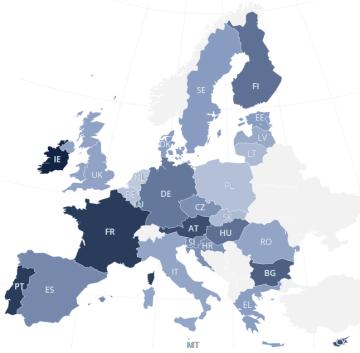
    International treaties, the Charter of Fundamental Rights of the European Union, European Union (EU) secondary law and national legislation provide a number of rights to citizens. The maps and tables presented show the various patterns concerning age requirements for children to acquire rights in the EU. They also identify inconsistencies, protection gaps and restrictions deriving from different age thresholds. The reference period was until April 2016. Any legislative developments since then have been included whenever relevant or if known.