eu-charter

Carta de los Derechos Fundamentales de la Unión Europea

Artículo 54 - Prohibición del abuso de derecho

Artículo 54 - Prohibición del abuso de derecho

Ninguna de las disposiciones de la presente Carta podrá ser interpretada en el sentido de que implique un derecho cualquiera a dedicarse a una actividad o a realizar un acto tendente a la destrucción de los derechos o libertades reconocidos en la presente Carta o a limitaciones más amplias de estos derechos y libertades que las previstas en la presente Carta..

Explicaciones

  • Text:

    Este artículo corresponde al artículo 17 del CEDH, que reza lo siguiente:

    `Ninguna de las disposiciones del presente Convenio podrá ser interpretada en el sentido de que implique para un Estado, grupo o individuo, un derecho cualquiera a dedicarse a una actividad o a realizar un acto tendente a la destrucción de los derechos o libertades reconocidos en el presente Convenio o a limitaciones más amplias de estos derechos y libertades que las previstas en el mismo.`

    [*] Nota del editor: las referencias de los números de los artículos de los Tratados han sido actualizadas y se han corregido algunos errores materiales.

    Source:
    Diario Oficial de la Unión Europea C 303/17 - 14.12.2007
    Preamble - Explanations relating to the Charter of Fundamental Rights:
    Las presentes explicaciones fueron elaboradas inicialmente bajo la responsabilidad del Praesidium de la Convención que redactó la Carta de los Derechos Fundamentales de la Unión Europea. Han sido actualizadas bajo la responsabilidad del Praesidium de la Convención Europea, a la vista de las adaptaciones de la redacción del texto de la Carta realizadas por la Convención (en particular, los artículos 51 y 52) y de la evolución del Derecho de la Unión. Si bien no tienen por sí mismas valor jurídico, constituyen un valioso instrumento de interpretación con objeto de aclarar las disposiciones de la Carta.

Jurisprudencia

Derecho constitucional nacional

16 results found

  • Basic Law for the Federal Republic of Germany
    País:
    Germany

    Article 18 Whoever abuses the freedom of expression, in particular the freedom of the press (paragraph (1) of Article 5), the freedom of teaching (paragraph (3) of Article 5), the freedom of assembly (Article 8), the freedom of association (Article 9), the privacy of correspondence, posts and telecommunications (Article 10), the rights of property (Article 14), or the right of asylum (Article 16a) in order to combat the free democratic basic order shall forfeit these basic rights. This forfeiture and its extent shall be declared by the Federal Constitutional Court.

  • Constitution of the Hellenic Republic
    URL:
    País:
    Greece

    Article 25(...) Abuse of rights shall be prohibited. (...)

  • Constitution of the Hellenic Republic
    País:
    Greece

    Article 25 (3) The abusive exercise of rights is not permitted […]

  • Constitution of the Republic of Bulgaria
    País:
    Bulgaria

    Art. 57. (2) Rights shall not be abused, nor shall they be exercised to the detriment of the rights or the legitimate interests of others.

  • Constitution of the Republic of Croatia
    País:
    Croatia


  • Constitution of the Republic of Estonia
    País:
    Estonia

    Article 10. The rights, freedoms and duties set out in this chapter do not preclude other rights, freedoms and duties which arise from the spirit of the Constitution or are in accordance therewith, and which are in conformity with the principles of human dignity, social justice and democratic government founded on the rule of law.

  • Czechia / Charter of Fundamental Rights and Freedoms
    País:
    Czechia

    Article 4 (...) (4) When employing the provisions concerning limitations upon the fundamental rights and freedoms, the essence and significance of these rights and freedoms must be preserved. Such limitations shall not be misused for purposes other than those for which they were enacted.

  • European Convention on Human Rights - Article 17
    País:
    Austria

    Article 17

    Nothing in this Convention may be interpreted as implying for any State, group or person any right to engage in any activity or perform any act aimed at the destruction of any of the rights and freedoms set forth herein or at their limitation to a greater extent than is provided for in the Convention.

  • Grundgesetz für die Bundesrepublik Deutschland
    País:
    Germany

    Artikel 18 Wer die Freiheit der Meinungsäußerung, insbesondere die Pressefreiheit (Artikel 5 Abs. 1), die Lehrfreiheit (Artikel 5 Abs. 3), die Versammlungsfreiheit (Artikel 8), die Vereinigungsfreiheit (Artikel 9), das Brief-, Post- und Fernmeldegeheimnis (Artikel 10), das Eigentum (Artikel 14) oder das Asylrecht (Artikel 16a) zum Kampfe gegen die freiheitliche demokratische Grundordnung mißbraucht, verwirkt diese Grundrechte. Die Verwirkung und ihr Ausmaß werden durch das Bundesverfassungsgericht ausgesprochen.

  • Konvention zum Schutze der Menschenrechte und Grundfreiheiten
    País:
    Austria

    Artikel 17 Keine Bestimmung dieser Konvention darf dahin ausgelegt werden, daß sie für einen Staat, eine Gruppe oder eine Person das Recht begründet, eine Tätigkeit auszuüben oder eine Handlung zu begehen, die auf die Abschaffung der in der vorliegenden Konvention festgelegten Rechte und Freiheiten oder auf weitergehende Beschränkungen dieser Rechte und Freiheiten, als in der Konvention vorgesehen, hinzielt.

  • Portugal / Constitution of the Portuguese Republic
    País:
    Portugal

    Article 16 (Scope and interpretation of fundamental rights) (1) The fundamental rights enshrined in the Constitution shall not exclude any other set out in applicable international laws and legal rules. (2) The constitutional precepts concerning fundamental rights must be interpreted and completed in harmony with the Universal Declaration of Human Rights.

    ...
    Article 18 (Legal force) (1) The constitutional precepts with regard to rights, freedoms and guarantees are directly applicable and are binding on public and private entities. (2) The law may only restrict rights, freedoms and guarantees in cases expressly provided for in the Constitution, and such restrictions must be limited to those needed to safeguard other constitutionally protected rights and interests. (3). Laws that restrict rights, freedoms and guarantees must have a general and abstract nature and may not have a retroactive effect or reduce the extent or scope of the essential content of the constitutional precepts.

  • Slovakia / Constitution of the Slovak Republic
    País:
    Slovakia

    Article 1 (1) The Slovak Republic is a sovereign, democratic state governed by the rule of law.(...)

  • The Constitution of the Republic of Cyprus
    País:
    Cyprus

    Article 34
    Nothing in this Part may be interpreted as implying for any Community, group or person any right to engage in any activity or perform any act aimed at the undermining or destruction of the constitutional order established by this Constitution or at the destruction of any of the rights and liberties set forth in this Part or at their limitation to a greater extent than is provided for therein.

  • Tο Σύνταγμα της Κυπριακής Δημοκρατίας
    País:
    Cyprus

    ΑΡΘΡΟΝ 34
    Ουδέν εκ των εν τω παρόντι, μέρει διαλαμβανομένων δύναται να ερμηνευθή ως παρέχον οιονδήποτε δικαίωμα εις οιονδήποτε κοινότητα, ομάδα ή άτομον να επιδοθή εις οιανδήποτε δράσιν ή εκτέλεσιν οιασδήποτε πράξεως σκοπούσης την υπονόμευσιν ή την κατάργησιν της υπό του Συντάγματος καθιδρυομένης συνταγματικής τάξεως ή την κατάργησιν οιουδήποτε εκ των εν τω παρόντι μέρει καθοριζομένων δικαιωμάτων ή ελευθεριών ή τον περιορισμόν αυτών εις μεγαλύτερον του οριζομένου εν τω παρόντι μέρει βαθμόν.

  • Το Σύνταγμα της Ελλάδας
    País:
    Greece

    Άρθρο 25 (3) Η καταχρηστική άσκηση δικαιώματος δεν επιτρέπεται. [...]

  • КОНСТИТУЦИЯ на Република България
    País:
    Bulgaria

    Чл. 57. (2) Не се допуска злоупотреба с права, както и тяхното упражняване, ако то накърнява права или законни интереси на други.

Derecho de la UE

0 results found

Derecho internacional

0 results found

Productos

  • Report / Paper / Summary
    4
    July
    2024
    Effectively communicating and promoting human rights is an integral part of fulfilling fundamental rights for all. Raising awareness of the benefits of these rights to people’s lives is essential for diluting the scepticism about the role of the human rights framework in the resolution of today’s social challenges. The FRA Communication Strategy 2023-2028 defines the principal objectives and overall approach that will underpin the agency’s communication activities over the next five years, in support of the implementation of the FRA Strategic Plan 2023-2028.
    klyaksun/stock.adobe.com
  • Periodic updates / Series
    1
    July
    2024
    The EU Agency for Fundamental Rights regularly collects data on the operations of NGO vessels involved in search and rescue in the Mediterranean. This includes any legal proceedings against them, as well as any difficulties in disembarking migrants in safe ports. This paper provides an overview of criminal investigations and other legal proceedings initiated by European Union (EU) Member States against civil society organisations deploying search and rescue vessels and aircraft in the Mediterranean and/or against individual crew members. The latest update covers the period from 2018 up until the end of May 2024.
  • In brief / Factsheet
    18
    June
    2024
    This factsheet focuses on the European arrest warrant and EU Member States obligations to respect fundamental rights. EU law and the European Convention on Human Rights sometimes overlap. The publication clarifies where there are similar principles in different legislation and provides examples of case law. In collaboration, the EU Agency for Fundamental Rights and the European Court of Human Rights produced this short publication. It is designed to aid lawyers and policymakers in understanding and applying the jurisprudence in this area.
  • Report / Paper / Summary
    18
    June
    2024
    The Consolidated Annual Activity Report offers a comprehensive summary of the agency's activities and accomplishments in 2023. It details the reports and data published on fundamental rights, as well as the projects completed, demonstrating how the agency met its strategic objectives. Additionally, the report incorporates stakeholder feedback, emphasising the agency's positive impact and significant contributions. Also included are core statistics on the agency's work, as well as the results of internal and external evaluations, financial statistics and resource management information.
  • Report / Paper / Summary
    11
    June
    2024
    Data protection rules protect privacy and prevent personal information from misuse. When the general data protection regulation (GDPR) came into force in 2018, it strengthened the role of data protection authorities. These supervisory bodies are the key enforcers of the fundamental right of protection of personal data. This report analyses the challenges they face in the GDPR implementation. The findings complement the European Commission's forthcoming evaluation of the GDPR.
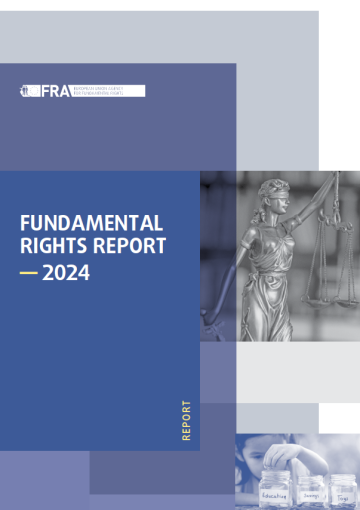
  • Fundamental Rights Report
    5
    June
    2024
    En el año 2023 se produjeron tanto avances como retrocesos en materia de protección de derechos fundamentales. El Informe sobre los Derechos Fundamentales 2024 de la FRA analiza los acontecimientos en este ámbito, identificando tanto los progresos realizados como las dificultades que todavía persisten. La publicación presenta los dictámenes de la FRA sobre los principales avances realizados en los ámbitos temáticos contemplados, así como un resumen de las pruebas que avalan tales dictámenes. Todo ello permite disponer de una visión de conjunto, compacta, pero muy ilustrativa, de los principales desafíos en materia de derechos fundamentales a los que se enfrentan la Unión Europea y sus Estados miembros.
  • Fundamental Rights Report
    5
    June
    2024
    FRA’s Fundamental Rights Report 2024 analyses the year’s developments in fundamental rights. It focuses on the most pressing fundamental rights concerns facing Europe in 2023: the cost-of-living crisis, rights concerns at the EU’s external borders and migration, and threats to democracy. Re-structured, this year’s new approach is a shorter and sharper analysis. It also presents FRA’s opinions on these developments, including a summary of the evidence supporting these opinions.
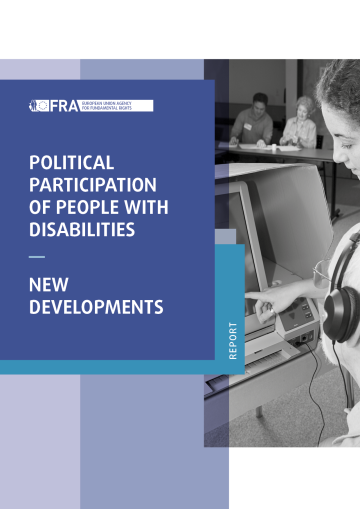
  • Report / Paper / Summary
    29
    May
    2024
    Ahead of the EU elections, this report explores the political participation of people with disabilities. Although some Member States removed restrictions on the right to vote and to stand for elections, barriers still exist. This report is an update of new developments following FRA’s last report published in 2014. It sets out ways forward to ensure people with disabilities have equal opportunities, in line with the EU Charter of Fundamental Rights and the Convention on the Rights of Persons with Disabilities.
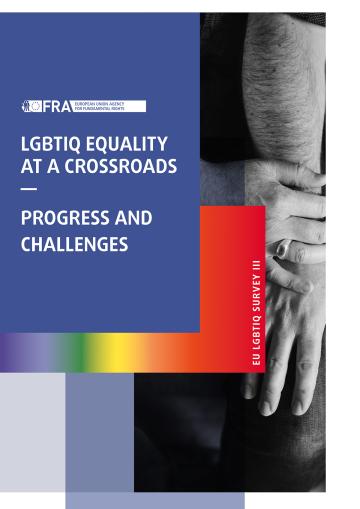
  • Report / Paper / Summary
    14
    May
    2024
    FRA’s third LGBTIQ survey shows that people still experience hate-motivated violence and discrimination. Trans and intersex people face even greater victimisation. Yet, signs of progress show that the EU’s and Member States’ efforts can positively affect people’s lives. More LGBTIQ people are open about their sexual orientation, gender identity, gender expression and sex characteristics.
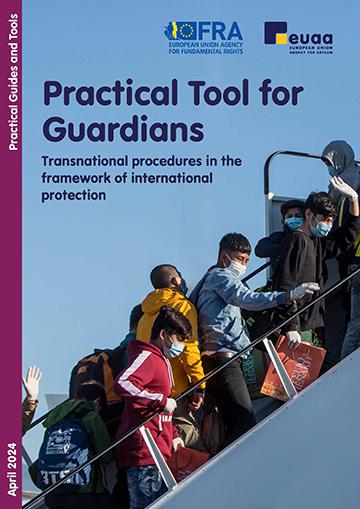
  • Periodic updates / Series
    17
    April
    2024
    This booklet is intended to support guardians assigned to children in the asylum procedure. It covers the technical aspects of the legal procedures related to the cross-border movement of such children. This booklet covers only procedures related to international protection. It is part of a series of four practical tools for guardians of unaccompanied children with international protection needs. The objective is to support guardians in their daily tasks and responsibilities during the asylum procedure, including the procedure under the Dublin III regulation and temporary protection. The tools have been developed by the European Union Agency for Asylum (EUAA) and FRA.