• Handbook / Guide / Manual
    9
    June
    2026
    The European Convention on Human Rights and European Union law provide an increasingly important framework for the protection of the rights of foreigners. EU legislation relating to asylum, borders and immigration is developing fast. There is an impressive body of case law by the European Court of Human Rights relating in particular to Articles 3, 5, 8 and 13 of the European Convention on Human Rights. The Court of Justice of the European Union is asked more and more frequently to pronounce on the interpretation of EU law provisions in this field. The fourth edition of this handbook, updated to June 2026, presents this EU
    legislation and the body of case law by the two European courts in an accessible way. A new chapter in the handbook focuses on monitoring compliance with fundamental rights and investigations into rights violations. It is intended for legal practitioners, judges, prosecutors, immigration officials and non-governmental organisations in the EU and Council of Europe Member States.
    Publication series: FRA-CoE Handbooks
  • Handbook / Guide / Manual
    30
    October
    2026
    La convention européenne des droits de l’homme (CEDH) et la législation de l’Union européenne (UE) fournissent un cadre de plus en plus important pour la protection des droits des ressortissants de pays tiers. La législation de l’UE relative à l’asile, aux frontières et à l’immigration se développe rapidement. Il existe un impressionnant corpus de jurisprudence de la Cour européenne des droits de l’homme qui porte, en particulier, sur les articles 3, 5, 8 et 13 de la CEDH. La Cour de justice de l’Union européenne (CJUE) est également de plus en plus souvent appelée à se prononcer sur l’interprétation des dispositions de la législation l’UE en la matière. La quatrième édition du présent manuel, mise à jour jusqu’en juin 2026, expose de manière accessible cette législation et la jurisprudence des deux cours européennes dans ce domaine. Il s’adresse aux praticiens du droit, aux juges, aux procureurs, aux agents des services de l’immigration et aux organisations non gouvernementales des États membres de l’UE et du Conseil de l’Europe.
    Publication series: FRA-CoE Handbooks
  • Handbook / Guide / Manual
    30
    October
    2026
    La Convenzione europea dei diritti dell’uomo (CEDU) e il diritto dell’Unione europea (UE) forniscono un quadro di riferimento sempre più importante per la protezione dei diritti degli stranieri. La legislazione dell’UE in materia di asilo, frontiere e immigrazione è in rapido sviluppo. Esiste un cospicuo corpus di giurisprudenza formato dalla Corte europea dei diritti dell’uomo (Corte EDU) riguardante, in particolare, gli articoli 3, 5, 8 e 13 della CEDU. La Corte di giustizia dell’Unione europea (CGUE) è chiamata con sempre maggiore frequenza a pronunciarsi sull’interpretazione delle disposizioni legislative dell’UE in quest’ambito. La presente quarta edizione del manuale, aggiornata a marzo 2026, presenta in modo accessibile la legislazione dell’UE e la giurisprudenza delle due corti europee, è rivolto a professionisti legali, giudici, pubblici ministeri, funzionari dell’immigrazione e organizzazioni non governative negli Stati membri dell’Unione europea e del Consiglio d’Europa.
    Publication series: FRA-CoE Handbooks
  • Handbook / Guide / Manual
    2
    June
    2026
    What is the rule of law and why does it matter? This explainer translates a foundational legal concept into clear, practical terms that resonate with everyday life. Its aim is to support clear and accessible communication on the rule of law as one of the foundations of our democratic societies.
  • Report / Paper / Summary
    1
    June
    2026
    The report contains a comprehensive and thorough account of the activities carried out by FRA in the implementation of its mandate and programme of work during 2025. It provides a detailed account of the results achieved in relation to the objectives set out in the annual work programme and the five strategic areas defined in the FRA strategic plan for 2023–2028, of financial and management information and of the risks related to the organisation’s activities and measures.
  • Report / Paper / Summary
    29
    May
    2026
    Online fraud represents a major criminal threat, affecting a growing number of people across the EU. This report presents findings from an EU-wide Eurobarometer survey of 26 453 respondents, focusing on responses to survey questions developed by FRA. It explores the prevalence of online fraud, who is most at risk, and which schemes people are most likely to fall victim to. It also looks at the reporting rate to the police and contact with other services, and at the impact on victims.
  • Handbook / Guide / Manual
    4
    November
    2026
    Since its initial publication, this handbook has been an important reference for guardianship systems for unaccompanied children across the European Union (EU). It has supported national authorities, practitioners and policymakers in upholding the rights of some of the most vulnerable children, in line with EU law and international standards. This updated edition comes at a pivotal moment. The entry into application of the Pact in June 2026 marks an important step towards a more comprehensive framework for migration and asylum across the Union. It aims to prevent abuse of the asylum system, including through measures addressing misuse of provisions concerning unaccompanied children, and reinforce public trust in its functioning.
  • Report / Paper / Summary
    11
    May
    2026
    The ability to communicate freely and privately online is protected under Article 7 of the EU Charter; it is a crucial enabler of other fundamental rights, particularly as the world becomes increasingly digital. This paper presents results from an EU-wide survey about people’s views on encryption of their private online communication. It looks, for example, at concern regarding access by outside actors to information shared when using private messaging applications. The results indicate that people highly value encryption and at the same time have concerns about online communications being accessed without their knowledge or permission. It provides a timely evidence base to shape policy discussions on internal security and digital privacy.
  • Periodic updates / Series
    21
    April
    2026
    From 2015 to 2023, FRA regularly published bulletins on fundamental rights issues related to migration and asylum. As part of the EU's 2024 Asylum and Migration Management Regulation, FRA is now restarting this reporting ahead of the June 2026 implementation of the EU Migration and Asylum Pact. This first bulletin in the new series takes stock of the situation of migrants, asylum seekers and refugees as of March 2026. It looks at key developments between January 2025 and the end of March 2026, as well as ongoing problems and new areas of concern.
    Publication series: Migration Bulletins
  • Report / Paper / Summary
    14
    April
    2026
    In response to increased arrivals of asylum seekers, in 2015 the European Commission introduced the hotspot approach. Under this approach, the European Commission and EU agencies supported Greece and Italy in identifying, registering and fingerprinting newly arrived people. FRA regularly visited the initial reception facilities hosting them. This report looks back at the lessons learnt from 10 years of FRA visits. It identifies recurring risks to rights and highlights practical measures and promising practices to prevent or address them. These ‘lessons learnt’ can inform the implementation of the 2024 Pact on Migration and Asylum in line with the EU Charter of Fundamental Rights.
  • Report / Paper / Summary
    31
    March
    2026
    Civic space is a crucial component of democracy and of societies founded on respect for fundamental rights and the rule of law. Civil society organisations across the EU face increasing pressure that limits their ability to operate. This report presents FRA opinions on how EU Member States can better protect civic space and support civil society organisations in safeguarding fundamental rights. The findings are based on data and information collected by FRANET, FRA’s multidisciplinary research network, and FRA’s consultation with CSOs participating in its Fundamental Rights Platform. It is complemented by desk research, interviews, stakeholder meetings and exchanges with intergovernmental organisations. It covers all EU Member States, as well as Albania, North Macedonia and Serbia.
  • Report / Paper / Summary
    27
    March
    2026
    This publication presents findings from an EU-wide survey on public attitudes to children’s use of social media. It presents people’s key concerns and their views on the minimum age limits for accessing social media platforms. The survey draws on the views of both teenagers and adults – those most directly affected. The findings offer a useful evidence base for policy discussions on social media age restrictions in the EU.
  • Report / Paper / Summary
    3
    March
    2026
    Violence against women remains widespread in the European Union (EU). This joint report by the EU Agency for Fundamental Rights (FRA) and the European Institute for Gender Equality (EIGE) presents detailed findings from the EU gender-based violence survey. It offers in-depth analysis of the scale, nature and drivers of violence and exposes the structural gender inequality. Building on the 2024 publication, EU gender-based violence survey - Key results, and following up on FRA’s 2014 report, Violence against women: an EU-wide survey, this report tracks trends over the last decade across the EU. Eurostat, FRA, and EIGE jointly conducted the survey. It is based on over 100,000 interviews covering all 27 EU Member States.
  • In brief / Factsheet
    28
    February
    2026
    This factsheet examines case law on cross-border child abduction, meaning the unlawful removal of a child from one EU Member State to another. Jointly published by the European Court of Human Rights and the EU Agency for Fundamental Rights, it explains how courts handle issues where EU law and human rights law overlap. It highlights key court decisions from the Court of Justice of the European Union (CJEU) and the European Court of Human Rights (ECtHR) to show how these two legal systems work together on issues of child abduction and prioritising the best interests of the child.
    Publication series: ECtHR-FRA Joint Factsheets
  • In brief / Factsheet
    28
    February
    2026
    This factsheet examines the importance of freedom of religion in the workplace as one of the foundations of a democratic society. Jointly published by FRA and the European Court of Human Rights, it examines relevant EU law on the topic, and explains how courts handle issues where EU law and human rights law overlap. It highlights key court decisions from the Court of Justice of the European Union (CJEU) and the European Court of Human Rights (ECtHR) to show how these two legal systems work together on aspects of religious freedom in the workplace, such as wearing religious symbols to work and time off for religious holidays.
    Publication series: ECtHR-FRA Joint Factsheets
  • In brief / Factsheet
    28
    February
    2026
    02 March 2026
    This factsheet focuses on the European arrest warrant and EU Member States obligations to respect fundamental rights. EU law and the European Convention on Human Rights sometimes overlap. The publication clarifies where there are similar principles in different legislation and provides examples of case law. In collaboration, the EU Agency for Fundamental Rights and the European Court of Human Rights produced this short publication. It is designed to aid lawyers and policymakers in understanding and applying the jurisprudence in this area.
    Publication series: ECtHR-FRA Joint Factsheets
  • Report / Paper / Summary
    24
    February
    2026
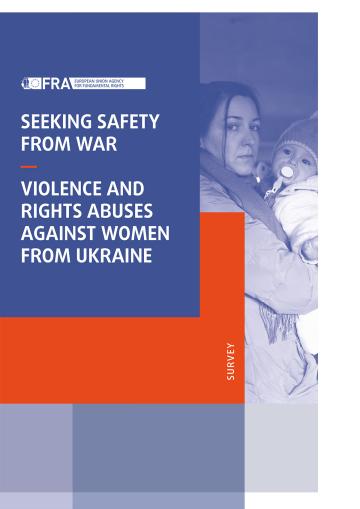
    The start of Russia’s war of aggression against Ukraine on 24 February 2022 shocked the global community and gave rise to a
    series of urgent fundamental rights challenges across Europe. While much attention has focused on the scale of devastation and its wider impact on all Ukrainians, the war has also inflicted profound personal harm. This report sheds light on the violence, sexual harassment and exploitation experienced by women displaced from Ukraine. Drawing on a survey and in-depth interviews with women from Ukraine, the report documents the prevalence, forms and patterns of gender-based violence and sets out practical measures to improve safety, access to justice and support.